Navigating the data-rich world of aquatic acoustic telemetry

Post provided by Kim Whoriskey

Early Career Researcher Kim Whoriskey takes us behind the Methods paper ‘Current and emerging statistical techniques for aquatic telemetry data: A guide to analysing spatially discrete animal detections’ which led to her being shortlisted for our Robert May Prize in 2019.

Understanding how aquatic animals move is becoming increasingly important for protecting them. Knowing where they migrate, how long they stay, and what they do when they travel through changing marine environments provides us with key information on movement corridors, habitat hotspots, and changing population distributions. This information can then be used to help manage and conserve many different aquatic species, from developing guidelines for recreational fishing practices to defining marine spatial planning measures.

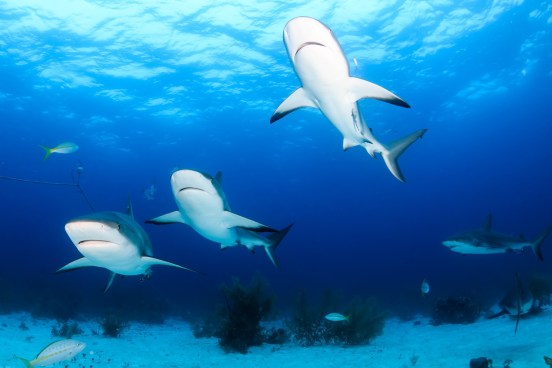
sharks

Continue reading “Navigating the data-rich world of aquatic acoustic telemetry”

Our August Issue is OUT NOW

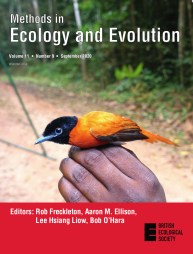
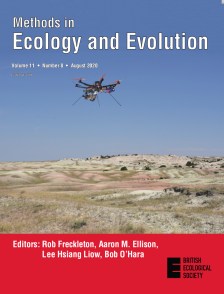
The August issue of Methods is now online!Cover JPEG

We have a larger issue of 14 articles this month, featuring tools for microbial evolution experiments, automatic biomass estimation of invertebrates, labeling biological samples and much more.

Senior Editor Bob O’Hara has selected five featured articles this month – find out about them below. We also have four Applications, one Practical Tools article and 10 articles that are freely available to everyone – no subscription required!

Continue reading “Our August Issue is OUT NOW”

Happy 10th Anniversary to us!

This year is our 10th Anniversary! To celebrate, we’ve made a timeline of highlights from the past decade, from the first paper ever submitted, to a top-cited article with 3,295 citations. We’d like to give a big thanks our dedicated editors, plus all the authors and reviewers who are developing the fields of ecology and evolution with groundbreaking new methods. Here’s to 10 more years! Continue reading Happy 10th Anniversary to us!

Issue 11.7: Biodiversity offsetting, demersal fisheries & decaying logs

The July issue of Methods is now online! Cover JPEG

This month’s issue features articles on evaluating biodiversity offsetting, managing remotely-collected data, quantifying log decay and much more.

Senior Editor Aaron Ellison has selected six featured articles this month – find out about them below. We also have three Applications and seven articles that are freely available to everyone – no subscription required!

Continue reading “Issue 11.7: Biodiversity offsetting, demersal fisheries & decaying logs”

Methodology matters for comparing coarse wood and bark decay rates across tree species

Post provided by Chenhui Chang


落红不是无情物,化作春泥更护花。 –龚自珍(清)
The fallen petals are not as cruel as they seem; they fertilize those in full bloom instead.”Gong Zizhen (Qing Dynasty)

log
A decaying Douglas fir log

This picture shows a decomposing log of Douglas fir, Pseudotsuga menziesii (Mirb.) Franco, in Schovenhorst, The Netherlands, which is one of the deadwood incubation sites of the LOGLIFE “tree cemetery” project. 25 angiosperm and gymnosperm species covering a diverse range of functional traits were selected and incubated in the “common garden experiment”. This project was founded in 2012, aiming to disentangle the effects of different species’ wood traits and site-related environmental drivers on decomposition dynamics of wood, and its associated diversity of microbial and invertebrate communities.

Continue reading “Methodology matters for comparing coarse wood and bark decay rates across tree species”

The tripod frame: mooring acoustic receivers on the seabed

Post provided by Jolien Goossens

Jolien Goossens tells us about the challenges of installing acoustic receivers on the seabed and the tripod they designed to overcome them.

sea

Installing scientific instruments in the marine environment comes with many challenges. Equipment has to withstand the physical forces of tides, currents and storms. Researchers have to take into account the effects of biofouling, corrosion and human activities. Even access to the study site can pose its difficulties, as diving is limited by depth and weather conditions. Practical deployment mechanisms are therefore needed to sustain consistent data flows.

Acoustic telemetry enables the observation of animal movements in aquatic environments. Individual animals are fitted with a transmitter, relaying a signal that can be picked up by acoustic receivers. To facilitate a convenient installation of these instruments, we developed and tested a new design, mounting a receiver with an acoustic release on a tripod frame. This frame enables the recovery of all equipment and better yet, improves the quality of the data.

Continue reading “The tripod frame: mooring acoustic receivers on the seabed”

Neo was right—The Matrix explains everything

Post provided by Jody Reimer

One of the unifying themes in ecology may be the acknowledgement that we live in a world of finite resources, and so we also live in a world of tradeoffs. A diverse range of research questions can be distilled into a question about tradeoffs. For example, how should an animal forage in the presence of predation? Which selective forces determine the life history of a flowering perennial? How should we manage a population to maximize the sustainable harvest rate?

Jody

Questions as varied as these can all be addressed using the same method of stochastic programming[1] (SDP) (see McNamara and Houston, 1986; Rees et al. 1999; and Runge and Johnson, 2002, respectively). SDP has been used extensively to study optimal tradeoffs in a wide range of applications in ecology, evolutionary biology, and management. It is a flexible and powerful modelling framework that allows for simultaneous consideration of an individual’s state, how an optimal decision might explicitly depend on time, and for a probabilistic landscape of risks and rewards. 

[1] Also known as Markov Decision Processes

Continue reading “Neo was right—The Matrix explains everything”

Issue 11.6: goats, camera traps, coral imaging and more!

The June issue of Methods is now online!

June Cover

This month’s issue features articles on designing camera trap studies, measuring coral growth rates, quantifying carbon assimilation by marine calcifiers and much more.

Senior Editor Rob Freckleton has selected six featured articles this month – find out about them below. We’ve also got three Applications and a Practical Tools article which are freely available to everyone – no subscription required!

Continue reading “Issue 11.6: goats, camera traps, coral imaging and more!”

Issue 11.5: Our May issue is now online!

The May issue of Methods is now online! As well as four Application and two Practical Tools articles, the latest issue of Methods in Ecology and Evolution includes six Featured Articles handpicked by our editors – you can find out more about them below.     Featured Articles Tree-based inference of species interaction networks from abundance data To be relevant, any network inference methodology needs … Continue reading Issue 11.5: Our May issue is now online!

Latest issue and other articles

Issue 3.4 Our latest issue covers an impressive array of subjects: from metabarcoding (with associated presentation), to population genetics and population monitoring (with video explaining a microphone array system). Modelling and monitoring dispersal also features heavily with four articles, one of which is accompanied by a video for a novel telemetry system to track wild animals. Articles also include topics such as transient dynamics, a review … Continue reading Latest issue and other articles