10th Anniversary Volume 7: The ecologist’s field guide to sequence‐based identification of biodiversity

Post provided by Si Creer, Kristy Deiner, Serita Frey and Holly Bik
To celebrate the 10th Anniversary of the launch of Methods in Ecology and Evolution, we are highlighting an article from each volume to feature in the Methods.blog. For Volume 7, we have selected ‘The ecologist’s field guide to sequence‐based identification of biodiversity’ by Creer et al. (2016).

In this post, the authors share their motivation behind the paper and discuss advances in sequencebased identification of biodiversity.

Continue reading “10th Anniversary Volume 7: The ecologist’s field guide to sequence‐based identification of biodiversity”
Individual History and the Matrix Projection Model

Post provided by Rich Shefferson

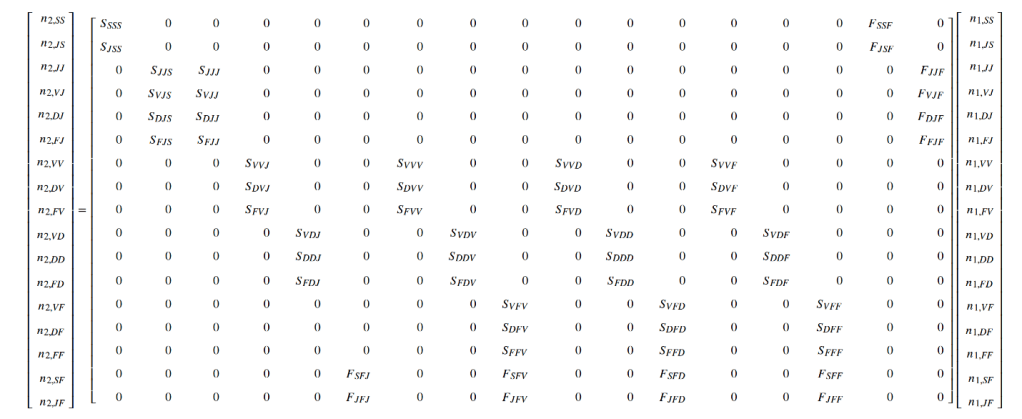
A single time-step projection of a historical matrix projection model (hMPM), for a 7 life stage life history model of Cypripedium parviflorum, the small yellow lady’s slipper. In this case, the vector of biologically plausible stage pairs in time 2 is equal to the full projection matrix multiplied by the vector of biologically plausible stage pairs in time 1.

Matrix projection modeling is a mainstay of population ecology. Ecologists working in natural area management and conservation, as well as in theoretical and academic realms such as the study of life history evolution, develop and use these models routinely. Matrix projection models (MPMs) have advanced dramatically in complexity over the years, originating from age-based and stage-based matrix models parameterized directly from the data, to complex matrices developed from statistical models of vital rates such as integral projection models (IPMs) and age-by-stage models. We consider IPMs to be a class of function-based MPM, while age-by-stage MPMs may be raw or function-based, but are typically the latter due to a better ability to handle smaller dataset. The rapid development of these methods can leave many feeling bewildered if they need to use these methods but lack sufficient understanding of scientific programming and of the background theory to analyze them properly.

Continue reading “Individual History and the Matrix Projection Model”

DNA from Bite Marks: An Amplicon Sequencing Protocol for Attacker Identification

Post provided by Daniela C. Rößler 

© Daniela C. Rößler

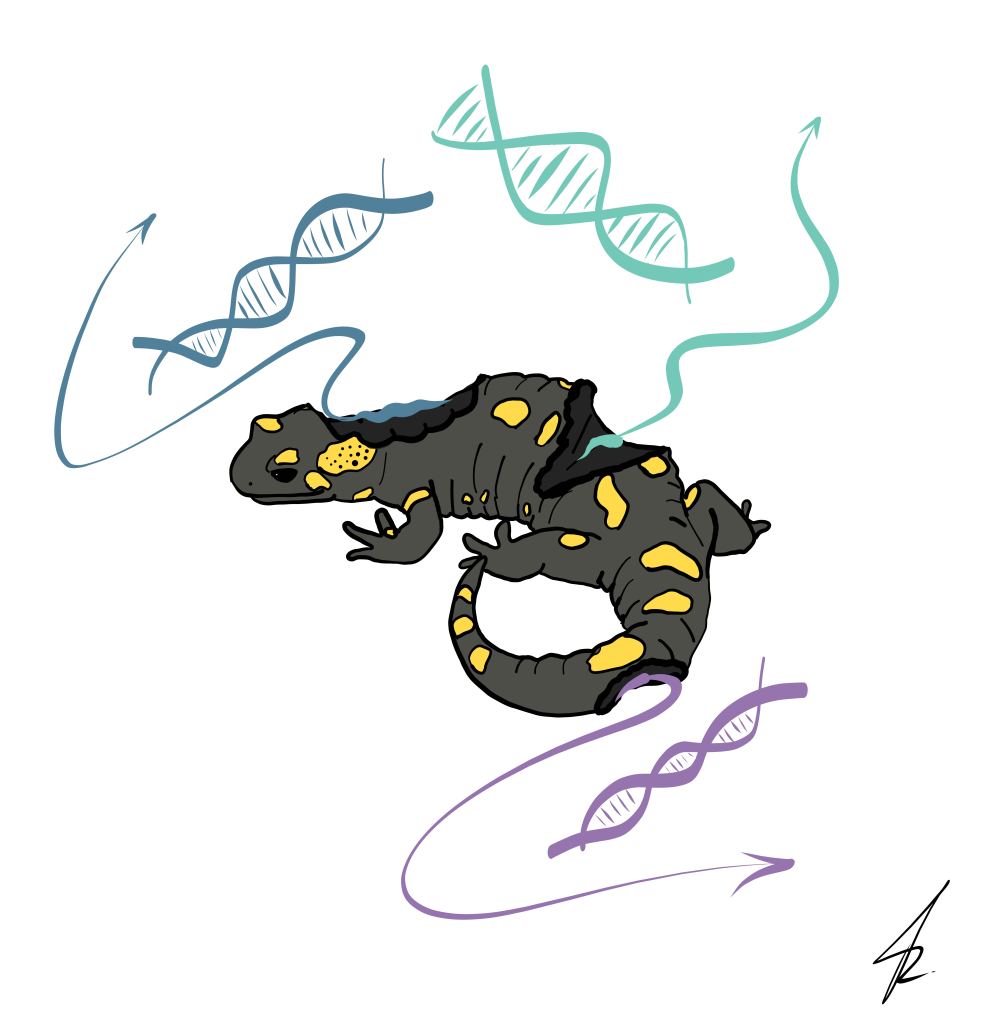
Understanding interactions between predators and prey is of interest to a variety of research fields. These interactions not only hold valuable information about ecological dynamics and food webs but are also crucial in understanding the evolution of predatory and anti-predator traits such as vision, visual signals and behavior. Thus, the “who attacks what and why” is key to approach broad evolutionary and ecological questions.

Continue reading “DNA from Bite Marks: An Amplicon Sequencing Protocol for Attacker Identification”

World Fisheries Day 2020: Cleaning up the Act of Salmon Fisheries?

Post provided by Ben Whittaker and Hannah L. Harrison

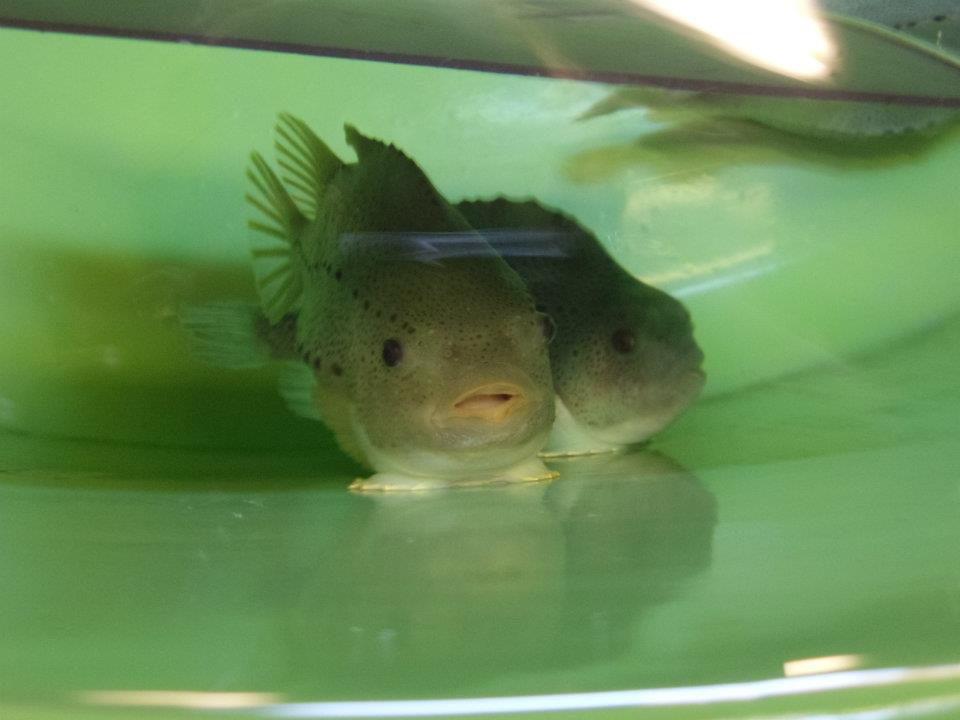
Juvenile lumpfish in hatchery facility. Credit: Emily Costello (UK).

World Fisheries Day is celebrated annually on 21st November, to reflect on the ever-increasing knowledge about fishing, fishers, coastal communities, and the status of the oceans and fish stocks. This year, the Canadian Wildlife Federation are highlighting their work towards ending the current practice of salmon aquaculture, via the gradual phasing out of open-pen finfish aquaculture (OPFA) to prevent further negative impacts of the practice on wildlife and marine habitats. One of the major impacts of salmon aquaculture on wildlife, is the transmission of sea lice to wild salmonid populations, which has resulted in mass mortalities of wild fish. The most efficient control method to reduce sea-lice in farms is arguably the deployment of cleaner fish, however, there is little information on how this widely used method impacts individual welfare and worldwide sustainability of cleaner fish stocks. In this blog post, Dr Ben Whittaker and Dr Hannah L. Harrison, discuss the current status of cleaner fish fisheries.

Continue reading “World Fisheries Day 2020: Cleaning up the Act of Salmon Fisheries?”

International LGBTQ+ STEM Day 2020: Promoting Visibility of LGBTQ+ People in STEM

Post provided by Chloe Robinson

Picture credit: Chloe Robinson.

November 18th, 2020 marks International LGBTQ+ STEM Day, which aims to celebrate lesbian, gay, bisexual, transgender, queer + (LGBTQ, “+”= plus other sexes, gender identities, and sexual orientations) people in all different STEM (science, technology, engineering, and mathematics) fields. This specific date is symbolic of the 60th anniversary of American astronomer and gay activist Frank Kameny’s US Supreme Court fight against workplace discrimination, a fight that continues today in many countries worldwide. To mark this day, Associate and Blog Editor, Dr. Chloe Robinson, who is openly lesbian, has put together a blog post, with contributions from other LGBTQ+-identifying MEE Associate Editors, to discuss the current state of LGBTQ+ visibility in STEM.

Continue reading “International LGBTQ+ STEM Day 2020: Promoting Visibility of LGBTQ+ People in STEM”

Reliably Predicting Pollinator Abundance with Process-Based Ecological Models

Post provided by Emma Gardner and Tom Breeze

Bumblebee. Picture credit: Tom Breeze.

Pollination underpins >£600 million of British crop production and wild insects provide a substantial contribution to the productivity of many crops. There is mounting evidence that our wild pollinators are struggling and that pollinator populations may be declining. Reliably modelling pollinator populations is important to target conservation efforts and to identify areas at risk of pollination service deficits. In our study, ‘Reliably predicting pollinator abundance: Challenges of calibrating process-based ecological models’, we aimed to develop the first fully validated pollinator model, capable of reliably predicting pollinator abundance across Great Britain.

Continue reading “Reliably Predicting Pollinator Abundance with Process-Based Ecological Models”

10th Anniversary Volume 4: Open population capture–recapture models with age structure and heterogeneity

Post provided by Eleni Matechou

To celebrate the 10th Anniversary of the launch of Methods in Ecology and Evolution, we are highlighting an article from each volume to feature on the Methods.blog. For Volume 4, we have selected ‘Estimating age‐specific survival when age is unknown: open population capture–recapture models with age structure and heterogeneity’ by Matechou et al. (2013). In this post, the authors discuss the background and key concepts of the article, and changes in the field that have happened since the paper was published seven years ago.

Continue reading “10th Anniversary Volume 4: Open population capture–recapture models with age structure and heterogeneity”

Squeezing the Lemon: Getting the Most from a Simple Acoustic Recogniser

Post provided by Nick Leseberg

Night parrot (Photo credit: Nick Leseberg).

Presenting the new MEE articleUsing intrinsic and contextual information associated with automated signal detections to improve call recognizer performance: A case study using the cryptic and critically endangered Night Parrot Pezoporus occidentalis, Nick Leseberg shares the methods behind the hunt for the elusive night parrot.

Continue reading “Squeezing the Lemon: Getting the Most from a Simple Acoustic Recogniser”

Halloween Special: The Ghosts and Guests of Academia

Post provided by Chloe Robinson

This Halloween, our Blog and Associate Editor Chloe Robinson explains the meaning of ghost and guest authorship, and speaking from her own experiences, the harm they cause to Early Career Researchers

From a young age, we grow up understanding that authors are people that have conceived and written something, most often a book. They do the required background research, thoughtfully lay out the plot and physically complete the main task that makes a book a book – the writing. Sure, they may have editors, cover producers, social media gurus, etc. to help make their book a success, but their name is the one on the front.

Continue reading “Halloween Special: The Ghosts and Guests of Academia”

Dr. Samniqueka Halsey: Informing Disease Management Actions through Modelling

Post provided by Samniqueka Halsey

Black History Month is a UK-wide celebration that takes place every October, acknowledging and raising awareness of the contribution that Black African and Caribbean communities have made in Britain and across the globe. We are excited to promote and profile the work of Black ecologists and evolutionary biologists across the British Ecological Society blogs.

Dr. Halsey in the field measuring dune thistles.

My name is Dr. Samniqueka Halsey, and I am a computational ecologist. I use modelling and statistics to answer questions about the way the world works. In particular, I try to inform management actions about disease emergence and conservation with my models. I have worked on projects regarding Lyme disease, Chronic Wasting Disease and a dune thistle that is threatened by habitat fragmentation. I realized that I genuinely wanted to become an ecologist starting in my junior year of college when I took an ecology course. This class exposed me to the joys of fieldwork, going outside, and collecting data. Combined with a few more courses such as aquatic ecology where I could go out to streams and lakes to collect water samples and then go back to the lab to analyze, it was fascinating. I was even able to be a field technician in Arizona, where I helped to trap prairie dogs to collect blood and ectoparasites to test for the plague.

Continue reading “Dr. Samniqueka Halsey: Informing Disease Management Actions through Modelling”