Into the Swarm-Verse: quantifying collective motion across species and contexts

Post provided by Marina Papadopoulou Authors We are three researchers interested in collective animal behaviour. Marina Papadopoulou is a postdoctoral researcher at Tuscia University in Italy, Simon Garnier is a Professor at the New Jersey Institute of Technology (USA), and Andrew King is an Associate Professor at Swansea University (UK). As a Greek-French-Welsh team with empirical, mathematical, and computational backgrounds in different study systems, we … Continue reading Into the Swarm-Verse: quantifying collective motion across species and contexts

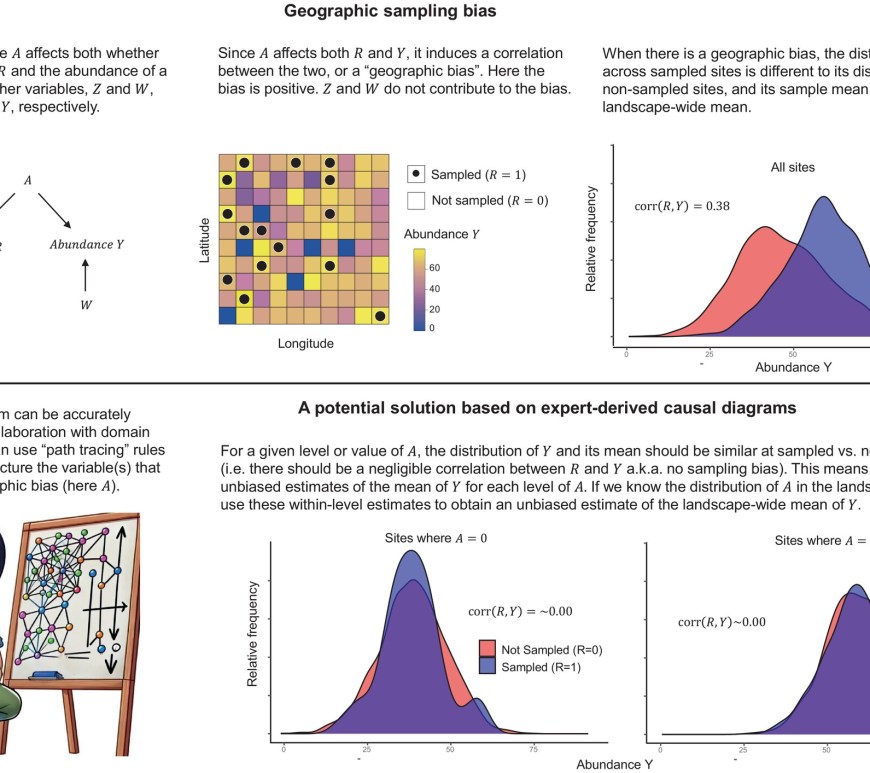
It is only by understanding what causes sampling bias that we can correct it

Post provided by Rob J. Boyd Colleagues and I recently published a paper in MEE, and its title might induce a bit of head scratching: “Using causal diagrams … to correct geographic sampling biases in biodiversity monitoring data” (Boyd et al., 2025). If you’re familiar with causal inference, you might be wondering, “What have causal diagrams got to do with sampling biases?” And if you’re … Continue reading It is only by understanding what causes sampling bias that we can correct it

Early career research: Increasing access, reproducibility and transparency in phylogenetic analyses with Cristian Román-Palacios

I was born in the Colombian Andes (Armenia, Quindío) back in the 90s. I received my bachelor’s degree in Biology from Universidad del Valle, in Cali, Colombia, in 2015. I moved to the US in 2016 to pursue a Ph.D. in Ecology and Evolutionary Biology at the University of Arizona – a degree that I completed in Fall of 2020. Although my research interests seem … Continue reading Early career research: Increasing access, reproducibility and transparency in phylogenetic analyses with Cristian Román-Palacios

ToxTrac: A free and user-friendly animal tracking software

Post provided by Magnus Andersson Animal tracking software no longer has to be costly or require advanced computational science skills to operate. Over the last decade, a significant number of free animal tracking software options have been released. However, many of these options suffer from infrequent updates and demand considerable computational expertise to utilize effectively. To address this issue, the creators of ToxTrac launched the … Continue reading ToxTrac: A free and user-friendly animal tracking software

How to write clean code

Alessandro Filazzola & Christopher Lortie tell us about their new article ‘A call for clean code to effectively communicate science‘, which provides a series of recommendations and a suite of tools that can be used to help support scientists to produce cleaner code. Can you clearly understand the code that you have written? What about if you gave it to a colleague? Or a reviewer? … Continue reading How to write clean code

Visualising the flow of matter within ecosystems

Post provided by Mateusz Iskrzyński Would you like to quickly get a clear picture of the food web you are modelling or analysing? Have you thought about including its visualisation in your paper? Or maybe you wanted to show your students or general audience how interconnected food webs are in real ecosystems? Or just wondered how matter flows through an ecosystem? To help you with … Continue reading Visualising the flow of matter within ecosystems

plantR: Managing species records from biological collections

Post provided by Renato Lima

Many biodiversity studies, covering a wide range of goals, need species records. These records are becoming readily available online, however there is minimal standardisation for these records at this stage, therefore requiring final users to spend a significant amount of time formatting records prior to using data. To overcome this, Renato Lima et al. have created plantR – an open-source package that provides a comprehensive toolbox to manage species records from biological collections. In this blog post, Renato discusses the workflow of the package and describes how this package can help researchers better assess data quality and avoid data leakage.

Continue reading “plantR: Managing species records from biological collections”

An Ecologist and a Programmer Walk Into a Bar…

Post provided by Daniel Vedder, Markus Ankenbrand, and Juliano Sarmento Cabral

Five years ago, a new institute opened its doors at the University of Würzburg: the Center for Computational and Theoretical Biology (CCTB). The idea was simple. Take six computational research groups, covering topics from image analysis to genomics and ecological modelling, put them in a building together, and see what happens.

Despite our disparate areas of expertise, this “experiment” has worked really well. It soon turned out that one of our greatest strengths as an institute lay in the cumulative computer know-how we have, or have acquired together. In our experience, many biologists are still somewhat wary of computational techniques, and struggle with them even when they use them. Part of the reason for this unease, we believe, is that few biologists are thoroughly trained in computer science.

Continue reading “An Ecologist and a Programmer Walk Into a Bar…”

Creating a research and conservation tool to support pollinator survival

Post provided by Matthias Becher, Grace Twiston-Davies & Juliet Osborne

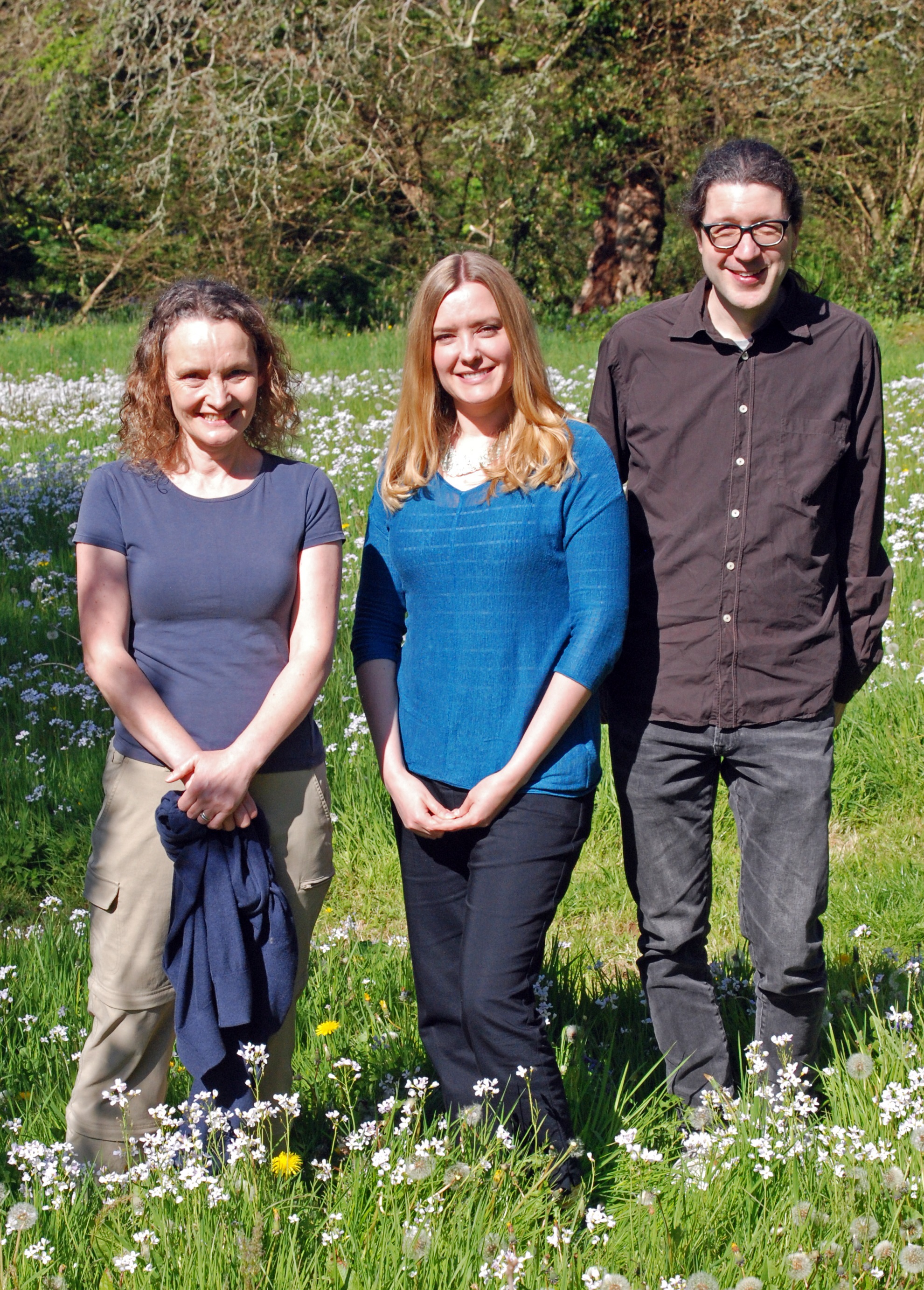
The BEEHAVE Team Osborne Becher and Twiston-Davies. Credit: Pete Kennedy.

Everyone, well, almost everyone, loves honey – that sweet, liquid gold laboriously collected by busy bees from countless little flowers. But of course, much more important than honey or wax or even cosmetic royal jelly products are the pollination services that bees provide to wildflowers and crops. In this blog post, authors Matthias Becher, Grace Twiston-Davies & Juliet Osborne discuss their latest paper published in Methods in Ecology & Evolution, “BEE-STEWARD: a research and decision support software for effective land management to promote bumblebee populations”.

Continue reading “Creating a research and conservation tool to support pollinator survival”

Mapping Animal Movement in R: The Science and the Art

Earlier this year, the BES Movement Ecology Special Interest Group held a competition to find the best animal movement maps in four categories: ‘pretty’, ‘nerdy’, ‘dynamic’ and ‘RMap’ (for maps produced entirely using R).

The results of the vote are in, and the winner of the RMap Category is Pratik Gupte from the University of Groningen, who used R to create this beautiful map of elephant movements across thermal landscapes. Here, we asked Pratik for the story behind the elephant map.

Continue reading “Mapping Animal Movement in R: The Science and the Art”