Editor recommendation: Predicting Animal Behaviour Using Deep Learning

Post provided by Jana McPherson

Common guillemots were one of the species used in this study. ©Richard Crossley

Understanding key habitat requirements is critical to the conservation of species at risk. For highly mobile species, discerning what is key habitat as opposed to areas that are simply being traversed (perhaps in the search for key habitats) can be challenging. For seabirds, in particular, it can be difficult to know which areas in the sea represent key foraging grounds. Devices that record birds’ diving behaviour can help shed light on this, but they’re expensive to deploy. In contrast, devices that record the birds’ geographic position are more commonly available and have been around for some time.

In their recent study entitled ‘Predicting animal behaviour using deep learning: GPS data alone accurately predict diving in seabirds,’ Ella Browning and her colleagues made use of a rich dataset on 399 individual birds from three species, some equipped with both global positioning (GPS) and depth recorder devices, others with GPS only. The data allowed them to test whether deep learning methods can identify when the birds are diving (foraging) based on GPS data alone. Results were highly promising, with top models able to distinguish non-diving and diving behaviours with 94% and 80% accuracy. Continue reading “Editor recommendation: Predicting Animal Behaviour Using Deep Learning”

Remote Sensing for Counting Animals: Polar Bears, Sheep and Everything In-Between

Post provided by Tracey Hollings

In an age of rapid technological advances, ecologists need to keep abreast of how we can improve or reinvent the way we do things. Remote sensing technology and image analysis have been developing rapidly and have the potential to revolutionise how we count and estimate animal populations.

Using remotely sensed imagery isn’t new in ecology, but recent innovations mean we can use it for more things. Land use change and vegetation mapping are among the areas of ecology where remote sensing has been used extensively for some time. Estimating animal populations with remotely sensed imagery was also demonstrated more than 40 years ago by detecting indirect signs of an animal with some success: think wombat burrows and penguin poop.

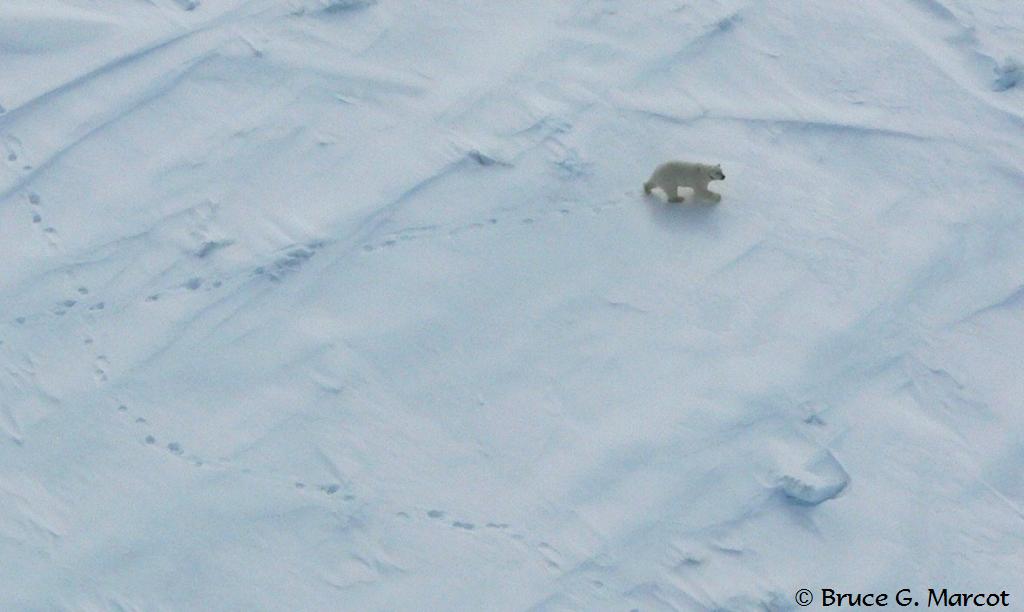
A polar bear from a helicopter

Thanks to improved spatial and spectral resolution (see the text box at the bottom of the post for a definition), accessibility, cost and coverage of remotely sensed data, and software development we have now reached a point where we can detect and count individual animals in imagery. Many of the first studies to demonstrate automated and semi-automated techniques have taken computer algorithms from other disciplines, such as engineering or biomedical sciences, and applied them to automate counting of animals in remotely sensed imagery. It turns out that detecting submarines is not so different to detecting whales! And finding abnormal cells in medical imaging is surprisingly similar to locating polar bears in the arctic! Continue reading “Remote Sensing for Counting Animals: Polar Bears, Sheep and Everything In-Between”

Remotely Tracking Movement and Behaviour with Biologgers: How to Add Accelerometer Data to the Mix

Post provided by Sam Cox, Florian Orgeret and Christophe Guinet

Animal biologging is a technique that’s quickly becoming popular in many cross-disciplinary fields. The main aim of the method is to record aspects of an animal’s behaviour and movement, alongside the bio-physical conditions they encounter, by attaching miniaturised devices to it. In marine ecosystems, the information from these devices can be used not only to learn how we can protect animals, many of whom are particularly vulnerable to disturbance (e.g. large fish, marine mammals, seabirds and turtles), but also more about the environments they inhabit.

Challenges when Tracking Marine Animals

Many marine animals have incredibly large ranges, travelling 1000s of kilometres. A huge advantage of biologging technologies is the ability to track an individual remotely throughout its range. For animals that dive, information on sub-surface behaviour can be obtained too. This information can then be retrieved when an animal returns to a set location. If this isn’t possible (e.g. individuals that make trips that are too long or die at sea), carefully constructed summaries can be relayed via satellite. This option provides information in real time, which can be very useful for researchers.

Tracks of juvenile southern elephant seals. Red tracks are individuals that returned to their natal colony. Grey are those individuals whose information would have been lost had it not been transmitted via the Argos satellite system.

Continue reading “Remotely Tracking Movement and Behaviour with Biologgers: How to Add Accelerometer Data to the Mix”

#EpicDuckChallenge Shows we can Count on Drones

Below is a press release about the Methods in Ecology and Evolution  article ‘Drones count wildlife more accurately and precisely than humans‘ taken from the University of Adelaide.

Lead author Jarrod Hodgson, University of Adelaide, standing in one of the replica colonies of seabirds constructed for the #EpicDuckChallenge.

A few thousand rubber ducks, a group of experienced wildlife spotters and a drone have proven the usefulness and accuracy of drones for wildlife monitoring.

A study from the University of Adelaide showed that monitoring wildlife using drones is more accurate than traditional counting approaches. This was published recently in the British Ecological Society journal Methods in Ecology and Evolution.

“For a few years now, drones have been used to monitor different animals that can be seen from above, including elephants, seals and nesting birds. But, until now, the accuracy of using drones to count wildlife was unclear,” says the study’s lead author, Jarrod Hodgson from the University’s Environment Institute and School of Biological Sciences. Continue reading “#EpicDuckChallenge Shows we can Count on Drones”

Using Interviews in Conservation Science Research

Post provided by David Christian Rose

Why Use Interviews in Conservation?

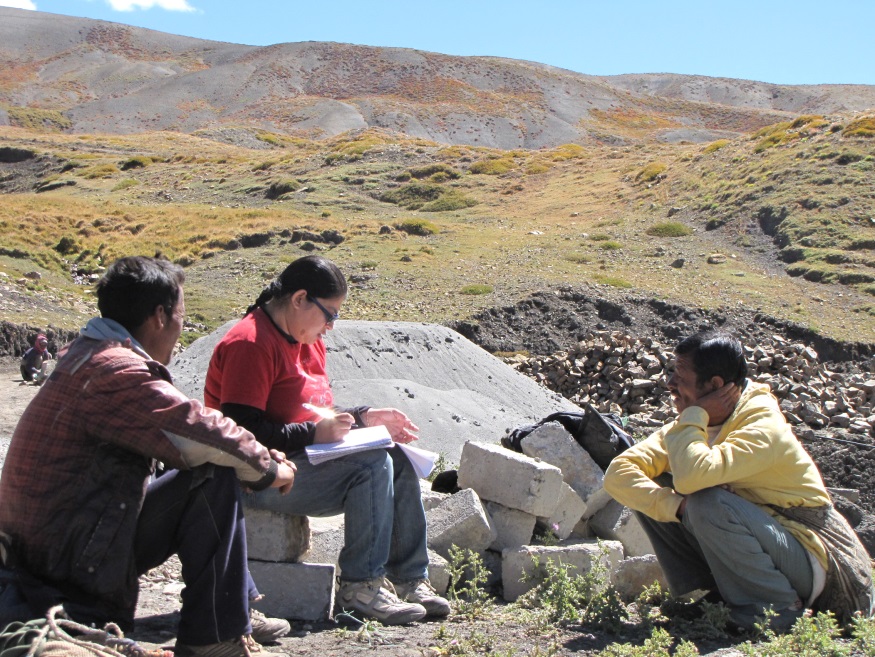
Key herder interviews by Chandrima Home (co-author) in the Upper Spiti Landscape © Kesang Chunit

Conservation interventions need to be implemented on the ground, so a range of people are required to make decisions. Decision-makers can be people like conservation practitioners, policy-makers, and stakeholders who could be affected by an intervention. This usually includes local residents, as well as people who make their living in the area, like fishers, farmers, hunters, and other businesses.

Since decision-making structures are complex and multi-layered, scientific evidence alone is not enough to guide the implementation of a conservation intervention. Researchers need to understand who’s involved in making decisions, who could be affected by the proposed intervention, and gain an appreciation of how local communities use and value their land. Often they’ll also need to find out what local communities think of particular species and habitats. Continue reading “Using Interviews in Conservation Science Research”

New Studies Aim to Boost Social Science Methods in Conservation Research

Below is a press release about the Methods Special Feature ‘Qualitative Methods for Eliciting Judgements for Decision Making‘ taken from the University of Exeter.

Scientists have produced a series of papers designed to improve research on conservation and the environment.

A group of researchers have contributed to a Special Feature of the journal Methods in Ecology and Evolution to examine commonly used social science techniques and provide a checklist for scientists to follow.

Traditional conservation biology has been dominated by quantitative data (measured in numbers) but today it frequently relies on qualitative methods such as interviews and focus group discussions. The aim of the special issue is to help researchers decide which techniques are most appropriate for their study, and improve the “methodological rigour” of these techniques. Continue reading “New Studies Aim to Boost Social Science Methods in Conservation Research”

Sticking Together or Drifting Apart? Quantifying the Strength of Migratory Connectivity

Post provided by Emily Cohen

Red Knot migratory connectivity is studied with tracking technologies and color band resighting. © Tim Romano
Red Knot migratory connectivity is studied with tracking technologies and colour band resighting. © Tim Romano

The seasonal long-distance migration of all kinds of animals – from whales to dragonflies to amphibians to birds – is as astonishing a feat as it is mysterious and this is an especially exciting time to study migratory animals. In the past 20 years, rapidly advancing technologies  – from tracking devices, to stable isotopes in tissues, to genomics and analytical techniques for the analysis of ring re-encounter databases – mean that it’s now possible to follow many animals throughout the year and solve many of the mysteries of migration.

What is Migratory Connectivity?

One of the many important things we’re now able to measure is migratory connectivity, the connections of migratory individuals and populations between seasons. There are really two components of migratory connectivity:

  1. Linking the geography of where individuals and populations occur between seasons.
  2. The extent, or strength, of co-occurrence of individuals and populations between seasons.

Continue reading “Sticking Together or Drifting Apart? Quantifying the Strength of Migratory Connectivity”

Midwater Ocean Communities: Sounds Like Siphonophore Soup

Post provided by Roland Proud

How do we know how many fish there are in the ocean? 1000, 1 billion, 1000 billion? We can’t catch them all and count – that’s not practical. Nor can we make observations from Earth-orbiting satellites – light does not penetrate far into the ocean. What we can use is sound.

Sound travels well in water (faster and further than it does in air), so we can use scientific SONAR (echosounders) to produce sound waves and record backscatter from organisms and communities. This provides information concerning their biomass, distribution and behaviour. A recent study used echoes from the mesopelagic zone (200 – 1,000m) to predict global mesopelagic fish biomass to be between 11 and 15 billion tonnes (that’s a lot), suggesting that mesopelagic fish communities could potentially provide global food security.

Mesopelagic Biogeography

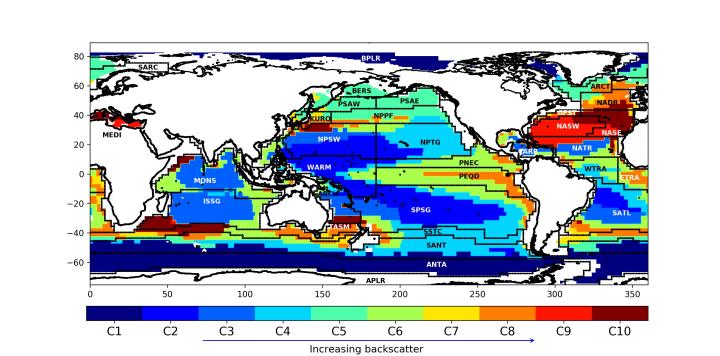
In a recent paper, we (the Pelagic Ecology Research Group, PERG at the University of St Andrews) divided the global ocean up into regions based on the properties of echoes from the mesopelagic zone (see below).

10 mesopelagic classes are shown for the open-ocean, echo intensity (a proxy for biomass) increases from blue to red. Coastal zones excluded. Longhurst provinces overlaid. Shapefile here. Proud et al. (2017)

Continue reading “Midwater Ocean Communities: Sounds Like Siphonophore Soup”

Imperfect Pathogen Detection: What to Do When Sampling and Diagnostic Tests Produce Inaccurate Results

Post Provided by Graziella DiRenzo

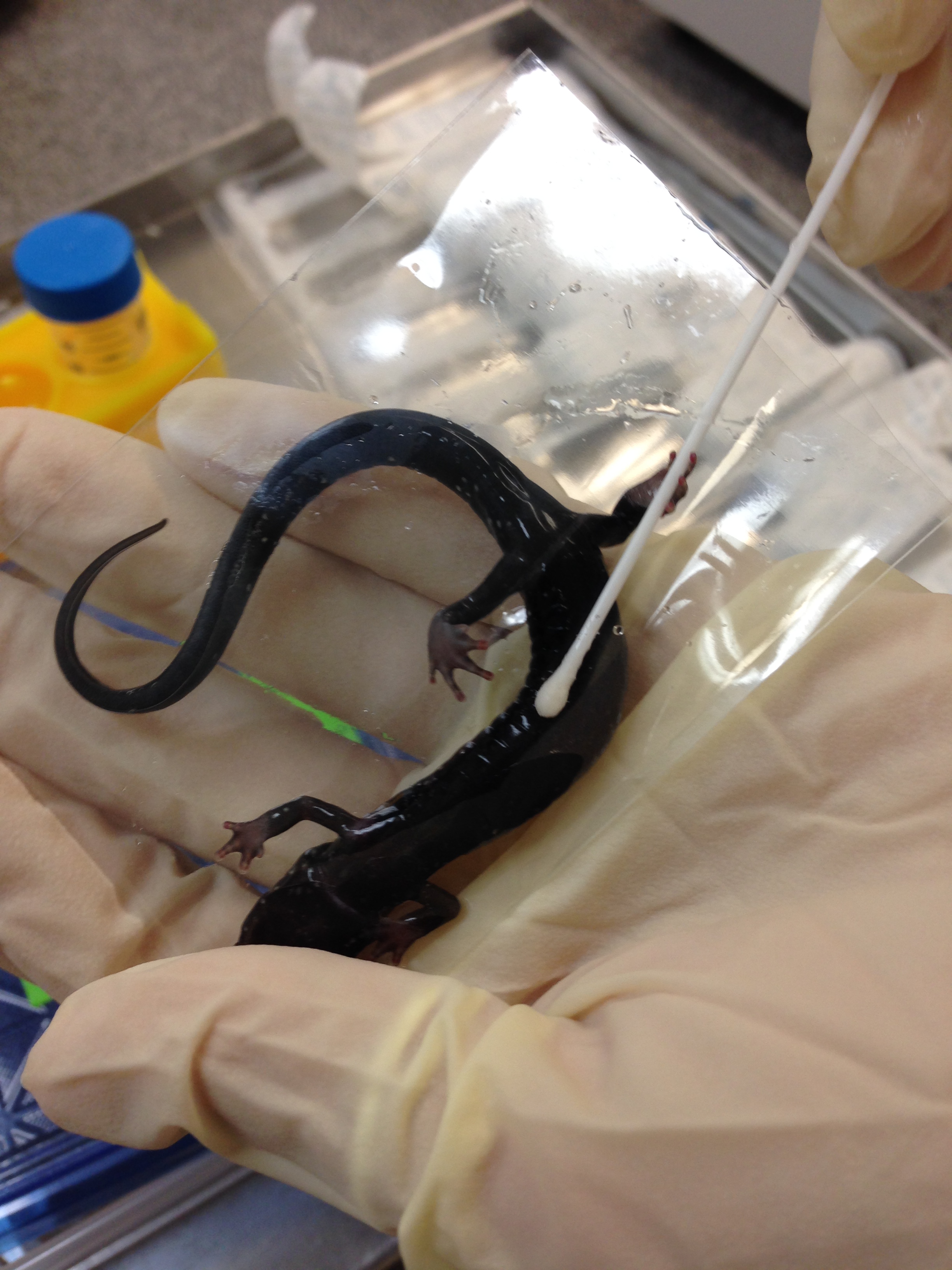
A salamander having its skin swabbed to test for Bsal infection.

Imagine you’re at the doctor’s office. You’re waiting to hear back on a critical test result. With recent emerging infectious diseases in human populations, you are worried you may be infected after a sampling trip to a remote field site. The doctor walks in. You sit nervously, sensing a slight tremble in your left leg. The doctor confidently declares, “Well, your tests results came back negative.” In that moment, you let out a sigh of relief, the kind you feel throughout your body. Then, thoughts start flooding your mind. You wonder– what are the rates of false negatives associated with the test? How sensitive is the diagnostic test to low levels of infection? The doctor didn’t sample all of your blood, so how can they be sure I’m not infected? Is the doctor’s conclusion right?

 Now, let’s say I’m the doctor and my patient is an amphibian. I don’t have an office where the amphibian can come in and listen to me explain the diagnosis or the progression of disease − BUT I do regularly test amphibians in the wild for a fatal fungal pathogen, known as Batrachochytrium dendrobatidis (commonly known as Bd). Diseases like Bd are among the leading causes of the approximately one-third of amphibian species that are threatened, near threatened, or vulnerable to extinction. To test for Bd, and the recently emerged sister taxon Batrachochytrium salamandrivorans (hereafter referred to as: Bsal), disease ecologists rely on non-invasive skin swabs. Continue reading “Imperfect Pathogen Detection: What to Do When Sampling and Diagnostic Tests Produce Inaccurate Results”

Monitoring the Distribution and Abundance of Sea Otters

Post provided by Perry Williams

Sea otters (Enhydra lutris) are an apex predator of the nearshore marine ecosystem – the narrow band between terrestrial and oceanic habitat. During the commercial maritime fur trade in the 18th and 19th centuries, sea otters were nearly hunted to extinction across their range in the North Pacific Ocean. By 1911, only a handful of small isolated populations remained.

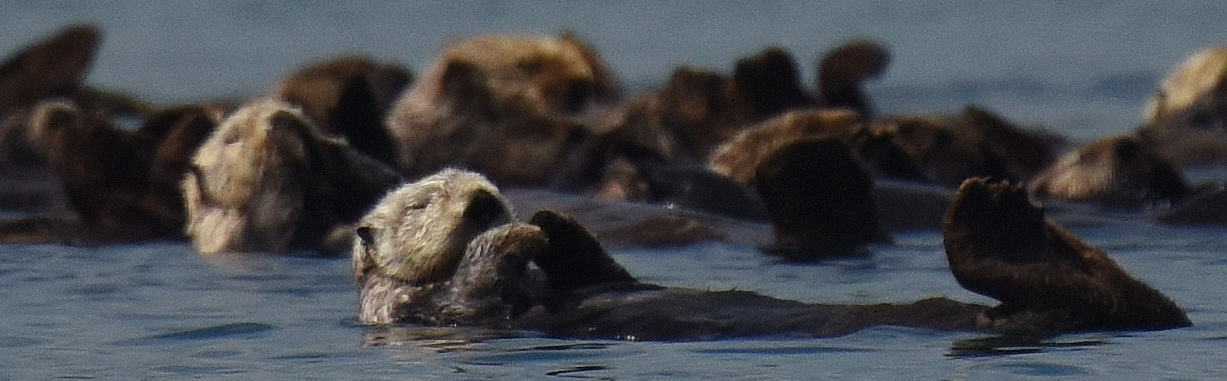
Sea otters resting in Glacier Bay National Park. © Jamie Womble, NPS. USFWS Permit #14762C-0, NPS Permit #GLBA-2016- SCI-0022.

But sea otter populations have recovered in many areas due to a few changes. The International Fur Seal Treaty in 1911 and the Marine Mammal Protection Act (1972) protected sea otters from most human harvest. Wildlife agencies helped sea otter colonisation by transferring them to unoccupied areas. Eventually, sea otters began to increase in abundance and distribution, and they made their way to Glacier Bay, a tidewater glacier fjord and National Park in southeastern Alaska. Continue reading “Monitoring the Distribution and Abundance of Sea Otters”