Habitat destruction and degradation represent serious threats to biodiversity, and quantification of land-use change over time is important for understanding the consequences of these changes to organisms and ecosystem service provision. Historical land-use maps are important for documenting how habitat cover has changed over time, but digitizing these maps is a time consuming process. HistMapR is an R package designed to speed up the digitization … Continue reading Digitizing Historical Land-use Maps with HistMapR
Close up of a black-capped babbler (Pellorneum capistratum), one of the species in our study.
Our newly-developed method simulates intraspecific trait variation when measuring biodiversity. This gives us an understanding of how individual variation affects ecosystem processes and functioning. We were able to show that accounting for within-species variation when measuring functional diversity can reveal details about ecological communities which would otherwise remain unseen. Namely, we found a negative impact of selective-logging on birds in Borneo when accounting for intraspecific variation which we could not detect when ignoring intraspecific variation.
Why Biodiversity Matters
Biodiversity is important for many reasons. One of the main reasons is its contribution to the range of goods and services provided by ecosystems (i.e. ecosystem services) that we can take advantage of, such as natural food resources or climatic regulation. It’s generally believed that biodiversity contributes to these services by increasing and maintaining ‘ecosystem functioning’ – often defined as the rate at which ecosystems are turning input energy (e.g. sunlight) into outputs (e.g. plant biomass). Continue reading “When Measuring Biodiversity, Do Individuals Matter?”
Understanding how biodiversity is distributed and its relationship with the environment is crucial for conservation assessment. It also helps us to predict impacts of environmental changes and design appropriate management plans. Biodiversity across a network of local sites is typically described using three components:
alpha (α) diversity, the average number of species in each specific site of the study area
beta (β) diversity, the difference in species composition between sites
gamma (γ) diversity, the total number of species in the study area.
Despite the many insights provided by the combination of alpha, beta and gamma diversity, the ability to describe species turnover has been limited by the fact that they do not consider more than two sites at a time. For more than two sites, the average beta diversity is typically used (multi-site measures have also been developed, but suffer shortcomings, including difficulties of interpretation). This makes it difficult for researchers to determine the likely environmental drivers of species turnover.
Rachel Carson (1940) Fish & Wildlife Service employee photo.
I can’t think of a more inspirational and influential ecologist than Rachel Carson. Nearly fifty years ago she released a book called Silent Spring, which argued that pesticides such as DDT were cascading up through food chains causing the death or sterilisation of birds and other animals. The publication of her book provoked public debate, likely in part because it was serialised in The New Yorker, and led to a paradigm shift in US and (arguably) global pest control policy.
With the full support of the scientific community to verify her facts and arguments, she was able to defeat the chemical industry’s backlash and galvanise public opinion in her favour. The 2005 Stockholm Convention, in which DDT was banned from agricultural use, would likely have never happened if it were not for her work.
“In a post-truth world where trust in the scientific process is being eroded almost daily, Rachel Carson is a perfect example of how we can speak out and be heard while still being scientists.”
Wetlands tend to accumulate considerable anthropogenic pollution.
All living organisms are dependent on trace elements (TEs), including metals, that are acquired in very small quantities through their environment or diet. Most TEs are essential for growth, development and physiology of the organism, but excessive intake can be detrimental for animals and plants. Some TEs – especially heavy metals such as mercury, cadmium, lead and others – are generally toxic though. This toxicity occurs because species’ natural mechanisms fail to excrete excess TEs quickly enough for their metabolism to cope. TEs are present in the environment at different concentrations, either through natural processes or anthropogenic processes (i.e. pollution).
Some natural environments are more vulnerable to toxic effects of TEs. For instance, wetlands are geochemical endpoints of large river systems that often flow near or through cities, roads, factories, industries, cultivated lands, and/or mines, so they tend to accumulate considerable anthropogenic pollution. Vulnerable habitats like wetlands need to be closely monitored in order to assess the environmental health of these ecosystems. For this kind of monitoring we need reliable methods to measure TEs exposure, intake and bioaccumulation. Continue reading “Biomonitoring Pollution in Wetlands: A New Method for More Reliable Interpretation of Chemical Data”
For the first time, it is possible to integrate at the global scale the results obtained with the most widely used methods to evaluate the “health” of ecosystems using lichens. This is the result of a study now published in the journal Methods in Ecology and Evolution, and represents a fundamental step for this indicator to be considered at the global scale and included in the list of indicators of the United Nations.
Lichens have long been successfully used by scientists as ecological indicators – a kind of environment health thermometer. These complex organisms – the yellow or green taints we often see on the surface of tree trunks – are very sensitive to pollution and changes in temperature and humidity. Evaluating how many lichens, of what kind, and their abundance in a certain ecosystem allows scientists to understand the impact that problems like climate change or pollution have on those ecosystems. Continue reading “Lichens and the “health” of ecosystems: we are closer to a global ecological indicator”
Digital photography has revolutionised the way we view ourselves, each other and our environment. The use of automated cameras (including camera traps) in particular has provided remarkable opportunities for biological research. Although mostly used for recreational purposes, the development of user-friendly, versatile auto-focus digital single lens reflex (DSLR) cameras allows researchers to collect large numbers of high quality images at relatively little cost.
How many samples do you hope to collect on your next field assignment? 50, 100 or 1000? How about billions. It may seem overly optimistic, but that’s the reality when using Light Detection and Ranging, or LiDAR.
LiDAR works on the principle of firing hundreds of thousands of laser pulses a second that measure the distance to an intercepting surface. This harmless barrage of light creates a highly accurate 3D image of the target – whether it’s an elephant, a Cambodian temple or pedestrians walking down the street. LiDAR has made the news over recent years for its ability to unearth ancient temples through thick jungle, but for those of us with an ecological motive it is the otherwise impenetrable cloak of vegetation which is of more interest.
It’s very hard to make sensible choices without sensible information. When it comes to actions around changing land use and its ecological impact though, this is often what we are forced to do. If we want to reduce the impact of human activities on natural ecosystems, we need to know how much change has already occurred and how altered an ecosystem might be from its “natural” state.
Working out which parts of the landscape have been changed and mapping the absence of natural vegetation is an achievable (though onerous) task. However, moving beyond this binary view of the world is a huge challenge. Pretty much all habitat has been modified by human influences to some extent – by, for example, wood extraction, the introduction of invasive species or livestock grazing. This means that a lot of the apparently native habitat is no longer capable of supporting its full complement of native biodiversity. Continue reading “Can We Really Measure Habitat Condition From Space?”
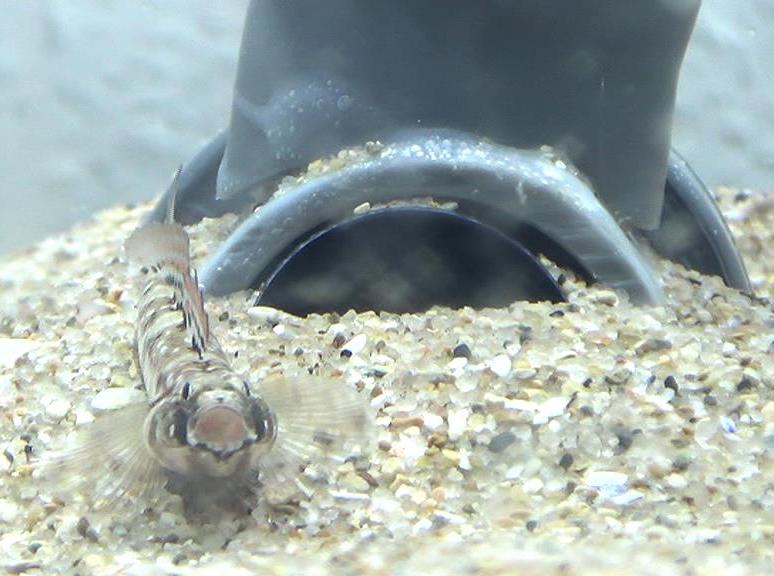
Most people assume that research equipment is expensive and complicated. But, it doesn’t need to be and the noise egg is a perfect example of this. It consists of a watertight container (as used by scuba divers) and the buzzer from a cellphone and does exactly what it says: it produces low frequency noise. This allows researchers to test the effect of noise on underwater life. It is a small, simple and cheap device that anyone can build.
Underwater noise is rapidly increasing due to, for example, boat traffic and offshore wind farms. This can lead to stress for animals and difficulties in communication. Just as people have a hard time communicating in a noisy pub, animals may struggle to get their messages across when background noise is high. A nice description of how animals use sound and how noise may affect this can be found at www.dosits.org
While there is some knowledge on the effect of noise on large aquatic animals, we still know very little about how fish and other small aquatic animals are affected. Such knowledge is vital for management of protected areas. It’s also important to know whether wind farms and boat traffic can affect reproduction in populations of underwater resources such as fish and mussels. The answers to these questions are likely to be species specific, so we’ll need data on a large number of species in different habitats. Continue reading “Testing the Effects of Underwater Noise on Aquatic Animals”


 Methods Blog