In this post, two of our Associate Editors with expertise in remote sensing, Sarah Goslee and Hooman Latifi, share their favourite MEE papers in the fields of remote sensing and biomass estimation.
In this post, the authors discuss the background and key concepts of the article, and changes in the field that have happened since the paper was published.
Terrestrial laser scanning (TLS) calculates 3D locations by measuring the speed of light between a transmitted laser pulse and its return. Firing hundreds of thousands of pulses per second, these instruments can represent the surroundings in detailed 3D, displaying them as virtual environments made up of high density points. The main applications of commercial instruments in the early 2000s were engineering or mining, but their application in natural forested environments was in its infancy. Forest ecosystems are structurally complex; clear reference points used to register multiple scans are rare and trees move due to wind creating artefacts in the data.
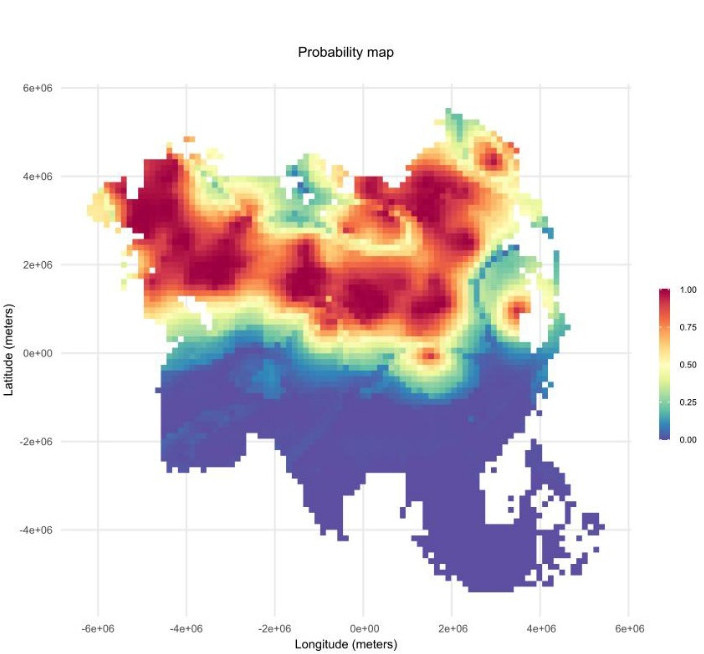
A very important ecological feature of a species is its geographic range, which can be described by its size, position and shape. Studying the geographic range can be useful to understand the ecological needs of a species and, thereby, to plan conservation strategies. In ecological studies, mathematical models are the new standard to reconstruct the distribution of living species on Earth because of their accuracy in predicting a species presence or absence at unsampled locations. These methods are able to reconstruct the climatic niche of a species and to project it onto a geographic domain in order to predict the species’ spatial distribution. To do this, besides the occurrences of a species, the models necessarily require the spatial maps of environmental variables, like temperature and precipitation, for all the study area.
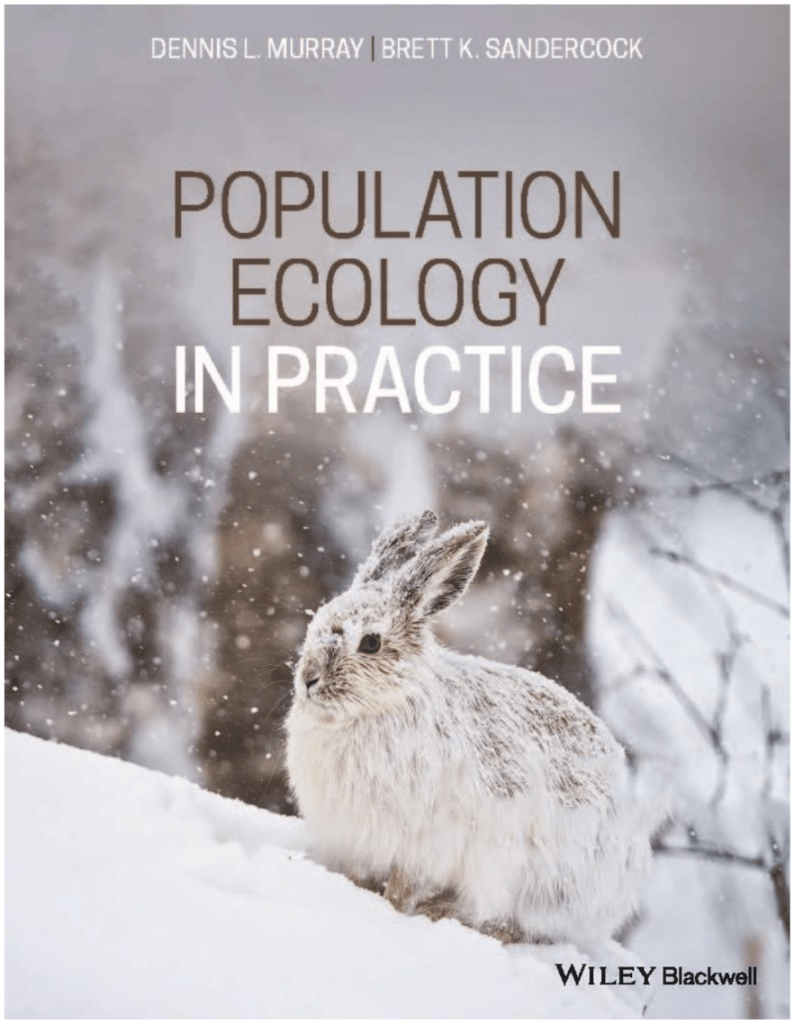
Today we bring the second part of an interview with Dennis Murray and Brett Sandercock about their brand new book in population ecology methods: “Population Ecology in Practice.” This time we talked about their experience as editors, including some useful advice for new editors.
If you missed the first part of the interview, check it out here.
Population Ecology in Practice introduces a synthesis of analytical and modelling approaches currently used in demographic, genetic, and spatial analyses. Chapters provide examples based on real datasets together with a companion website with study cases and exercises implemented in the R statistical programming language.
As with every other ecosystem on earth, the world’s oceans and the marine life they provide a home to, are under increasing pressure from human-related activities. At the 1992 Earth Summit, Canada proposed the concept of a World Ocean Day as a day to celebrate our oceans and to raise awareness about the crucial role the ocean plays in our lives and the important ways people can help protect it. Since 2002, the Ocean Project has been coordinating and promoting of World Ocean Day.
Today we bring the first part of an interview with Dennis Murray and Brett Sandercock about their brand new book in population ecology methods: “Population Ecology in Practice.” The editors were kind enough to share some interesting backstage information with us.
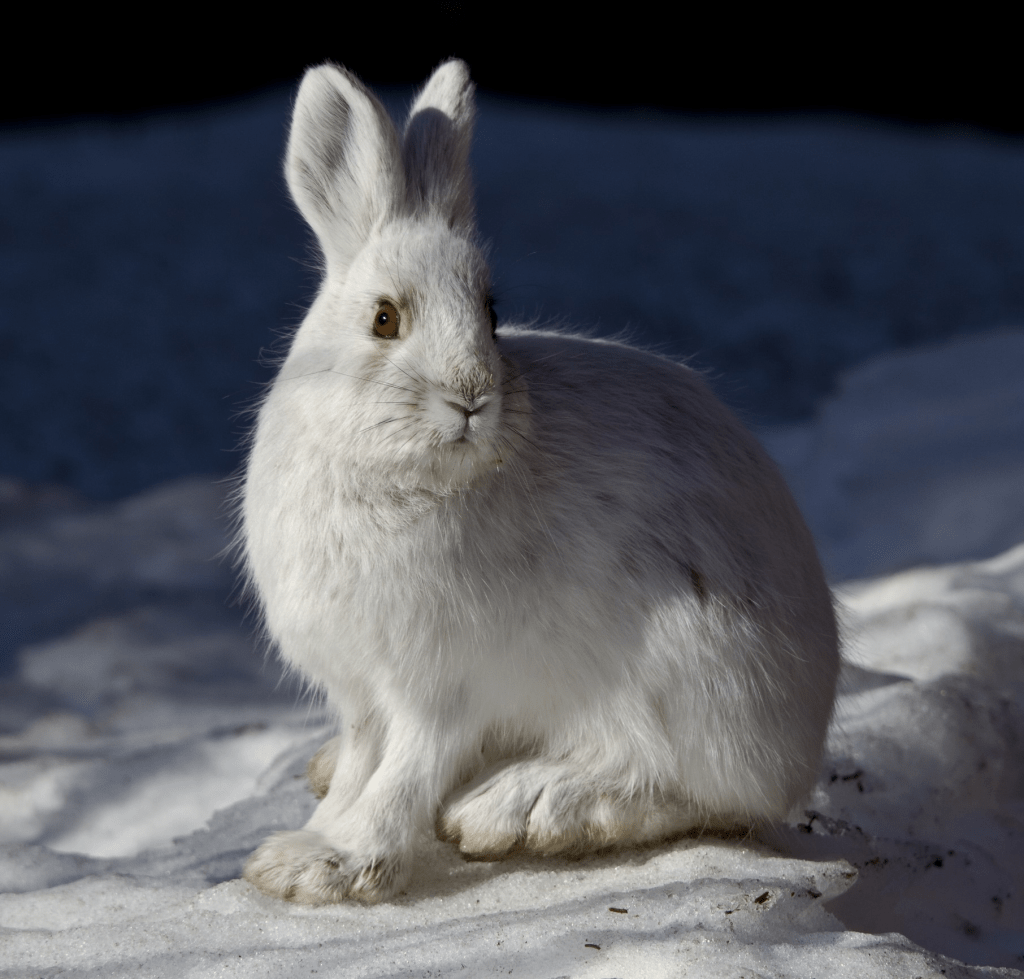
Snowshoe hare in winter
Population Ecology in Practice introduces a synthesis of analytical and modelling approaches currently used in demographic, genetic, and spatial analyses. Chapters provide examples based on real datasets together with a companion website with study cases and exercises implemented in the R statistical programming language.
Stay tuned for the second part of this interview, where we talk about some of the challenges of editing a large book and the editors share essential advice for anyone looking into leading such a project!
The demands of a growing human population are putting increasing pressure on the Earth’s natural systems and services. Dubbed the ‘Anthropocene’, we are currently living in a period where human actions are directly altering many earth processes, including atmospheric, geologic, hydrologic and biospheric processes. Climatic change and the resulting consequences, including rising temperatures, changing precipitation (i.e. rainfall, snow etc) and increase in frequency of storm events, represent the biggest challenge to our future and the life-support ecosystems that make our world habitable.
Artist’s interpretation of global climate change. Photo credit: Pete Linforth/Pixabay.
In 1970, Earth Day was launched as a modern environmental movement and a unified response to an environment in crisis. Earth Day has provided a platform for action, resulting in the creation of the Environmental Protection Agency (EPA), The Clean Air, Clean Water and Endangered Species Acts in the US and more globally. This year, 22 April marks the 50th anniversary of Earth Day, and the number one environmental crisis theme which needs immediate attention is ‘Climate Action’. Many of our ecosystems on earth are degrading at an alarming pace and we are currently experiencing a species loss at a rate of tens or hundreds of times faster than in the past.
The answer to this question depends on a reef’s location, given that shark abundances can vary with primary productivity and other oceanographic features. It also depends on which time period you chose as your reference point. Shark abundances can fluctuate over the course of a few hours – as well as over days to years to decades and beyond. Even if you chose the same time and place as the person before you, you might have come up with a slightly different answer. This variation in how we determine baselines – overlaid on a backdrop of natural variation in shark communities over space and time – can contribute to differing perceptions about what’s natural or what a depleted population can possibly be restored to.
The sending of letters under the pen name ‘St. Valentine’ began back in the middle ages as a way of communicating affection during the practice of courting. Fast forward to 2020 and Valentine’s Day is a day for celebrating romance, but now it typically features the exchange of gifts and cards between lovers.