International Women’s Day: Advice for Women Starting a Career in STEM

So far this week we’ve heard why some of our female Editors chose to pursue a career in science, what the problems the push for gender equality faces in STEM fields  and where things have been improved in recent years. To close International Women’s Day our posts from the Editors we asked: What advice would you give to female students or Early Career Researchers looking to make a career in academia?

SusanJohnston2Susan Johnston: Mentorship schemes: there are many benefits from being able to have transparent, open and reciprocal discussion on career development, as well as the unwritten rules and experiences of academia. In smaller or less diverse departments, supervisors could encourage their female students to contact potential mentors (male or female) from other institutions. A quick Skype conversation every few months can benefit both the mentee and the mentor.
Carolyn KurleCarolyn Kurle: Don’t be daunted by the idea of how challenging a position in academia might be and don’t remove yourself from the path of academia just because you might be afraid of the potential demands. More and more support exists for mixing successful academic lives with also being a present and fulfilled parent and having a full life outside of research. And the more we expect that to be the case, the more it will exist as reality. Continue reading “International Women’s Day: Advice for Women Starting a Career in STEM”


International Women’s Day: What Inspired You to Pursue a Career in Science?

Tomorrow (Tuesday 8 March) is International Women’s Day. To celebrate, we asked  our female Editors a few questions about gender equality (and other issues) in STEM and we’ll be posting their answers over the next four days.

We begin our International Women’s Day posts on a positive note, finding out a little more about our Editors. The first question that we asked them was: What made you want to pursue a career in science and were there any female scientists in particular who inspired you to pursue a career in STEM?

Jana VamosiJana Vamosi: I had no idea what I wanted to do until I was well into my twenties. I took a class in Evolutionary Biology at the end of my undergraduate degree. I loved learning the unifying theories and applying my nascent skills in biomathematics. I went on to start graduate studies with Dr Sally Otto at the University of British Columbia and her mentorship inspired me to consider a career in STEM.

Rachel_MccreaRachel McCrea: I always loved mathematics at school but never realised you could make a career out of it.  I didn’t think about my career path as such when choosing what to study at university but just chose a subject that I enjoyed.  My two (female) A-level maths teachers are to thank for me not pursuing medicine or veterinary science as they really supported me and taught me double-maths at A-level, even though only myself and one other student chose to take it.  I was inspired by Simon Singh’s book on Fermat’s Last Theorem and whilst at university I discovered that even though pure mathematics was not for me I really liked statistics so decided to study for an MSc.  Since then I have never turned back!  Continue reading “International Women’s Day: What Inspired You to Pursue a Career in Science?”

New Associate Editors

Today we are welcoming three new Associate Editors to Methods in Ecology and Evolution: Nick Golding (University of Melbourne, Australia), Rachel McCrea (University of Kent, UK) and Francesca Parrini (University of the Witwatersrand, South Africa). They have all joined on a three-year term and you can find out more about them below. Nick Golding “I develop statistical models and software for mapping the distributions of species and diseases. I’m particularly interested in … Continue reading New Associate Editors

New Associate Editor: Anne Chao

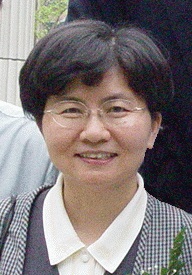
Today, we are pleased to be welcoming a new member of the Methods in Ecology and Evolution Associate Editor Board. Anne Chao joins us from the National Tsing Hua University in Taiwan and you can find out a little more about her below.

Anne Chao

Anne Chao

“I am 60% statistician, 30% mathematician and 10% ecologist. Mathematical and statistical problems in ecology and evolution fascinate me. My current research interests include statistical inferences of biodiversity measures (for example taxonomic, phylogenetic, and functional diversities along with related similarity/differentiation indices), and statistical analysis of ecological and environmental survey data (such as standardising biological samples and rarefaction/extrapolation techniques).”

Anne has been very engaged with the journal over the past few years as a regular reviewer and as an author. Her first article in Methods, Entropy and the species accumulation curve‘ (written with YT Wang and Lou Jost) was published in 2013 and is now freely available. Continue reading “New Associate Editor: Anne Chao”

New Associate Editors

Over the next few weeks we will be welcoming three new Associate Editors to Methods in Ecology and Evolution. Susan Johnston (University of Edinburgh, UK) became a member of the Associate Editor Board on Monday 5 October. She will be joined on 19 October by Natalie Cooper (Natural History Museum, London, UK) and finally by Luísa Carvalheiro (University of Brasília, Brazil) on 2 November. You can find out … Continue reading New Associate Editors

Statistics in Ecology and Environmental Monitoring: A Look Back at the SEEM 2015 Conference

Post provided by Dr Matt Schofield

Matt is an Associate Editor for Methods in Ecology and Evolution. He was the principle organiser of this year’s SEEM conference. His research interests include Bayesian inference and hierarchical modelling, computational methodology, ecological statistics and much more. Matt is based at the University of Otago.

A photo taken during a lunch break at the conference

The Statistics in Ecology and Environmental Monitoring (SEEM) conference was held in Queenstown, New Zealand on June 22-26, 2015. Queenstown is a resort town in the Southern Alps of New Zealand that looks out on Lake Wakatipu, surrounded by snow-capped mountains. The venue gave a chance to explore some of the natural beauty of New Zealand, with excursions to local ski fields, wineries and various hiking trails.

SEEM conferences have been organized by members of the Statistics group at the University of Otago since 1993. The first SEEM conference was held in Dunedin, New Zealand and conferences were then held regularly (every 3 years) until 2002. The last SEEM conference, in 2007, also served as the EURING (European Union for Bird Ringing) technical meeting. With nearly ten years passing since 2007, we had a smaller conference of around 50 attendees this year. There was an engaging atmosphere during the meeting and productive discussion followed each of the 40 talks. The SEEM 2015 meeting maintained the tradition of previous SEEM conferences with delegates from across a broad spectrum of statistical ecology coming together to discuss research. Continue reading “Statistics in Ecology and Environmental Monitoring: A Look Back at the SEEM 2015 Conference”

What is Beta Diversity?

Post provided by Dr Andrés Baselga

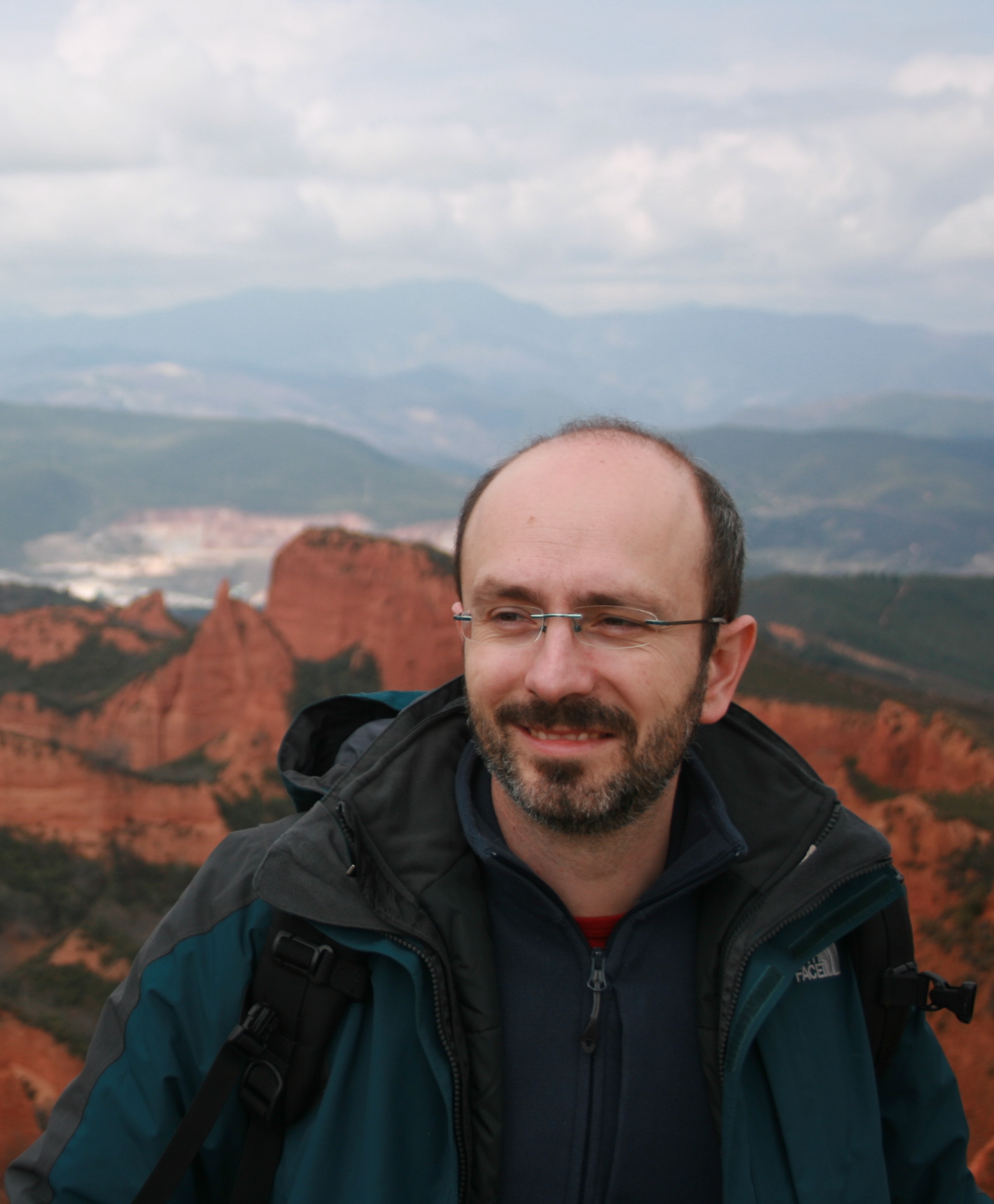
Dr Andrés Baselga

A key property of biodiversity is that it is not evenly distributed around the world. In other words, different sites are usually  home to different biological communities. Quantifying the differences among biological communities is a major step towards understanding how and why biodiversity is distributed in the way it is.

The term beta diversity was introduced by R.H. Whittaker in 1960. He defined it as “the extent of change in community composition, or degree of community differentiation, in relation to a complex-gradient of environment, or a pattern of environments”. In his original paper, Whittaker proposed several ways to quantify beta diversity. In its simplest form (which we will call strict sense or multiplicative beta diversity), beta diversity is defined as the ratio between gamma (regional) and alpha (local) diversities (Whittaker, 1960; Jost, 2007). Therefore, it is the effective number of distinct compositional units in the region (Tuomisto, 2010). Essentially, beta diversity quantifies the number of different communities in the region. So it’s clear that beta diversity does not only account for the relationship between local and regional diversity, but also informs about the degree of differentiation among biological communities. This is because alpha and gamma diversities are different if (and only if) the biological communities within the region are different.

It’s easy to demonstrate how beta diversity varies from the minimum to the maximum differentiation of local assemblages in a region. For simplicity, we will quantify biological diversity as species richness (number of species), but it’s important to remember that alpha, beta and gamma diversities can also be defined to account for richness and relative abundances (see Jost, 2007 for a detailed explanation). When local assemblages are all identical (minimum differentiation), alpha diversity equals gamma diversity, and beta diversity equals 1 (figure below).

beta1

Continue reading “What is Beta Diversity?”

Methods 5th Anniversary Symposium: A Gender Balanced Event?

Post provided by Alison Johnston

The Methods in Ecology and Evolution Symposium was an excellent conference with dynamic and interesting speakers representing a wide range of topics which have been published in the journal over the last five years. It was an unusual conference for a couple of reasons:

  1. It wasn’t all in one place. Talks were relayed between London and Calgary (during convenient times!), a couple of speakers presented via Skype from neither location and it was watched via livestream.com by hundreds of other participants
  2. There were equal numbers of male and female presenters. In my experience this gender balance of invited speakers is unusual and notable

Equal attendance
The gender balance of the speakers encouraged me to look around the room and write down a few figures for other gender dimensions of the London section of the symposium. As well as equal gender representation of speakers, there was also a good gender balance in the attendees – 42% of the attendees were female at the time I wrote down the numbers. These two figures suggest that it was a good conference for gender equality. However, I think these headline figures hide a number of more tricky aspects of gender equality.

Questionable numbers
There were a total of 23 questions asked of the 12 speakers presenting or livestreamed in London and only 3 of these were from women (2 out of 22 if I exclude my own question to reduce any investigator effects). These data points are not independent, as some people asked several questions, but I didn’t keep a record of individuals. Twitter revealed a similar reduced female presence compared to attendance: of those people tweeting to #Methods5th only 37% were women.

Proportion of different symposium participants that were female. Half the speakers and nearly half the attendees were female. But only just over 10% of questions were asked by women.
Proportion of different symposium participants that were female. Half the speakers and nearly half the attendees were female. But only around 10% of questions were asked by women.

Continue reading “Methods 5th Anniversary Symposium: A Gender Balanced Event?”

Bat Appreciation Day: The Latest Methodological Advances

Post provided by Kate Jones and the Biodiversity Modelling Research Group

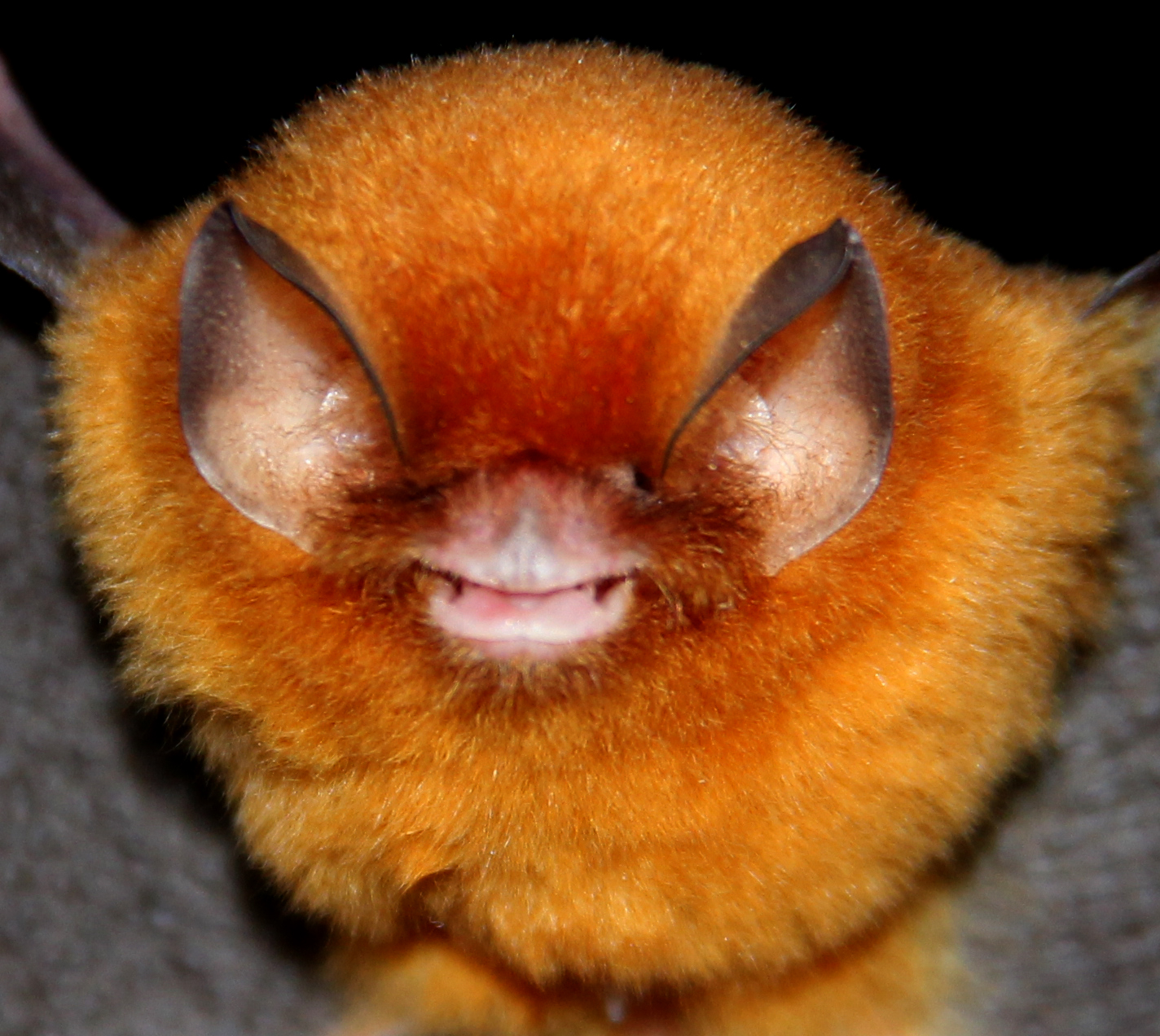
The Funnel-eared bat (Natalus stramineus)
The Funnel-eared bat (Natalus stramineus) – © Veronica Zamora-Gutierrez

Today (17 April) is Bat Appreciation Day! Yes I know, a whole day to appreciate bats. Although my biodiversity modelling research group at University College London would argue that 24 hours is just not enough time to appreciate these cool, yet misunderstood animals, we wanted to mark the day by giving MEE a round-up of the latest methodological advances in bat monitoring and what we hope to see in the next few years.

Bat Detectives and Machine Learning

oisin_pictureOisin Mac Aodha PostDoc – If you have ever tried to spot bats flying around at night you will know that it can be very difficult. However, bats leak information about themselves into the environment in the form of the sounds they make while navigating and feeding. These calls are often too high for us to hear, but we can use devices known as bat detectors to transform them into a form that we can record and listen to. Monitoring bat populations over wide areas or long periods can result in huge amounts of data which is difficult to analyse though. To address this problem, our group, along with Zooniverse, have setup a citizen science project called Bat Detective which asks members of the public help us find bat calls in audio recordings that have been collected from all over Europe (the infographic below gives a bit more information on this). We have had an amazing response to date and our detectives have already located several thousand bat calls. However, to scale up monitoring, we need more automated methods of detecting calls. Using the analysis provided by our Bat Detectives, we are currently working on building algorithms that can automatically tell us if a recording contains a bat call.

In this video we see a visual representation of an audio signal called a spectrogram that features several bat calls. On top you see the result of an automated method we have developed for detecting bat calls. The larger the value, the more certain the algorithm is that there is a bat call at that point in time. Continue reading “Bat Appreciation Day: The Latest Methodological Advances”

2014 Robert May Prize Winner: Laure Gallien

The Robert May Prize is awarded annually for the best paper published in Methods by a young author at the start of their research career. We’re delighted to announce that the 2014 winner is Laure Gallien, for her article ‘Identifying the signal of environmental filtering and competition in invasion patterns – a contest of approaches from community ecology.

Today, biological invasions are of major concern for maintaining biodiversity. However, understanding what drives the success of invasive species at the scale of the community remains a challenge. Two processes have been described as main drivers of the coexistence between invasive and native species: environmental filtering and competitive interactions. However, recent reviews have shown that competitive interactions are rarely detected, and thus their importance as drivers of invasion success placed under question. But can this be due to pure methodological issues? Using a simulation model of community assembly, Laure and co-authors (Marta Carboni and Tamara Münkemüller) show that the infrequent detection of competition can arise from three important methodological shortcomings, and provide guidelines for future studies of invasion drivers at the scale of the community.

Continue reading “2014 Robert May Prize Winner: Laure Gallien”