New Tool to Assess Effects of Powerful Man-Made Underwater Sounds

Below is a press release about the Methods paper ‘An interim framework for assessing the population consequences of disturbance‘ taken from the University of St Andrews:

A team of scientists from the University of St Andrews has developed a new desktop tool for assessing the impact of noise from human disturbance, such as offshore wind development on marine mammal populations.
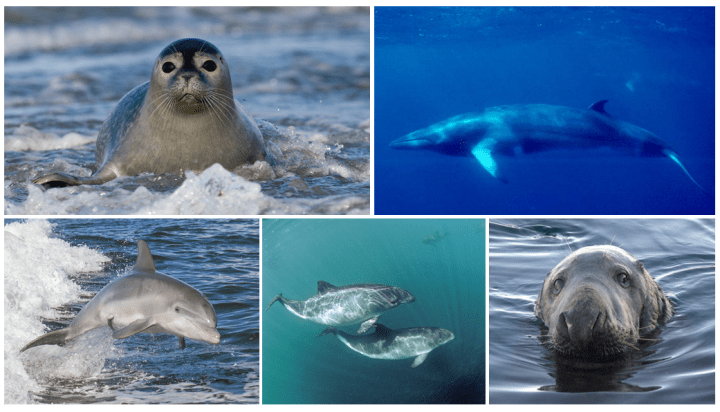
PCOD_PR_imageThe team, led by Prof. John Harwood, have developed the interim Population Consequences of Disturbance (PCoD) framework for assessing the consequences of human induced noise disturbance on animal populations. The study was published yesterday in the journal Methods in Ecology and Evolution.

Changes in natural patterns of animal behaviour and physiology resulting from animals being disturbed may alter the conservation status of a population if the activity affects the ability of individuals to survive, breed or grow. However, information to forecast population-level consequences of such changes is often lacking. The project team developed an interim framework to assess impacts when empirical information is sparse. Crucially, the model shows how daily effects of being disturbed, which are often straightforward to estimate, can be scaled to the duration of disturbance and to multiple sources of disturbance.

“We have developed a novel framework that can be used to broadly forecast the consequences of anthropogenic disturbance on animal populations, which in principal can be applied to a range of marine and terrestrial species and different types of disturbance.” – Dr Stephanie King

One important application for the interim PCoD framework is in the marine industry. Many industries use practices that involve the generation of underwater noise. These include shipping, oil and gas exploration, defence activities and port, harbour and renewable energy construction. Continue reading “New Tool to Assess Effects of Powerful Man-Made Underwater Sounds”

Advances in Phylogenetic Methods – The Applications Papers

Original Image ©PLOS One Phylogeny

Timed to coincide with Evolution 2015, we have released a new Virtual Issue on Phylogenetic Methods. All of the articles in this Virtual Issue will be freely available for a limited period.

On Friday, we gave some more information about the research articles in this Virtual Issue. In this post, we will be focusing on the Applications papers.

Applications papers introduce new tools for research, which provide practitioners with an important source of information and background on the tools they use. In this Virtual Issue we have highlighted the newest Applications papers that describe how phylogenetic methods are contributing to the fields of ecology and evolution. These include tools with aims as diverse as phylogenetic tree reconstruction and analysing phylogenetic diversity in communities. All Applications papers, not just those in the Virtual Issue, are free to access.

You can see a little more information on each of the Applications Papers below.

Continue reading “Advances in Phylogenetic Methods – The Applications Papers”

Virtual Issue: Advances in Phylogenetic Methods

Original Image ©PLOS One Phylogeny

Timed to coincide with Evolution 2015, we have released a new Virtual Issue on Phylogenetic Methods. All of the articles in this Virtual Issue will be freely available for a limited period.

An understanding of the tree of life contributes to many facets of biology. This Virtual Issue has assembled studies that showcase the breadth of the utility of phylogenetic trees, including phylogenetic beta diversity, trait evolution, diversification, biodiversity studies, phylogenetic signal, biogeography, ecosystem functioning, and host-pathogen dynamics.

The Research papers included are excellent examples of new ways that phylogenies can be applied to central questions in ecology, evolution and biodiversity, such as measuring niche conservatism, trait evolution and diversification rates. The issue also has articles on barcoding methods, which increasingly are used to understand phylogenetic and functional diversity.

You can see a little more information on each of the articles below.

Continue reading “Virtual Issue: Advances in Phylogenetic Methods”

The Methods in Ecology and Evolution 5th Anniversary Impact Factor

Thomson-Reuters have just released this year’s Impact Factors. The Methods in Ecology and Evolution Impact Factor is now an astounding 6.554, up from a truly dismal 5.322 last year. We now have enough years of Impact Factors to make it worthwhile drawing a graph.

Zoooom!
The Methods in Ecology and Evolution Impact Factor goes up and up (…except when it doesn’t).

This puts us ninth in Ecology, and we would be fifth in Evolutionary Biology if Thomson-Reuters thought we published stuff in Evolutionary Biology. We would also be top in Statistics and Substance Abuse if we could get ourselves into either of those categories. Continue reading “The Methods in Ecology and Evolution 5th Anniversary Impact Factor”

Issue 6.6

Issue 6.6 is now online!

The June issue of Methods is now online!

This month’s issue contains one Applications article and one Open Access article.

VirtualCom: A simple and readily usable tool that will help to resolve theoretical and methodological issues in community ecology. VirtualCom simulates the evolution of the pool of regionally occurring species, the process-based assembly of native communities and the invasion of novel species into native communities. One of the authors of this Application is the 2014 Robert May Young Investigator Prize Winner, Laure Gallien.

Calibrating animal-borne proximity loggers, this month’s only Open Access article, comes from Christian Rutz et al. The authors calibrated a recently developed digital proximity-logging system (‘Encounternet’) for deployment on a wild population of New Caledonian crows. They show that, using signal-strength information only, it is possible to assign crow encounters reliably to predefined distance classes, enabling powerful analyses of social dynamics. Their study demonstrates that well-calibrated proximity-logging systems can be used to chart social associations of free-ranging animals over a range of biologically meaningful distances.

Our June issue also features articles on Phylogenetic MethodsPhysiological Ecology, Biomonitoring and Conservation, Species Distribution Monitoring and Bioinformatics. Continue reading “Issue 6.6”

What fish ears can tell us about sex, surveillance and sustainability

Below is a press release about the Methods paper, ‘Quantifying physiological influences on otolith microchemistry, from the University of Southampton:

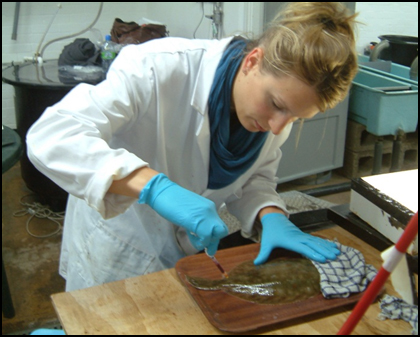
Dr Anna Sturrock blood sampling plaice ©Anna Sturrock

Scientists at the University of Southampton have found a way to pry into the private lives of fish – by looking in their ears!

By studying ear stones in fish, which act as tiny data recorders, scientists can now reveal migration patterns and even provide insights into their sex life.

Managing fish stocks in a sustainable way is a major challenge facing scientists, conservationists, policy makers and fishermen. To get the best results, accurate information about the movements of fish in the wild is needed but gathering this information is extremely difficult. Continue reading “What fish ears can tell us about sex, surveillance and sustainability”

International Day for Biological Diversity 2015

Happy International Day for Biological Diversity everyone!

As you may know, today (Friday 22 May) is the United Nations Day for Biodiversity and we are celebrating by highlighting some of the best papers that have been published on biodiversity in Methods in Ecology and Evolution. This is by no means an exhaustive list and you can find many more articles on similar topics on the Wiley Online Library (remember, if you are a member of the BES, you can access all Methods articles free of charge).

If you would like to learn more about the International Day for Biological Diversity, you may wish to visit the Convention on Biological Diversity website, follow them on Twitter or check out today’s hashtag: #IBD2015.

Without further ado though, here are a few of the best Methods papers on Biological Diversity:

Methods Cover - August 2012Biodiversity Soup

We begin with an Open Access article from one of our Associate Editors, Douglas Yu (et al.). This article was published in the August issue of 2012 and focuses on the metabarcoding of arthropods. The authors present protocols for the extraction of ecological, taxonomic and phylogenetic information from bulk samples of arthropods. They also demonstrate that metabarcoding allows for the precise estimation of pairwise community dissimilarity (beta diversity) and within-community phylogenetic diversity (alpha diversity), despite the inevitable loss of taxonomic information.

Continue reading “International Day for Biological Diversity 2015”

Issue 6.5

Issue 6.5 is now online!

The May issue of Methods is now online!

We have two freely available articles this month: one Application and one Open Access Article.

rSPACE: An open-source R package for implementing a spatially based power analysis for designing monitoring programs. This method incorporates information on species biology and habitat to parameterize a spatially explicit population simulation.

Tim Lucas et al. provide this month’s Open Access article: A generalised random encounter model for estimating animal density with remote sensor data. The authors have developed a Generalised Random Encounter Model (gREM) to estimate absolute animal density from count data from both camera traps and acoustic detectors. They show that gREM produces accurate estimates of absolute animal density for all combinations of sensor detection widths and animal signal widths. This model is applicable for count data obtained in both marine and terrestrial environments, visually or acoustically. It could be used for big cats, sharks, birds, echolocating bats, cetaceans and much more. Continue reading “Issue 6.5”

The Delphi Technique: Unleashing the Power of Structured Collaboration in Anonymity

Post provided by Nibedita Mukherjee (author of The Delphi technique in ecology and biological conservation)

The quirky nature of decision making

Two heads are often better than one in decision making. Several heads might have an even higher probability of being better than one. However, people in a group often have different modes of thinking or problem solving, alternate reference frames, subjective biases and varying levels or domains of expertise. How do we harness these messy thought processes and channel them for effective decision-making for biodiversity management?

© Henry Martin (The New Yorker Collection/The Cartoon Bank)

Continue reading “The Delphi Technique: Unleashing the Power of Structured Collaboration in Anonymity”

Methods in Ecology and Evolution 5th Anniversary Symposium: The Livestream

On Wednesday 22 April 2015, Methods in Ecology and Evolution will be celebrating its 5th Anniversary. Methods is the British Ecological Society’s youngest journal and over the past five years it has established itself as the leading publication for methodological advances for both the ecological and evolutionary academic communities.

For those of you who can’t make it to either the first half or the Symposium in London (Looking Forward to the Next Five Years) or the second half in Calgary (Next Generation Ecology and Evolution: Genomics Tools for the Study of Ecology, Evolution, and Biomonitoring) we will be livestreaming every presentation.

What You Need to Watch the Livestream

Our 5th Anniversary Symposium will be streamed though Livestream.com. This platform is optomised for all browsers as well as Android and iOS devices. So all that you need is a computer, tablet or smart phone and the ability to connect to the internet.

Continue reading “Methods in Ecology and Evolution 5th Anniversary Symposium: The Livestream”