Imperfect Pathogen Detection: What to Do When Sampling and Diagnostic Tests Produce Inaccurate Results

Post Provided by Graziella DiRenzo
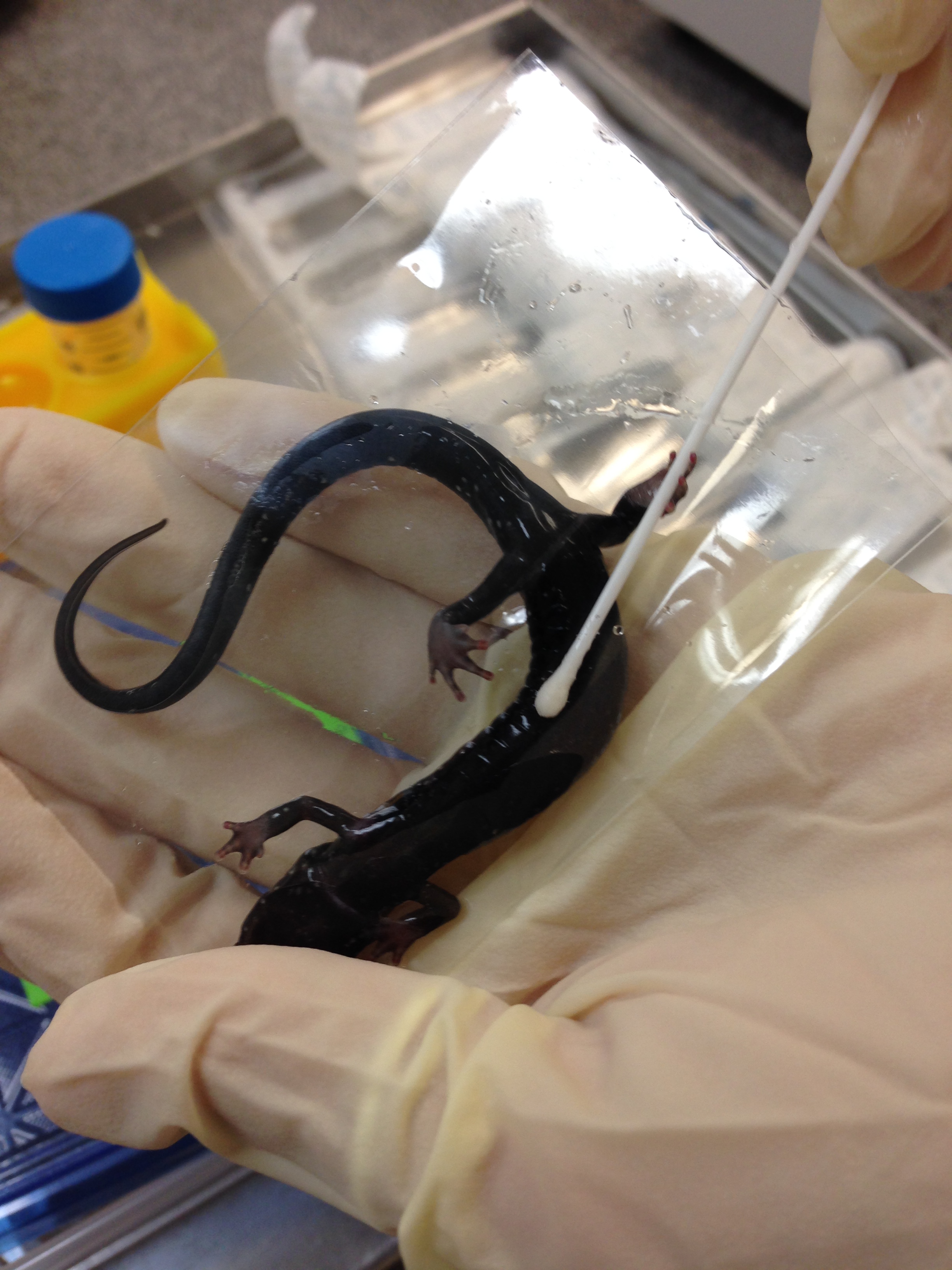
A salamander having its skin swabbed to test for Bsal infection.

Imagine you’re at the doctor’s office. You’re waiting to hear back on a critical test result. With recent emerging infectious diseases in human populations, you are worried you may be infected after a sampling trip to a remote field site. The doctor walks in. You sit nervously, sensing a slight tremble in your left leg. The doctor confidently declares, “Well, your tests results came back negative.” In that moment, you let out a sigh of relief, the kind you feel throughout your body. Then, thoughts start flooding your mind. You wonder– what are the rates of false negatives associated with the test? How sensitive is the diagnostic test to low levels of infection? The doctor didn’t sample all of your blood, so how can they be sure I’m not infected? Is the doctor’s conclusion right?

 Now, let’s say I’m the doctor and my patient is an amphibian. I don’t have an office where the amphibian can come in and listen to me explain the diagnosis or the progression of disease − BUT I do regularly test amphibians in the wild for a fatal fungal pathogen, known as Batrachochytrium dendrobatidis (commonly known as Bd). Diseases like Bd are among the leading causes of the approximately one-third of amphibian species that are threatened, near threatened, or vulnerable to extinction. To test for Bd, and the recently emerged sister taxon Batrachochytrium salamandrivorans (hereafter referred to as: Bsal), disease ecologists rely on non-invasive skin swabs. Continue reading “Imperfect Pathogen Detection: What to Do When Sampling and Diagnostic Tests Produce Inaccurate Results”

Reptile DNA Sexing: Easier Than You Ever Thought

Post provided by Lukáš Kratochvíl and Michail Rovatsos

The sand lizard (Lacerta agilis).

Many researchers, breeders and hobbyists need to know sex of their animals. Sometimes it’s easy – in sexually dimorphic species you only have to look. In other species or juveniles it’s often not so straightforward though. And it’s often impossible – but sometimes essential – in embryos or in tissue samples. Determining sex from DNA is the most practical option, or sometimes even the only possibility, in these cases.

Molecular sexing is routinely used in mammals and birds, but until now it has only been available for a handful of reptile species. Many people didn’t believe that this situation would improve considerably any time soon. But why? Continue reading “Reptile DNA Sexing: Easier Than You Ever Thought”

Building Universal PCR Primers for Aquatic Ecosystem Assessments

Post provided by Vasco Elbrecht Many things can negatively affect stream ecosystems – water abstraction, eutrophication and fine sediment influx are just a few. However, only intact freshwater ecosystems can sustainably deliver the ecosystem services – such as particle filtration, food biomass production and the supply of drinking water – that we rely on. Because of this, stream management and restoration has often been in the … Continue reading Building Universal PCR Primers for Aquatic Ecosystem Assessments

In Vivo Micro-CT Scanning: Studying Reptiles and Amphibians from the Inside Out

POST PROVIDED BY CHRIS BROECKHOVEN, ANTON DU PLESSIS, STEPHAN G. LE ROUX, P. LE FRAS N. MOUTON AND CANG HUI

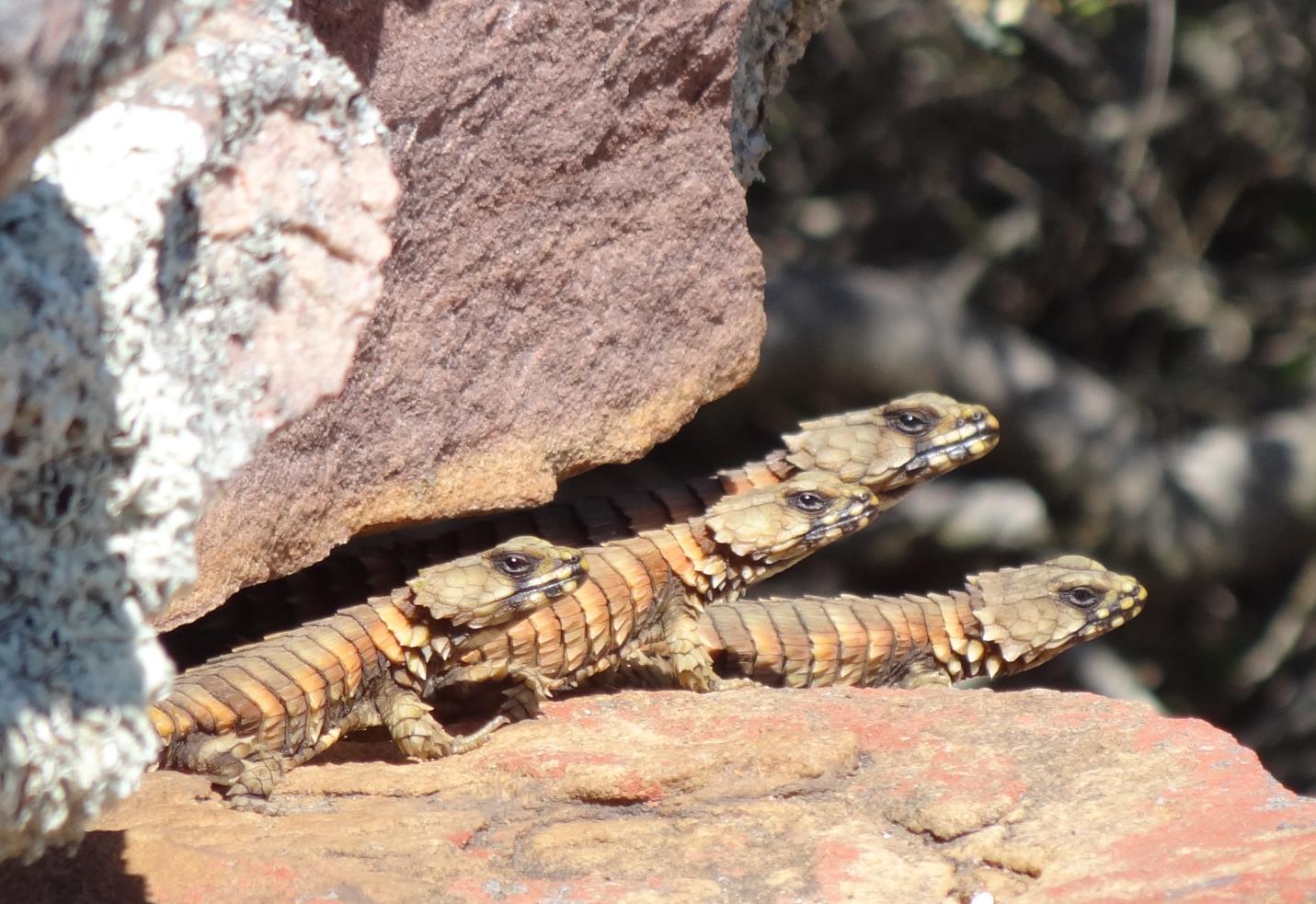
Lizards, such as these South African armadillo lizards, serve an important role as model organisms for various ecological and evolutionary studies. © Chris Broeckhoven

X-ray micro-computed tomography – or µCT – is a technique that uses x-rays to create high resolution cross-sections of samples. Virtual 3D models can be made from these cross-sections without destroying the original samples. Micro-CT has important applications in medical imaging and, in the biomedical field, in vivo µCT allows researchers to make virtual 3D models of the skeleton and organs of live small animals. Three-dimensional models like these could provide insight into diseases and guide the development of medicines and therapies.

In vivo µCT holds three major advantages over other methods:

  1. It allows for repeated measurements of small live animals at different times without having to sacrifice them.
  2. It eliminates variation among individuals.
  3. It can reduce the number of animals required to obtain statistically meaningful data.

A variety of commercially available µCT scanners that are optimised for scanning live animals are now available. The use of in vivo µCT in ecological and evolutionary studies, however, has greatly lagged behind its use in biomedical studies. Continue reading “In Vivo Micro-CT Scanning: Studying Reptiles and Amphibians from the Inside Out”