In the Spotlight: LGBTQ+ Ecologists and Evolutionary Biologists

Post provided by Vishwadeep Mane

For Pride Month, we are inviting LGBTQ+-identifying ecologists and evolutionary biologists to share their experiences of being LGBTQ+ in their field and present their thoughts on how the STEM can improve lives for LGBTQ+ individuals. First up we have Vishwadeep Mane, a first-year microbiology PhD student at the Indian Institute of Science (IISc), Bengaluru.
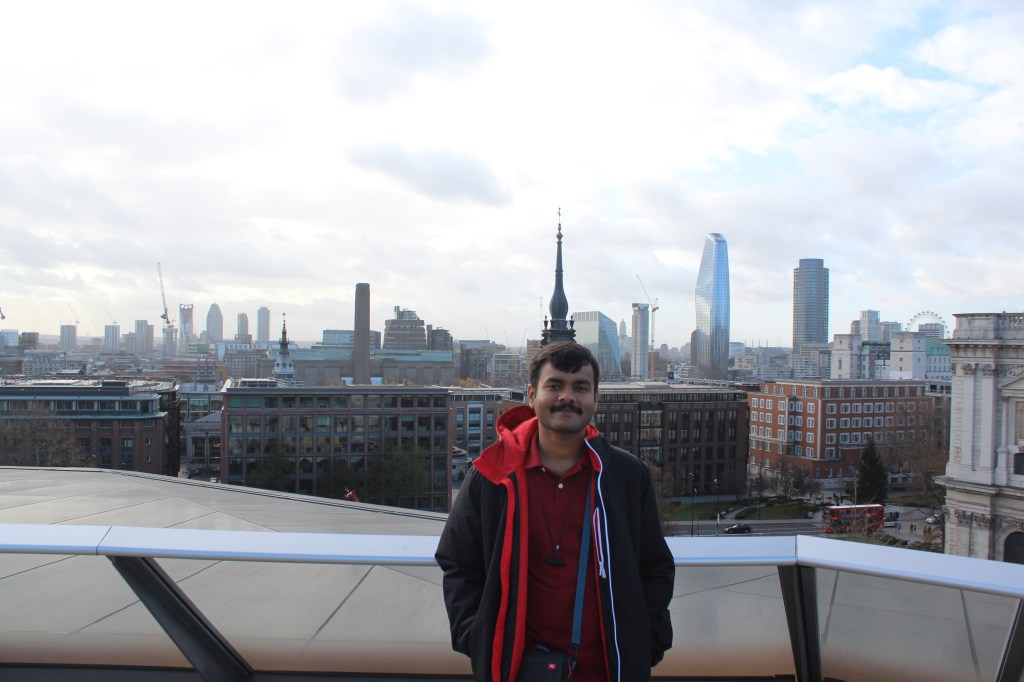
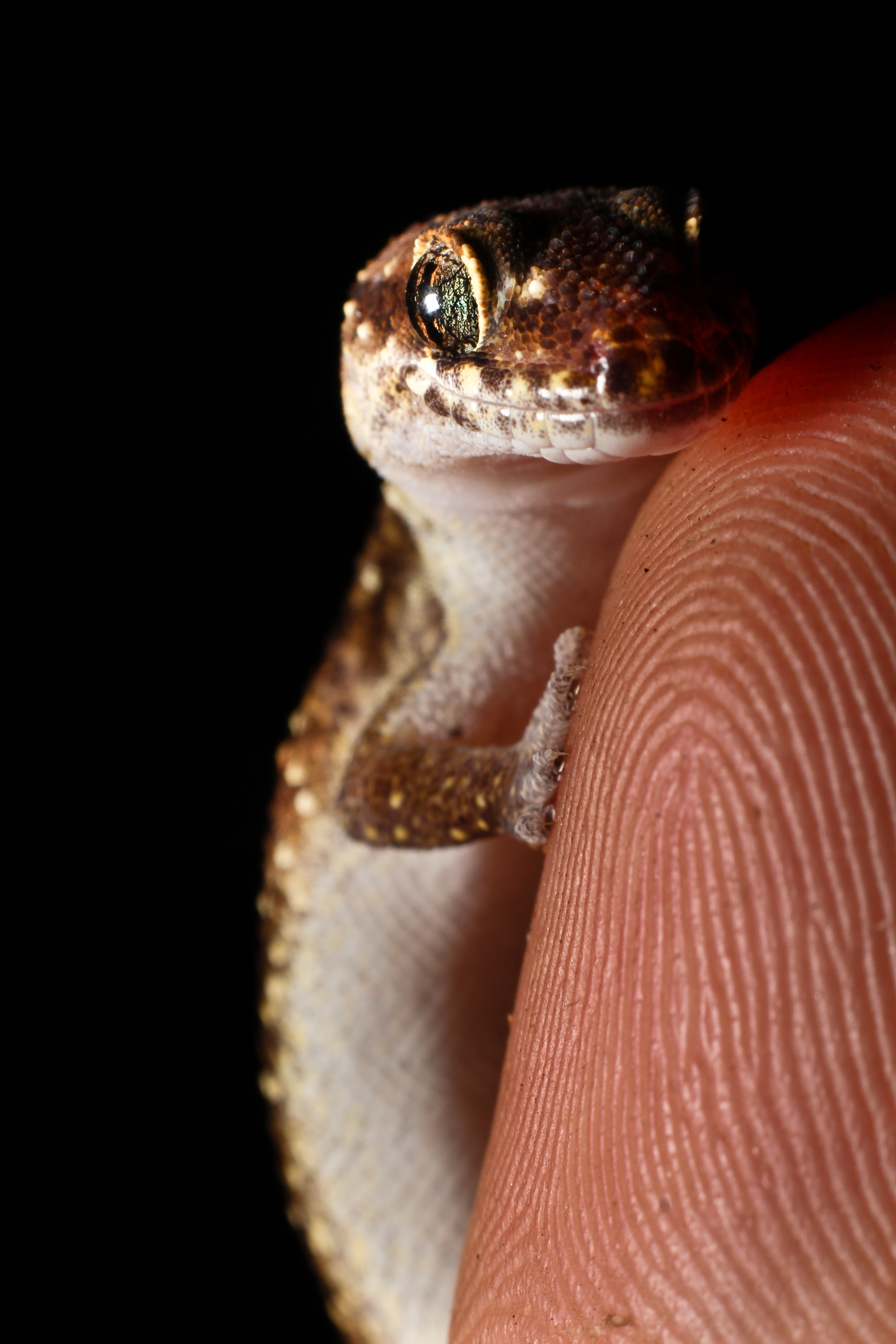
Vishwadeep Mane shares his experience of being LGBTQ+ in microbiology.

Hello Everyone! Namaste! The world today is on the brink of a whole new era, an era of rethinking better. The Pandemic portrayed the necessity of sustainable reforms that are imperative for adapting to newer situations. Nevertheless, it brought the whole world together, gave us a reason to fight, love and respect. This month marks the ‘rebellion’ that gave voices to many unheard stories and changed the course of life of many individuals. To a greater extent, it helped in making this world a place for all with equality and respect. This ‘rebellion’ gave the moment of ‘Pride’ to possibly everyone unique in their own way. Happy Pride Month to all of you!

Continue reading “In the Spotlight: LGBTQ+ Ecologists and Evolutionary Biologists”

Ideas Brought to Life Through BES Hackathon

Post provided by Tom August

Introduction to the Hackathon

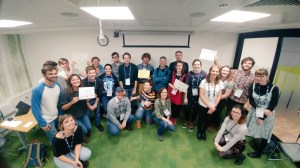
Hackathon participants with their awards.

Hackathons have become a regular feature in the data-science world. Get a group of people with a shared interest together, give them data, food, and a limited amount of time and see what they can produce (often with prizes to be won). Translated into the world of academia as research hackathons, these events are a fantastic way to foster collaboration, interdisciplinary working and skills sharing.

The Quantitative Ecology hackathon was an intense day of coding resulting in creative and innovative research ideas using social and ecological data. Teams worked through the day to develop their ideas with support from experts in R, open science and statistics. We ended up with five projects addressing questions from, ‘Who has the least access to nature?’ to ‘Where should citizen scientists go to collect new data?’.

Continue reading “Ideas Brought to Life Through BES Hackathon”

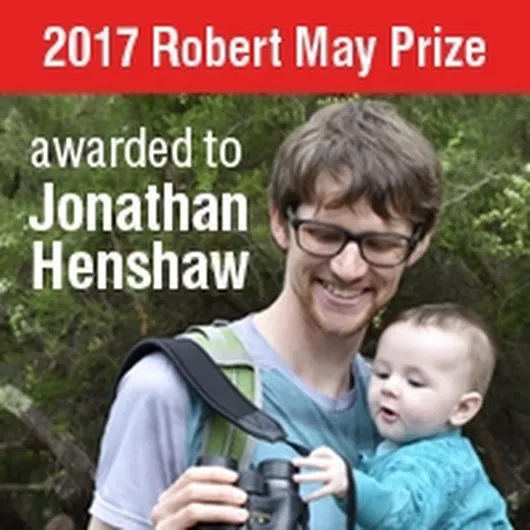
2017 Robert May Prize Winner: Jonathan Henshaw

The Robert May Prize is awarded annually for the best paper published in Methods in Ecology and Evolution by an Early Career Researcher. We’re delighted to announce that the 2017 winner is Jonathan Henshaw, for his article ‘A unified measure of linear and nonlinear selection on quantitative traits.

The standard approach to quantifying natural selection, developed by Lande and Arnold, does not allow for comparable metrics between linear (i.e. selection on the mean phenotype) and nonlinear (i.e. selection on all other aspects of the phenotypic distribution, including variance and the number of modes) selection gradients. Jonathan Henshaw’s winning submission provides the first integrated measure of the strength of selection that applies across qualitatively different selection regimes (e.g. directional, stabilizing or disruptive selection). Continue reading “2017 Robert May Prize Winner: Jonathan Henshaw”

Ecology, do we have a problem?

Last week many of us were at the Ecology Across Borders meeting in Ghent, catching up with friends, making new friends, and listening to talks about the latest ecological science. Many of us, of course, were also following social media. On the statistics social media scene a lot of attention was being paid to a post on Medium by Kristian Lum: Statistics, we have a … Continue reading Ecology, do we have a problem?

Making YOUR Code Reproducible: Tips and Tricks

When we were putting together the British Ecological Society’s Guide to Reproducible Code we asked the community to send us their advice on how to make code reproducible. We got a lot of excellent responses and we tried to fit as many as we could into the Guide. Unfortunately, we ran out of space and there were a few that we couldn’t include.

Luckily, we have a blog where we can post all of those tips and tricks so that you don’t miss out. A massive thanks to everyone who contributed their tips and tricks for making code reproducible – we really appreciate it. Without further ado, here’s the advice that we were sent about making code reproducible that we couldn’t squeeze into the Guide:

Organising Code

©Leejiah Dorward

“Don’t overwrite data files. If data files change, create a new file. At the top of an analysis file define paths to all data files (even if they are not read in until later in the script).” – Tim Lucas, University of Oxford

“Keep one copy of all code files, and keep this copy under revision management.” – April Wright, Iowa State University

“Learn how to write simple functions – they save your ctrl c & v keys from getting worn out.” – Bob O’Hara, NTNU

For complex figures, it can make sense to pre-compute the items to be plotted as its own intermediate output data structure. The code to do the calculation then only needs to be adjusted if an analysis changes, while the things to be plotted can be reused any number of times while you tweak how the figure looks.” – Hao Ye, UC San Diego Continue reading “Making YOUR Code Reproducible: Tips and Tricks”

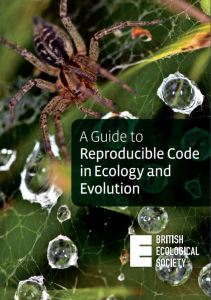
A Guide to Reproducible Code in Ecology and Evolution

Post provided by Natalie Cooper and Pen-Yuan Hsing

Cover image by David J. Bird

The way we do science is changing — data are getting bigger, analyses are getting more complex, and governments, funding agencies and the scientific method itself demand more transparency and accountability in research. One way to deal with these changes is to make our research more reproducible, especially our code.

Although most of us now write code to perform our analyses, it’s often not very reproducible. We’ve all come back to a piece of work we haven’t looked at for a while and had no idea what our code was doing or which of the many “final_analysis” scripts truly was the final analysis! Unfortunately, the number of tools for reproducibility and all the jargon can leave new users feeling overwhelmed, with no idea how to start making their code more reproducible. So, we’ve put together the Guide to Reproducible Code in Ecology and Evolution to help. Continue reading “A Guide to Reproducible Code in Ecology and Evolution”

2016 Robert May Prize Winner: Gabriella Leighton

The Robert May Prize is awarded annually for the best paper published in Methods in Ecology and Evolution by an Early Career Researcher. We’re delighted to announce that the 2016 winner is Gabriella Leighton, for her article ‘Just Google it: assessing the use of Google Images to describe geographical variation in visible traits of organisms.

‘Just Google it’ marks an important step in converting ecology to an armchair science. Many species (e.g. owls, hawks, bears) are difficult, time-consuming, expensive and even dangerous to observe. It would be a lot easier if we didn’t have to spend time, energy and risk lives having to observe organisms in the field! Continue reading “2016 Robert May Prize Winner: Gabriella Leighton”

2015 Robert May Prize Winner: Kim Calders

The Robert May Prize is awarded annually for the best paper published in Methods in Ecology and Evolution by an Early Career Researcher. We’re delighted to announce that the 2015 winner is Kim Calders, for his article ‘Nondestructive estimates of above-ground biomass using terrestrial laser scanning.

Kim led the work on this article and had an international team of co-authors. They have developed a way to harness laser technology for use in measurements of vegetation structure of forests. The study is an important development in the monitoring of carbon stocks for worldwide climate policy-making. Continue reading “2015 Robert May Prize Winner: Kim Calders”

2014 Robert May Prize Winner: Laure Gallien

The Robert May Prize is awarded annually for the best paper published in Methods by a young author at the start of their research career. We’re delighted to announce that the 2014 winner is Laure Gallien, for her article ‘Identifying the signal of environmental filtering and competition in invasion patterns – a contest of approaches from community ecology.

Today, biological invasions are of major concern for maintaining biodiversity. However, understanding what drives the success of invasive species at the scale of the community remains a challenge. Two processes have been described as main drivers of the coexistence between invasive and native species: environmental filtering and competitive interactions. However, recent reviews have shown that competitive interactions are rarely detected, and thus their importance as drivers of invasion success placed under question. But can this be due to pure methodological issues? Using a simulation model of community assembly, Laure and co-authors (Marta Carboni and Tamara Münkemüller) show that the infrequent detection of competition can arise from three important methodological shortcomings, and provide guidelines for future studies of invasion drivers at the scale of the community.

Continue reading “2014 Robert May Prize Winner: Laure Gallien”

Open Access Week 2014

Once more Open Access Week has rolled around. At MEE we operate a hybrid model: although we are a subscription journal, authors can choose to make their papers open access (for a price – sorry). Over the past year, 21 papers have been published as open access (listed here). They span the range of topics we cover, including citizen science, using cell phones, and asking … Continue reading Open Access Week 2014