Heat waves reconstructed!

Post provided by Loke von Schmalensee For many decades, humans have tried to understand how to process continuous signals for our convenience. As a result, numerous innovative methods have been developed for recording, compressing, restoring, and transforming (and more) continuous signals. Consider, for instance, the relationship between signal processing and music: it comes into play directly through the recording of sound waves, and indirectly via … Continue reading Heat waves reconstructed!

Hidden Markov models have pitfalls…

…but also opportunities! Hidden Markov models (HMMs) and their extensions are attractive methods for analysing ecological data. In recent years, a variety of extensions of the basic model have been proposed, yielding great opportunities for ecological inference. Yet, as these models become more complex and challenging to understand, it is important to consider what pitfalls these methods have and what opportunities there are for future … Continue reading Hidden Markov models have pitfalls…

A framework for unifying disturbance ecology

Post provided by: Brian Buma

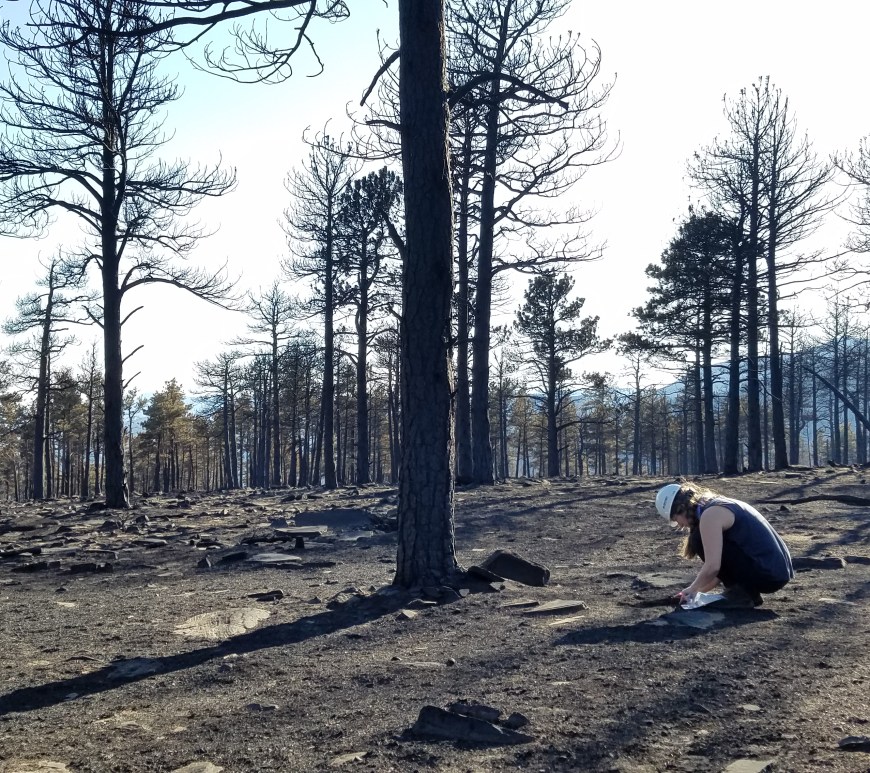
In this post, Brian Buma discusses a unifying framework for studying disturbance ecology, from largescale wildfires to bacterial colonies, as proposed in the new paper “Disturbance ecology and the problem of n = 1: A proposed framework for unifying disturbance ecology studies to address theory across multiple ecological systems” recently published in Methods in Ecology and Evolution.

Continue reading “A framework for unifying disturbance ecology”

Creating a research and conservation tool to support pollinator survival

Post provided by Matthias Becher, Grace Twiston-Davies & Juliet Osborne

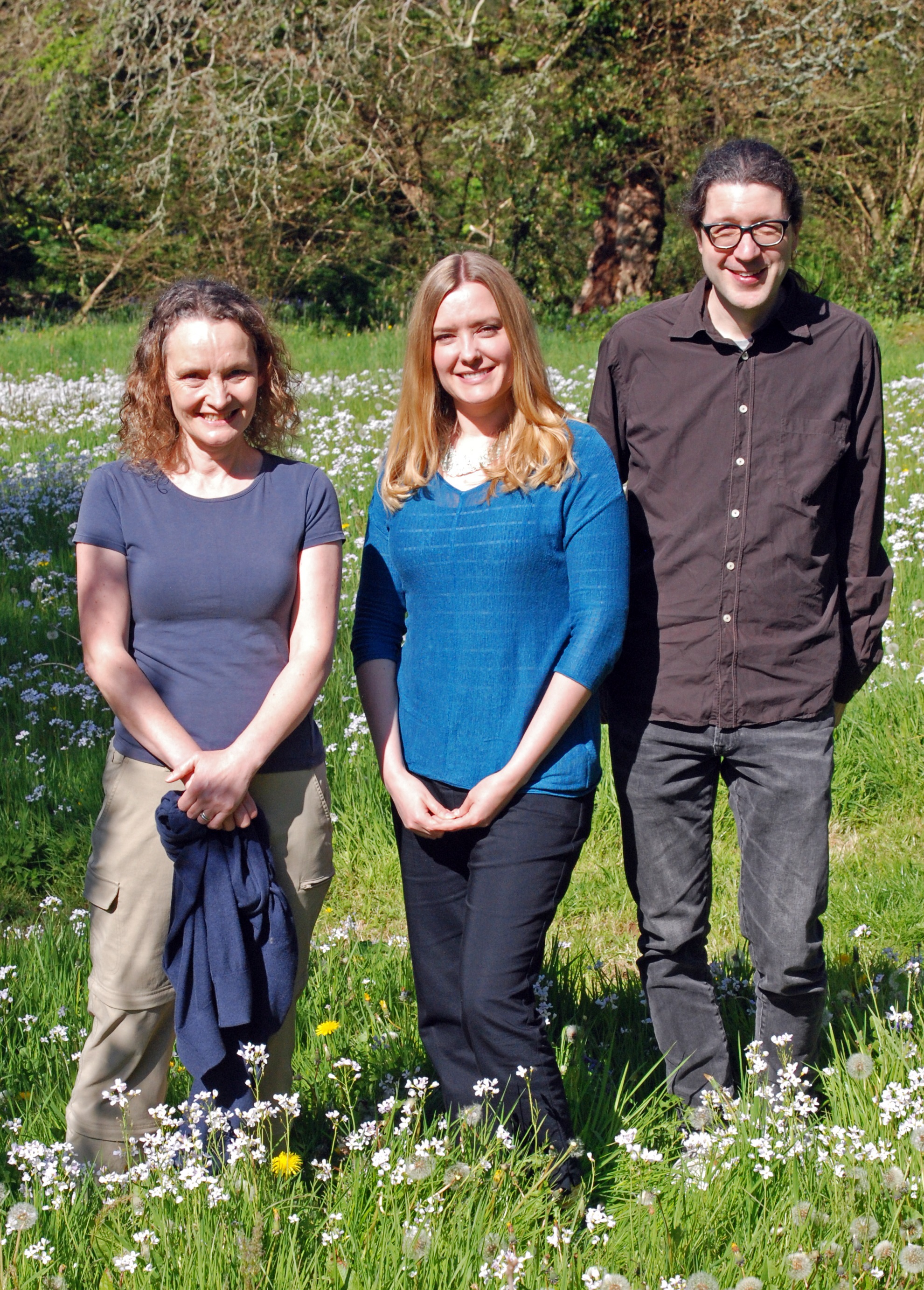
The BEEHAVE Team Osborne Becher and Twiston-Davies. Credit: Pete Kennedy.

Everyone, well, almost everyone, loves honey – that sweet, liquid gold laboriously collected by busy bees from countless little flowers. But of course, much more important than honey or wax or even cosmetic royal jelly products are the pollination services that bees provide to wildflowers and crops. In this blog post, authors Matthias Becher, Grace Twiston-Davies & Juliet Osborne discuss their latest paper published in Methods in Ecology & Evolution, “BEE-STEWARD: a research and decision support software for effective land management to promote bumblebee populations”.

Continue reading “Creating a research and conservation tool to support pollinator survival”

International Day of Forests: Generation Restoration

Post provided by Chloe Robinson

Credit: Food and Agriculture Organization of the United Nations.

Forests, across all ecozones and in all shapes and sizes, are essential for life on earth. Around 80% of the world’s land-based biodiversity call forests home and over 1 billion people, including more than 2,000 Indigenous cultures, rely on forests for food, shelter, energy and income. As with many other ecosystems, forests worldwide are under increasing threat from human activities, with the current rate of deforestation estimated at 13 million hectares per year.

Continue reading “International Day of Forests: Generation Restoration”

10th Anniversary Volume 11: Updates on the ClimEx Handbook

Post provided by Aud H. Halbritter

To celebrate the 10th Anniversary of the launch of Methods in Ecology and Evolution, we are highlighting an article from each volume to feature in the Methods.blog. For Volume 11, we have selected ‘The handbook for standardized field and laboratory measurements in terrestrial climate change experiments and observational studies (ClimEx)’ by Halbritter et al. (2019).

Continue reading “10th Anniversary Volume 11: Updates on the ClimEx Handbook”

10th Anniversary Volume 3: paleotree: A Retrospective

Post provided by David bapst

To celebrate the 10th Anniversary of the launch of Methods in Ecology and Evolution, we are highlighting an article from each volume to feature on the Methods.blog. For Volume 3, we have selected ‘paleotree: an R package for paleontological and phylogenetic analyses of evolution‘ by David W. Bapst (2012). In this post, David discusses the background to the Application he wrote as a graduate student, and how the field has changed since.

I was a fourth year graduate student when I first had the idea to make an R package. Quite a few people thought it was a bit silly, or a bit of a time-waste, but I thought it was the right thing to do at the time, and I think it has proven to be the right decision in hindsight.

Continue reading “10th Anniversary Volume 3: paleotree: A Retrospective”

Creating a package to infer species coexistence

Post provided by Ignasi Bartomeus, David García-Callejas, and Oscar Godoy

Ignasi Bartomeus and colleagues share the story behind their recent Methods article ‘cxr: A toolbox for modelling species coexistence in R’.

This post recalls the journey on how we ended up developing cxr (acronym for CoeXistence relationships in R), an R package for quantifying interactions among species and their coexistence relationships. In other words, it provides tools for telling apart the situations in which different species can persist together in a community from the cases in which one species completely overcomes another.

Continue reading “Creating a package to infer species coexistence”

Stop, think, and beware of default options

Post provided by Paula Pappalardo (with contributions from Elizabeth Hamman, Jim Bence, Bruce Hungate & Craig Osenberg)

Esta publicación también está disponible en español.

You spent months carefully collecting data from articles addressing your favorite scientific question, you have dozens of articles neatly arranged on a spreadsheet, you found software or code to analyze the data, and then daydream about how your publication will be the most cited in your field while making cool plots. If that sounds familiar, you have probably done a meta-analysis. Meta-analysis uses statistical models to combine data from different publications to answer a specific question.

What you may not have realized when going down the meta-analysis rabbit hole, is that small, seemingly inconsequential, choices can greatly affect your results. If you want to know about one of them lurking behind the scenes… read on!

Continue reading “Stop, think, and beware of default options”

Para, piensa, y ten cuidado con las configuraciones por defecto

Post escrito por Paula Pappalardo (con aportes de Elizabeth Hamman, Jim Bence, Bruce Hungate & Craig Osenberg)

This post is also available in English.

Pasaste meses laboriosamente colectando datos de artículos científicos acerca de tu pregunta favorita, tienes decenas de artículos perfectamente organizados en una base de datos, ya encontraste el programa o código para analizar los datos, y entonces imaginas como tu publicación va a ser la más citada en tu campo de investigación mientras haces unos gráficos lindísimos. Si esto te suena familiar, seguramente has hecho un meta-análisis. Un meta-análisis usa modelos estadísticos para combinar datos de distintas publicaciones para responder a una pregunta específica.

Lo que quizás no te diste cuenta mientras navegabas los pasos del meta-análisis, es que pequeñas decisiones (a veces pareciendo de muy poca importancia) pueden tener grandes efectos en los resultados. Si quieres saber más acerca de una de estas decisiones en particular… ¡sigue leyendo!

Continue reading “Para, piensa, y ten cuidado con las configuraciones por defecto”