Our August Issue is out now!

Our August issue is now online now! This issue contains 27 articles about the latest methods in ecology and evolution, including a special feature on active remote sensing, seed morphology, drones and much more! Read to find out about this month’s featured articles and the article behind our cover. Special feature Our Joint Special Feature with Journal of Animal Ecology aims to showcase contemporary methods for … Continue reading Our August Issue is out now!

Tracking marine tetrapod carcasses, passive drifters and citizen science

In this new video Maurício Tavares and coauthors showcase the findings of their latest article. They designed and tested a system for tracking carcasses of marine tetrapods on the Southern Subtropical Shelf of the southwestern Atlantic Ocean. Their research contributes to findings on marine tetrapod drift patterns and can be replicated in other coastal regions of the world for tracking a wide range of marine … Continue reading Tracking marine tetrapod carcasses, passive drifters and citizen science

Active remote sensing- Behind the research

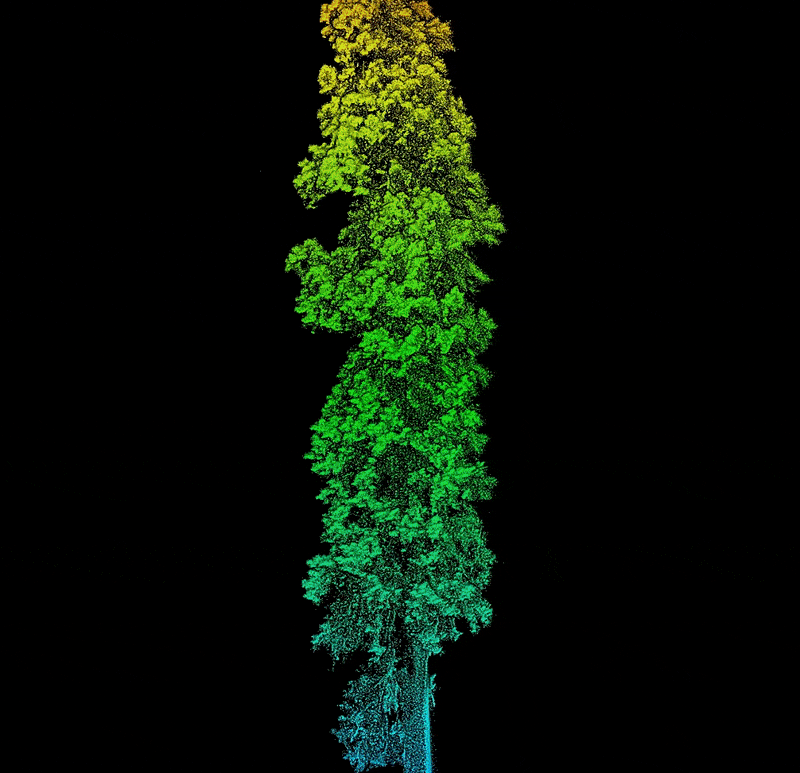
Active sources of remote sensing data, in particular Light Detection and Ranging (LiDAR) and Radio Detection and Ranging (RADAR), majorly differ from passive sources by offering data of three-dimensional (3D) character, which help representing the earth terrain, surface and the related structural attributes. This cross-journal special feature hosts a series of innovative publications from multiple disciplines, but with a common focus on the state-of-the-art science … Continue reading Active remote sensing- Behind the research

Our July Issue is out now!

Our July issue is now online now! This issue contains 19 articles about the latest methods in ecology and evolution, including a special feature on active remote sensing, seed morphology, drones and much more! Read to find out about this month’s featured articles and the article behind our cover Special feature Active sources of remote sensing data, in particular Light Detection and Ranging (LiDAR) and Radio … Continue reading Our July Issue is out now!

AnimalTA: an easy-to-use program for tracking and analysing animal movement

Post provided by Violette Chiara and Sin-Yeon Kim There are many tools available to track and analyse animal movement. In this post, Violette Chiara and Sin-Yeon Kim share insights on how AnimalTA fills the niche of an accessible, user-friendly software for video analysis. Why AnimalTA? AnimalTA is a new tool to track and analyse animal movement in digital videos. When we began to develop AnimalTA, … Continue reading AnimalTA: an easy-to-use program for tracking and analysing animal movement

Seeds ‘exposed’! A method to automatically reveal seed morphological traits from images.

Post provided by Roberta L. C. Dayrell The knowledge of seed morphology is an essential resource for practitioners and scientists across diverse disciplines such as botany, agriculture, restoration, conservation, and archaeology. Morphological attributes can inform studies on topics such as seed dispersal, predation, longevity, and germination. This knowledge also has practical applications, including seed identification and assessments of quality and ripeness. But extracting meaningful information … Continue reading Seeds ‘exposed’! A method to automatically reveal seed morphological traits from images.

Heat waves reconstructed!

Post provided by Loke von Schmalensee For many decades, humans have tried to understand how to process continuous signals for our convenience. As a result, numerous innovative methods have been developed for recording, compressing, restoring, and transforming (and more) continuous signals. Consider, for instance, the relationship between signal processing and music: it comes into play directly through the recording of sound waves, and indirectly via … Continue reading Heat waves reconstructed!

Our June Issue is out now!

Our June issue is now online now! This issue contains 17 articles about the latest methods in ecology and evolution, including citizen science data, drones and multi authored papers and much more! Read to find out about this month’s featured articles and the article behind our cover. Featured Articles Researchers in ecology and evolutionary biology are increasingly dependent on computational code to conduct research. Hence, the … Continue reading Our June Issue is out now!

Welcoming our new Methods in Ecology and Evolution Associate Editors

Methods in Ecology and Evolution is delighted to announce 13 new Associate Editors who have joined the Editorial Board following our latest open call across all seven BES journals Dr Timo AdamUniversity of Copenhagen, Denmark My research focuses on the development, implementation, and application of innovative statistical methods for stochastic processes, particularly hidden Markov models and their flexible extensions. I am particularly interested in statistical … Continue reading Welcoming our new Methods in Ecology and Evolution Associate Editors

Using citizen science photos to perform phenological studies

Post provided by Yves P. Klinger (he/him)

Photos collected by citizen scientists are a rich source of information that is still relatively unexplored. Phenology, the study of recurring biological events, could make use of photos taken by citizen scientists at different times, but accessing and preparing the plethora of publicly available data is challenging. In this post, Yves P. Klinger describes the motivation behind developing a workflow for using citizen science photos for phenological research, as featured in the paper “iPhenology – using open-access citizen science photos to track phenology at continental scale”.

Continue reading “Using citizen science photos to perform phenological studies”