Unraveling the identity of fish sounds to support marine conservation

Post provided by Xavier Mouy Fish sounds and marine conservation Many fish species produce sounds to attract mates, scare away predators or defend their territory. These sounds are very useful to us, scientists! Just by listening to the ocean, we can detect the presence of different fish species, infer their behaviour and potentially find out how many fish there are in an environment. This has … Continue reading Unraveling the identity of fish sounds to support marine conservation

Our May issue is out now!

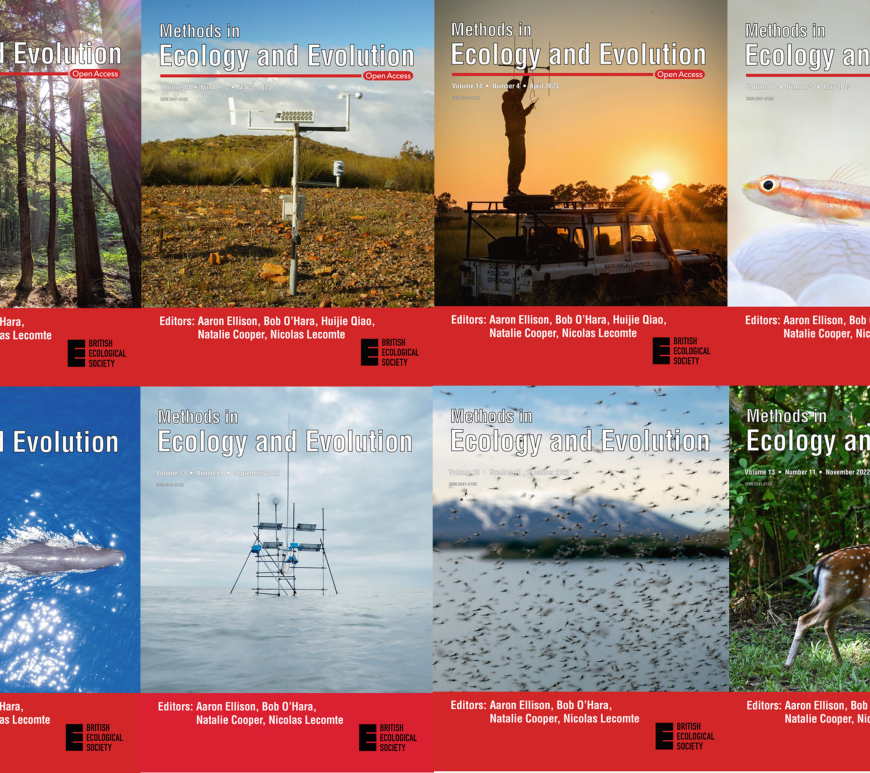
Our May issue is now online now! This issue contains 18 articles about the latest methods in ecology and evolution, including species distribution models, temperature measurements and much more! Read to find out about this month’s featured articles and the article behind our cover. Featured articles The insurance effect of biodiversity—that diversity stabilises aggregate ecosystem properties—is mechanistically underlain by inter- and intraspecific trait variation in organismal … Continue reading Our May issue is out now!

wingen: mapping genetic diversity using moving windows

Post provided by Anusha Bishop (she/her)

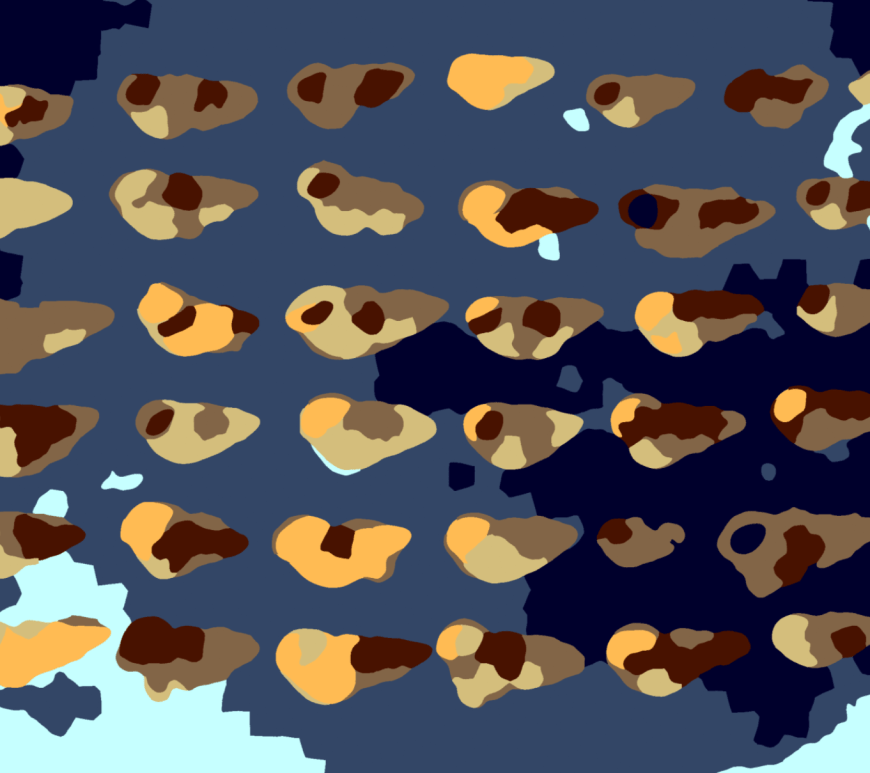
Global biodiversity loss and increased availability of genomic-scale data has motivated a growing interest in conserving genetic diversity. To do so, we need tools that help us understand how genetic diversity is distributed. In pursuit of this, we have developed a new method for creating maps of genetic diversity using spatial moving windows, which we have implemented in the R package wingen.

Continue reading “wingen: mapping genetic diversity using moving windows”

Robert May Prize 2022: Winner announced for early career researcher award 

We’re excited to announce Tanya Strydom as the winner of the 2022 Robert May Prize , celebrating the best article in the journal by an author at the start of their career.  Winner: Tanya Strydom Research: Food web reconstruction through phylogenetic transfer of low-rank network representation About the Research Despite their importance in many ecological processes, collecting data and information on ecological interactions is an … Continue reading Robert May Prize 2022: Winner announced for early career researcher award 
Wind-robust sound event detection and denoising for bioacoustics

Post provided by Julius Juodakis Common solutions to wind noise don’t work with bioacoustics Bioacoustics has great potential to help us understand animal communities. We already have strikingly futuristic hardware for capturing natural sounds, such as the autonomous Audiomoth or the 5-gram μMoth recorders, and projects making use of it, such as the live-observation WhaleMap, SAFE Project in Borneo, or the Australian Acoustic Observatory, the … Continue reading Wind-robust sound event detection and denoising for bioacoustics

Searching for my (paleo)buddies

Post provided by Bruno do Rosario Petrucci Inferring rates of diversification from phylogenies and fossils has been a focus of evolutionary biology for generations, since a quantitative understanding of the dynamics of speciation and extinction is necessary for a complete picture of the history of life. Computational and statistical methods with that goal have recently seen an explosion in complexity and power. While exciting, this … Continue reading Searching for my (paleo)buddies

Increasing the accessibility of genetic sequencing with ISSRseq

Post provided by Sandra J. Simon Working with a Genetic Model During my PhD at West Virginia University (WVU), I worked with the genetic models in the family Salicaceae, such as Populus trichocarpa,to understand the relationship between plant genetics and biotic interactions. Let’s take a moment to focus on what makes P. trichocarpa a good species to use as a genetic model by comparing it … Continue reading Increasing the accessibility of genetic sequencing with ISSRseq

Our April issue is out now!

Our April issue is now online now! This issue contains 11 articles about the latest methods in ecology and evolution including machine learning, mitochondrial gene extraction, robot birds and much more! Featured Articles The popularity of machine learning (ML), deep learning (DL) and artificial intelligence (AI) has risen sharply in recent years. This article provides a comprehensive overview of the field of ML and DL, summarizing … Continue reading Our April issue is out now!

ENphylo: A new method to model the distribution of extremely rare species

Post provided by Pasquale Raia (he/him), Alessandro Mondanaro (he/him), Mirko Di Febbraro (he/him), Marina Melchionna (she/her) and Silvia Castiglione (she/her) Back in 2001 Sally Duncan, a quite prolific science writer, published on Science Findings, one of the Oregon-based Pacific Northwest Research Station’s public resources, an exquisitely assembled report focusing on a fundamental issue in ecology, the definition, perception and meaning of ecological rarity. To ecologists … Continue reading ENphylo: A new method to model the distribution of extremely rare species

FOSSILS: free, fast, and open-source biomechanical modelling

Post provided by Narimane Chatar (She/Her) Romain Boman (He/Him), Valentin Fallon Gaudichon (He/Him), Jamie A. MacLaren (He/Him), Valentin Fischer (He/Him).

Understanding the way that bones and other biological materials deal with the stresses and strains of everyday life is fundamental for interpreting the behaviour of modern and extinct organisms. Researchers frequently do this by using a digital simulation which can predict the behaviour of materials by breaking complex objects down into much smaller elements – this is known as finite element modelling. In this blog post, Narimane Chatar and her co-authors discuss their new protocol for performing finite element modelling aimed at life-sciences and biomechanics which is fast, open-source, and free for all to use.

Continue reading “FOSSILS: free, fast, and open-source biomechanical modelling”