The Ecology of Dance

Post provided by Chloe Robinson

Dance has been part of human culture for millennia. Some scholars refer to dance as a specific language, dependent on the space and time in which it exists and dependent on the power structures that rule in that time. April 29th marks International Dance Day; a day initiated in 1982 by the International Dance Committee of the UNESCO International Theatre Institute to commemorate the birthday of Jean-Georges Noverre, a distinguished French choreographer.
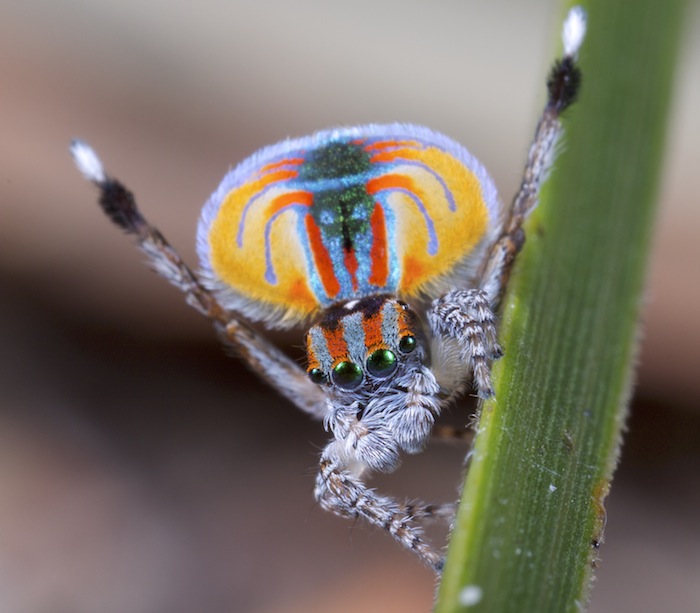
Male Maratus volans peacock spider. Picture credit: Jürgen Otto.

For humans, dance is considered a sacred ritual, sometimes a form of communication and sometimes an important social and courtship activity. A recent study has even linked the innate ability to dance with greater survival rates in prehistoric times. However, for certain species of wild animal, dance-like behaviours are crucial for communication and mating. In this blog, I am going to highlight the evolutionary foundations of dance in wild animals and explore some of the ways that dance is used in ecology.

Continue reading “The Ecology of Dance”

2019 Robert May Prize Winner: Corneile Minnaar

The Robert May Prize is awarded annually for the best paper published in Methods in Ecology and Evolution by an Early Career Researcher. We’re delighted to announce that the 2019 winner is Corneile Minnaar, for his article ‘Using quantum dots as pollen labels to track the fates of individual pollen grains‘.

A central component of an organism’s fitness is its ability to successfully reproduce. This includes finding a potential mate and successful mating. For plants, movement of pollen from an anther to a conspecific stigma is essential for successful reproduction, but directly tracking movement of individual pollen grains heretofore has been impossible (with the exception of those species of orchids and milkweeds whose pollen comes in large packages (pollinia)). Knowing how pollen move around, whether or not they successfully fertilize ovules, is also central to understanding the evolution and ecology of flowering plants (angiosperms) and floral traits.

Continue reading “2019 Robert May Prize Winner: Corneile Minnaar”

Earth Day 2020: Monitoring Biodiversity for Climate Action

Post provided by Chloe Robinson

The demands of a growing human population are putting increasing pressure on the Earth’s natural systems and services. Dubbed the ‘Anthropocene’, we are currently living in a period where human actions are directly altering many earth processes, including atmospheric, geologic, hydrologic and biospheric processes. Climatic change and the resulting consequences, including rising temperatures, changing precipitation (i.e. rainfall, snow etc) and increase in frequency of storm events, represent the biggest challenge to our future and the life-support ecosystems that make our world habitable.

Artist’s interpretation of global climate change. Photo credit: Pete Linforth/Pixabay.

In 1970, Earth Day was launched as a modern environmental movement and a unified response to an environment in crisis. Earth Day has provided a platform for action, resulting in the creation of the Environmental Protection Agency (EPA), The Clean Air, Clean Water and Endangered Species Acts in the US and more globally. This year, 22 April marks the 50th anniversary of Earth Day, and the number one environmental crisis theme which needs immediate attention is ‘Climate Action’. Many of our ecosystems on earth are degrading at an alarming pace and we are currently experiencing a species loss at a rate of tens or hundreds of times faster than in the past. 

Continue reading “Earth Day 2020: Monitoring Biodiversity for Climate Action”

Anacapa Toolkit: Automating the Cataloguing of Biodiversity

Post provided by Emily Curd

Imagine that you want to catalogue all of the biodiversity (all of the living organisms) from a particular location; how many trained experts would that require? How many person hours would it take to collect and identify all of the rare, well-disguised, and microscopic organisms? How many of these organisms would have to be removed from the environment and taken back to a lab for taxonomic analysis.

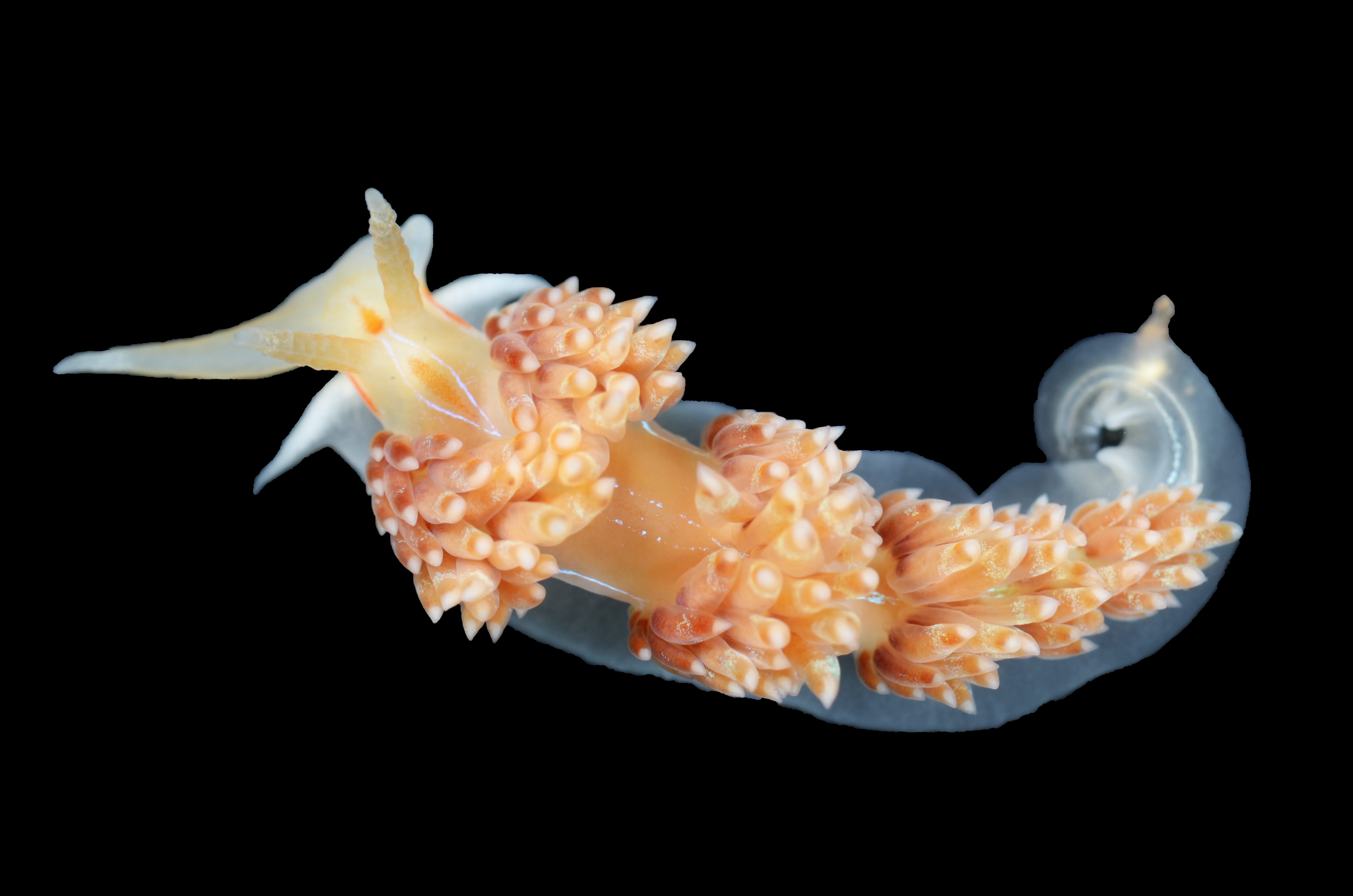
With eDNA, you can survey the presence of this gorgeous opalescent nudibranch without capturing or even touching it.
©Natural History Museum of Los Angeles County — Amanda Bemis & Brittany Cumming

Although there is no substitute for human expertise, we have begun using the traces of DNA that organisms leave behind (e.g. excretions, skin and hair cells) in the environment to catalogue biodiversity. These traces of DNA, referred to as environmental DNA, can persist in the environment for minutes or can persist for centuries depending on where they end up. This field of environmental DNA (eDNA) is rapidly becoming an effective tool to complement surveys of biodiversity, both past and present.

Continue reading “Anacapa Toolkit: Automating the Cataloguing of Biodiversity”

Working from Home, Isolation and Staying Sane

Post provided by Graziella Iossa

Since I’ve been working from home and self-isolating for health reasons since the end of last summer, I thought that a post around the strategies that have helped me during this time might be useful.

Maslow’s Hierarchy of Needs

If you cant go to work to do the science,
the science comes home with you!
©Chloe Robinson

So, first and foremost, your mental health. It’s really hard to concentrate on anything work-related if you’re not in the right mental state. Of course, these are not ordinary times, so making sure that family, friends and those we care about are doing well, would be my first step. When I feel anxious about the times ahead, the single most important thing that helps me to deal with anxiety is having those who I care for the most, close by. If that’s not possible because they’re self-isolating, keeping in touch remotely regularly is the next best thing. Developmental psychologists recognise that human motivation is linked to a hierarchy of needs: if the most basic needs are not met, more complex needs cannot be fulfilled. In a pandemic, it’s likely that our priorities will change and we need to adapt to them, this might take a while and that’s to be expected.

Continue reading “Working from Home, Isolation and Staying Sane”

Issue 11.4: Population Dynamics, Machine Learning, Morphometrics and More

The April issue of Methods is now online!

The latest issue of Methods in Ecology and Evolution is now online! This month’s issue is a little shorter than our last few. But, as they say, good things come in small packages!

Senior Editor Lee Hsiang Liow has selected six Featured Articles this month. You can find out about all of them below. We’ve also got five Applications articles and a Practical Tools article in the April issue that we’re going to cover. Those six papers are freely available to everyone – no subscription required!

On top of all that, the April issue includes articles on camera traps, land cover classification, presence-absence sampling and more.

Continue reading “Issue 11.4: Population Dynamics, Machine Learning, Morphometrics and More”

Hyperoverlap: Detecting Overlap in n-Dimensional Space

Post provided by Matilda Brown, Barbara Holland, and Greg Jordan

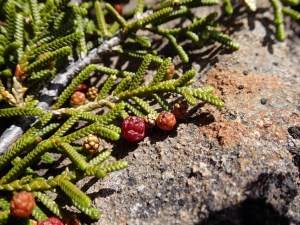
Overlap can help us to learn why Microcachrys
is now only found in the mountains of
Tasmania. ©Greg Jordan

There are many reasons that we might be interested in whether individuals, species or populations overlap in multidimensional space.  In ecology and evolution, we might be interested in climatic overlap, morphological overlap, phenological or biochemical overlap. We can use analyses of overlap to study resource partitioning, evolutionary histories and palaeoenvironmental conditions, or to inform conservation management and taxonomy. Even these represent only a subset of the possible cases in which we might want to investigate overlap between entities. Databases such as GBIF, TRY and WorldClim make vast amounts of data publicly available for these investigations. However, these studies require complex multivariate data and distilling such data into meaningful conclusions is no walk in the park.

Continue reading “Hyperoverlap: Detecting Overlap in n-Dimensional Space”

How Do You Measure Birdsong? Introducing Chipper

Post provided by Abigail Searfoss and Nicole Creanza

Today, science extends beyond the research bench or the field site more often than ever before. Scientists are continuously interacting with educators and the general public, and people are reciprocating the interest with a drive to be involved.

A chipping sparrow. ©Kathy Malone, Nashville
chapter of the Tennessee Ornithology Society.

With this integration of science and the public, citizen-science efforts to crowdsource information have become increasingly popular (check out Zooniverse, SciStarter, NASA Citizen Science Projects, Project FeederWatch, and Foldit to get involved!). In the birding community, enthusiasts have been observing and recording birds for decades, but now there are methods for immediate data sharing among the community (eBird).

Continue reading “How Do You Measure Birdsong? Introducing Chipper”

H.A.P.P.Y: How Are People Preventing Yearning in Academia?

Post provided by Chloe Robinson

Academia and university culture in general are high-paced, demanding environments to work and study in. In the UK alone, a Unihealth study identified that 80% of students studying in higher education experienced stress and anxiety. Similarly, staff and faculty are currently under tremendous pressure and the effects are apparent. A study for the Higher Education Policy Institute revealed that university counselling referrals have risen by three-quarters between 2009 and 2015. So it’s hardly surprising that universities are being coined primary ‘anxiety machines’.

Credit: Ramdlon (pixabay.com).

A multitude of factors can cause the kinds of stress being experienced by so many in universities. Unmanageable workloads, lack of permanent contracts, research exploitation, discrimination, sexism, lack of sufficient support and supervision, pressure to be successful and high competition are just some of the reasons. University bosses state they are aware of the issues and are actively working to improve well-being in institutions, but a lot still remains to be done to tackle the issues.

Continue reading “H.A.P.P.Y: How Are People Preventing Yearning in Academia?”

Using Shark Scales to Unlock the Secrets of Historical Shark Communities on Coral Reefs

Post provided by Erin Dillon

Close your eyes for a second and imagine a coral reef. What do you think the shark community on that reef looked like historically?

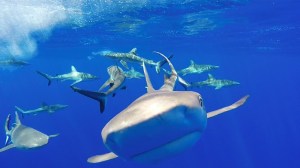
Grey reef sharks on Palmyra Atoll’s forereef. ©Darcy Bradley.

Perhaps you imagined a remote reef with high shark abundance like Fakarava, French Polynesia or Palmyra Atoll, Northern Line Islands. Maybe you thought of a marine protected area such as Jardines de la Reina National Park in Cuba. Or perhaps you relied on your own memories from snorkeling on reefs in the past or photos of reefs taken decades ago.

The answer to this question depends on a reef’s location, given that shark abundances can vary with primary productivity and other oceanographic features. It also depends on which time period you chose as your reference point. Shark abundances can fluctuate over the course of a few hours – as well as over days to years to decades and beyond. Even if you chose the same time and place as the person before you, you might have come up with a slightly different answer. This variation in how we determine baselines – overlaid on a backdrop of natural variation in shark communities over space and time – can contribute to differing perceptions about what’s natural or what a depleted population can possibly be restored to.

Continue reading “Using Shark Scales to Unlock the Secrets of Historical Shark Communities on Coral Reefs”