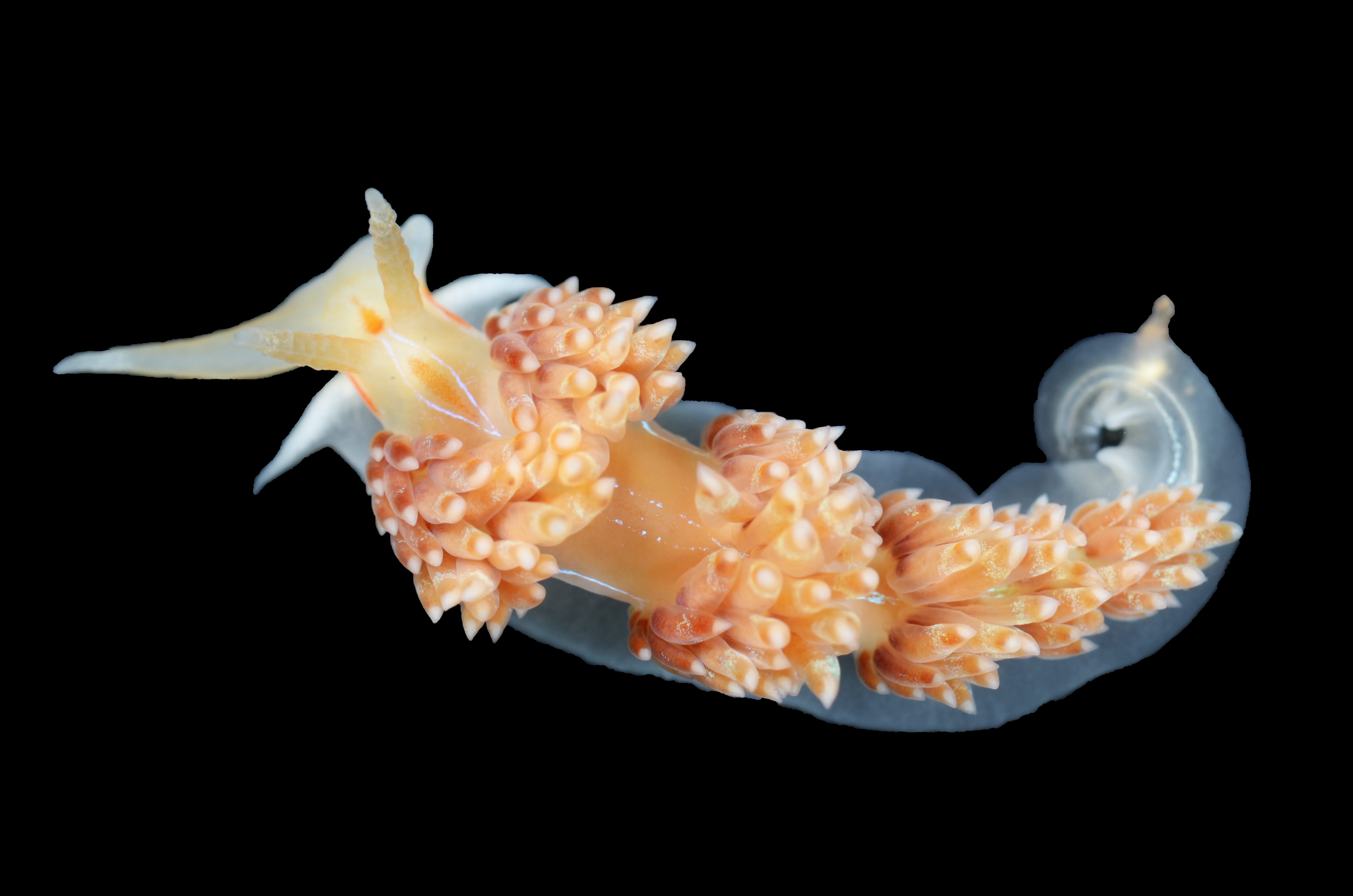
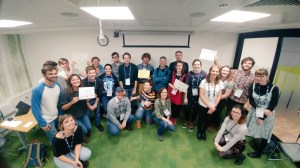
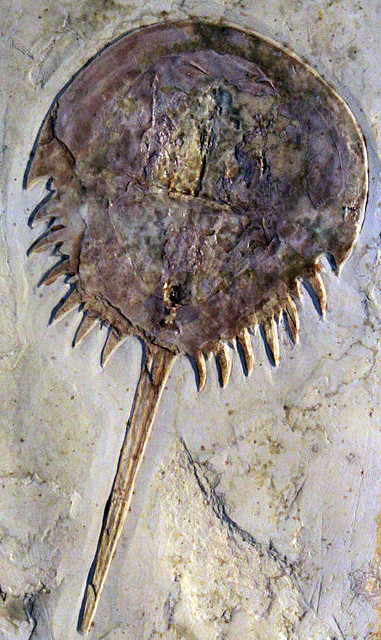
Methods in Ecology and Evolution is turning 10 years old! Back in 2010, we launched the journal because of feedback from the community that there was a need for a journal that promoted the publication of new methods. Founding Editor Rob Freckleton and Graziella Iossa (now a member of the Editorial Board) summarised the aims and ambitions for the journal in the first issue. They … Continue reading Ten Years of Methods in Ecology and Evolution
Climate change is threatening biodiversity and ecosystems around the world. We urgently need to better understand how species and ecosystems respond to these changes. There are already thousands of climate change experiments and observational studies out there that could be used to synthesise findings across systems and regions. But it turns out that making meaningful syntheses isn‘t always so straightforward!
The Need for Standardised Methods and Reporting
There are two major challenges (and some minor ones too) for synthesising data across different experiments. First, the data are not always available. This problem arises because key study information – such as metadata, covariates or methodological details – are often not adequately or consistently reported across studies.
The second problem is that scientists use different protocols. This leads to a diversity of ways of measuring and quantifying the same variables. Different protocols may measure or report the same variables in slightly different ways, so the data are not compatible. Consistency in measurements and protocols is one reason why working in large networks – such as ITEX, Herbivory, or NutNet – to name only a few, is so powerful. In these networks, experiments and observations are repeated across large regions or worldwide using strict protocols for experimental design and measurements. Continue reading “Standardising Methods in Climate Change Experiments: A Community Effort”
Coming to the BES Annual Meeting? Planning to submit a paper to a BES journal? Then you should sign up for the Speed Review Session on Thursday 12 December! (sign-up sheets will be on the BES Stand in the Exhibition Hall.) Find out more about this session below.
Essentially, Speed Review is a chance for you to get a Senior Editor’s opinion on your manuscript. All you need to do is sign-up and bring along a figure or a key finding from your research to centre the discussion on. Each session will be limited to five minutes, so try to have a succinct summary of your manuscript ready as well. The Editor you speak to will let you know what they think of your paper and try to give you some advice about any areas to highlight or any potential concerns that they might have about it. Continue reading “Speed Review at the BES Annual Meeting: Get a Senior Editor’s Opinion on YOUR Manuscript”
You can find out more about our Featured Articles (selected by the Senior Editor) below. We also discuss this month’s Open Access and freely available papers we’ve published in our latest issue (Practical Tools and Applications articles are always free to access, whether you have a subscription or not) .
How much do you think about the world beneath your feet? Soil is essential for life on earth and provides many ecosystem services, including carbon storage and providing habitats for billions of organisms. But one third of our global soils are already degraded and are at risk of further degradation from human activities, such as unsustainable farming practices, industrial activities, mining and other non-environmentally friendly practices. In 2002, the International Union of Soil Sciences (IUSS) marked the 5th December as World Soil Day, to celebrate the importance of soil as a critical component of the natural system and as a vital contributor to human well-being.
Today, we are pleased to announce the latest new member of the Methods in Ecology and Evolution Associate Editor Board. Saras Windecker joins us from the University of Melbourne, Australia as an Applications Editor. You can find out a little more about her below.
Saras Windecker
“I’m a quantitative ecologist who started out as a wetland ecologist. I’m interested in developing and applying models for a range of applied and theoretical questions, spanning decomposition, species distributions, and more recently, public health forecasting. I’m interested in software development for scientists and thinking about how we develop literate programming skills and promote open science in ecology.” Continue reading “New Associate Editor: Saras Windecker”
Michael Phelps yw un o’r athletwyr Olympaidd mwyaf clodfawr erioed, ynghyd â’r nofiwr cyflymaf yn y byd. Ac eto, gallai nofio’n gyflymach. Gan wisgo siwt arbennig LZR Racer Speedo, gallai Michael Phelps leihau’i lusgiad hydrodynamig, neu’i wrthiant dŵr, 40% neu fwy. O ganlyniad gallai ei gyflymdra nofio gynyddu dros 4%! Mewn cystadleuaeth, dyna’r gwahaniaeth rhwng gwobrau arian ac aur. Ond, petai Phelps yn anghofio tynnu’i “hosanau llusgo” – sef hosanau rhwystrus a ddyluniwyd i gynyddu gwrthiant dŵr er mwyn cynyddu cryfder y nofiwr – caiff ei gyflymder ei leihau’n sylweddol. Byddai’n ffodus i ennill gwobr efydd!
Mae nofwyr proffesiynol yn gyfarwydd â defnyddio technolegau i wella eu perfformiad drwy leihau eu llusgiad ond ni all hynny gymharu â’r addasiadau a wnaed gan anifeiliaid gwyllt. Mae creaduriaid yn y môr wedi esblygu addasiadau anghredadwy i leihau llusgiad, megis lliflinio eithafol mewn mamaliaid ac adar y môr. Mae hyn yn eu galluogi i symud dan y dŵr mor gyflym ac effeithlon â phosib. Mae morloi, er enghraifft, yn eithaf afrosgo ar y tir ond maent yn osgeiddig ac yn gyflym o dan y dŵr. Mae siâp eu cyrff wedi’i ddylunio er mwyn iddynt symud yn gyflymaf pan fyddant yn nofio.
We have now entered the era of artificial intelligence. In just a few years, the number of applications using AI has grown tremendously, from self-driving cars to recommendations from your favourite streaming provider. Almost every major research field is now using AI. Behind all this, there is one constant: the reliance, in one way or another, on deep learning. Thanks to its power and flexibility, this new subset of AI approach is now everywhere, even in ecology we show in ‘Applications for deep learning in ecology’.
But what is deep learning exactly? What makes it so special?
Deep Learning: The Basics
Deep learning is a set of methods based on representation learning: a way for machines to automatically detect how to classify data from raw examples. This means they can detect features in data by themselves, without any prior knowledge of the system. While some models can learn without any supervision (i.e. they can learn to detect and classify objects without knowing anything about them) so far these models are outperformed by supervised models. Supervised models require labelled data to train. So, if we want the model to detect cars in pictures, it will need examples with cars in them to learn to recognise them.
Hello! This is my first post as Blog Editor for Methods in Ecology and Evolution and I’m thrilled to be starting with an exciting, thought-provoking topic in the wake of Halloween. But first, let me introduce myself. I currently work as a Postdoctoral Fellow and Project Manager in the Hajibabaei Lab at the Centre for Biodiversity Genomics (University of Guelph, ON, Canada) and my undergraduate and postgraduate degrees are both from Swansea University (UK). My research background is largely focused around the application of environmental DNA (i.e. free DNA found in natural environments) to detect and monitor aquatic species and answer ecological questions through both single-species detection and DNA metabarcoding.