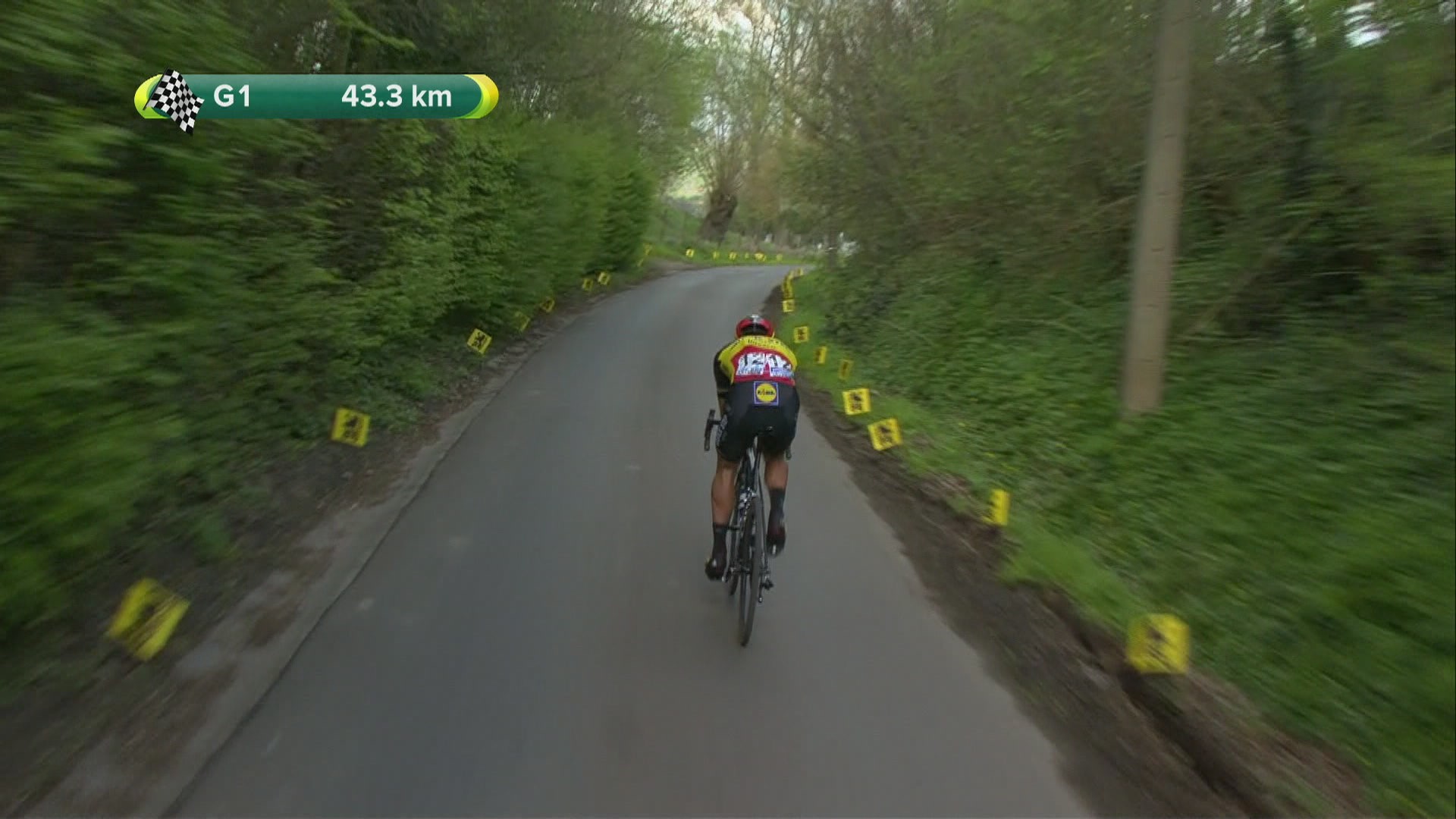
Focusing on trees and shrubs growing around recognisable climbs and other ‘landmarks’ along the route of this major annual road cycling race in Belgium, the team looked at video footage from 1981 to 2016 obtained by Flemish broadcaster VRT. They visually estimated how many leaves and flowers were present on the day of the course (usually in early April) and linked their scores to climate data. Continue reading “TV Coverage of Cycling Races Can Help Document the Effects of Climate Change”
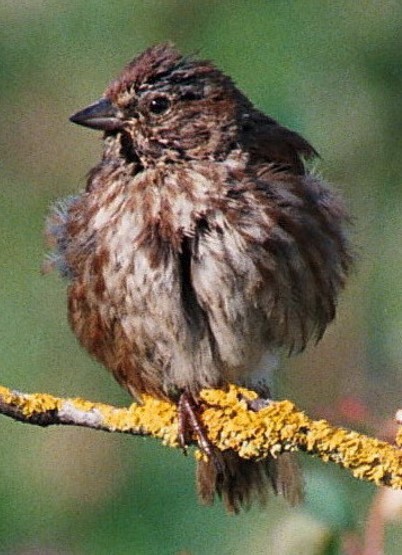
Understanding how wild populations respond and adapt to environmental change is a key question in evolutionary biology. To understand this, we need to be able to separate genetic and environmental effects on phenotypic variation. Statistical ‘animal models’, which can do just this, have revolutionised the field of quantitative genetics. A lack of full knowledge of individual pedigrees can lead to severe bias in quantitative genetic parameter estimates though – particularly when genetic values for focal traits vary non-randomly in unknown parents.
Datasets used by quantitative ecologists are getting more and more complex. So we need more complex models, such as hierarchical and complex spatial models. Typically, Bayesian approaches such as Markov chain Monte Carlo have been used. But these methods can be slow, making it infeasible to fit some models.
Statistical and quantitative methods within ecology have increased substantially in recent years. This rise can be attributed both to the growing need to address global environmental change issues, as well as the increase in data sources to address these challenges. Continue reading “Statistical Ecology Virtual Issue”
“…if all the matter in the universe except the nematodes were swept away, our world would still be dimly recognizable, and if, as disembodied spirits, we could then investigate it, we should find its mountains, hills, vales, rivers, lakes, and oceans represented by a film of nematodes…” (Cobb 1914)
He may have said it more than a century ago but we now, more than ever, realise that Nathan Augustus Cobb was right. Nematodes are by far the most abundant animals soil, freshwater and marine ecosystems. These tiny worms are barely visible to the human eye (if they’re visible at all), hundreds can inhabit a single gram of soil . Their similar shape might lead you to think that they’re all alike, but that’s not the case. More than 25,000 species have been identified and estimates put their entire species diversity in the 100,000s.
This taxonomic and functional diversity has boosted nematodes to become useful bioindicators for soil quality. Nematodes perform many different functions in both terrestrial and aquatic ecosystems. These are mainly defined by what they eat:
Bacteria/Fungi: Many nematode groups eat bacteria and fungi. They control the population of these organisms and keep them active.
Plants: Plant feeders are the unwanted guests in agricultural systems as well as in our gardens. They can destroy entire harvests by piercing into or infiltrating roots.
Omnivores/Predators: Many nematode species prey on other smaller organisms including smaller nematodes and control their abundances.
Parasites: These species inhabit other larger organisms and can act as biocontrol agents.
David Warton interviews Alan Gelfand, a keynote speaker at the Statistics in Ecology and Environmental Monitoring (SEEM) conference in Queenstown, NZ. Alan is best known for proposing Bayesian estimation of a posterior distribution using Gibbs sampling, in his classic papers ‘Sampling-Based Approaches to Calculating Marginal Densities‘ and ‘Illustration of Bayesian Inference in Normal Data Models Using Gibbs Sampling‘. David and Alan discuss the origins of … Continue reading An Interview with Alan Gelfand
‘babette‘ is an R package that works with the popular phylogenetic tool BEAST2. BEAST2 uses one or more alignments and a model setup to create a Bayesian posterior of jointly estimated model parameters and phylogenies.
babette lets you call BEAST2 from an R script. This makes it easier to explore models and/or alignments than using the graphical user interface programs that BEAST2 provides. It will also help you to improve the reproducibility of your work with BEAST2.
babette Tutorial Videos
If you’re new to phylogentic analyses, the video ‘babette demo‘ demonstrates the package. It has all of the information that you need to be able to start using the package
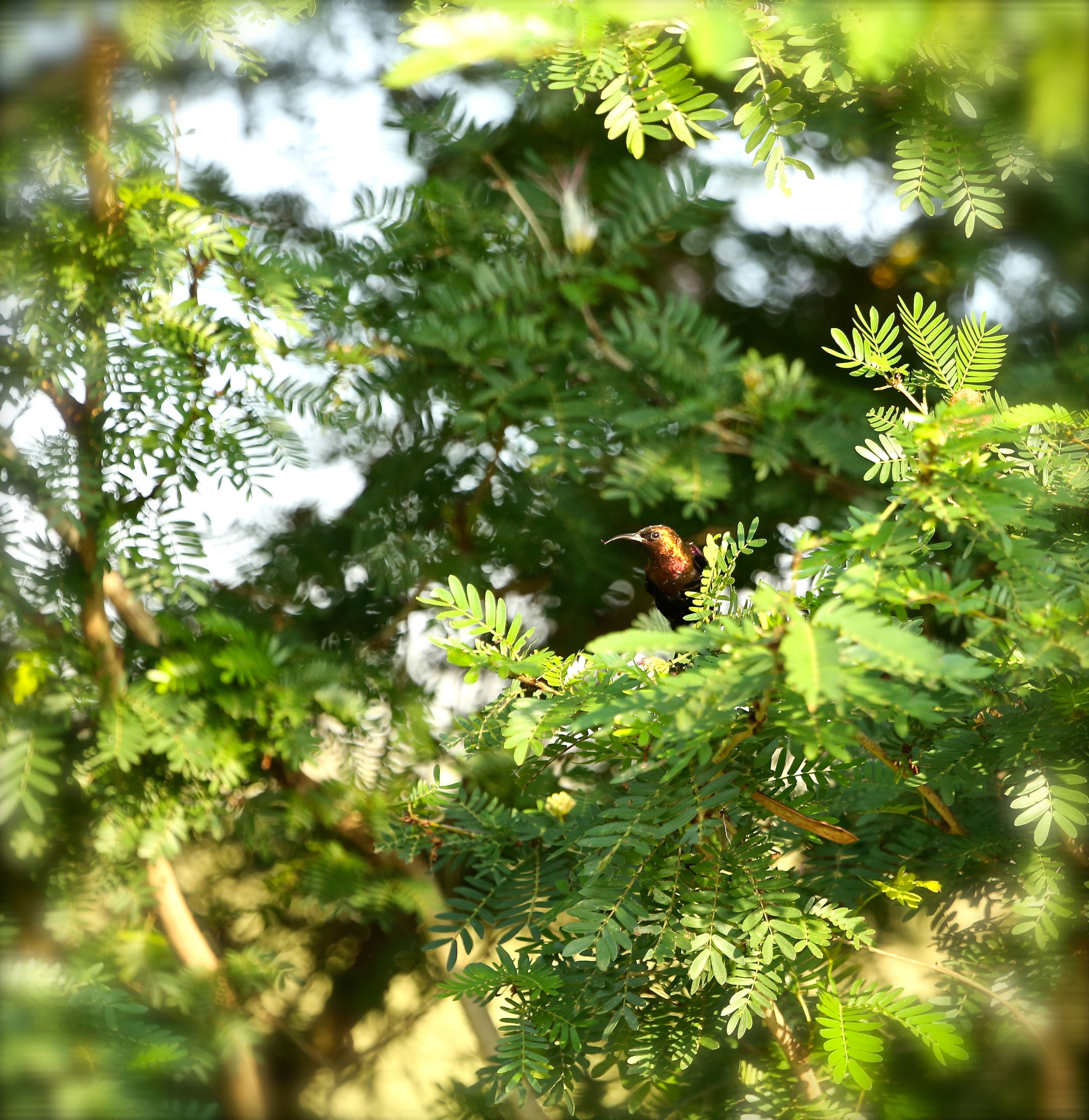
Working on FLightR, the package for analysis of data obtained from solar geolocation tracking devices, we were haunted by the unpleasant feeling of investing in technology which will soon be out of date. Until now solar geolocators have been popular in ornithological studies. This is because they’re small, light-weight (< 1/3 g) tracking devices that can be deployed even on miniature birds, such as swallows and warblers. They’ve also been the longest-lasting data loggers, with the most storage space and, of course, the most affordable ones.
Are Solar Geolocators Finished?
There are apparent drawbacks of using this technique though. To begin with, solar geolocation simply does not work for some species. You can’t use it to study birds living in dense tropical forests or in cavities, because of the light-pattern bias. For the same reason, it doesn’t provide fantastic results in light-polluted areas. Data from geolocators cannot be retrieved remotely, and this is why you need to have high recapture rates for the species you’re studying. Continue reading “The Future of Solar Geolocation Tracking is NOW”
Like all living things, plant species must reproduce to persist. Key stages in successful plant reproduction must be carefully timed to make sure resources are available and conditions are optimal. There will be little success if flowers mature in bad weather conditions for their insect pollinators or if fruits ripen but the seed dispersers have migrated elsewhere.
An international research team has developed a simple method for using a network of autonomous time-lapse cameras to track the breeding and population dynamics of Antarctic penguins, providing a new, low-cost window into the health and productivity of the Antarctic ecosystem.
The team of scientists from NOAA Fisheries and several other nations published in the journal Methods in Ecology and Evolution, descriptions of the camera system and a new method for turning static images into useful data on the timing and success of penguin reproduction. They say that the system monitors penguins as effectively as scientists could in person, for a fraction of the cost. Continue reading “Remote Camera Network Tracks Antarctic Species at Low Cost”




 Methods Blog