An Interview with Alan Gelfand

David Warton interviews Alan Gelfand, a keynote speaker at the Statistics in Ecology and Environmental Monitoring (SEEM) conference in Queenstown, NZ. Alan is best known for proposing Bayesian estimation of a posterior distribution using Gibbs sampling, in his classic papers ‘Sampling-Based Approaches to Calculating Marginal Densities‘ and ‘Illustration of Bayesian Inference in Normal Data Models Using Gibbs Sampling‘. David and Alan discuss the origins of … Continue reading An Interview with Alan Gelfand

The babette R Package: How to Sooth the Phylogenetic BEAST2

Post provided by Richel Bilderbeek

 What is babette?

‘babette‘ is an R package that works with the popular phylogenetic tool BEAST2. BEAST2 uses one or more alignments and a model setup to create a Bayesian posterior of jointly estimated model parameters and phylogenies.

babette lets you call BEAST2 from an R script. This makes it easier to explore models and/or alignments than using the graphical user interface programs that BEAST2 provides. It will also help you to improve the reproducibility of your work with BEAST2.

babette Tutorial Videos

If you’re new to phylogentic analyses, the video ‘babette demo‘ demonstrates the package. It has all of the information that you need to be able to start using the package

Continue reading “The babette R Package: How to Sooth the Phylogenetic BEAST2”

The Future of Solar Geolocation Tracking is NOW

Post provided by Julia Karagicheva, Theunis Piersma and Eldar Rakhimberdiev

Black-tailed godwit with leg-mounted solar geolocator. ©Jan van de Kam

Working on FLightR, the package for analysis of data obtained from solar geolocation tracking devices, we were haunted by the unpleasant feeling of investing in technology which will soon be out of date. Until now solar geolocators have been popular in ornithological studies. This is because they’re small, light-weight (< 1/3 g) tracking devices that can be deployed even on miniature birds, such as swallows and warblers. They’ve also been the longest-lasting data loggers, with the most storage space and, of course, the most affordable ones.

Are Solar Geolocators Finished?

There are apparent drawbacks of using this technique though. To begin with, solar geolocation simply does not work for some species. You can’t use it to study birds living in dense tropical forests or in cavities, because of the light-pattern bias. For the same reason, it doesn’t provide fantastic results in light-polluted areas. Data from geolocators cannot be retrieved remotely, and this is why you need to have high recapture rates for the species you’re studying.   Continue reading “The Future of Solar Geolocation Tracking is NOW”

Fourier Methods Gain Wide Appeal for Tropical Phenology Analysis

Post provided by Emma Bush

Lopé National Park. ©Jeremy Cusack

Like all living things, plant species must reproduce to persist. Key stages in successful plant reproduction must be carefully timed to make sure resources are available and conditions are optimal. There will be little success if flowers mature in bad weather conditions for their insect pollinators or if fruits ripen but the seed dispersers have migrated elsewhere.

Because plants rely on the abiotic environment for sunlight, nutrients and water, and in some cases for the dispersal of pollen and seeds, it is not surprising that their life stages are closely linked to environmental cycles. Continue reading “Fourier Methods Gain Wide Appeal for Tropical Phenology Analysis”

Remote Camera Network Tracks Antarctic Species at Low Cost

Below is a press release about the Methods in Ecology and Evolution article ‘Estimating nest‐level phenology and reproductive success of colonial seabirds using time‐lapse cameras‘ taken from NOAA Fisheries.

Camera system in place in an Adélie and gentoo penguin colony ©Jefferson Hinke, NOAA Fisheries

An international research team has developed a simple method for using a network of autonomous time-lapse cameras to track the breeding and population dynamics of Antarctic penguins, providing a new, low-cost window into the health and productivity of the Antarctic ecosystem.

The team of scientists from NOAA Fisheries and several other nations published in the journal Methods in Ecology and Evolution, descriptions of the camera system and a new method for turning static images into useful data on the timing and success of penguin reproduction. They say that the system monitors penguins as effectively as scientists could in person, for a fraction of the cost. Continue reading “Remote Camera Network Tracks Antarctic Species at Low Cost”

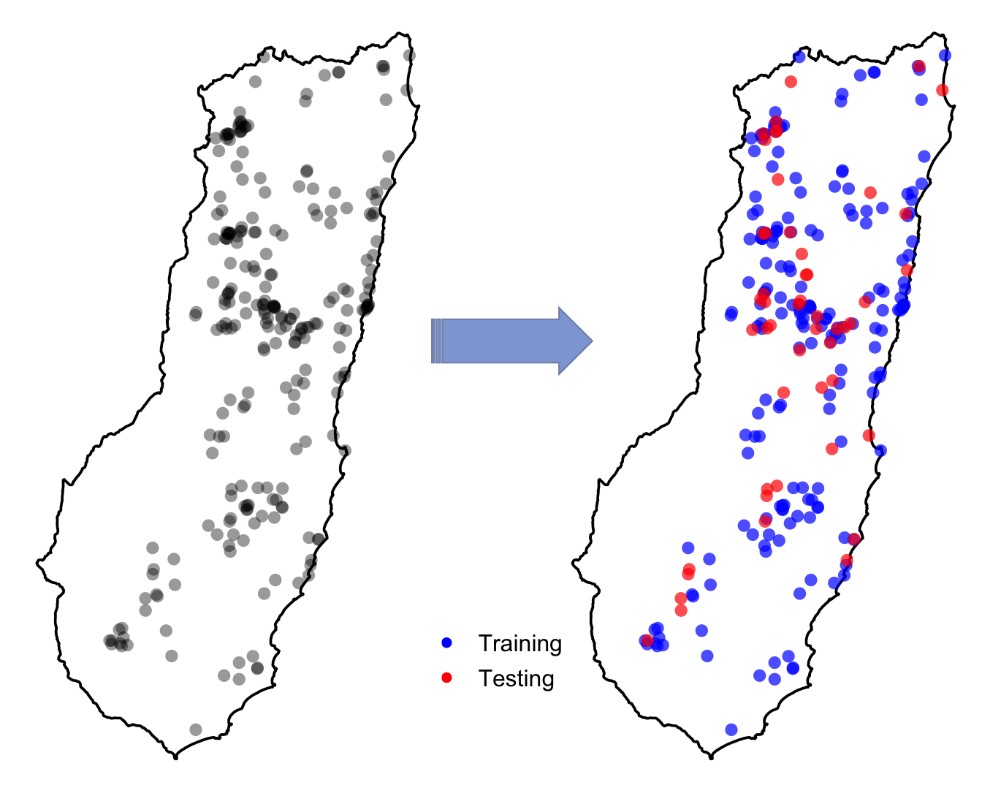
Can Opportunistically Collected Citizen Science Data Create Reliable Habitat Suitability Models for Less Common Species?

Post provided by Ute Bradter, Mari Jönsson and Tord Snäll

Detta blogginlägget är tillgängligt på svenska

Opportunistically collected species observation data, or citizen science data, are increasingly available. Importantly, they’re also becoming available for regions of the world and species for which few other data are available, and they may be able to fill a data gap.

Siberian jay ©Ute Bradter

In Sweden, over 60 million citizen science observations have been collected – an impressive number given that Sweden has a population of about 10 million people and that the Swedish Species Observation System, Artportalen, was created in 2000. For bird-watchers (or plant, fungi, or other animal enthusiasts), this is a good website to bookmark. It will give you a bit of help in finding species and as a bonus, has a lot of pretty pictures of interesting species. Given the amount of data citizen science can provide in areas with few other data, it’s important to evaluate whether they can be used reliably to answer questions in applied ecology or conservation. Continue reading “Can Opportunistically Collected Citizen Science Data Create Reliable Habitat Suitability Models for Less Common Species?”

Kan medborgarnas opportunistiskt insamlade data användas för artutbredningsmodeller av mindre vanliga arter?

Bloginlägg av Ute Bradter, Mari Jönsson och Tord Snäll

This blog post is available in English

Opportunistiskt insamlade artobservationer av frivilliga, så kallade medborgarforskningsdata, blir alltmer tillgängliga. Dessa data har potentialen att fylla ett databehov för olika regioner i världen och arter för vilka få andra data är tillgängliga.

Siberian jay ©Ute Bradter
Lavskrika ©Ute Bradter

I Sverige har över 60 miljoner artobservationer samlats in av frivilliga i Artportalen – ett imponerande antal med tanke på att Sverige har en befolkning på cirka 10 miljoner människor och att webbplatsen endast har funnits sedan år 2000. För fågelskådare (eller växt-, svamp-, andra djurentusiaster), är Artportalen en bra hemsida att bokmärka om man vill ha lite hjälp med att hitta arter eller tycker om att titta på vackra bilder på arter. Globalt samlas ett stort antal sådana uppgifter för artförekomst i Global Biodiversity Information Facility. Med tanke på den mängd data som medborgarforskare kan tillhandahålla för områden med få andra data är det viktigt att utvärdera om de kan användas för att tillförlitligt besvara frågor inom grundläggande ekologi eller naturvård. Continue reading “Kan medborgarnas opportunistiskt insamlade data användas för artutbredningsmodeller av mindre vanliga arter?”

Using the Smith-Root ANDe System for Wildlife Conservation

POST PROVIDED BY TRACIE SEIMON, PHD

The ANDe system can help researchers tell whether endangered species are present.

In recent years, there have been a lot of studies on the use of environmental DNA (eDNA) for species detection and monitoring. This method takes advantage of the fact that organisms shed DNA into the environment in the form of urine, feces, or cells from tissue such as skin. As this DNA stays in the environment, we can use molecular techniques to search for traces of it. By doing this, we can determine if a species lives in a particular place.

At the Wildlife Conservation Society (WCS), we’re integrating and using the ANDe system in combination with ultra-portable qPCR (quantitative polymerase chain reaction) and DNA extraction technologies developed by Biomeme Inc. for eDNA capture and species detection of endangered turtles, and other aquatic organisms. This helps us to better monitor species within our global conservation programs. Continue reading “Using the Smith-Root ANDe System for Wildlife Conservation”

Editor Recommendation: The Ecologist’s Field Guide to Sequence-Based Identification of Biodiversity

Post provided by Pierre M Durand

A fossilized species of the diatom Thalassiosira. B. A species of the dinoflagellate Prorocentrum. Image provided by A. Ndhlovu).
A fossilized species of the diatom Thalassiosira. B. A species of the dinoflagellate Prorocentrum. (Image provided by A. Ndhlovu).

As any reader of Methods in Ecology and Evolution will know, advances in technologies and methodologies used by ecologists and evolutionary biologists are never-ending. Coupled with the tendency for researchers to become ever more specialised, this means that keeping up to date with all the advances is challenging at best. Occasionally, new advances revolutionise the kinds of questions we ask and encourage us to develop new approaches to answer them. One of these huge advances emerged from the ‘-omics’ revolution.

The application of -omics methodologies to evolution and ecology has been particularly rapid. These technologies usually aren’t part of the basic science education in these fields – it’s more usual for computational biologists to cross over to ecology and evolution than the other way around. The review by Simon Creer and colleagues ’The ecologist’s field guide to sequence-based identification of biodiversity’ helps bridge this gap. It’s not too technical, but sufficiently detailed, and it provides a very handy overview of how genomics, transcriptomics and their meta-analyses can be applied to evolutionary ecology. The paper is filled with enormously helpful workflows, pointers, examples and, as the title suggests, is a guide for those who are not experts in sequence based technologies. Continue reading “Editor Recommendation: The Ecologist’s Field Guide to Sequence-Based Identification of Biodiversity”

Editor Recommendation: Assessing Strengths and Weaknesses of DNA Metabarcoding-Based Macroinvertebrate Identification for Routine Stream Monitoring

Post provided by Andrew R. Mahon The use of molecular methods for monitoring and surveillance of organisms in aquatic and marine systems has become more and more common. We’ve since expanded this technology this through using both captured whole organisms and collecting/filtering environmental DNA (eDNA).  These methods naturally migrated from single species, active surveillance methods towards using high throughput sequencing as a method of passive … Continue reading Editor Recommendation: Assessing Strengths and Weaknesses of DNA Metabarcoding-Based Macroinvertebrate Identification for Routine Stream Monitoring