Monitoring the Distribution and Abundance of Sea Otters

Post provided by Perry Williams

Sea otters (Enhydra lutris) are an apex predator of the nearshore marine ecosystem – the narrow band between terrestrial and oceanic habitat. During the commercial maritime fur trade in the 18th and 19th centuries, sea otters were nearly hunted to extinction across their range in the North Pacific Ocean. By 1911, only a handful of small isolated populations remained.
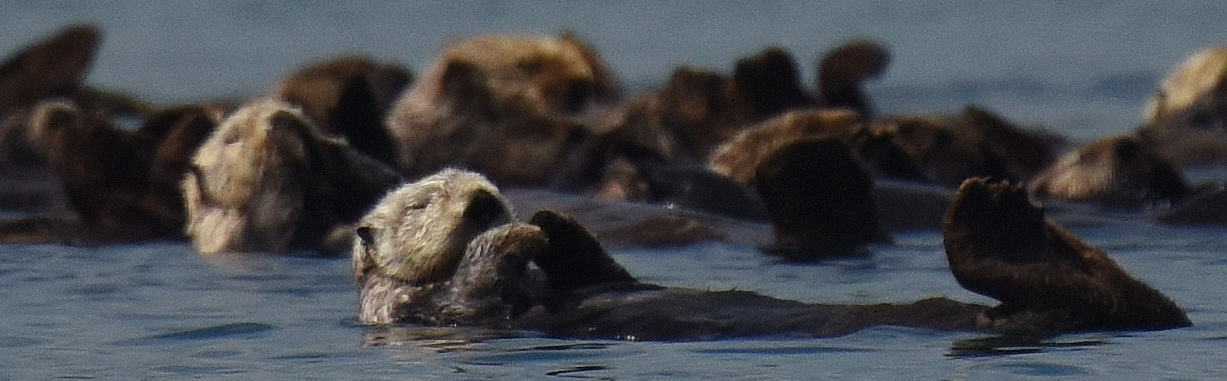
Sea otters resting in Glacier Bay National Park. © Jamie Womble, NPS. USFWS Permit #14762C-0, NPS Permit #GLBA-2016- SCI-0022.

But sea otter populations have recovered in many areas due to a few changes. The International Fur Seal Treaty in 1911 and the Marine Mammal Protection Act (1972) protected sea otters from most human harvest. Wildlife agencies helped sea otter colonisation by transferring them to unoccupied areas. Eventually, sea otters began to increase in abundance and distribution, and they made their way to Glacier Bay, a tidewater glacier fjord and National Park in southeastern Alaska. Continue reading “Monitoring the Distribution and Abundance of Sea Otters”

A New Way to Study Bee Cognition in the Wild

Understanding how animals perceive, learn and remember stimuli is critical for understanding both how cognition is shaped by natural selection, and how ecological factors impact behaviour.Unfortunately, the limited number of protocols currently available for studying insect cognition has restricted research to a few commercially available bee species, in almost exclusively laboratory settings. In a new video Felicity Muth describes a simple method she developed with Trenton Cooper, Rene … Continue reading A New Way to Study Bee Cognition in the Wild

Tracing New and Old Resources in Estuarine Ecosystems

Post provided by Thomas Larsen, Kim Vane & Ricardo Fernandes

This week, more than 150 events along the US shores will celebrate estuaries and educate the public and policy makers of the many benefits we get from healthy and thriving ecosystems. But why do we need to pay more attention to estuaries?

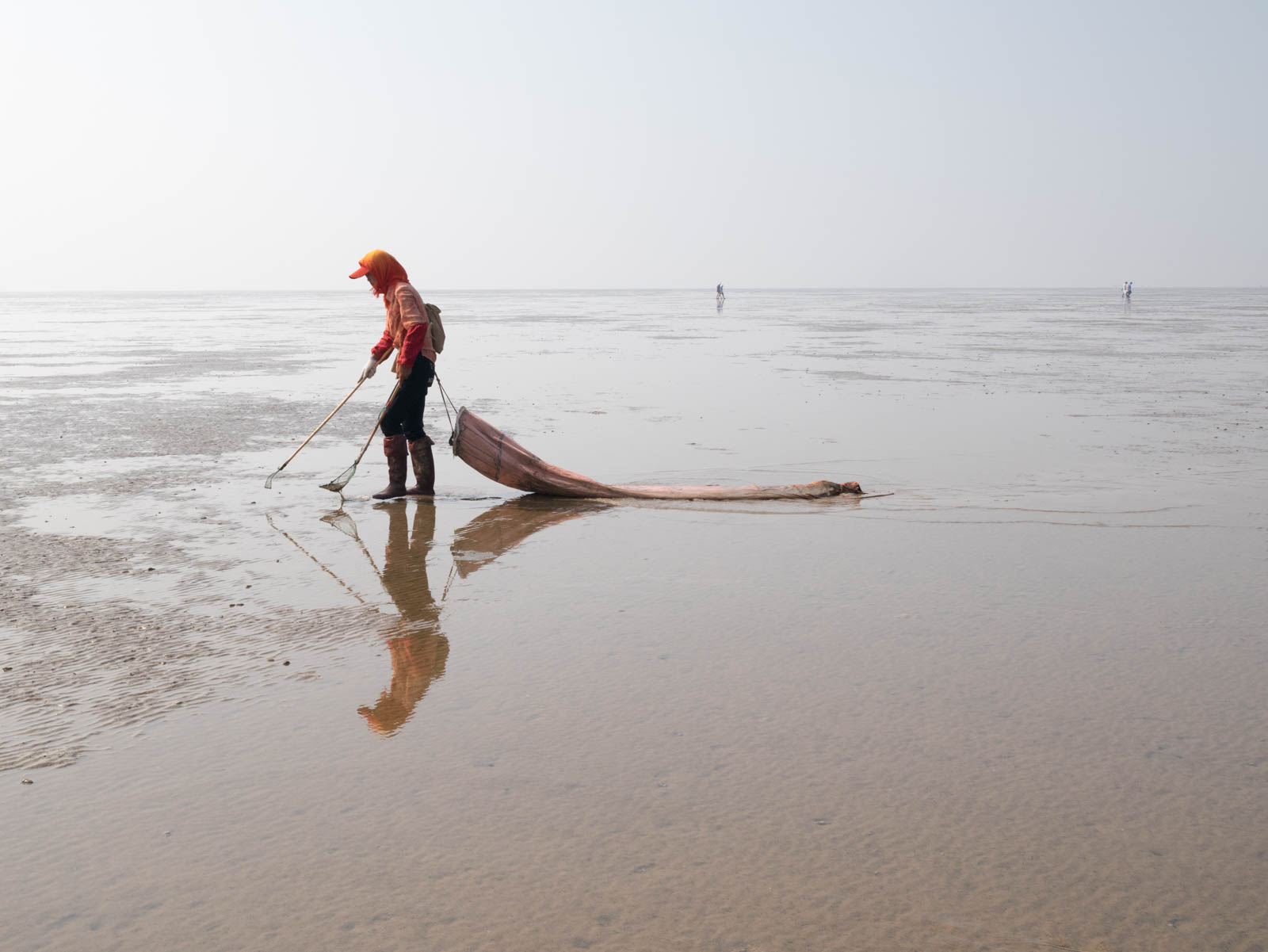
A woman collecting snails in the Yellow River estuary, China. Estuaries are important habitats for marine gastropods and nurturing grounds for marine fishes. ©Thomas Larsen
Estuaries are important habitats for marine gastropods and nurturing grounds for marine fishes. ©Thomas Larsen

Estuaries are biological hotspots and by far the most productive ecosystems on our planet. The shallow waters where streams and rivers meet the sea often harbour a rich terrestrial and aquatic flora and are home to many animals. They’re important feeding and reproduction areas for a diverse array of wildlife such as birds and fish, which can include both freshwater and marine species. A large portion of the world’s marine fisheries today depend on the ecosystem services of estuaries; it has been estimated that well over half of all marine fishes develop in the protective environment of an estuary. Historically, humans have been attracted to these large expanses of shallow water that could sustain their basic needs. Nowadays, these estuaries also have economic value as recreational and touristic destinations as for example fishing, boating and swimming spots.

However, our understanding of how estuaries function and sustain this amount of biodiversity is limited. As is the case for most ecosystems on our planet, estuaries are under increasing pressure from human activities. Estuaries are subjected to intensive land reclamation and developments like harbours and aquacultural farms. They also receive excessive amounts of of nutrients, soil and organic matter from intensive farms and urban landscapes via small streams and large rivers. These stressors are accentuated by environmental changes such as sea level rise, increasing water temperatures and extreme weather conditions causing droughts and flooding. Continue reading “Tracing New and Old Resources in Estuarine Ecosystems”

Learn to be a Reviewer: Peer Reviewer Mentoring Scheme

Today is the first day of peer review week. One of the issues that many people bring up about the current system of peer review is that there is very little formal training. There are guidance documents available (including the BES Guide to Peer Review), workshops on peer review can be found at some conferences and some senior academics teach their PhD students or post-docs about the process. In general though, peer review training is fairly hard to come by.

This is something that people have told us (the BES publications team) at conferences and through surveys, so we’re doing something about it. From October 2017 until April 2018 Methods in Ecology and Evolution is going to be partnering with the BES Quantitative Ecology Special Interest Group to run a trial Peer Review Mentoring Scheme.

The trial scheme is going to focus on statistical ecology (as we receive a lot of statistical papers at Methods in Ecology and Evolution), but if it goes well, we’ll be looking at other areas of expertise too.

Applications for Mentor and Mentee positions are now open. If you’re an experienced statistical ecologist or evolutionary biologist or an Early Career Researcher in those fields, we’d love to receive an application from you. Continue reading “Learn to be a Reviewer: Peer Reviewer Mentoring Scheme”

Issue 8.9

Issue 8.9 is now online!

The September issue of Methods is now online!

This issue contains two Applications articles and three Open Access articles. These five papers are freely available to everyone, no subscription required.

 qfasar: A new R package for diet estimation using quantitative fatty acid signature analysis methods. It also provides functionality to evaluate and potentially improve the performance of a library of prey signature data, compute goodness-of-fit diagnostics, and support simulation-based research.

 biomass: An r package designed to compute both AGB/AGC estimate and its associated uncertainty from forest plot datasets, using a Bayesian inference procedure. The package builds upon previous work on pantropical and regional biomass allometric equations and published datasets by default, but it can also integrate unpublished or complementary datasets in many steps.

Continue reading “Issue 8.9”

Multi-State Species Distribution Models: What to do When Species Need Multiple Habitats

Post provided by Jan Engler, Veronica Frans and Amélie Augé

The north, south, east, and west boundaries of a species’ range tell us very little about what is happening inside…

― Robert H. MacArthur (1972, p. 149)

When You Enter the Matrix, Things Become Difficult!

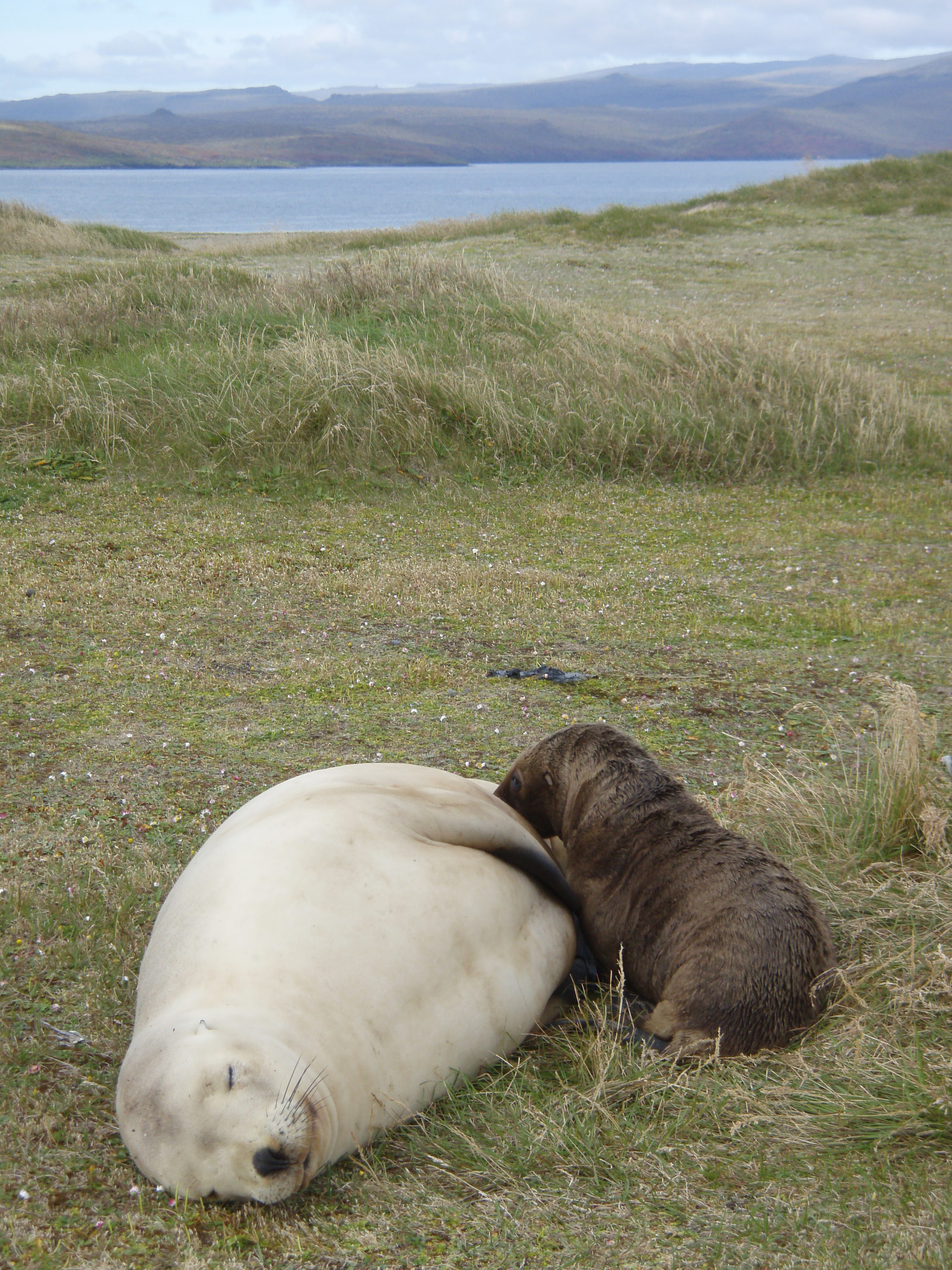
New Zealand sea lion mother and pup. © Amélie Augé

Protecting wildlife calls for a profound understanding of species’ habitat demands to guide concrete conservation actions. Quantifying the relationships between species and their environment using species distribution models (SDMs) has attracted tremendous attention over the past two decades. Usually these species-environment relationships are estimated on coarse spatial scales, using globally-interpolated long-term climate data sets. While they’re useful for studies on large-scale species distributions, these environmental predictors have limited applications for conservation management.

Climatic data were the first environmental information available with global coverage, but a wide range of Earth observation techniques have increased the availability of much finer environmental information. This allows us to quantify species-environment relationships in unprecedented detail. We can now shift the scale that SDMs operate at, resulting in more useful applications in conservation – SDMs now enter the matrix.

This shift in scale brings new challenges, especially for species using multiple distinct habitat types to survive. The landscape matrix, which has been negligible at the broad (global) scale, is hugely important at the fine (local) scale. It is not only that we need to quantify certain habitat types but also need to consider their arrangement in the landscape, which is basically what the landscape matrix is about. But as we enter the matrix, things become difficult. Continue reading “Multi-State Species Distribution Models: What to do When Species Need Multiple Habitats”

Protecting Habitat Connectivity for Endangered Vultures: Identifying Priorities with Network Analysis

Post provided by Juliana Pereira, Santiago Saura and Ferenc Jordán

The endangered Egyptian vulture. ©Carlos Delgado

One of the main causes behind biodiversity loss is the reduction and fragmentation of natural habitats. The conversion of natural areas into agricultural, urban or other human-modified landscapes often leaves wild species confined to small and isolated areas of habitat, which can only support small local populations. The problem with small, isolated populations is that they are highly vulnerable to extinction caused by chance events (such as an epidemic or a natural disaster in the area), or by genetic erosion (dramatic loss of genetic diversity that weakens species and takes away their ability to adapt to new conditions).

On top of that, we now have the added concern of climate change, which is altering environmental conditions and shifting habitats to different latitudes and altitudes. To survive in the face of these changes, many species need to modify their geographical distribution and reach new areas with suitable conditions. The combination of mobility (a biological property of species) and the possibility of spatial movement (a physical property of the landscape) is critically important for this. Continue reading “Protecting Habitat Connectivity for Endangered Vultures: Identifying Priorities with Network Analysis”

Valuing Nature the Interdisciplinary Way

Post provided by Graziella Iossa

Before I started my NERC Valuing Nature Placement in April 2017, I’d never done interdisciplinary work. I had been thinking about it for a while though, when I read on Twitter that the Valuing Nature Programme were launching their placement scheme for 2017. I had already been in touch with my prospective hosts – Hilary Graham, Department of Health Science, and Piran White, Environment Department, both at the University of York – but the launch of the scheme galvanised our interest. We put together our application and were delighted to receive funding. So, what is that we set out to do?

Valuing Nature

Piran, Hilary and I had already been talking about projects focusing on knowledge transfer, particularly around collaborative work to tackle antimicrobial resistance. Valuing Nature was the perfect fit for what we wanted to do. The programme aims to further our understanding of nature in valuation analyses and decision making by building an interdisciplinary research community capable of working across the natural, biological and social sciences, as well as the arts and humanities. Interdisciplinarity is integral to the programme. Continue reading “Valuing Nature the Interdisciplinary Way”

Uncertainties in Species Occurrence Data: How to deal with False Positives and False Negatives

Post provided by Gurutzeta Guillera-Arroita

Species Surveys: New Opportunities and Ongoing Data Challenges

Technologies, such as drones, open new opportunities for wildlife monitoring ©J. Lahoz-Monfort, UMelb.

Monitoring is a fundamental step in the management of any species. The collection and careful analysis of species data allows us to make informed decisions about management priorities and to critically evaluate our actions. There are many aspects of a natural system that we can measure and, when it comes to monitoring the status of species, occurrence is a commonly used metric.

Ecologists have a long history of collecting species occurrence data from systematic surveys and our ability to gather species data is only going to grow! This is partly enabled by the fact that citizen science programs are starting to gain a prominent role in wildlife monitoring. There’s a growing recognition that well-managed citizen science surveys can produce useful data, while scaling up monitoring effort thanks to the increased human-power from large numbers of committed volunteers. Continue reading “Uncertainties in Species Occurrence Data: How to deal with False Positives and False Negatives”

Mark-Recapture and Metapopulation Structure: Using Study Design to Minimize Heterogeneity

Post provided by Delphine Chabanne

Pod of bottlenose dolphins observed in Cockburn Sound, Perth, Western Australia.

Wildlife isn’t usually uniformly or randomly distributed across land- or sea-scapes. It’s typically distributed across a series of subpopulations (or communities). The subpopulations combined constitute a metapopulation. Identifying the size, demography and connectivity between the subpopulations gives us information that is vital to local-species conservation efforts.

What is a Metapopulation?

Richard Levins developed the concept of a metapopulation to describe “a population of populations”. More specifically, the term metapopulation has been used to describe a spatially structured population that persists over time as a set of local populations (or subpopulations; or communities).  Emigration and immigration between subpopulations can happen permanently (through additions or subtractions) or temporarily (through the short-term presence or absence of individuals).

How individuals could distribute themselves within an area.

Continue reading “Mark-Recapture and Metapopulation Structure: Using Study Design to Minimize Heterogeneity”