Issue 7.2: Demography Beyond the Population

Issue 7.2 is now online!

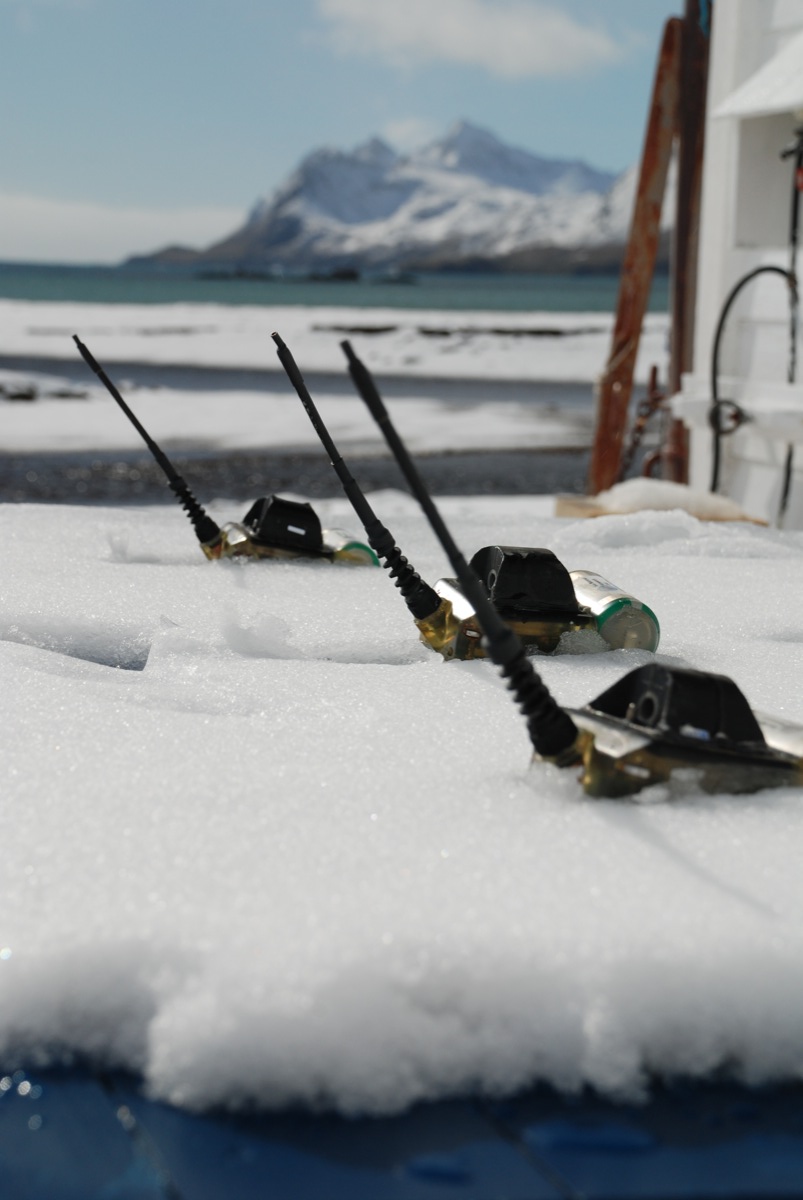
Sagebrush steppe in eastern Idaho, USA
© Brittany J. Teller

The February issue of Methods is now online! As you may have seen already, it includes the BES cross-journal Special Feature: “Demography Beyond the Population“. There are also eight other wonderful articles to read.
We have four articles in the Demography Beyond the Symposium Special Feature. You can read an overview of them by two of the Feature’s Guest Editor Sean McMahon and Jessica Metcalf here (Sean and Jessica are also Associate Editors of Methods).

If you’d like to find out more about each of the individual papers before downloading them, we have blog posts about each one. Daniel Falster and Rich Fitzjohn discuss the development of plant and provide some advice on creating simulation models in Key Technologies Used to Build the plant Package (and Maybe Soon Some Other Big Simulation Models in R). There is a look back at the evolution of Integral Projection Models from Mark Rees and Steve Ellner in How Did We Get Here From There? A Brief History of Evolving Integral Projection Models. In Inverse Modelling and IPMs: Estimating Processes from Incomplete Information Edgar González explains how you can estimate process that you can’t observe. And keep an eye out for Brittany Teller’s blog post coming next week!

Don’t wait too long to get the Demography Beyond the Population Special Feature papers though, they’re freely available for a limited time only

Continue reading “Issue 7.2: Demography Beyond the Population”

Inverse Modelling and IPMs: Estimating Processes from Incomplete Information

Post provided by Edgar J. González

In demography, a set of processes (survival, growth, fecundity, etc.) interacts to produce observable patterns (population size, structure, growth rate, etc.) that change over time. With traditional approaches you follow the individuals of a population over some timespan and track all of these processes.

Demographic patterns and processes (Click to expand)

However, depending on the organism, some processes may be very hard to quantify (e.g. mortality or recruitment in animals or plants with long lifespans). You may have observed the patterns for the organism that you’re studying and, even better, measured some, but not all, of the processes. The question is: can we use this limited information to estimate the processes we couldn’t measure? Continue reading “Inverse Modelling and IPMs: Estimating Processes from Incomplete Information”

How Did We Get Here From There? A Brief History of Evolving Integral Projection Models

Post provided by MARK REES and Steve Ellner

The Early Days: Illyrian Thistle and IBMs

Illyrian Thistle
Illyrian Thistle

Back in 1997 MR was awarded a travel grant from CSIRO to visit Andy Sheppard in Canberra. CSIRO had been collecting detailed long-term demographic data on several plant species and Andy was keen to develop data-driven models for management.

Andy decided Illyrian thistle (Onopordum Illyricum) would be a good place to start, as this was the most complicated in terms of its demography. The field study provided information on size, age and seed production. The initial goal was to quantify the impact of seed feeders on plant abundance, but after a few weeks of data analysis it became apparent that the annual seed production per quadrat was huge (in the 1000s) but there were always ~20 or so recruits. This meant that effects of seed feeders (if any) occurred outside the range of the data, which wasn’t ideal for quantitative prediction.

So the project developed in a different direction. Onopordum is a monocarpic perennial (it lives for several years then flowers and dies) and Tom de Jong and Peter Klinkhamer had recently developed models to predict at what size or age monocarps should flower, so it seemed reasonable to see if this would work. Continue reading “How Did We Get Here From There? A Brief History of Evolving Integral Projection Models”

Key Technologies Used to Build the plant Package (and Maybe Soon Some Other Big Simulation Models in R)

Post provided by RICH FITZJOHN and DANIEL FALSTER

Our paper in Methods in Ecology and Evolution describes a new software package, plantplant is an individual-based simulation model that simulates the growth of individual trees, stands of competing plants, or entire metacommunities under a disturbance regime, using common physiological rules and trait-based functional trade-offs to capture differences among species.

Non-Linear Processes and Thousands of Plants

Since the development of gap models in the 1970s (e.g. Botkin 1972), researchers have been using computer simulations to investigate how elements of plant biology interact with competition and disturbance regimes to influence vegetation demography, structure and diversity. Simulating the competitive interactions among many thousands of plants, however, is no easy task.

Despite widespread recognition of the importance of key non-linear processes — such as size-structured competition, disturbance, and trait-based trade-offs — for vegetation dynamics, relatively few researchers have been brave (or daft) enough to try and incorporate such processes into their models. The situation is most extreme in theoretical ecology, where much contemporary theory (e.g. coexistence theory, neutral theory) is still built around completely unstructured populations.

Features of plant

Key processes modelled within the plant package.

The plant package attempts to change that by providing an extensible, open source framework for studying trait-, size- and patch-structured dynamics. One thing that makes the plant model significant is the focus on traits. plant is one of several attempts seeking to integrate current understanding about trait based trade-offs into a model of individual plant function (see also Moorcroft et al 2001Sakschewski et al 2015).

A second feature that makes the plant software significant, is it that is perhaps the first example where a computationally intensive model has been packaged up in a way that enables widespread usage, makes the model more usable and doesn’t  sacrifice speed.

In this post we will describe the key technologies used to build the plant software. Continue reading “Key Technologies Used to Build the plant Package (and Maybe Soon Some Other Big Simulation Models in R)”

Methods Beyond the Population

Post Provided by SEAN MCMAHON and JESSICA METCALF

Demography Beyond the Population” is a unique Special Feature being published across the journals of the British Ecological Society.  The effort evolved from a symposium of the same name hosted in Sheffield, UK last March. Both the meeting and the Special Feature were designed to challenge ecologists from a range of fields whose research focuses on populations.

The participants were charged with sharing how they are pushing the work they do beyond the stage where the population is the focus into research where the population is just the beginning and the focus spans scales, systems and tools. This encompasses a broad suite of biological research, including range modelling, disease impacts on communities, biogeochemistry, evolutionary theory, and conservation biology. The meeting was a great success, and this Special Feature should be equally valuable to the broad readership of the BES journals.

Methods in Ecology and Evolution has a special place in the Special Feature, hosting four papers. These papers not only introduce new efforts in population biology, they provide the methods that other scientists can use to implement them. With the tools provided by these four papers, researchers will be able to advance forest modelling, evolutionary theory, climate change biology and statistical inference of hidden population parameters.  Seriously good stuff! Continue reading “Methods Beyond the Population”

International Marine Connectivity Conference: Pre-Booking Now Open

Background of the iMarCo

iMarCoiMarCo is a new initiative aimed at creating an international network for promoting collaborative projects among European scientists interested in the study of marine connectivity. The network covers a broad spectrum of marine science disciplines including physical oceanography, microchemistry, genetics and evolutionary ecology, behaviour, tagging, fisheries and aquaculture.

The strategic objective of iMarCo is to organise and create synergies among the European scientific community sharing an interest in the understanding of the spatial dynamics of marine populations. Continue reading “International Marine Connectivity Conference: Pre-Booking Now Open”

Demography Beyond the Population Webinar: Register for Free Now

Webinar logoRegister for FREE for the first ever BES Publishing webinar based on our forthcoming Demography Beyond the Population Special Feature.

This hour long webinar will begin at 1pm (GMT) on Tuesday 1 March. It highlights some of the excellent articles soon to be published in the British Ecological Society journals Special Feature entitled “Demography Beyond the Population”. The Special Feature is a collaborative effort including articles in all six BES journals. This is the first time such a large ecological collaboration has been attempted worldwide. Using a cross-journal approach has allowed us to highlight the strongly interdisciplinary nature of the field of demography to its fullest potential as well as to lay down the foundations for future directions at the interface of ecology, evolution, conservation biology and human welfare. The webinar has several international speakers and will discuss the articles in the Special Feature and the implications for demography research going forward. Continue reading “Demography Beyond the Population Webinar: Register for Free Now”

The Smart Nest Box: Stepping into the World of Cavity-Dwelling Animals

Post provided by MARKÉTA ZÁRYBNICKÁ

The SNBox in the field

Seeing is better than being told, isn’t it? In recent years, video recording and analysis has become a successful non-invasive method for collecting biological data on many species. At Project Smart Nestbox (a collaborative project between the Czech University of Life Science Prague and the Czech Technical University in Prague) we decided to push these methods forward to allow for the long term surveillance of cavity or box-nesting species. We developed and tested the Smart Nest Box (SNBox) – a system that overcomes some of the usual limitations found in video recording fieldwork: data storage capacity, power source and insufficient light. As it’s National Nest Box Week in the UK, Methods in Ecology and Evolution have asked me to write a blog post about it. Continue reading “The Smart Nest Box: Stepping into the World of Cavity-Dwelling Animals”

Safeguarding Sturgeon: Satellite measurements of ocean color and temperature help researchers predict sturgeon locations

Below is a press release about the Methods paper ‘Dynamic seascapes predict the marine occurrence of an endangered species: Atlantic Sturgeon Acipenser oxyrinchus oxyrinchus‘ taken from the University of Delaware.

New clues are helping University of Delaware researchers develop an online map to help Mid-Atlantic fishermen avoid catching Atlantic sturgeon.

Researchers at the University of Delaware are one step closer to developing an online map that would help Mid-Atlantic fishermen avoid catching Atlantic sturgeon.

The research team, led by Matthew J. Oliver, Patricia and Charles Robertson Professor of Marine Science and Policy, found they could make useful predictions about sturgeon locations using satellite measurements of ocean color and temperature. They reported their findings Feb. 3 in the journal Methods in Ecology and Evolution.

The researchers believe this to be an important step toward helping both fishermen and the vulnerable fish. If they can reliably predict where sturgeon or other “species of concern” are congregating or migrating, they can relay this information to fishermen through a daily fishing forecast, similar to a weather forecast. Continue reading “Safeguarding Sturgeon: Satellite measurements of ocean color and temperature help researchers predict sturgeon locations”

Celebrating Wetlands Today, Protecting Them for Tomorrow

Post Provided by JULIA CHERRY, UNIVERSITY OF ALABAMA

Today is World Wetlands Day, a day to raise awareness about wetlands and the many ecosystem services that they provide. Wetlands are broadly defined as areas saturated or inundated with water for periods long enough to generate anaerobic soils and support water-loving plants. They include bogs, swamps, floodplain forests, marshes and mangroves.

Some may wonder why these habitats deserve their own day of recognition, as wetlands can evoke images of the soggy, unpleasant wild places– the “ghast pools” of Dante’s Divine Comedy or the “waste places” of Beowulf. Unfortunately, these descriptions overshadow the true beauty and value of the world’s diverse wetland ecosystems. For those of us dedicated to researching and enjoying wetlands, these areas are worth appreciating every day of the year for numerous reasons.

In honor of World Wetlands Day, I will make the case for wetlands and highlight an example of a new research tool designed to understand how coastal wetlands may respond to sea-level rise.

Wetland habitats, including (A) a marine-dominated coastal marsh and maritime pine island complex (Grand Bay National Estuarine Research Reserve, Mississippi, USA), (B) a freshwater floodplain marsh (Hale County, Alabama, USA), (C) a cypress-tupelo swamp (Perry Lakes, Alabama, USA), and (D) a Gulf of Mexico salt marsh (Rockefeller Wildlife Refuge, Louisiana, USA). ©Julia Cherry

Continue reading “Celebrating Wetlands Today, Protecting Them for Tomorrow”