Issue 6.8

Issue 6.8 is now online!
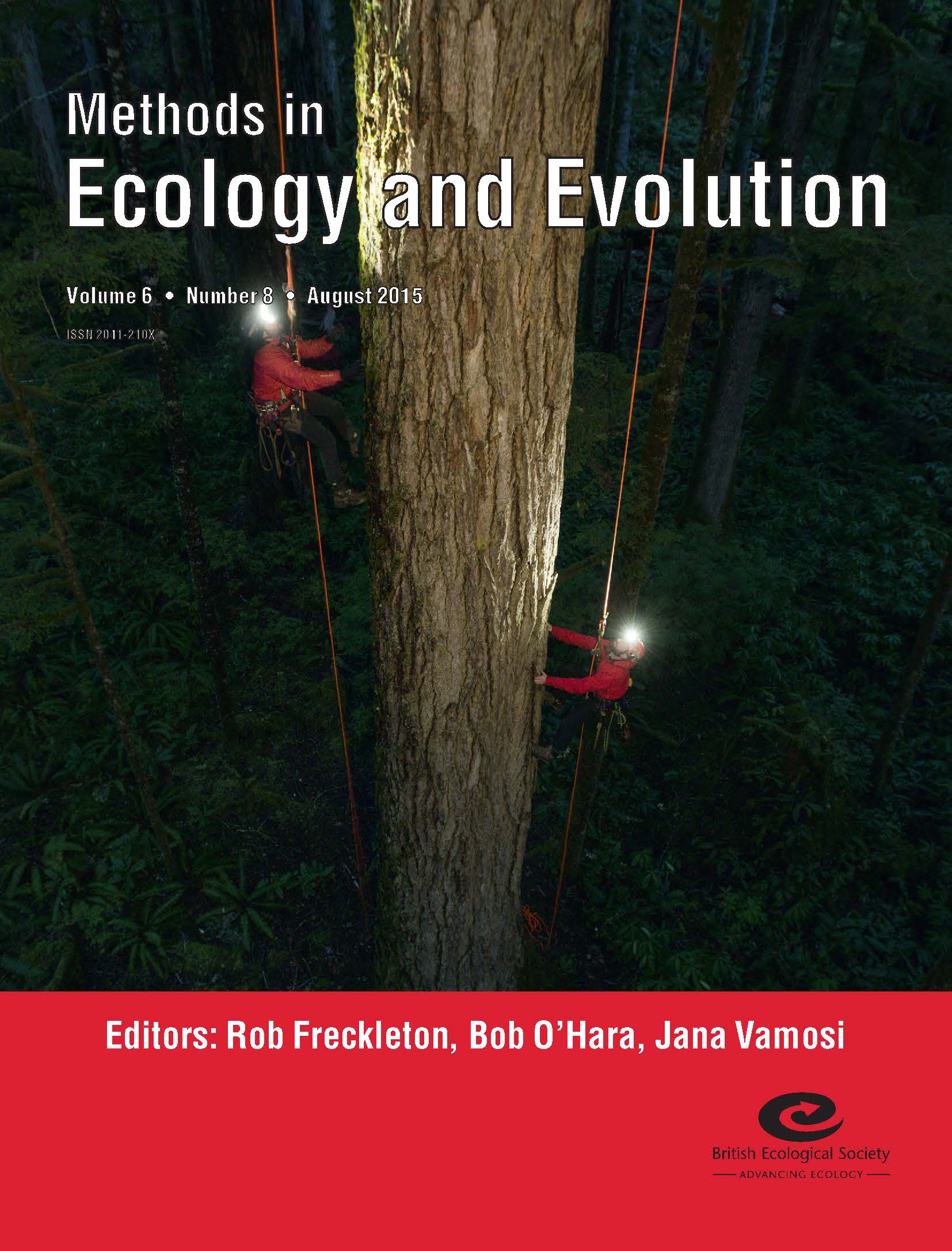
The August issue of Methods is now online!

This month’s issue contains two Applications article and one Open Access article, all of which are freely available.

LEA: This R package enables users to run ecological association studies from the R command line. It can perform analyses of population structure and genome scans for adaptive alleles from large genomic data sets. The package derives advantages from R programming functionalities to adjust significance values for multiple testing issues and to visualize results.

PIPITS: An open-source stand-alone suite of software for automated processing of Illumina MiSeq sequences for fungal community analysis. PIPITS exploits a number of state of the art applications to process paired-end reads from quality filtering to producing OTU abundance tables.

Giovanni Strona and Joseph Veech provide this month’s Open Access article. Many studies have focused on nestedness, a pattern reflecting the tendency of network nodes to share interaction partners, as a method of measuring the structure of ecological networks. In ‘A new measure of ecological network structure based on node overlap and segregation‘ the authors introduce a new statistical procedure to measure both this kind of structure and the opposite one (i.e. species’ tendency against sharing interacting partners).

In addition to this, our August issue features articles on Estimating Diversity, Ecological Communities and Networks, Genetic Distances and Immunology. Continue reading “Issue 6.8”

Impact of Flooding on Wetlands Measurable via Low-Cost Approach

Below is a press release about the Methods paper ‘Testing sea-level rise impacts in tidal wetlands: a novel in situ approach‘ taken from the University of Alabama:

IMG_0175 (2)
Researchers installed adjustable enclosures near the shoreline to simulate low, medium & high flooding levels. © Dr Eric Sparks, Mississippi State University

Scientists designed a new, on-site method for studying potential impacts rising sea levels can have on vital wetlands, said a University of Alabama researcher who led a study publishing in Methods in Ecology and Evolution today describing the modifiable apparatuses.

Primarily using materials available at the local hardware store, the scientists, including UA’s Dr Julia Cherry, designed, constructed and tested low-cost enclosures, called weirs, to realistically simulate three flooding levels on coastal wetlands. Simulating impacts of sea level rise on-site and at larger scales had previously proven difficult.

“I hope this provides other researchers with a template to ask their questions and to improve upon the method we’ve documented to do bigger and better coastal wetland studies,” said Cherry, an associate professor in UA’s New College and its biological sciences department. Continue reading “Impact of Flooding on Wetlands Measurable via Low-Cost Approach”

Animal-eye view of the world revealed with new visual software

Below is a press release about the Open Access Methods paper ‘Image calibration and analysis toolbox – a free software suite for objectively measuring reflectance, colour and pattern‘ taken from the University of Exeter:

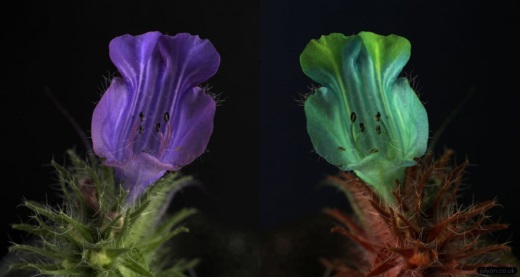
New camera technology that reveals the world through the eyes of animals has been developed by University of Exeter researchers. The details are published today in the journal Methods in Ecology and Evolution.

Echium angustifolium in Tenerife (Borage family). To us the flowers are a fairly uniform purple, but bees can see two UV absorbent patches at the top of the flower.

The software, which converts digital photos to animal vision, can be used to analyse colours and patterns and is particularly useful for the study of animal and plant signalling, camouflage and animal predation, but could also prove useful for anyone wanting to measure colours accurately and objectively.

The software has already been used by the Sensory Ecology group in a wide range of studies, such as colour change in green shore crabs, tracking human female face colour changes through the ovulation cycle, and determining the aspects of camouflage that protect nightjar clutches from being spotted by potential predators. Continue reading “Animal-eye view of the world revealed with new visual software”

The Value of Information: Does More Data Mean Better Decisions?

Post provided by Dr Stefano Canessa

Applied ecology can be defined as scientific knowledge that helps in making good management decisions. Scientists have a natural desire to collect information, managers want that information so that they know they are doing the right thing, and both generally act under the assumption that more information equals better decisions. This is generally correct, since information helps us make, well, informed decisions. Therefore, when our ecological knowledge is uncertain (which is practically always the case) we usually advocate further research.

On the other hand, however, information comes at a cost. It may cost money to collect it and take time to set up studies: both are usually in short supply. We can’t learn everything and often the information we can actually collect is still imperfect. So how do we determine if that additional piece of information we’d like to have is really valuable for our management?

In ‘When do we need more data? A primer on calculating the value of information for applied ecologists’ , Stefano Canessa and colleagues provide a tutorial to the calculation of value of information (VOI) for applied ecologists and managers who would like to know more about it, but are not familiar with decision-theoretic principles and notation.

What is ‘Value of Information’?

In decision analysis, the value of information is the improvement in the outcomes of our actions that we would expect if we could reduce or eliminate uncertainty before making a decision. Previously applied in engineering, economics and healthcare planning, VOI is also intuitively appealing for environmental management, where decisions must be made in the face of ubiquitous uncertainty.  Knowing the value of information can assist in designing monitoring and experimental programs, implementing adaptive management and prioritising sources of uncertainty. In other words, it can help applied ecologists and conservation managers find a focused, transparent way to address the inevitable need for “more data”.

An increasing number of studies are applying VOI to conservation management; however, in spite of its potential the technique is still underused in real-world applications, particularly beyond the small community of applied ecologists trained in decision-analytic methods.

Click Image to begin a Prezi Presentation on Value of Information

In summary, three things determine the value of information:

  1. How much we already know (the more we know, the less beneficial it is to collect more information)
  2. Whether and how we would react to that extra information by changing actions, and how much better would the updated action be
  3. How good is the information we can actually get (think about sample sizes, imperfect detection, time lags, etc)

Continue reading “The Value of Information: Does More Data Mean Better Decisions?”

Issue 6.7

Issue 6.7 is now online!

The July issue of Methods is now online!

This month’s issue contains two Applications article and one Open Access article, all of which are freely available.

fuzzySim: Binary similarity indices are widely used in ecology. This study proposes fuzzy versions of the binary similarity indices most commonly used in ecology, so that they can be directly applied to continuous (fuzzy) rather than binary occurrence values, producing more realistic similarity assessments. fuzzySim is an open source software package which is also available for R.

 Actave.net: A freely accessible, web-based analysis tool for complex activity data, actave.net provides cloud-based and automatic computation of daily aggregates of various activity parameters based on recorded immersion data. It provides maps and graphs for data exploration, download of processed data for modelling and statistical analysis, and tools for sharing results with other users.

Anna Sturrock et al. provide this month’s Open Access article. In ‘Quantifying physiological influences on otolith microchemistry‘ the authors test relationships between otolith chemistry and environmental and physiological variables. The influence of physiological factors on otolith composition was particularly evident in Sr/Ca ratios, the most widely used elemental marker in applied otolith microchemistry studies. This paper was reported on in the media recently. You can read more about it here.

Our July issue also features articles on Monitoring, Remote Sensing, Conservation, Genetics and three papers on Statistics. Continue reading “Issue 6.7”

Statistics in Ecology and Environmental Monitoring: A Look Back at the SEEM 2015 Conference

Post provided by Dr Matt Schofield

Matt is an Associate Editor for Methods in Ecology and Evolution. He was the principle organiser of this year’s SEEM conference. His research interests include Bayesian inference and hierarchical modelling, computational methodology, ecological statistics and much more. Matt is based at the University of Otago.

A photo taken during a lunch break at the conference

The Statistics in Ecology and Environmental Monitoring (SEEM) conference was held in Queenstown, New Zealand on June 22-26, 2015. Queenstown is a resort town in the Southern Alps of New Zealand that looks out on Lake Wakatipu, surrounded by snow-capped mountains. The venue gave a chance to explore some of the natural beauty of New Zealand, with excursions to local ski fields, wineries and various hiking trails.

SEEM conferences have been organized by members of the Statistics group at the University of Otago since 1993. The first SEEM conference was held in Dunedin, New Zealand and conferences were then held regularly (every 3 years) until 2002. The last SEEM conference, in 2007, also served as the EURING (European Union for Bird Ringing) technical meeting. With nearly ten years passing since 2007, we had a smaller conference of around 50 attendees this year. There was an engaging atmosphere during the meeting and productive discussion followed each of the 40 talks. The SEEM 2015 meeting maintained the tradition of previous SEEM conferences with delegates from across a broad spectrum of statistical ecology coming together to discuss research. Continue reading “Statistics in Ecology and Environmental Monitoring: A Look Back at the SEEM 2015 Conference”

‘Bee soup’ could help understand declines and test remedies

Below is a press release about the Methods paper ‘High-throughput monitoring of wild bee diversity and abundance via mitogenomics‘ taken from the University of East Anglia:

It may sound counter-intuitive, but crushing up bees into a ‘DNA soup’ could help conservationists understand and even reverse their decline – according to University of East Anglia scientists.

Research published today in the journal Methods in Ecology and Evolution shows that collecting wild bees, extracting their DNA, and directly reading the DNA of the resultant ‘soup’ could finally make large-scale bee monitoring programmes feasible.

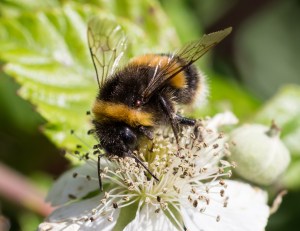
14614327622_6525ac1c30_o
©Mibby23 (click image to see original version)

This would allow conservationists to detect where and when bee species are being lost, and importantly, whether conservation interventions are working.

The UK’s National Pollinator Strategy outlines plans for a large-scale bee monitoring programme. Traditional monitoring involves pinning individual bees and identifying them under a microscope. But the number of bees needed to track populations reliably over the whole country makes traditional methods infeasible.

This new research shows how the process could become quicker, cheaper and more accurate. Continue reading “‘Bee soup’ could help understand declines and test remedies”

New Tool to Assess Effects of Powerful Man-Made Underwater Sounds

Below is a press release about the Methods paper ‘An interim framework for assessing the population consequences of disturbance‘ taken from the University of St Andrews:

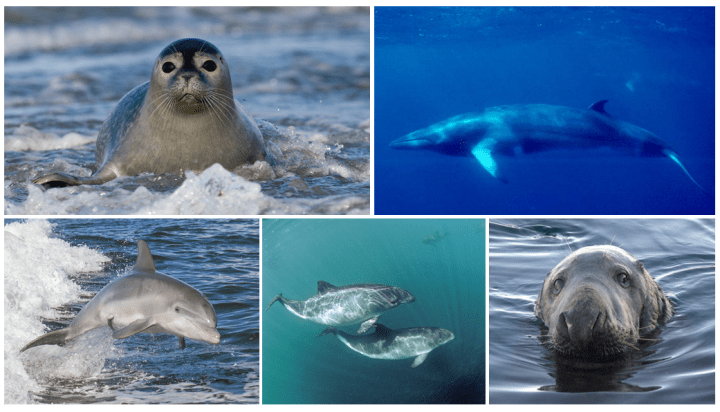
A team of scientists from the University of St Andrews has developed a new desktop tool for assessing the impact of noise from human disturbance, such as offshore wind development on marine mammal populations.

PCOD_PR_imageThe team, led by Prof. John Harwood, have developed the interim Population Consequences of Disturbance (PCoD) framework for assessing the consequences of human induced noise disturbance on animal populations. The study was published yesterday in the journal Methods in Ecology and Evolution.

Changes in natural patterns of animal behaviour and physiology resulting from animals being disturbed may alter the conservation status of a population if the activity affects the ability of individuals to survive, breed or grow. However, information to forecast population-level consequences of such changes is often lacking. The project team developed an interim framework to assess impacts when empirical information is sparse. Crucially, the model shows how daily effects of being disturbed, which are often straightforward to estimate, can be scaled to the duration of disturbance and to multiple sources of disturbance.

“We have developed a novel framework that can be used to broadly forecast the consequences of anthropogenic disturbance on animal populations, which in principal can be applied to a range of marine and terrestrial species and different types of disturbance.” – Dr Stephanie King

One important application for the interim PCoD framework is in the marine industry. Many industries use practices that involve the generation of underwater noise. These include shipping, oil and gas exploration, defence activities and port, harbour and renewable energy construction. Continue reading “New Tool to Assess Effects of Powerful Man-Made Underwater Sounds”

Advances in Phylogenetic Methods – The Applications Papers

Original Image ©PLOS One Phylogeny

Timed to coincide with Evolution 2015, we have released a new Virtual Issue on Phylogenetic Methods. All of the articles in this Virtual Issue will be freely available for a limited period.

On Friday, we gave some more information about the research articles in this Virtual Issue. In this post, we will be focusing on the Applications papers.

Applications papers introduce new tools for research, which provide practitioners with an important source of information and background on the tools they use. In this Virtual Issue we have highlighted the newest Applications papers that describe how phylogenetic methods are contributing to the fields of ecology and evolution. These include tools with aims as diverse as phylogenetic tree reconstruction and analysing phylogenetic diversity in communities. All Applications papers, not just those in the Virtual Issue, are free to access.

You can see a little more information on each of the Applications Papers below.

Continue reading “Advances in Phylogenetic Methods – The Applications Papers”

Virtual Issue: Advances in Phylogenetic Methods

Original Image ©PLOS One Phylogeny

Timed to coincide with Evolution 2015, we have released a new Virtual Issue on Phylogenetic Methods. All of the articles in this Virtual Issue will be freely available for a limited period.

An understanding of the tree of life contributes to many facets of biology. This Virtual Issue has assembled studies that showcase the breadth of the utility of phylogenetic trees, including phylogenetic beta diversity, trait evolution, diversification, biodiversity studies, phylogenetic signal, biogeography, ecosystem functioning, and host-pathogen dynamics.

The Research papers included are excellent examples of new ways that phylogenies can be applied to central questions in ecology, evolution and biodiversity, such as measuring niche conservatism, trait evolution and diversification rates. The issue also has articles on barcoding methods, which increasingly are used to understand phylogenetic and functional diversity.

You can see a little more information on each of the articles below.

Continue reading “Virtual Issue: Advances in Phylogenetic Methods”