International Bat Appreciation Day: Giving thanks to the real superheroes of the sky

Post provided by Chloe Robinson
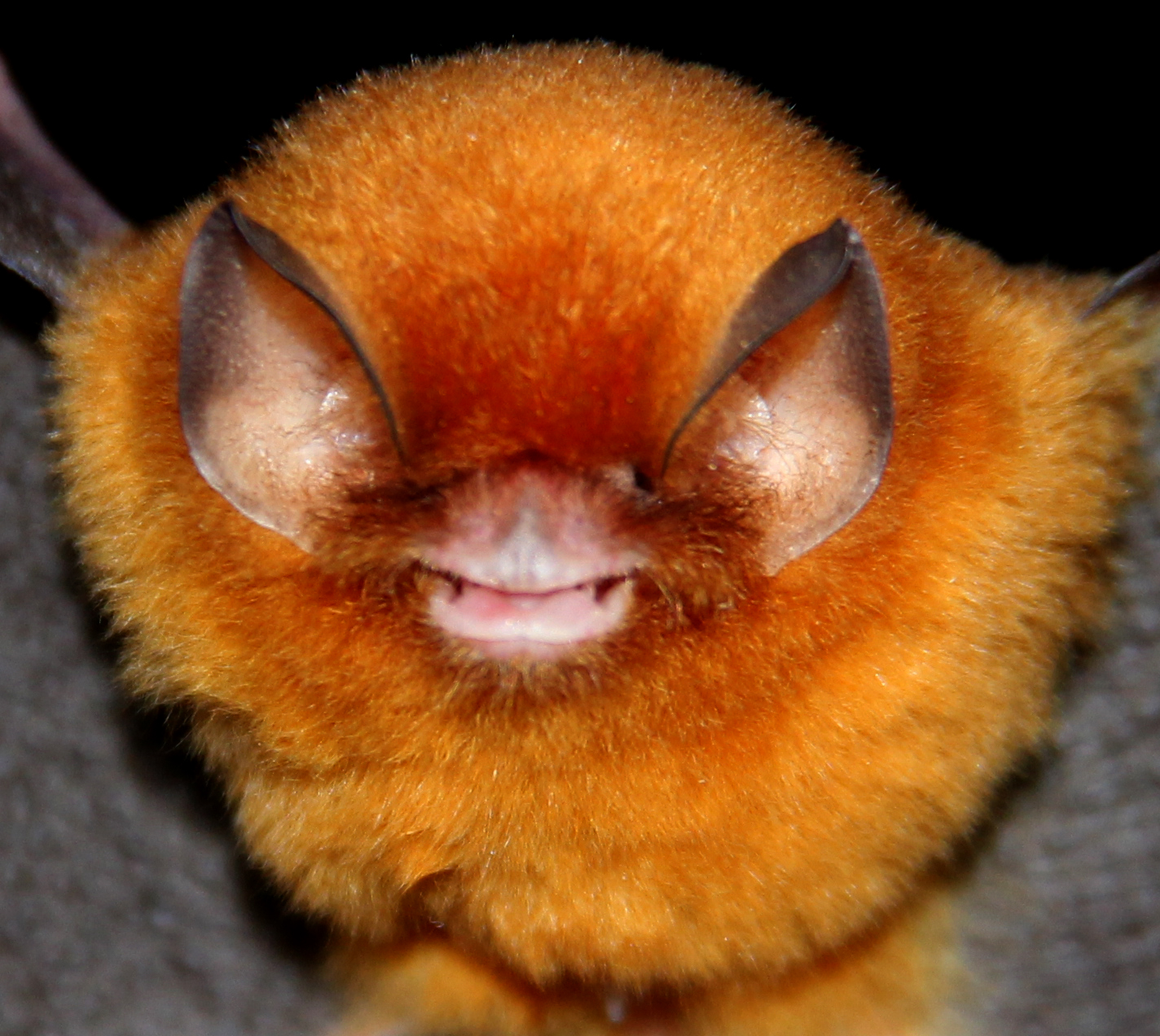
Mexican greater funnel-eared bat (Natalus mexicanus). Credit: Veronica Zamora-Gutierrez.

Bat Conservation International (BCI), founded in 1982, aims to conserve bats and their habitats through a combination of education, conservation, and research. Bats worldwide contribute towards controlling pests, create rich fertilizer for landowners, and pollinate fruit and flowers. BCI introduced International Bat Appreciation Day to increase awareness about bats and what they do for our environment.

In this post, associate editor Chloe Robinson will be summarising the various MEE published methods for bat monitoring and how technological developments have allowed us to further look and listen into the lives of these incredible creatures.

Continue reading “International Bat Appreciation Day: Giving thanks to the real superheroes of the sky”
Unmasking Acoustic Indices

Post provided by Oliver Metcalf

Gould’s toucanet Selenidera gouldii display involves dancing, but also lots of vocalisation. Credit: Oliver Metcalf.

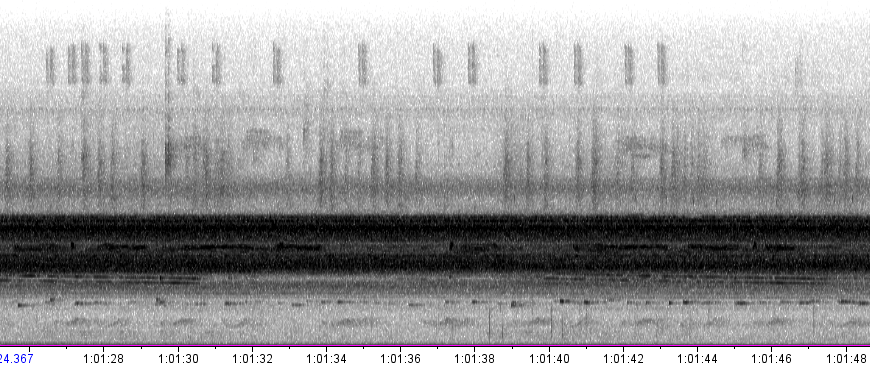
Acoustic indices are increasingly being used when analysing soundscapes to gain information on biodiversity. However, inconsistent results and lack of consensus on best practices has hampered their application in conservation and land‐use management contexts. In this post, Oliver Metcalf talks about his Methods in Ecology and Evolution article ‘Acoustic indices perform better when applied at ecologically meaningful time and frequency scales’, where he highlights the need to  calculate acoustic indices at ecologically appropriate time and frequency bins to reduce signal masking effects.

Continue reading “Unmasking Acoustic Indices”

10th Anniversary Volume 9: Acoustic Monitoring Editor’s Choice

To celebrate our 10th Anniversary, we are highlighting a key article from each of our volumes. For Volume 9 we selected Estimating effective detection area of static passive acoustic data loggers from playback experiments with cetacean vocalisations’ by Nuuttila et al. (2018). 

In this post, three of our Associate Editors with expertise in acoustic monitoring, Sarab Sethi, Camille Desjonquères and Lian Pin Koh, select their favourite MEE papers in this field.

Continue reading “10th Anniversary Volume 9: Acoustic Monitoring Editor’s Choice”

Anniversary Volume 9: Estimating Effective Detection Area of Static Passive Acoustic Data

Post provided by Hanna K Nuuttila

To celebrate the 10th Anniversary of the launch of Methods in Ecology and Evolution, we are highlighting an article from each volume to feature in the Methods.blog. For Volume 9, we have selected ‘Estimating effective detection area of static passive acoustic data loggers from playback experiments with cetacean vocalisations’ by Nuuttila et al. (2018).  In this post, the authors discuss the background and key concepts of the article, and the application of the article for assessing abundance of cetaceans.

Continue reading “Anniversary Volume 9: Estimating Effective Detection Area of Static Passive Acoustic Data”

Earth Day 2020: Monitoring Biodiversity for Climate Action

Post provided by Chloe Robinson

The demands of a growing human population are putting increasing pressure on the Earth’s natural systems and services. Dubbed the ‘Anthropocene’, we are currently living in a period where human actions are directly altering many earth processes, including atmospheric, geologic, hydrologic and biospheric processes. Climatic change and the resulting consequences, including rising temperatures, changing precipitation (i.e. rainfall, snow etc) and increase in frequency of storm events, represent the biggest challenge to our future and the life-support ecosystems that make our world habitable.

Artist’s interpretation of global climate change. Photo credit: Pete Linforth/Pixabay.

In 1970, Earth Day was launched as a modern environmental movement and a unified response to an environment in crisis. Earth Day has provided a platform for action, resulting in the creation of the Environmental Protection Agency (EPA), The Clean Air, Clean Water and Endangered Species Acts in the US and more globally. This year, 22 April marks the 50th anniversary of Earth Day, and the number one environmental crisis theme which needs immediate attention is ‘Climate Action’. Many of our ecosystems on earth are degrading at an alarming pace and we are currently experiencing a species loss at a rate of tens or hundreds of times faster than in the past. 

Continue reading “Earth Day 2020: Monitoring Biodiversity for Climate Action”

New Research Shows Pretend Porpoise Sounds are Helping Conservation Efforts

Below is a press release about the Methods in Ecology and Evolution article ‘Estimating effective detection area of static passive acoustic data loggers from playback experiments with cetacean vocalisations‘ taken from Swansea University.

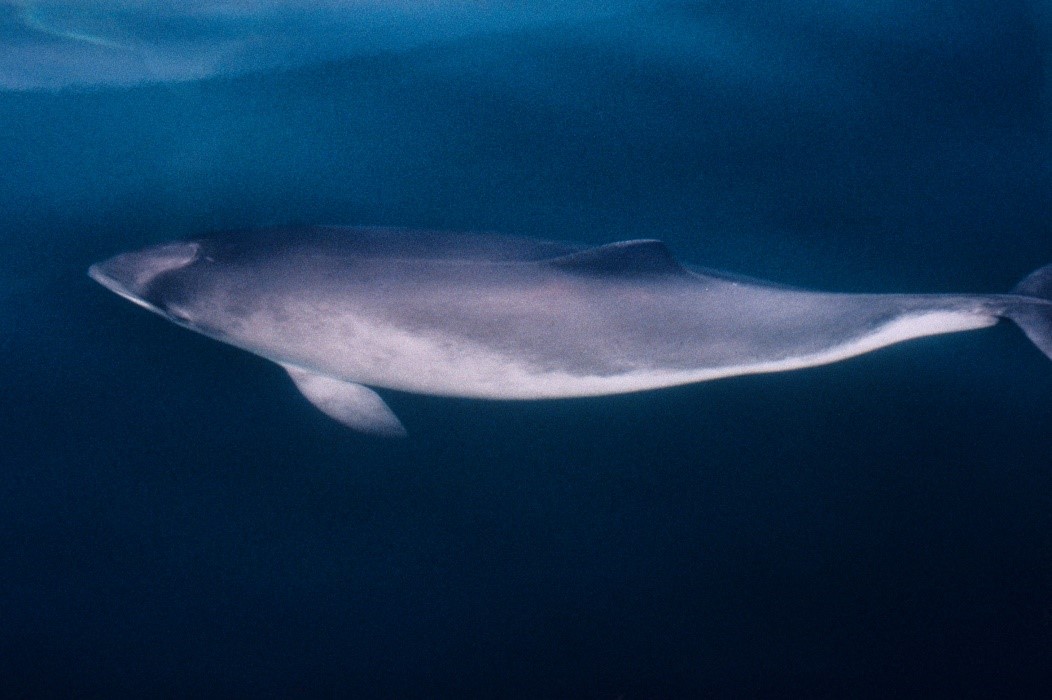
Harbour porpoise under the surface - I. Birks, SeaWatchFoundation
Harbour porpoise under the surface – I. Birks, SeaWatchFoundation

An examination into the detection of harbour porpoises is helping to give new understanding of effective monitoring of species under threat from anthropogenic activities such as fisheries bycatch and coastal pollution.

In a first study of its kind, Dr Hanna Nuuttila, currently at Swansea University’s College of Science – together with scientists from the German Oceanographic Museum, the University of St Andrews and Bangor University – revealed how playing back porpoise sounds to an acoustic logger can be used to assess the detection area of the device, a metric typically required for effective monitoring and conservation of protected species.

Continue reading “New Research Shows Pretend Porpoise Sounds are Helping Conservation Efforts”

The Overlooked Commotion of Particle Motion in the Ocean

Below is a press release about the Open Access Methods paper ‘Particle motion: the missing link in underwater acoustic ecology‘ taken from the University of Bristol, the University of Exeter and the Centre for Environment, Fisheries  & Aquaculture Science (CEFAS).

Fish and invertebrates predominantly or exclusively detect particle motion.

A growing number of studies on the behaviour of aquatic animals are revealing the importance of underwater sound, yet these studies typically overlook the component of sound sensed by most species: particle motion. In response, researchers from the Universities of Bristol, Exeter and Leiden and CEFAS have developed a user-friendly introduction to particle motion, explaining how and when it ought to be measured, and provide open-access analytical tools to maximise its uptake. Continue reading “The Overlooked Commotion of Particle Motion in the Ocean”