Our July Issue is now online! This issue contains 20 articles about the latest methods in ecology and evolution, including methods for characterising soil bacterial biodiversity, identifying fish species in fish markets using eDNA, standarising and cleaning biodiversity data and much more! Plus, read the editorial about our switch to a gold open access model this month. Read on to find out about this month’s featured articles … Continue reading July 2022 Issue Out Now!
One of my main areas of study is Periphyton developed in microcosms. For those of you who don’t know, Periphyton is a green biofilm that you may notice in some (not very clean) swimming pools and is composed mainly of algae, bacteria, fungi, meiofauna and detritus. I started studying Periphyton because my Masters thesis involved developing a model in freshwater systems and after that I wanted to look into their spatial distribution.
I wanted to find an opportunity to connect my study system with two of my passions: space travel (I used to watch Star Trek and also I thoroughly enjoyed Space: The Final Frontier for Ecological Theory by Peter Kareiva) and tropical rainforests (which I developed a fondness for while watching Tarzan). I thought I could use Periphyton as a model system to test ecological theory, with a complexity similar to tropical forest as suggested by Lowe [1].
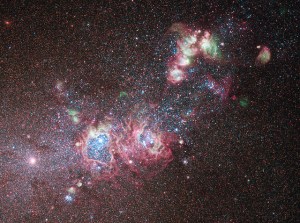
The study of the spatial structure of Periphyton was not as easy as space travel in Star Trek (for one thing they have a warp drive and I don’t!). I wanted to compare spatial models and data, but the methods that were available weren’t very well-suited to what I wanted to do, so I was not sure of how to begin. In the end, I decided to launch my first microcosms experiment and in the first photos I took of Periphyton’s spatial structure I saw they were like clouds, algae clouds. Continue reading “From Star Trek to Species Ranks in Space… and Beyond”

 Methods Blog