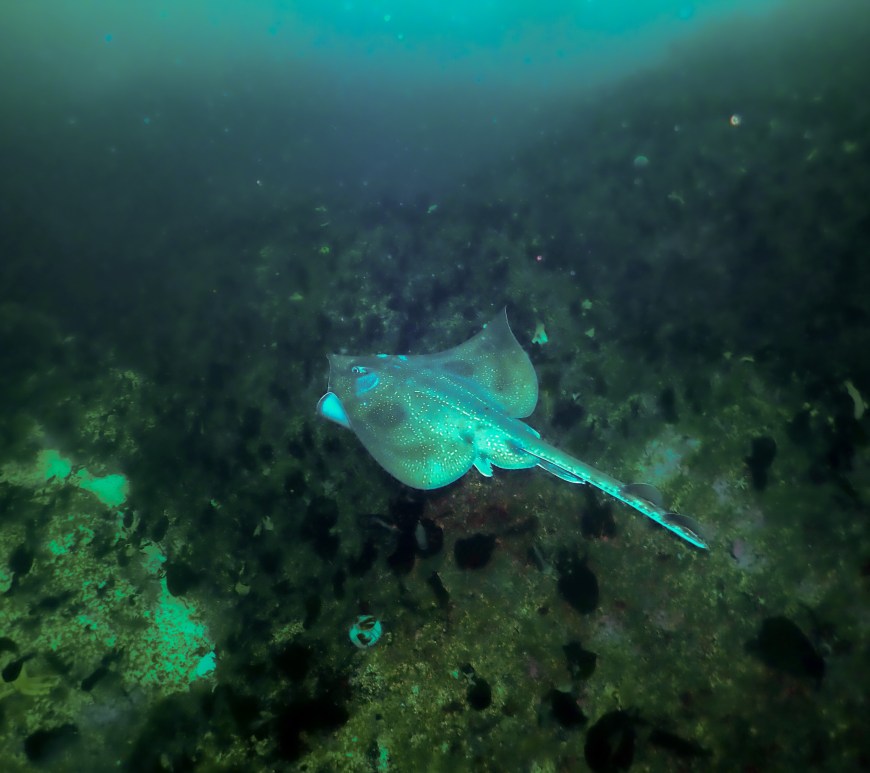
Post provided by Edward Lavender Skating in the deep A decade ago, the Movement Ecology of Flapper Skate project was established to track flapper skate (Dipturus intermedius) in Scotland. Flapper skate are large, flattened, benthic animals, with pale undersides and mottled, grey-brown colouration above. Growing in excess of two metres long, they roam over the seabed down to depths of 1200 m. It is thought … Continue reading Tracking animals in an underwater maze
Post provided by Michaël Beaulieu A cold Encounter in the Wild When talking about animal welfare to scientists who commonly use biologging tools to monitor the behaviour or physiology of wild animals in an ecological or conservation context, I have noticed that the first thing that usually comes to mind for them is the unwanted impact that biologging may have on animal welfare. Much has … Continue reading For worse and for better: the complicated marriage between biologging and wild animal welfare
Michael Phelps is one of the most decorated Olympic athletes of all time and the world’s fastest swimmer. And yet, he could swim faster. Wearing the Speedo LZR Racer supersuit Michael Phelps could reduce his hydrodynamic drag, or water resistance, by upwards of 40%. That could increase his swim speed by more than 4%! In competition, that’s the difference between silver and gold. But, if Phelps forgot to remove his “drag socks” – cumbersome footwear designed to increase water resistance for strength training – his speed would be dramatically reduced. He’d be lucky to walk away with bronze!
Professional swimmers have adapted to the use of performance enhancing technologies to decrease their drag, but that’s nothing compared to the adaptations made by wild animals. Creatures in the marine environment have evolved incredible adaptations to decrease drag, such as extreme streamlining in marine mammals and seabirds. This allows them to move underwater as quickly and efficiently as possible. Seals, for example, are pretty ungainly on land, but in the water they’re sleek and rapid. They have a body shape designed to maximise speed while swimming.
The way that bats acrobatically navigate and forage in complete darkness has grasped the interest of scientists since the 18th century. These seemingly exotic animals make up one in four mammalian species and play important roles in many ecosystems across the globe from rainforests to deserts. Yet, their elusive ways continue to fascinate and frighten people even today. Over the last 200 years, dedicated scientists have worked to uncover how bats hunt and navigate using only their voice and ears while flying at high speed in complete darkness. Still, the inaccessible lifestyle of these small, nocturnal fliers continues to challenge what we know about their activities in the wild.
Understanding the impact bats have on their ecosystems – for example how many insects a bat catches per night – has still not been directly measured. Most of our knowledge on the natural behaviour and foraging ecology is based on elaborate, but ground-based experiments carried out in the wild. These experiments generally track their behaviour using radio-telemetry, record snapshots of their emitted echolocation calls with microphones, or involve extensive observations. Continue reading “Studying Wild Bats with Small On-Board Sound and Movement Recorders”
Movement ecology is a cross-disciplinary field. Its main aim is to quantitatively describe and understand how movement relates to individual and population-level processes for resource acquisition and, ultimately, survival. Today the study of movement ecology hinges on two 21st century advances:
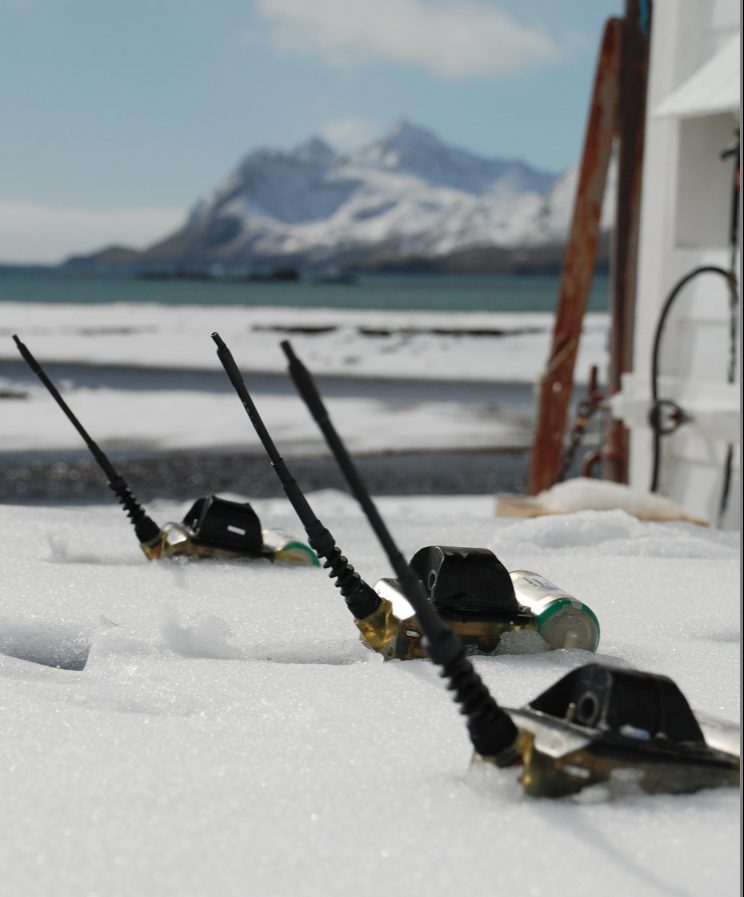
Animal-borne devices/tags (biologging science, Hooker et al., 2007) and/or remote sensing technology to quantify movement and collect data from remote or otherwise challenging environments
Computational power sufficient to manipulate, process and analyse substantial volumes of data
Although datasets often involve small numbers of individuals, each individual can have thousands – sometimes even millions – of data points associated with it. Study species have tended to be large birds and mammals, due to the ease of tag attachment. However, the trend for miniaturisation of tags and the development of remote detection technologies (such as radar, e.g. Capaldi et al., 2000), have allowed researchers to track and study ever smaller animals. Continue reading “Movement Ecology: Stepping into the Mainstream”


 Methods Blog