Digital photography has revolutionised the way we view ourselves, each other and our environment. The use of automated cameras (including camera traps) in particular has provided remarkable opportunities for biological research. Although mostly used for recreational purposes, the development of user-friendly, versatile auto-focus digital single lens reflex (DSLR) cameras allows researchers to collect large numbers of high quality images at relatively little cost.
As you read this, thousands of volunteers of all ages and backgrounds are collecting information for over 1,100 citizen science projects worldwide. These projects cover a broad range of topics: from volunteers collecting samples of the microbes in their digestive tracts, to tourists providing images of endangered species (such as tigers) that are often costly to survey.
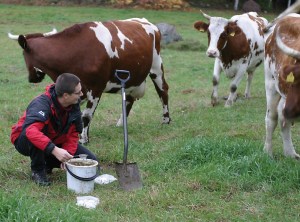
Studies of ecosystem function are studies of action: of insects pollinating flowers, of predators killing pests – and in our case (well, more often than not) of beetles disposing of dung. To isolate the effects of the critters that we think will matter, we need to selectively include or exclude them. If we think a particular species or species group is responsible for a certain function, then we test this by keeping it in or out of enclosures. If we want to look at effects of species diversity, then we create communities of different species richness.
Depending on the target organism, this is sometimes easy and sometimes difficult. But it almost invariably proves to be fun! We enjoy the challenge of inventing new techniques for unravelling ecosystem functions sustained by insects. Working on dung beetles – as we tend to do – can be messy, but it’s definitely never boring.
In targeting ecosystem functions, the real trick is to make the experiments relevant. What we want to understand are the effects of changes occurring in the real world. All too often studies of ecosystem functions have been focused on artificial species pools in artificial settings. To see how we have solved this, we’ll give you a quick look at our dungy portfolio of approaches to date. Continue reading “Disentangling Ecosystem Functions: Our Imagination is the Limit”
Happy New Year! We hope that you all had a wonderful Winter Break and that you’re ready to start 2016. We’re beginning the year with a look back at some of our highlights of 2015. Here’s how last year looked at Methods in Ecology and Evolution.
The Articles
We published some amazing articles in 2015, too many to mention them all here. However, we would like to say a massive thank you to all of the authors, reviewers and editors who contributed to the journal last year. Without your hard work, knowledge and generosity, the journal would not be where it is today. We really appreciate all of your time and effort. THANK YOU!
Opportunities at the Interface between Ecology and Statistics
Biodiversity Indicators are some of the most important tools linking ecological data with government policy. Indicators need to summarise large amounts of information in a format that is accessible to politicians and the general public. The primary use of indicators is to monitor progress towards environmental targets. For the UK, a suite of indicators are produced annually which are used to monitor progress towards the Aichi targets of the Convention on Biological Diversity as well as for European Union based commitments. However, this is complicated by the fact that biodiversity policy within the UK is devolved to each of the four nations, so additional indicators have been developed to monitor the commitments of each country.
A range of biodiversity indicators exist within this suite covering the five strategic goals of the Convention; which include addressing the causes of biodiversity loss, reducing pressures on biodiversity and improving status of biodiversity within the UK. Within strategic goal C (improve status of biodiversity by safeguarding ecosystems, species and genetic diversity) there are currently 11 “State” indicators that use species data to monitor progress towards the targets underlying this goal. Most existing species based indicators use abundance data from large scale monitoring schemes with systematic protocols. However, there are other sources of data, such as occurrence records, that can offer an alternative if they are analysed using the appropriate methods. This post will discuss the development of species indicators for occurrence records to complement the current UK species based indicators, specifically relating to the C4b priority species indicator and the D1c pollinators indicator. Continue reading “Building a Better Indicator”
Post provided by ALISTAIR HOBDAY (senior principal research scientist, CSIRO Australia), Tim Lynch (senior research scientist, CSIRO, Australia) and Rachael Alderman (wildlife biologist, Tasmanian Department of Primary Industry, Parks, Water and Environment, Australia).
Behavioural and ecological research and monitoring of wildlife populations are based on collection of field data. Demographic data, such as breeding frequency, birth rates and juvenile survival, have been critical in understanding population trends for a wide range of species.
Photography has been extensively used by field biologists and ecologists to gather these data and they have been quick to take up improvements in this technology. Many field programmes today use photography either for primary data collection or the communication of results. Advances in digital photography, image storage and transmission, image processing software and web-based dissemination of images have been extremely rapid in recent years, offering ecologists and biologists a range of powerful tools.
Digital imagery has been captured from a wide range of platforms, each of which has various advantages and limitations for biological study. The most remote images are captured from satellite-based sensors, which have been used to assess population abundance of large animals, such as elephant seals, or locate colonies of emperor penguins. Cameras mounted on aircraft can also provide large-scale perspectives but both of these platforms suffer from high cost, operational limitations due to weather, and limited temporal replication. Recent use of drones, while cheaper, still requires a person to be close to the survey location and can only be used in short bursts, typically lasting less than 20 minutes.
Land-based cameras – or those fixed onto animals – can track behaviour closely, but have low sample size as data tends to be collected at the scale of individual or small groups. To improve replication, fleets of remote cameras can be used or multiple images stitched together post hoc to form a montage. However, this increases cost, either for hardware or labour to manually construct panoramas. To date all these camera systems have had limits to their spatial and/or temporal resolution and, therefore, to the number of individuals covered. This restricts biological study at the population level. Continue reading “High-Res Camera Surveys of Wildlife Colonies: The advantages over traditional approaches”
About the issue With topics ranging from phylogenetic analysis to statistics and distribution modelling, conservation, citizen science, surveys, genetic and demographic models to avian biology, our issue 3.2 should be of interest to most ecologists and evolutionary biologists. The issue also contains 5 free applications. About the cover This very high-resolution image of a beech-dominated forest in central Germany was taken by an unmanned aerial … Continue reading Issue 3.2
Modern technology offers some really exciting new opportunities for the use of citizen science, and in our newest video Jonathan Silvertown, Open University, gives a demonstration of Evolution MegaLab, a huge collaboration exploring the use of citizen science methods to undertake high-quality surveys of polymorphism in a wild species. Jonathan demonstrates the site’s display of historical polymorphism data, some features designed to enable researchers to assess the … Continue reading Evolution MegaLab


 Opportunities at the Interface between Ecology and Statistics


 Methods Blog