The Team Shrub research group in 2017 on Qikiqtaruk – Herschel Island in the Canadian Arctic. Not only do Team Shrub work with other people’s data, we collect our own to share publicly following open science best practice. (Photo credit: Sandra Angers-Blondin, www.teamshrub.com).
Team Shrub (www.teamshrub.com), are ecologists working to understand how global change alters plant communities and ecosystem processes. In May 2020, Team Shrub held a lab meeting to discuss working with other people’s data. Inspired by the conversation, they decided to put a blog post together to explore the importance of careful data cleaning in open science, provide 10 best practice suggestions for working with other people’s data, and discuss ways forward towards more reproducible science.
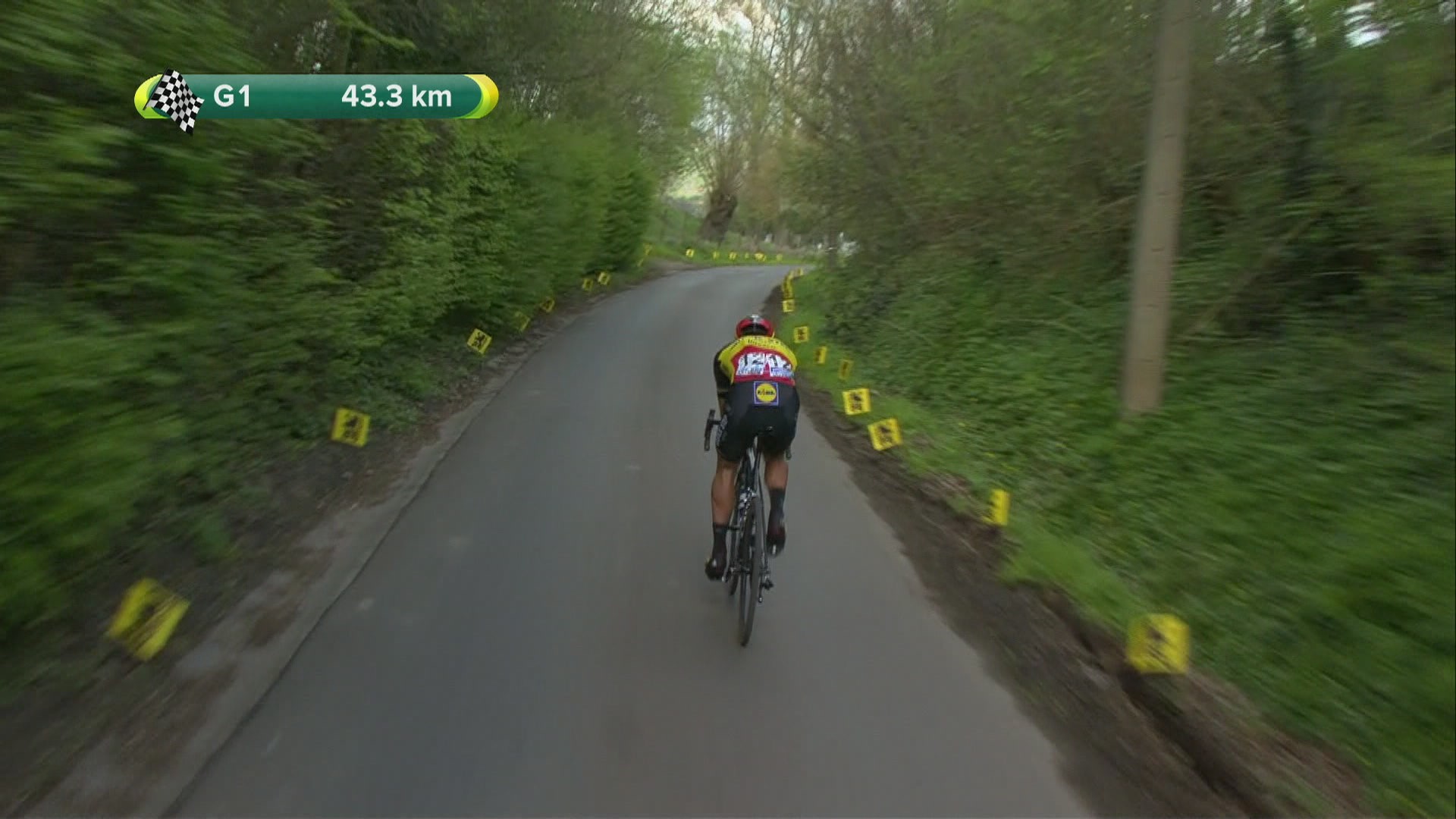
Focusing on trees and shrubs growing around recognisable climbs and other ‘landmarks’ along the route of this major annual road cycling race in Belgium, the team looked at video footage from 1981 to 2016 obtained by Flemish broadcaster VRT. They visually estimated how many leaves and flowers were present on the day of the course (usually in early April) and linked their scores to climate data. Continue reading “TV Coverage of Cycling Races Can Help Document the Effects of Climate Change”
Focus Group Discussions: What are They and Why Use Them?
A focus group discussion with local farmers in Trans Mara district, Kenya, carried out by Tobias O. Nyumba (co-author)
To paraphrase Nelson Mandela: ultimately, conservation is about groups of people. On a global scale it’s our collective human footprint that drives habitat destruction and species extinction, and the joint action of large groups that makes positive change. At a smaller scale, groups of people make decisions about conservation policy or management. In turn, communities of people feel the positive or negative effects of these actions, directly or indirectly. From global to local scales, groups of people make changes and groups of people feel the effects of those changes.
To improve conservation action and understand how decisions affect communities on the ground we need to talk to those communities. This is where focus group discussions become an asset to conservation research. They bring participants together in the same place where they can draw from their own personal beliefs and experiences, and those of other group members in a collective discussion. The researcher takes more of a backseat (facilitator) role in focus group discussions compared to interviews, allowing the group conversation to evolve organically. We can get a more holistic view of a situation from this method than from one-on-one interviews alone. Also, as respondents are interviewed at the same time and in the same place, travelling times and costs can be reduced for the researcher. Continue reading “Using Focus Group Discussions in Conservation Research”
As you read this, thousands of volunteers of all ages and backgrounds are collecting information for over 1,100 citizen science projects worldwide. These projects cover a broad range of topics: from volunteers collecting samples of the microbes in their digestive tracts, to tourists providing images of endangered species (such as tigers) that are often costly to survey.
Last week the Center for Open Science held a meeting with the aim of improving inference in ecology and evolution. The organisers (Tim Parker, Jessica Gurevitch & Shinichi Nakagawa) brought together the Editors-in-chief of many journals to try to build a consensus on how improvements could be made. I was brought in due to my interest in statistics and type I errors – be warned, my summary of the meeting is unlikely to be 100% objective.
True Positives and False Positives
The majority of findings in psychology and cancer biology cannot be replicated in repeat experiments. As evolutionary ecologists we might be tempted to dismiss this because psychology is often seen as a “soft science” that lacks rigour and cancer biologists are competitive and unscrupulous. Luckily, we as evolutionary biologists and ecologists have that perfect blend of intellect and integrity. This argument is wrong for an obvious reason and a not so obvious reason.
We tend to concentrate on significant findings, and with good reason: a true positive is usually more informative than a true negative. However, of all the published positives what fraction are true positives rather than false positives? The knee-jerk response to this question is 95%. However, the probability of a false positive (the significance threshold, alpha) is usually set to 0.05, and the probability of a true positive (the power, beta) in ecological studies is generally less than 0.5 for moderate sized effects. The probability that a published positive is true is therefore 0.5/(0.5+0.05) =91%. Not so bad. But, this assumes that the hypotheses and the null hypothesis are equally likely. If that were true, rejecting the null would give us very little information about the world (a single bit actually) and is unlikely to be published in a widely read journal. A hypothesis that had a plausibility of 1 in 25 prior to testing would, if true, be more informative, but then the true positive rate would be down to (1/25)*0.5/((1/25)*0.5+(24/25)*0.05) =29%. So we can see that high false positive rates aren’t always the result of sloppiness or misplaced ambition, but an inevitable consequence of doing interesting science with a rather lenient significance threshold. Continue reading “There’s Madness in our Methods: Improving inference in ecology and evolution”
If there is one question I hear over and over again, it’s this: “why, oh why, do you use satellite data instead of ground-based data in your research?” People seem to think that I believe satellite data are better than ground-based data. Do I not value fieldwork? Do I not trust ground-based data? My answer to all of this is: you’ll never catch me preaching that satellite remote sensing can solve the entire data collection gap in ecological monitoring.
Yes, satellite-based techniques can address spatial and temporal domains inaccessible to traditional, on-the-ground, approaches, but I am the first to acknowledge that satellite remote sensing cannot match the accuracy, precision and thematic richness of in-situ measurement and monitoring.
In spite of this, data collected on the ground are currently difficult to use for mapping and predicting regional or global changes in the spatio-temporal distribution of biodiversity (a problem for those of us trying to tackle these kinds of issues). Ground-based data can also be expensive and tend to come from a single annual time period. This makes it difficult to gather information on temporal changes and phenology. Continue reading “In Defence of Satellite Data: The Perfect Companion to Ground-Based Research”




 Methods Blog