Imperfect Pathogen Detection: What to Do When Sampling and Diagnostic Tests Produce Inaccurate Results

Post Provided by Graziella DiRenzo
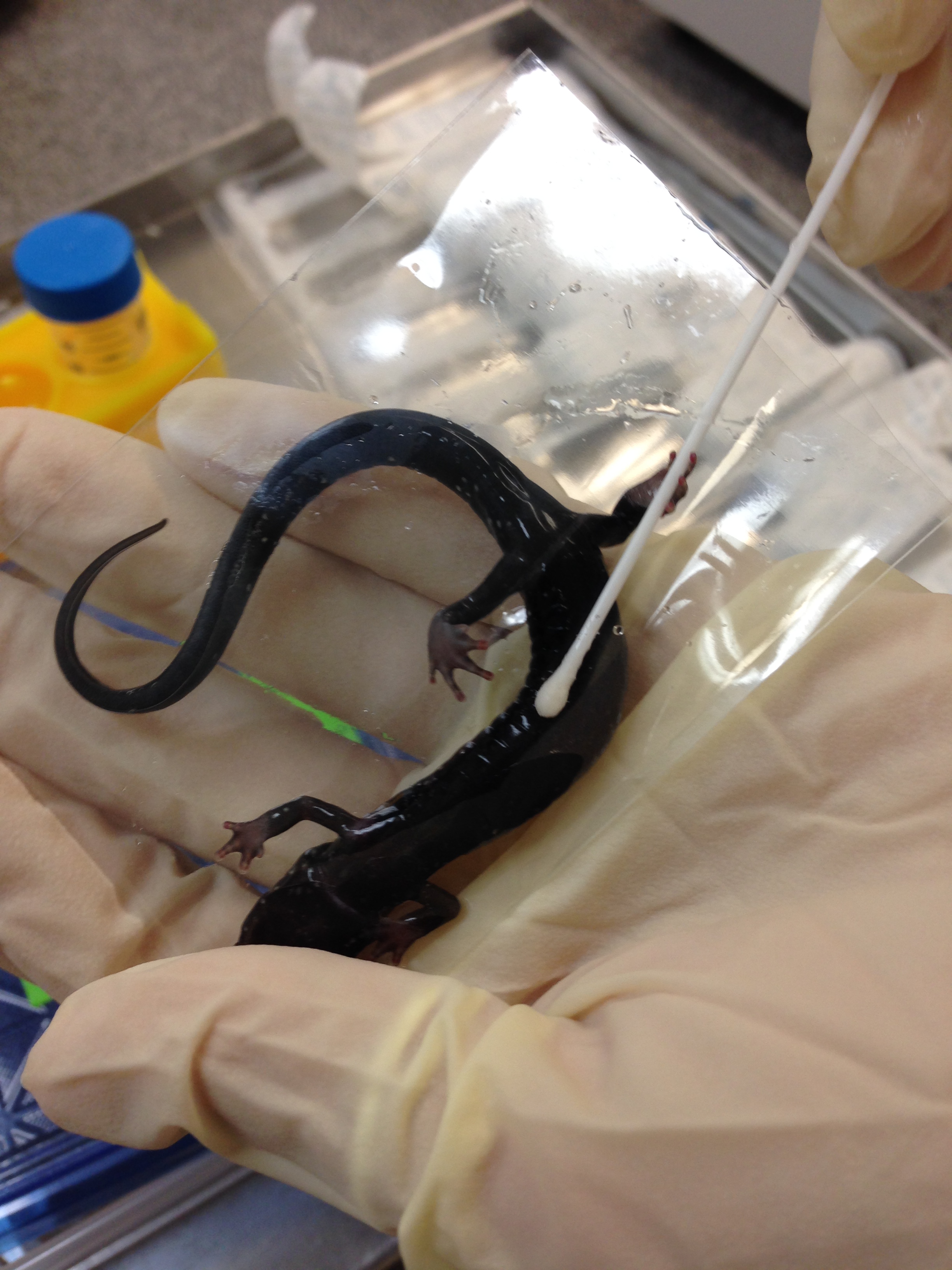
A salamander having its skin swabbed to test for Bsal infection.

Imagine you’re at the doctor’s office. You’re waiting to hear back on a critical test result. With recent emerging infectious diseases in human populations, you are worried you may be infected after a sampling trip to a remote field site. The doctor walks in. You sit nervously, sensing a slight tremble in your left leg. The doctor confidently declares, “Well, your tests results came back negative.” In that moment, you let out a sigh of relief, the kind you feel throughout your body. Then, thoughts start flooding your mind. You wonder– what are the rates of false negatives associated with the test? How sensitive is the diagnostic test to low levels of infection? The doctor didn’t sample all of your blood, so how can they be sure I’m not infected? Is the doctor’s conclusion right?

 Now, let’s say I’m the doctor and my patient is an amphibian. I don’t have an office where the amphibian can come in and listen to me explain the diagnosis or the progression of disease − BUT I do regularly test amphibians in the wild for a fatal fungal pathogen, known as Batrachochytrium dendrobatidis (commonly known as Bd). Diseases like Bd are among the leading causes of the approximately one-third of amphibian species that are threatened, near threatened, or vulnerable to extinction. To test for Bd, and the recently emerged sister taxon Batrachochytrium salamandrivorans (hereafter referred to as: Bsal), disease ecologists rely on non-invasive skin swabs. Continue reading “Imperfect Pathogen Detection: What to Do When Sampling and Diagnostic Tests Produce Inaccurate Results”

In Vivo Micro-CT Scanning: Studying Reptiles and Amphibians from the Inside Out

POST PROVIDED BY CHRIS BROECKHOVEN, ANTON DU PLESSIS, STEPHAN G. LE ROUX, P. LE FRAS N. MOUTON AND CANG HUI

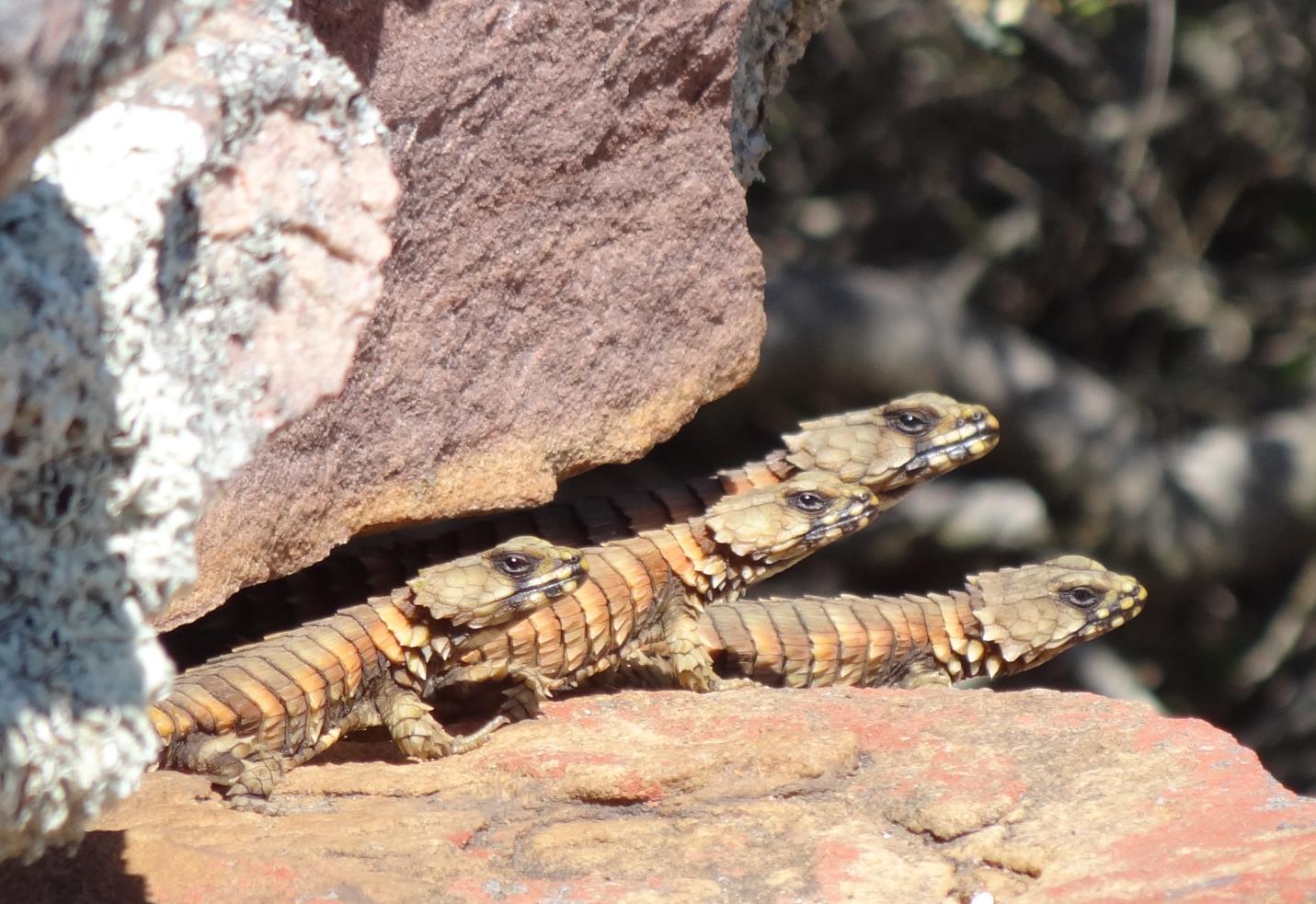
Lizards, such as these South African armadillo lizards, serve an important role as model organisms for various ecological and evolutionary studies. © Chris Broeckhoven

X-ray micro-computed tomography – or µCT – is a technique that uses x-rays to create high resolution cross-sections of samples. Virtual 3D models can be made from these cross-sections without destroying the original samples. Micro-CT has important applications in medical imaging and, in the biomedical field, in vivo µCT allows researchers to make virtual 3D models of the skeleton and organs of live small animals. Three-dimensional models like these could provide insight into diseases and guide the development of medicines and therapies.

In vivo µCT holds three major advantages over other methods:

  1. It allows for repeated measurements of small live animals at different times without having to sacrifice them.
  2. It eliminates variation among individuals.
  3. It can reduce the number of animals required to obtain statistically meaningful data.

A variety of commercially available µCT scanners that are optimised for scanning live animals are now available. The use of in vivo µCT in ecological and evolutionary studies, however, has greatly lagged behind its use in biomedical studies. Continue reading “In Vivo Micro-CT Scanning: Studying Reptiles and Amphibians from the Inside Out”

Predicting Disease Outbreaks Using Environmental Changes

Below is a press release about the Methods paper ‘Environmental-mechanistic modelling of the impact of global change on human zoonotic disease emergence: a case study of Lassa fever‘ taken from the University College London.

The multimammate rat (Mastomys natalensis) transmits Lassa virus to humans. ©Kelly, et al.
The multimammate rat transmits Lassa virus to humans. ©Kelly, et al.

A model that predicts outbreaks of zoonotic diseases – those originating in livestock or wildlife such as Ebola and Zika – based on changes in climate, population growth and land use has been developed by a UCL-led team of researchers.

“This model is a major improvement in our understanding of the spread of diseases from animals to people. We hope it can be used to help communities prepare and respond to disease outbreaks, as well as to make decisions about environmental change factors that may be within their control,” said lead author Professor Kate Jones, UCL Genetics, Evolution & Environment and the Zoological Society of London. Continue reading “Predicting Disease Outbreaks Using Environmental Changes”

Demography and Big Data

Post provided by BRITTANY TELLER, KRISTIN HULVEY and ELISE GORNISH

Follow Brittany (@BRITTZINATOR) and Elise (@RESTORECAL) on Twitter

To understand how species survive in nature, demographers pair field-collected life history data on survival, growth and reproduction with statistical inference. Demographic approaches have significantly contributed to our understanding of population biology, invasive species dynamics, community ecology, evolutionary biology and much more.

As ecologists begin to ask questions about demography at broader spatial and temporal scales and collect data at higher resolutions, demographic analyses and new statistical methods are likely to shed even more light on important ecological mechanisms.

Population Processes

Midsummer Opuntia cactus in eastern Idaho, USA. © B. Teller.

Traditionally, demographers collect life history data on species in the field under one or more environmental conditions. This approach has significantly improved our understanding of basic biological processes. For example, rosette size is a significant predictor of survival for plants like wild teasel (Werner 1975 – links to all articles are at the end of the post), and desert annual plants hedge their bets against poor years by optimizing germination strategies (Gremer & Venable 2014).

Demographers also include temporal and spatial variability in their models to help make realistic predictions of population dynamics. We now know that temporal variability in carrying capacity dramatically improves population growth rates for perennial grasses and provides a better fit to data than models with varying growth rates because of this (Fowler & Pease 2010). Moreover, spatial heterogeneity and environmental stochasticity have similar consequences for plant populations (Crone 2016). Continue reading “Demography and Big Data”

New Associate Editors

Today we are welcoming three new Associate Editors to Methods in Ecology and Evolution: Nick Golding (University of Melbourne, Australia), Rachel McCrea (University of Kent, UK) and Francesca Parrini (University of the Witwatersrand, South Africa). They have all joined on a three-year term and you can find out more about them below. Nick Golding “I develop statistical models and software for mapping the distributions of species and diseases. I’m particularly interested in … Continue reading New Associate Editors