10th Anniversary Volume 7: The ecologist’s field guide to sequence‐based identification of biodiversity

Post provided by Si Creer, Kristy Deiner, Serita Frey and Holly Bik
To celebrate the 10th Anniversary of the launch of Methods in Ecology and Evolution, we are highlighting an article from each volume to feature in the Methods.blog. For Volume 7, we have selected ‘The ecologist’s field guide to sequence‐based identification of biodiversity’ by Creer et al. (2016).

In this post, the authors share their motivation behind the paper and discuss advances in sequencebased identification of biodiversity.

Continue reading “10th Anniversary Volume 7: The ecologist’s field guide to sequence‐based identification of biodiversity”
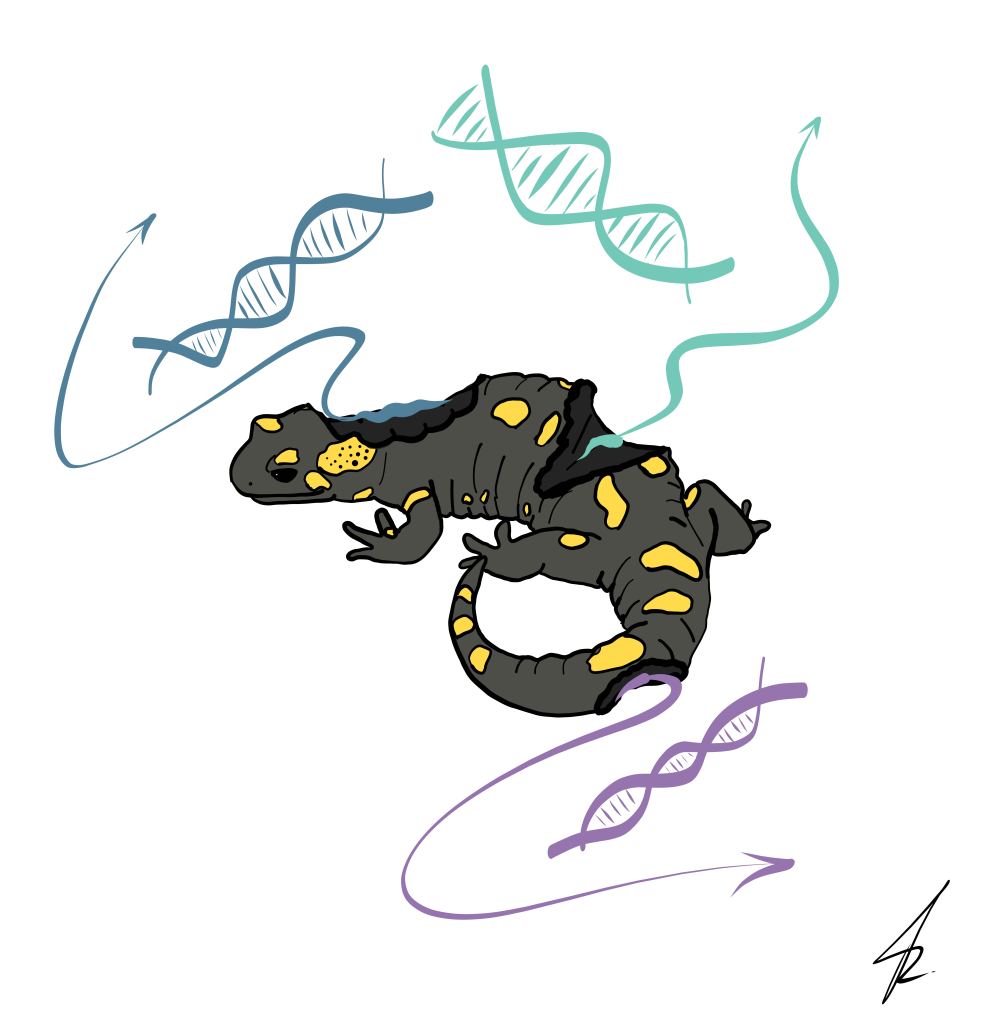

DNA from Bite Marks: An Amplicon Sequencing Protocol for Attacker Identification

Post provided by Daniela C. Rößler 

© Daniela C. Rößler

Understanding interactions between predators and prey is of interest to a variety of research fields. These interactions not only hold valuable information about ecological dynamics and food webs but are also crucial in understanding the evolution of predatory and anti-predator traits such as vision, visual signals and behavior. Thus, the “who attacks what and why” is key to approach broad evolutionary and ecological questions.

Continue reading “DNA from Bite Marks: An Amplicon Sequencing Protocol for Attacker Identification”

Scant Amounts of DNA Reveal Conservation Clues

Below is a press release about the Methods in Ecology and Evolution article ‘Empowering conservation practice with efficient and economical genotyping from poor quality samples‘ taken from the Stanford Woods Institute for the Environment.

Wild tiger in India. ©Prasenjeet Yadav

The challenges of collecting DNA samples directly from endangered species makes understanding and protecting them harder. A new approach promises cheap, rapid analysis of genetic clues in degraded and left-behind material, such as hair and commercial food products.

The key to solving a mystery is finding the right clues. Wildlife detectives aiming to protect endangered species have long been hobbled by the near impossibility of collecting DNA samples from rare and elusive animals. Continue reading “Scant Amounts of DNA Reveal Conservation Clues”

Top 10 speciation and evolution papers

Methods will be attending the next ITN Speciation conference 2012 in Jyväskylä, Finland and to mark the occasion, the editorial team has put together a list of some our most relevant work in speciation and evolution. Applications – concise papers describing new software, equipment, or other practical tools: PASSaGE: Pattern Analysis, Spatial Statistics and Geographic Exegesis. Version 2 by Micheal Rosenberg and Corey Anderson RBrownie: … Continue reading Top 10 speciation and evolution papers

Issue 2.6

Our last issue for 2011 is out. Issue 2.6 is packed with the latest methodological developments. We have four new articles on monitoring: from positional accuracy in the field by Mike Dodd to distance sampling butterflies by Nick Isaac and colleagues, to how to account for non-independent detection of individuals by Julien Martin and collaborators and, finally, to a class of spatial capture-recapture models for … Continue reading Issue 2.6