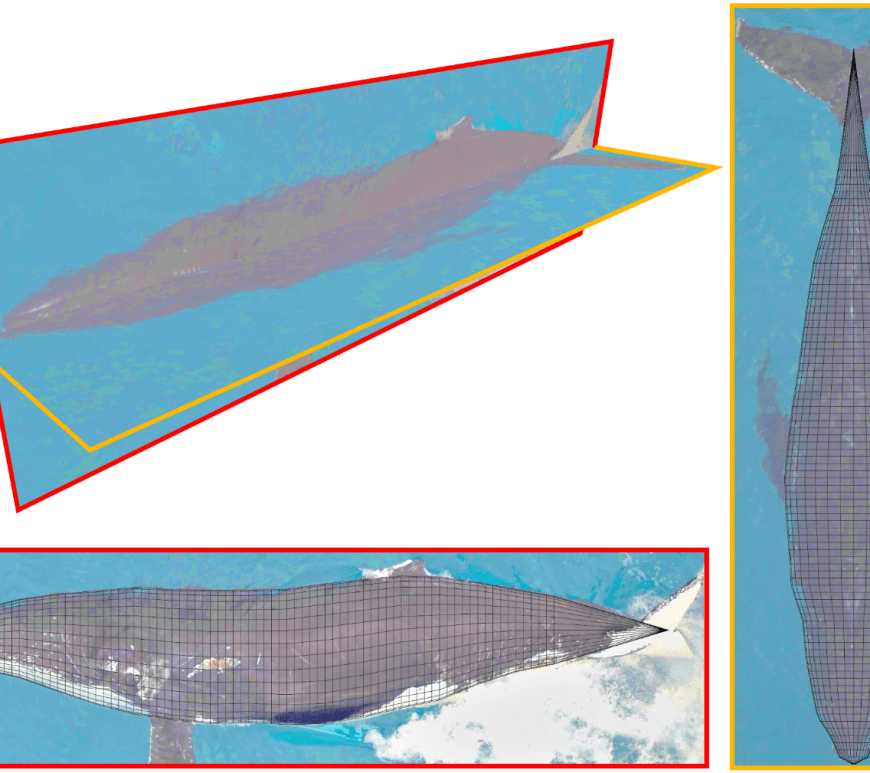
A whale’s size not only provides information on its own health, but also the status of the marine ecosystem in which it lives. So how do scientists weigh the biggest creatures on planet?In this blog post, Nathan Hirtle shares insight from his recent paper on measuring the volume of whales using drone images.
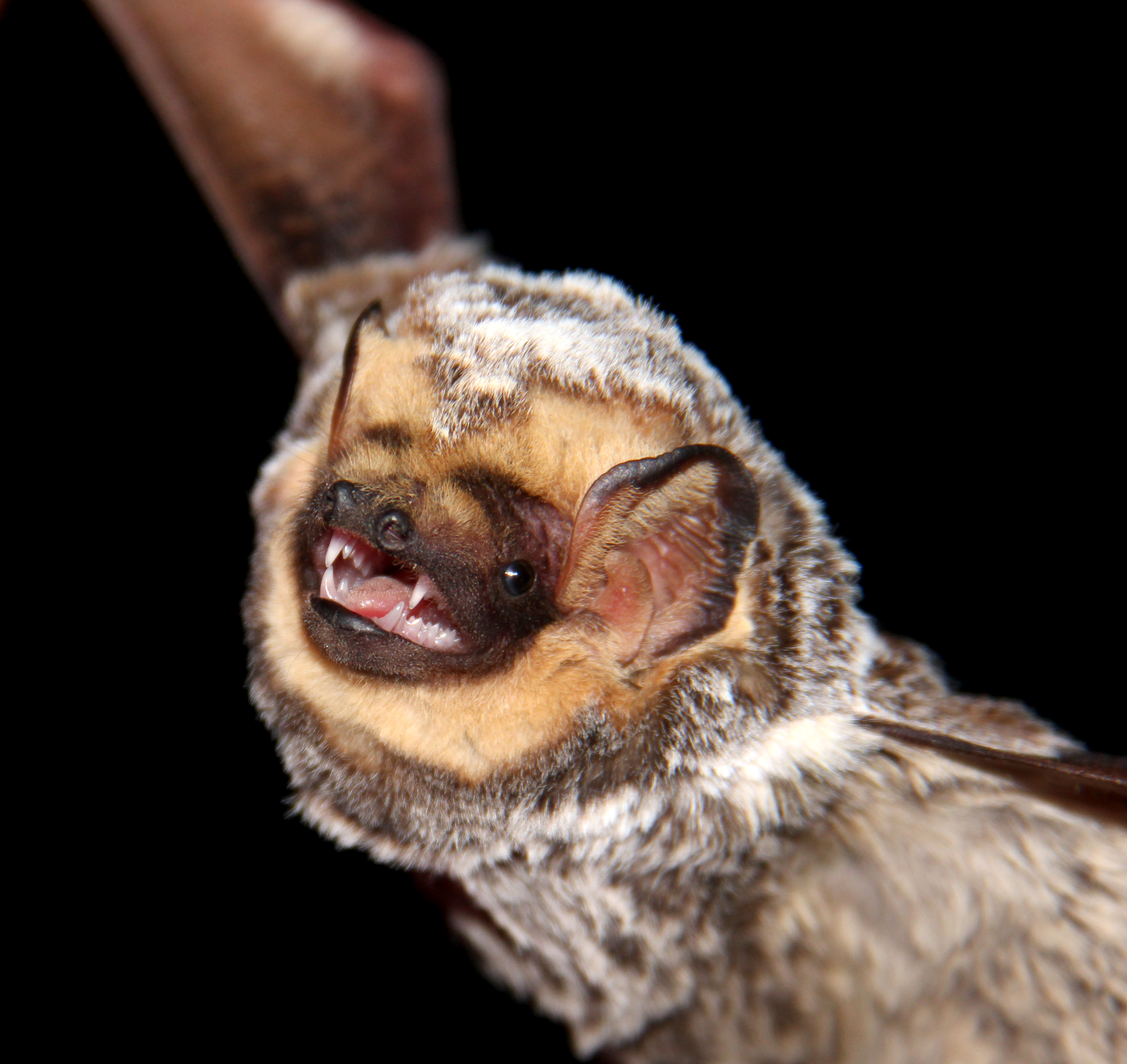
Hoary bat (Lasiurus cinereus). Credit: Veronica Zamora-Gutierrez.
Ecologists have started looking into drones as new tools for wildlife surveys, but how can drone disturbance be minimized in order to produce accurate wildlife counts? In this post, Kayla Kuhlmann describes a drone practice to reduce disruption during acoustic bat surveys as featured in the paper “Miniaturization eliminates detectable impacts of drones on bat activity”, recently published in Methods in Ecology and Evolution.
Researchers have devised a way to accurately estimate the weight of free-living whales using only aerial images taken by drones. By measuring the body length, width and height of free-living southern right whales photographed by drones, researchers were able to develop a model that accurately calculated the body volume and mass of the whales.
Because of their large size and aquatic life, previously the only way to obtain data on the body mass of whales was to weigh dead or stranded individuals.
The innovative method can be used to learn more about the physiology and ecology of whales. “Knowing the body mass of free-living whales opens up new avenues of research. We will now be able to look at the growth of known aged individuals to calculate their body mass increase over time and the energy requirements for growth. We will also be able to look at the daily energy requirements of whales and calculate how much prey they need to consume.” said Assistant Professor Fredrik Christiansen from Aarhus Institute of Advanced Studies in Denmark and lead author of the study. Continue reading “Researchers Use Drones to Weigh Whales”
Understanding animal movement and population size is a challenge for researchers studying any megafauna species. Sea turtles though, add a whole additional level of complexity. These wide-ranging, swift, charismatic animals spend much of their time underwater and in remote places. When trying to track down and count turtles, this obstacle to understanding population size becomes a full-on barricade.
Lead author Jarrod Hodgson, University of Adelaide, standing in one of the replica colonies of seabirds constructed for the #EpicDuckChallenge.
A few thousand rubber ducks, a group of experienced wildlife spotters and a drone have proven the usefulness and accuracy of drones for wildlife monitoring.
A study from the University of Adelaide showed that monitoring wildlife using drones is more accurate than traditional counting approaches. This was published recently in the British Ecological Society journal Methods in Ecology and Evolution.
New method faster, more efficient and less damaging to the environment
A team of researchers from the University of Wollongong (UOW) and the University of Tasmania has developed a new method for assessing the health of fragile Antarctic vegetation using drones, which they say could be used to improve the efficiency of ecological monitoring in other environments as well.
The researchers have written about their method in an article published in Methods in Ecology and Evolution, a scientific journal of the British Ecological Society.




 Methods Blog