Teaching Models to Listen to Bats: The Story Behind BSG-BATS

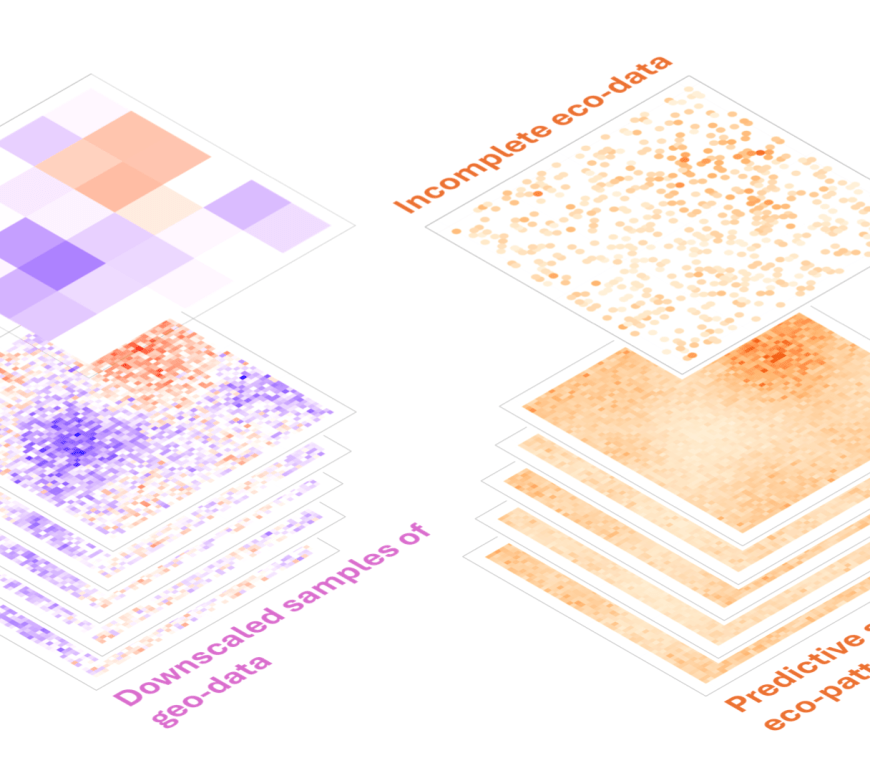
Post provided by Katarina Meramo Bats are extraordinary animals. They fly, echolocate, and navigate in absolute darkness, and produce some of the most complex acoustic signals in the mammalian world. They pollinate, disperse seeds, control insect populations, and quietly hold ecosystems together. Yet, despite their importance, monitoring bats – particularly across large spatial and temporal scales – remains remarkably challenging. Over the past decade, bioacoustic … Continue reading Teaching Models to Listen to Bats: The Story Behind BSG-BATS

All I Want for Christmas is Data: Thoughts on Holidays in the Bush

In this series, we explore the unique experiences of field ecologists conducting research in remote field stations during the holiday season. Through personal stories and reflections, our contributors share what it’s like to conduct scientific work in remote, biodiverse environments, where the challenges of research intersect with the spirit of the holidays. From the solitude of secluded field stations to unexpected festive moments in the … Continue reading All I Want for Christmas is Data: Thoughts on Holidays in the Bush

CMiNet: Building Reliable Microbiome Networks Through Consensus. 

Post provided by Rosa Aghdam I am a scientist at the Solís-Lemus Lab at the University of Wisconsin–Madison, working at the intersection of microbiome networks and computational biology. My research focuses on understanding the invisible world inside and around us. Microbial communities form intricate social systems, and my goal is to build tools that help researchers study those systems more clearly and more reliably. You … Continue reading CMiNet: Building Reliable Microbiome Networks Through Consensus. 

Our December issue is out now!

This issue contains the latest methods in ecology and evolution. Read the last issue of the year to find out about this month’s featured articles and the article behind our cover! Featured Fast‐tracking ecological interpretation using bespoke quantitative large language models There is untapped potential to apply large language models (LLMs) to quantitative ecological and environmental datasets. Here, authors present a roadmap for designing and … Continue reading Our December issue is out now!

Workflows: A New Paper Type for Methods

Beginning in 2026, Methods in Ecology and Evolution will accept submissions of a new paper type – Workflows – for consideration for review and eventual publication in the journal. Up until now, we have generally considered manuscripts that describe a way to organise existing methods into a useful sequence to analyse an interesting set of data, make one’s computational life easier, or creating a package … Continue reading Workflows: A New Paper Type for Methods

We impersonated predators and prey to study trophic interactions. It was quite fun, but mostly, it worked

Post provided by David Bolduc and Frederic Dulude-de Broin Most people have played some form of tag during childhood – games where certain players try to catch others, who in turn may be able to take refuge in designated areas, or who must collect a flag or another item to win the game. These games are fun and engaging perhaps because they tap into some … Continue reading We impersonated predators and prey to study trophic interactions. It was quite fun, but mostly, it worked

Our November issue is out now!

This issue contains the latest methods in ecology and evolution. Read to find out about this month’s featured articles and the article behind our cover! Featured Current frontiers in the passive acoustic monitoring of bats Passive acoustic monitoring of bats is used in a growing number of studies in applied and basic research. Despite the publication of good-practice recommendations, several unsettled debates persist about the … Continue reading Our November issue is out now!

Modelling approaches in meta-analysis: from sandwich estimators to correlated hierarchical models

Post provided by Coralie Williams Conducting a meta-analysis involves a series of decisions, from choosing what data to extract to selecting the outcome measure. But then comes the model specification – how should it be formulated? At its simplest, a meta-analysis can be expressed as a simple linear regression model where the outcome is an effect size (yi), which is a quantitative measure derived from … Continue reading Modelling approaches in meta-analysis: from sandwich estimators to correlated hierarchical models

Listening to trees: uncovering the seismic fingerprint of wind-induced tree sway

Post provided by Josefine Umlauft. We are a group of geophysicists, mathematicians, and ecologists who normally speak quite different scientific languages. This project brought us together through a shared curiosity: could the instruments and analytical tools originally developed for studying earthquakes also help us understand how trees move in the wind? The result, The Seismic Fingerprint of Wind-Induced Tree Sway, grew out of conversations between … Continue reading Listening to trees: uncovering the seismic fingerprint of wind-induced tree sway

Peering through the shell: tracking stress with heartbeats

Post provided by Lima F. P.; Pereira F. L.; Loureiro B.; Humet M.; Seabra R. How can we tell when an animal is stressed, long before it dies? For marine invertebrates like mussels, limpets, oysters, or crabs, one of the clearest signals comes from their hearts. Heart rate can vary in response to changes in the environment (such as temperature or oxygen), offering a non-invasive … Continue reading Peering through the shell: tracking stress with heartbeats