What is Methods in Ecology and Evolution?

In a new Methods in Ecology and Evolution podcast, the Senior Editors – Rob Freckleton, Bob O’Hara and Jana Vamosi – discuss the past, present and future of the journal. They talk about what sets it apart from other journals, their favourite articles and the kinds of papers that they would like to see more of. If you’re thinking about submitting to Methods in Ecology and … Continue reading What is Methods in Ecology and Evolution?

Issue 7.11

Issue 7.11 is now online!
The November issue of Methods is now online!

This month’s issue contains four Applications articles and two Open Access articles, all of which are freely available.

– moveHMM: This R package allows ecologists to process GPS tracking data into series of step lengths and turning angles, and to fit a hidden Markov model to these data, allowing, in particular, for the incorporation of environmental covariates.

– BORIS: An open-source and multiplatform standalone program that allows a user-specific coding environment to be set for a computer-based review of previously recorded videos or live observations. Being open to user-specific settings, the program allows a project-based ethogram to be defined that can then be shared with collaborators, or can be imported or modified.

– inbreedR: An R package that provides functions to measure variance in inbreeding – through the strength of correlation in heterozygosity across marker loci – based on microsatellite and SNP markers with associated P-values and confidence intervals. Within the framework of Heterozygosity–fitness correlation theory, inbreedR also estimates the impact of inbreeding on marker heterozygosity and fitness.

– Terrestrial Precipitation Analysis: This package is comprised of the Precipitation Trends (P-Trend), Precipitation Attributes (P-Att) and Precipitation Manipulation (P-Man) tools. Combined, these web tools allow researchers to easily calculate fundamental precipitation statistics for past, present and projected future precipitation regimes for any terrestrial location in the world.

Continue reading “Issue 7.11”

Scat Collection Protocols for Dietary DNA Metabarcoding

DNA dietary analysis is a non-invasive tool used to identify the food consumed by vertebrates. The method relies on identifying prey DNA in the target animals’ scats. It’s especially useful for marine animals such as seals and seabirds as it is difficult to watch their feeding events.

In the video below, Julie McInnes describes scat collection protocols that she (along with Rachael Alderman, Bruce Deagle, Mary-Anne Lea, Ben Raymond and Simon Jarman) developed to optimise the detection of food DNA in vertebrate scat samples. The authors use the shy albatross to demonstrate their new methods.

Continue reading “Scat Collection Protocols for Dietary DNA Metabarcoding”

Issue 7.10

Issue 7.10 is now online!

The October issue of Methods is now online!

This month’s issue contains three Applications articles and two Open Access articles, all of which are freely available.

– CODYN: New analytical tools applied to long-term data demonstrate that ecological communities are highly dynamic over time. The R package, library(“codyn”), helps ecologists implement these tools and gain insi–ghts into ecological community dynamics.

– Geometric Morphometrics: A tool for the R statistical environment that optimises the smoothing procedure for 3D surfaces used in Geometric Morphometrics.

– TRAPPER: Open source, multi-user software that facilitates analysis of videos and images, provides spatial filtering and web-mapping, allows flexible implementation of specific data collection protocols, and supports data re-use and (re)discovery.

Continue reading “Issue 7.10”

Automatic Camera Monitoring: A Window into the Daily Life of Pollinators

Post provided by Ronny Steen

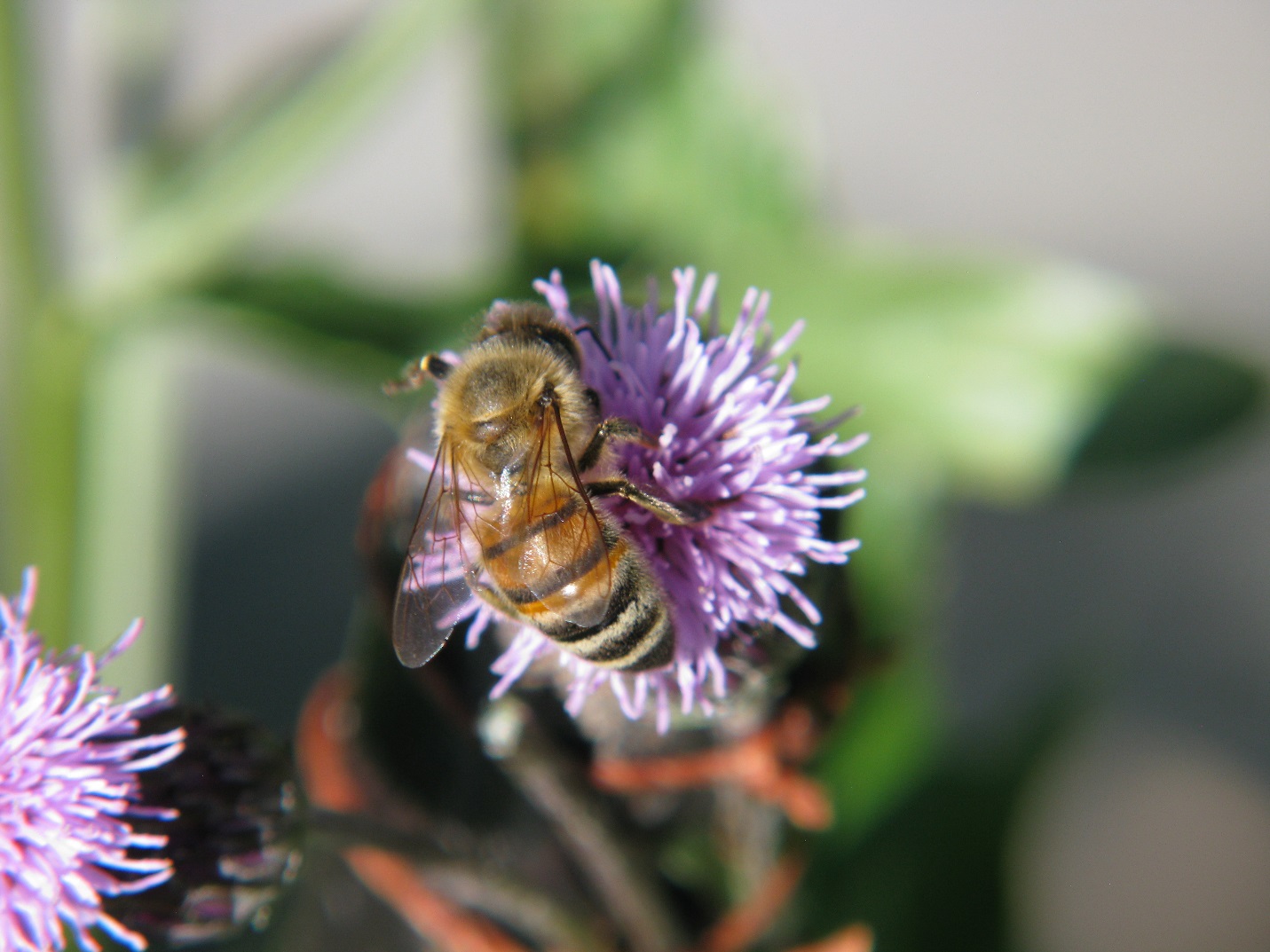
Image from the Canon PowerShot camera with CHDK script ‘Motion Detect Plus’. The thistle flower being visited by ♀ honeybee Apis mellifera L.

Pollinators have fascinated ecologists for decades, and they have traditionally been monitored by on-site human observations. This can be a time-consuming enterprise and – more importantly – species identification and recordings of behaviour have to be registered at the time of observation. This has two complications:

  1. While writing notes, or recording them electronically, the observer cannot continue focusing on the animal or behaviour in question.
  2. Such data then have to be transcribed, with the risk of making transcription errors.

Bringing Monitoring into the 21st Century

Although on-site human observations have predominated, today’s widespread availability of digital monitoring equipment has enabled unique data on flower visitors to be collected. In my research, I have used a time-efficient automated procedure for monitoring flower-visiting animals – namely foraging bumblebees visiting focal white clovers and honeybees visiting thistles.

Continue reading “Automatic Camera Monitoring: A Window into the Daily Life of Pollinators”

RSS Meeting on Model Averaging: Elephants, Oscars and Spiky Data

Post provided by Dr Eleni Matechou

Eleni is a Lecturer in Statistics and a member of the Statistical Ecology @ Kent (SE@K) group at the University of Kent. She develops statistical models motivated by ecological applications to study populations of birds, insects and, more recently, humans.

On September 15th 2016, a half-day meeting on Model Averaging – organised by the Environmental Statistics section and the East Kent local group of the Royal Statistical Society (RSS) – took place at the University of Kent in Canterbury .

There were three invited speakers: Professor Richard Chandler, from University College London, Professor Jonty Rougier, from the University of Bristol and Dr Kate Searle, from the Centre for Ecology and Hydrology, who presented via Skype.

All three talks included interesting motivating data, clever modelling and great insight.

Taming the Pachyderm

elephant-in-the-roomProfessor Richard Chandler presented joint work with Marianna Demetriou on “The interpretation of climate model ensembles”. Projecting future global temperatures is clearly a timely topic and Richard’s talk highlighted the challenges of doing this reliably. And they’re certainly not minor challenges, in his own words, this is a problem he has spent 10 years thinking about! Continue reading “RSS Meeting on Model Averaging: Elephants, Oscars and Spiky Data”

Peer Review Week: Should we use double blind peer review? The evidence…

Non-blind Peer Review Monster

This week is Peer Review Week, the slightly more popular academic celebration than pier review week. Peer review is an essential part of scientific publication and is – like Churchill’s democracy – the worst system to do it. Except for all of the others. The reason it’s imperfect is mainly that it’s done by people, so there is a natural desire to try to improve it.

One suggestion for improvement is to us double blind reviews. At the moment most journals (including Methods in Ecology and Evolution) use single blind reviewing, where the author isn’t told the identity of the reviewers. The obvious question is whether double blind reviewing does actually improve reviews: does it reduce bias, or improve quality? There have been several studies in several disciplines which have looked at this and related questions. After having looked at them, my summary is that double blind reviewing is fairly popular, but makes little or no difference to the quality of the reviews, and reviewers can often identify the authors of the papers.

Continue reading “Peer Review Week: Should we use double blind peer review? The evidence…”

What Makes a Good Peer Review: Peer Review Week

For many academics, especially Early Career Researchers, writing a review can seem like quite a daunting task. Direct training is often hard to come by and not all senior academics have the time to act as mentors. As this week is Peer Review Week, we wanted to provide some advice on what makes a good review and what makes a bad review. This advice has been kindly provided by the Methods in Ecology and Evolution Associate Editors – all of whom are authors and reviewers as well.

The BES Guide to Peer Review in Ecology and Evolution

Before we dive into the tips from our Editors though, we want to highlight one of the best resources for anyone looking for peer review guidance – the BES Guide to Peer Review in Ecology and Evolution. This booklet is intended as a guide for Early Career Researchers, who have little or no experience of reviewing journal articles but are interested in learning more about what is involved. It provides a succinct overview of the many aspects of reviewing, from hands-on practical advice about the actual review process to explaining less tangible aspects, such as reviewer ethics. You can get the PDF version of the guide (and the other BES guides) for free on the BES website. Continue reading “What Makes a Good Peer Review: Peer Review Week”

Thank You to All of Our Reviewers: Peer Review Week 2016

As many of you will already know, this week is Peer Review Week (19-25 September). Peer Review Week is a global event celebrating the vital work that is done by reviewers in all disciplines. To mark the week, we will be having a series of blog posts about peer review. The theme for this year’s Peer Review Week is recognition for review and we’re starting … Continue reading Thank You to All of Our Reviewers: Peer Review Week 2016

Issue 7.9

Issue 7.9 is now online!

The September issue of Methods is now online!

This month’s issue contains two Applications articles and three Open Access articles, all of which are freely available.

– Arborist Throw-Line Launcher: A cost-effective and simple alternative for collecting leaves and seeds from tall trees. The authors have also provided some tutorial videos on YouTube.

– ctmm: An R package which implements all of the continuous-time stochastic processes currently in use in the ecological literature and couples them with powerful statistical methods for autocorrelated data adapted from geostatistics and signal processing.

Continue reading “Issue 7.9”