Our October issue is out now!

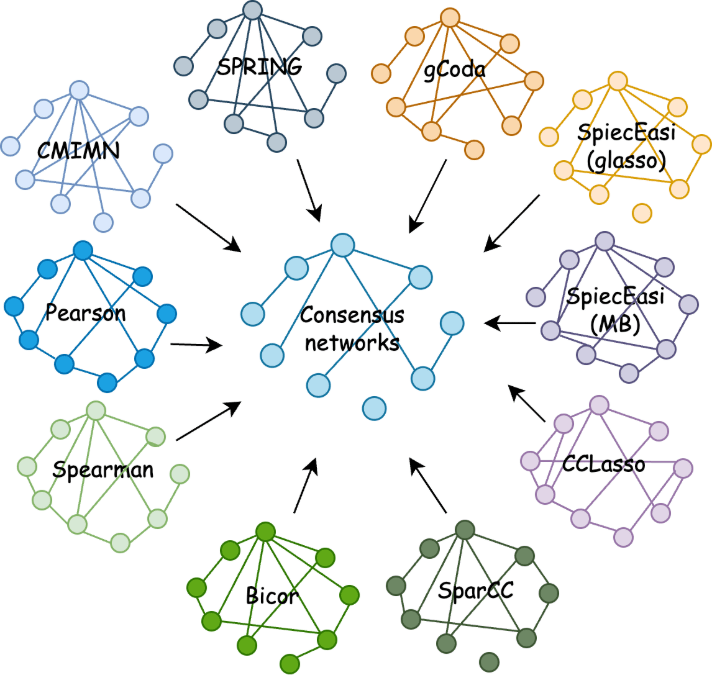
This issue contains the latest methods in ecology and evolution. Read to find out about this month’s featured articles and the article behind our cover! Featured Advancing causal inference in ecology: Pathways for biodiversity change detection and attribution Here, authors address key challenges of biodiversity change detection and conservative causal attribution and propose solutions to overcome barriers in (1) biodiversity and driver data characteristics, (2) detection of change within both data types and (3) linking driver and biodiversity … Continue reading Our October issue is out now!

Making heatwaves in the wild: lessons from extreme fieldwork

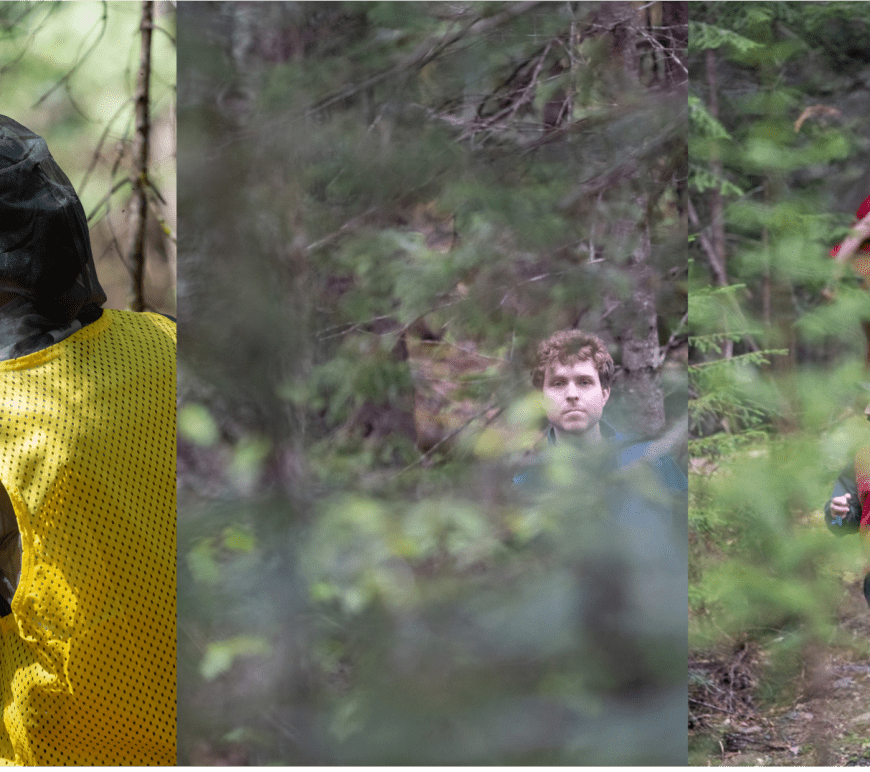
Post provided by Pieter Arnold, Xuemeng Mu, James King We are a team of ecologists in Australia with keen interest in how plants and ecosystems will respond to climate change. Conducting research on the effects of forecasted climate change, and particularly extreme events like heatwaves, is extremely challenging to do in the field. We had to first convince ourselves that it would be possible to … Continue reading Making heatwaves in the wild: lessons from extreme fieldwork

10,000 Arthropods in a Hectare: What We Found Crawling, Flying, and Hiding in Panama’s Rainforest

Post provided by Daniel Souto-Vilarós. I’m a molecular ecologist who currently works as a postdoctoral researcher at the University of Utah, with a long-standing obsession with biodiversity. While much of my work has focused on plant-pollinator interactions, this project took me down a very different path: into the leaf litter, soil, and night sky of a tropical forest to try and find out how many … Continue reading 10,000 Arthropods in a Hectare: What We Found Crawling, Flying, and Hiding in Panama’s Rainforest

What’s That Sound? A New Way to Explore Freshwater Soundscapes

Post provided by Katie Turlington I’m Katie Turlington, a soundscape ecologist and PhD candidate at the Australian Rivers Institute, Griffith University. My research explores how we can use sound to monitor freshwater ecosystems, which are incredibly diverse but often under-surveyed. I’ve spent the last few years working on rivers in South-East Queensland, trying to make sense of the many sounds these systems produce—from insect stridulations … Continue reading What’s That Sound? A New Way to Explore Freshwater Soundscapes

Our September issue is out now!

This issue contains the latest methods in ecology and evolution. Read to find out about this month’s featured articles and the article behind our cover! Featured DeepDiveR—A software for deep learning estimation of palaeodiversity from fossil occurrences The incompleteness of the fossil record presents a barrier to estimating changes in biodiversity which standard statistical methods struggle to account for. Here authors present DeepDiveR, an R package … Continue reading Our September issue is out now!

Smart cameras in the wild: A centralised solar-powered Raspberry Pi system for automated animal observation and environmental monitoring

Post provided by Marçal Pou-Rossell Many studies of animal behaviour – especially parental care – rely on short, fragmented observations. Whether due to battery limitations, human resources, or remote field conditions, collecting continuous data throughout an entire reproductive cycle is often just not feasible. As a result, key behaviours can go undocumented, and our understanding of how animals make decisions across time remains incomplete. We … Continue reading Smart cameras in the wild: A centralised solar-powered Raspberry Pi system for automated animal observation and environmental monitoring

No training necessary: Shark tracking simplified

Post provide Chinmay Keshava Lalgudi. Drone imagery offers an efficient way to gather data on mobile animals. Drones are used for population surveys, creating 3D models of habitat, and even studying how animals move and behave in their environment. While collecting this data is relatively easy, manually annotating it is painstaking and slow. Analysing drone imagery can often mean spending hours in front of a … Continue reading No training necessary: Shark tracking simplified

Our August issue is out now!

This issue contains the latest methods in ecology and evolution. Read to find out about this month’s featured articles and the article behind our cover! Featured Empirical ecology to support mechanistic modelling: Different objectives, better approaches and unique benefits Making mechanistic models credible requires empirical studies, but traditional study topics and designs often do not support them well. The models we use for modern problems need … Continue reading Our August issue is out now!

Catching Biodiversity in the Wind: How a Simple Dust Cloth Revolutionizes Airborne eDNA Monitoring

Post provided by Meng Yao Biodiversity is disappearing at an alarming rate worldwide. To protect it, we first need to monitor it—but tracking species traditionally requires significant time, expertise, and often expensive equipment. What if we could detect the presence of plants and animals just by sampling the air around us? As the principal investigator of the molecular ecology and biodiversity laboratory at Peking University, … Continue reading Catching Biodiversity in the Wind: How a Simple Dust Cloth Revolutionizes Airborne eDNA Monitoring

Can we identify animal behaviours from camera traps without training new AI models?

Post provided by Gaspard Dussert. My name is Gaspard Dussert, and I am a PhD student at the Université Lyon 1, working in the Laboratory of Biometry and Evolutionary Biology (LBBE). My research combines artificial intelligence (AI) with ecology, focusing on automating wildlife monitoring from camera trap images. Camera traps are motion-activated cameras placed in the wild. They are incredibly powerful tools in ecology, helping … Continue reading Can we identify animal behaviours from camera traps without training new AI models?