Our July Issue is out now!

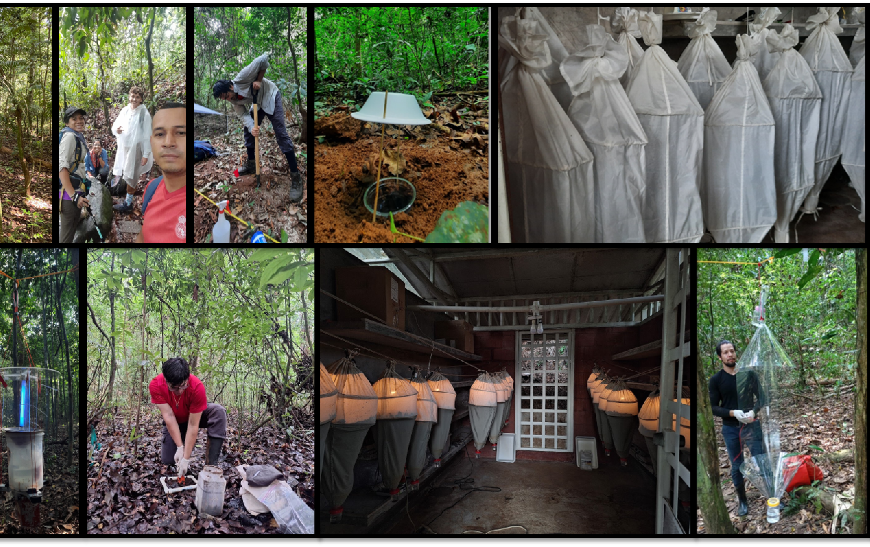
This issue contains the latest methods in ecology and evolution. Read to find out about this month’s featured articles and the article behind our cover! Featured MicroEcoTools: An R package for comprehensive theoretical microbial ecology analysis Authors introduce MicroEcoTools, an R package designed to test ecological framework predictions using microbial community data. It assesses microbial diversity and evaluates the relative impacts of stochastic and deterministic … Continue reading Our July Issue is out now!

False Causes, Meet Attractor Dimension

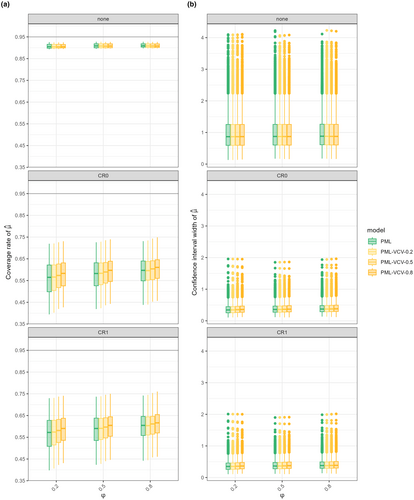
Post provided by Yair Daon Who am I? I’m Yair Daon, a mathematician-turned-epidemiologist at Bar-Ilan University’s Faculty of Medicine. Most days I stare at time-series curves that claim one thing “drives” another. When those claims are wrong, public-health decisions can drift off course. Our new Methods in Ecology & Evolution paper introduces a fast way to shout “no!” before that happens. A two-minute primer for … Continue reading False Causes, Meet Attractor Dimension

Practical tools to advance Image-Based bio-logging in marine ecosystems

Post provided by Marianna Chimienti My name is Dr Marianna Chimienti, and I am a lecturer in Marine Top Predator Ecology at the School of Ocean Sciences at Bangor University (UK). I’m fascinated by animal movements. My main research focuses on understanding how, where, when, and why animals move, using bio-logging technology (devices attached to animals that can record location, depth, acceleration, orientation, environmental conditions, … Continue reading Practical tools to advance Image-Based bio-logging in marine ecosystems

An easy-to-manage tool for forest ecosystem modeling—The pnetr R package

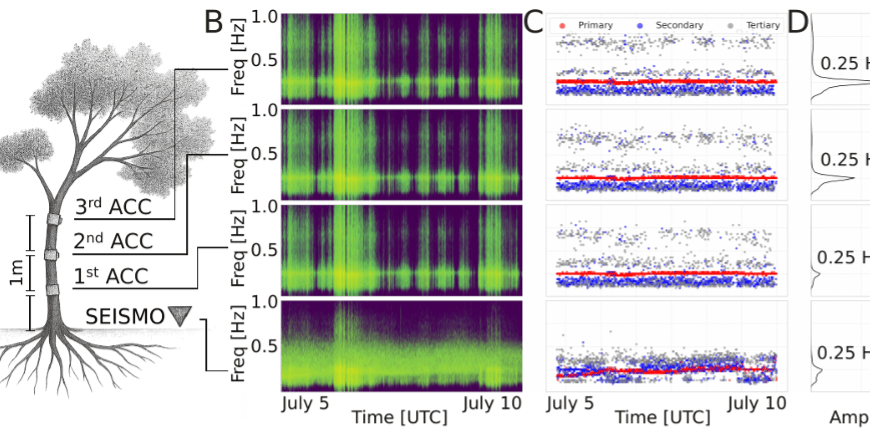
Post provided by Xiaojie Gao I am a remote sensing ecologist currently working as a postdoctoral researcher at Harvard Forest department of Harvard University. My research focuses on mapping and understanding the impacts of climate change and human activities on the terrestrial vegetation ecosystems. The development of the pnetr R package for forest ecosystem modeling was inspired by my own research interest in understanding how … Continue reading An easy-to-manage tool for forest ecosystem modeling—The pnetr R package

Supporting safe and equitable access to field research

To celebrate Pride Month 2025, we are excited to share a series of blogs and podcasts highlighting useful articles and resources for LGBTQIA+ ecologists and researchers. In each post, the authors behind these resources explain what they are, how they came to produce them, and why they are important. In this post, Elizabeth shares fieldwork advice for researchers with marginalized identities. Post provided by Elizabeth N. … Continue reading Supporting safe and equitable access to field research

Charting the Unheard: A Primer for Analysing Toothed Whale Vocal Repertoires

Post provided by Maia Austen Introduction: Why toothed whale voices matter I’m a PhD candidate in the ONDAS Lab at the University of Vermont, advised by Dr. Laura May-Collado. My PhD looks to utilize machine learning analysis to better understand how and why dolphins communicate with each other. Toothed whales – like dolphins and belugas – are among the most acoustically sophisticated animals on Earth. … Continue reading Charting the Unheard: A Primer for Analysing Toothed Whale Vocal Repertoires

Predictability or pondering prediction

Post provided by Marieke Wesselkamp At the beginning of this project, we often found ourselves contemplating on the evolution of various environmental systems – some vast and global, others local. These were, for example, the trajectory of elephant populations in the Southern African Kruger national park over the next decades, the change in plant species composition on the roof the neighbour’s garage over the months, … Continue reading Predictability or pondering prediction

Our June Issue is out now!

This issue contains the latest methods in ecology and evolution, including papers from the special feature Innovation in Practice. Read to find out about this month’s featured articles and the article behind our cover! Featured ECKOchain: A FAIR blockchain‐based database for long‐term ecological data Open data practices in ecology are increasingly accepted, yet primary long-term ecological data remain hard to find. To incentivise open primary ecological … Continue reading Our June Issue is out now!

Simple, intuitive tool for population management decision-making

Post provided by Izzy McCabe Predictions of insect populations from phenology models and sampling can help growers manage pests and beneficial insects on their farms. Phenology models relate accumulated heat units after winter to pest development and thereby inform timing of control actions, while sampling relies on regular on-site data collection (daily, weekly, etc.) to measure pest population densities and estimate potential damage. A drawback … Continue reading Simple, intuitive tool for population management decision-making

Improved order selection method for hidden Markov models: a case study with movement data.

Post provided by Fanny Dupont. About the first author My PhD focuses on animal movement and the impact of vessels on Arctic marine mammals (lab website). Specifically, I develop statistical tools to analyse narwhal (Monodon monoceros) behaviour and assess the effects of increased shipping on marine ecosystems. I am co-supervised by Dr. Marie Auger-Méthé (University of British Columbia) and Dr. Marianne Marcoux (Fisheries and Oceans … Continue reading Improved order selection method for hidden Markov models: a case study with movement data.