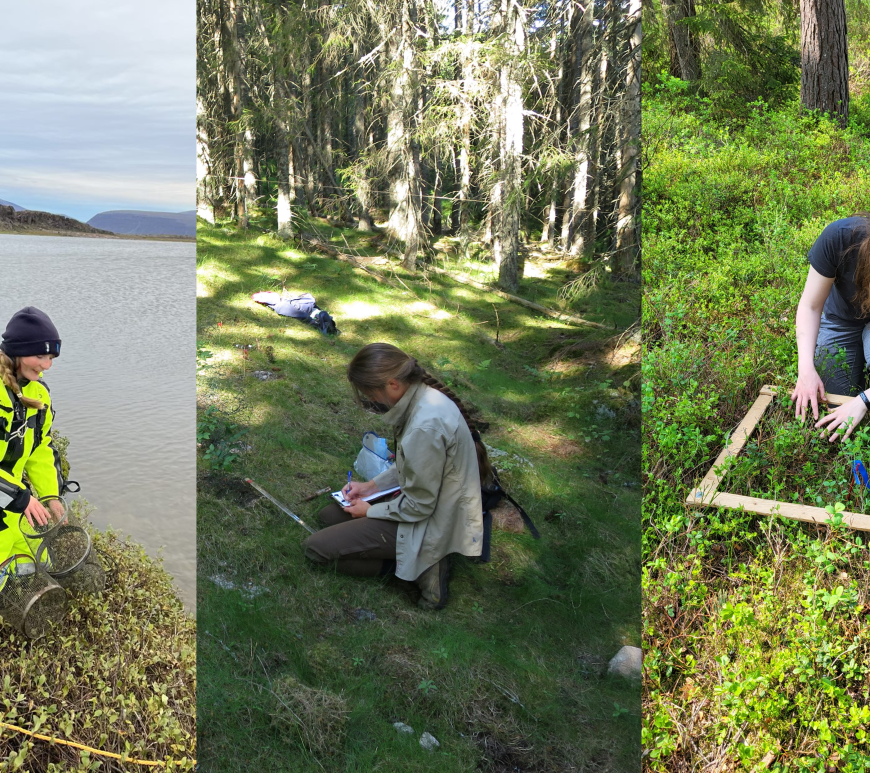
Post provided by Faith Jones, Helen Spence-Jones, and Caroline Greiser Fieldwork is the foundation of ecological science. From observational and monitoring studies, to experiments done in complex real-world conditions, to ground-truthing models: we can’t hope to understand ecology if we don’t actually check what is happening in nature. The love of being outdoors has also attracted many of us to careers in ecology: fieldwork remains … Continue reading A short guide for effective field data collection
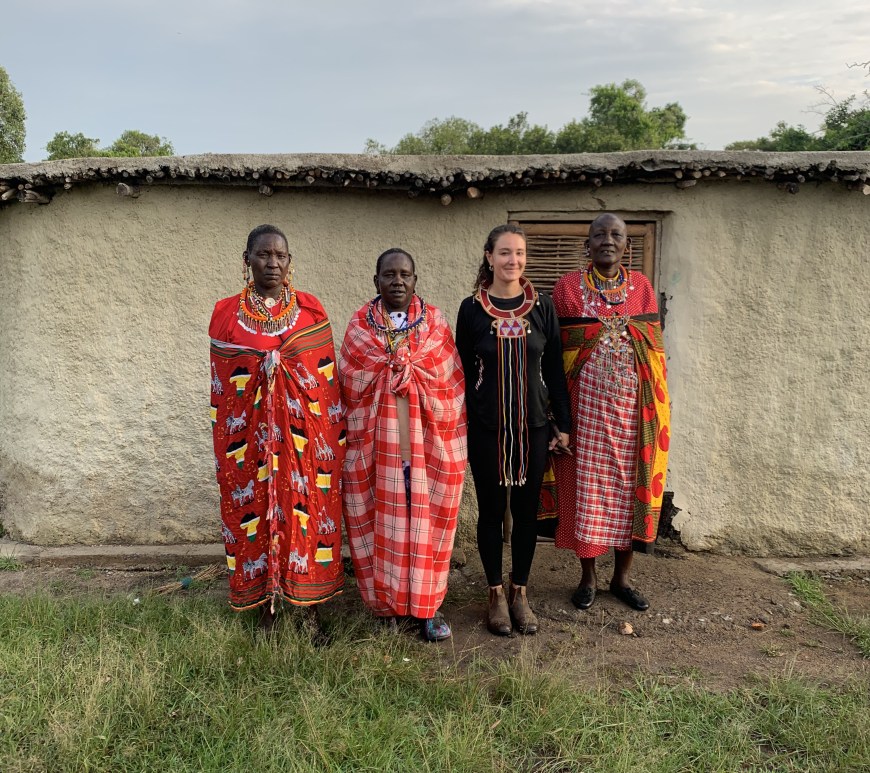
In this series, we explore the unique experiences of field ecologists conducting research in remote field stations during the holiday season. Through personal stories and reflections, our contributors share what it’s like to conduct scientific work in remote, biodiverse environments, where the challenges of research intersect with the spirit of the holidays. From the solitude of secluded field stations to unexpected festive moments in the … Continue reading All I Want for Christmas is Data: Thoughts on Holidays in the Bush
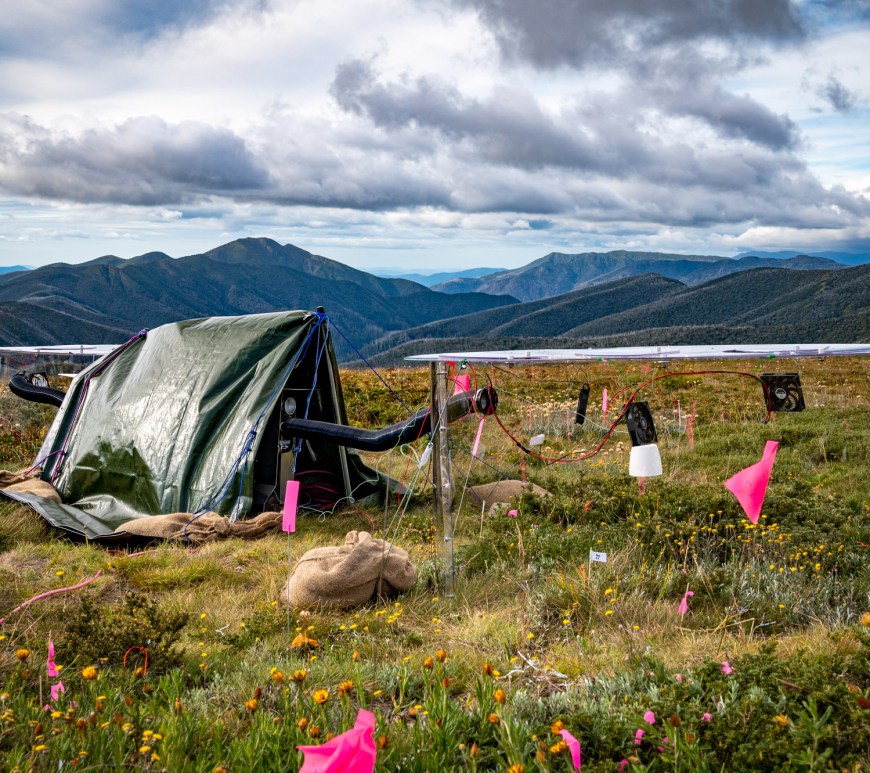
Post provided by Pieter Arnold, Xuemeng Mu, James King We are a team of ecologists in Australia with keen interest in how plants and ecosystems will respond to climate change. Conducting research on the effects of forecasted climate change, and particularly extreme events like heatwaves, is extremely challenging to do in the field. We had to first convince ourselves that it would be possible to … Continue reading Making heatwaves in the wild: lessons from extreme fieldwork
To celebrate Pride Month 2025, we are excited to share a series of blogs and podcasts highlighting useful articles and resources for LGBTQIA+ ecologists and researchers. In each post, the authors behind these resources explain what they are, how they came to produce them, and why they are important. In this post, Elizabeth shares fieldwork advice for researchers with marginalized identities. Post provided by Elizabeth N. … Continue reading Supporting safe and equitable access to field research
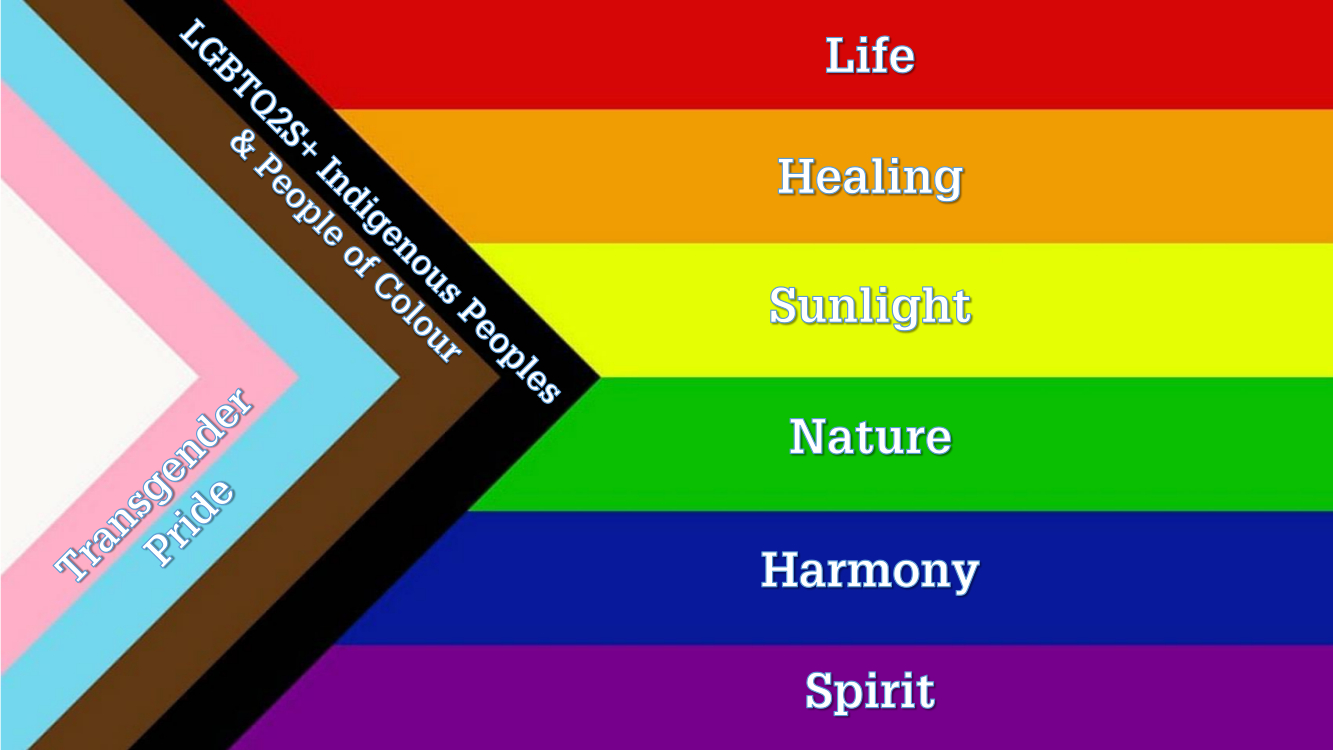
To celebrate UK Pride Month, the British Ecological Society journal blogs are posting a ‘Rainbow Research’ series, which aims to promote visibility of STEM researchers from the LGBTQ+ community. Each post will be connected to a theme represented by one of the colours shown in the Progress Pride flag. In this post, Natalie Yoh discusses their bat conservation research under the flag theme of ‘Nature’.
The standard approach to quantifying natural selection, developed by Lande and Arnold, does not allow for comparable metrics between linear (i.e. selection on the mean phenotype) and nonlinear (i.e. selection on all other aspects of the phenotypic distribution, including variance and the number of modes) selection gradients. Jonathan Henshaw’s winning submission provides the first integrated measure of the strength of selection that applies across qualitatively different selection regimes (e.g. directional, stabilizing or disruptive selection). Continue reading “2017 Robert May Prize Winner: Jonathan Henshaw”
To understand the factors shaping vocal communication, we need reliable information about the communicating individuals on different levels. First, vocal behaviour should be recorded from undisturbed animals in meaningful settings. Then we have to separate and assign the individuals’ vocalisations. Finally, the precise timing of vocal events needs to be stored. Microphone backpacks allow researchers to record the vocal behaviour of individual animals in naturalistic settings – even in acoustically challenging … Continue reading Microphone Backpacks for Individual-level Acoustic Recordings
‘Just Google it’ marks an important step in converting ecology to an armchair science. Many species (e.g. owls, hawks, bears) are difficult, time-consuming, expensive and even dangerous to observe. It would be a lot easier if we didn’t have to spend time, energy and risk lives having to observe organisms in the field! Continue reading “2016 Robert May Prize Winner: Gabriella Leighton”
Evelyn Chrystalla ‘E.C.’ Pielou (February 20, 1924 – July 16, 2016) – a towering figure in ecology – was a key pioneer in the incorporation of statistical rigor into biogeography and ecology. She devised many important statistical hypotheses tests for spatial arrangements and patterns ranging in scale from individual plants in a field through to elevational zonation of vegetation to ranges of groups of species distributed over regional through to continental-scale ranges. Her research has provided the impetus for biogeographical analyses for generations.
She published ten books, including several long after her formal retirement in 1988. Her book Biogeography (1979) is a masterpiece. It covers historical biogeography (including inferences from cladograms, which were just beginning to be a hot topic at that time) and ecological biogeography with keen insight and treats topics like long-distance dispersal (that had largely been the subject of just-so stories) with her characteristic statistical rigor. Her books on mathematical ecology have a strong emphasis on models of spatial pattern and ways to estimate biodiversity, and her methods – including the famous Pielou‘s evenness index – are still widely used.Continue reading “A Homage to EC Pielou: One of the 20th Century’s Most Accomplished Scientists”








 Methods Blog