Do-it-yourself fishing and climate scenario experiments with a marine ecosystem model

Post provided by Michael Heath, Tom Doherty,  Jack Laverick & Douglas Speirs

Herring is a planktivorous fish species. Credit: Atle Grimsby.

World Fisheries Day, celebrated on November 21, is dedicated to highlighting the critical importance of healthy ocean ecosystems and to ensure sustainable stocks of fisheries in the world. Pressure to find ecologically sustainable strategies for harvesting food from the sea is getting ever stronger, especially in the face of changing climate. However, the question is complex because the harvestable species live in a complex food web where everything is directly or indirectly connected to everything else. Models for carrying out scenario analyses on the impact of fisheries management options on food webs are usually the preserve of trained experts.

In this blog post, Michael Heath of the University of Strathclyde guides us through how using a new marine modelling package and online app, published in their recent Methods in Ecology and Evolution paper ‘StrathE2E2: An R package for modelling the dynamics of marine food webs and fisheries.’, makes these analyses easily accessible to anyone with just basic website skills.

Continue reading “Do-it-yourself fishing and climate scenario experiments with a marine ecosystem model”

Atlantis: A Model for Biophysical, Economic and Social Elements of Marine Ecosystems

Post provided by ASTA AUDZIJONYTE, Heidi Pethybridge, Javier Porobic, Rebecca Gorton, Isaac Kaplan, and Elizabeth A. Fulton

Increased Demands on a Crowded Ocean

Multiple demands on, and uses of, the ocean. ©Frank Shepherd

The ocean was once a limitless frontier, primed for exploitation of fish and other marine life. Today, a scan of the coastline (in our case off Australia and the US) shows an ocean landscape dotted with aquaculture pens, wind farms, eco-tours, and oil rigs, as well as commercial and recreational fishing boats. This presents marine and maritime managers with the huge challenge of balancing competing social, conservation, and economic objectives. Trade-offs arise even from success stories. For example, seal and sea lion populations are recovering from centuries of hunting, which is great. But now they’re preying heavily on economically valuable species like salmon and cod, creating potential tensions between fisheries and conservation communities. Ecosystem-based management is one way that we can start to address these trade-offs. Continue reading “Atlantis: A Model for Biophysical, Economic and Social Elements of Marine Ecosystems”

New Research Shows Pretend Porpoise Sounds are Helping Conservation Efforts

Below is a press release about the Methods in Ecology and Evolution article ‘Estimating effective detection area of static passive acoustic data loggers from playback experiments with cetacean vocalisations‘ taken from Swansea University.

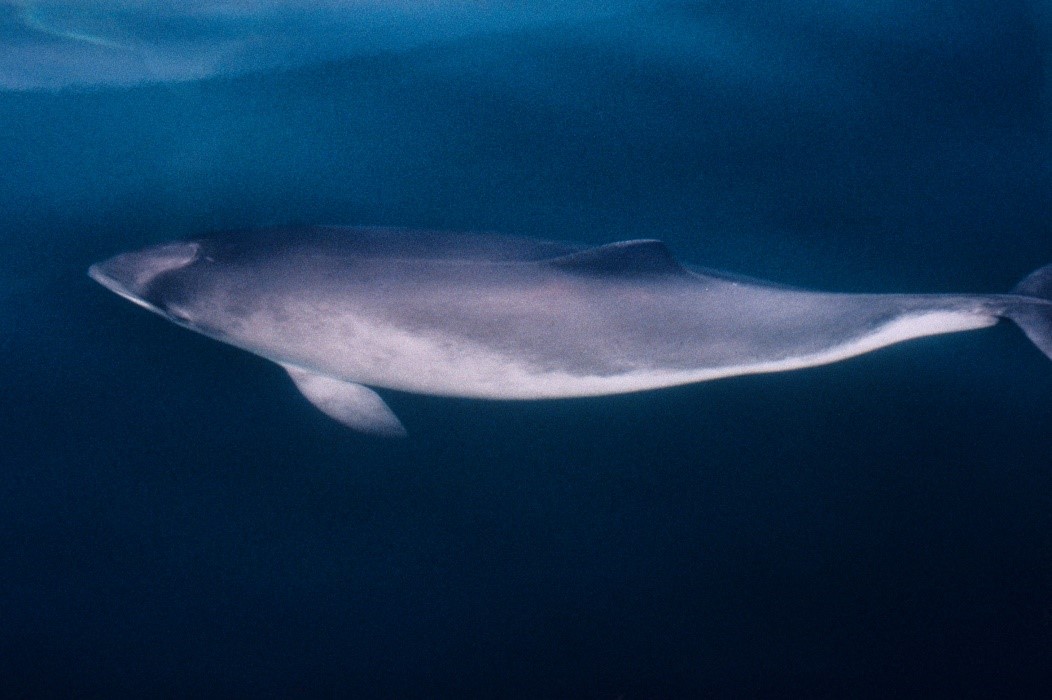
Harbour porpoise under the surface - I. Birks, SeaWatchFoundation
Harbour porpoise under the surface – I. Birks, SeaWatchFoundation

An examination into the detection of harbour porpoises is helping to give new understanding of effective monitoring of species under threat from anthropogenic activities such as fisheries bycatch and coastal pollution.

In a first study of its kind, Dr Hanna Nuuttila, currently at Swansea University’s College of Science – together with scientists from the German Oceanographic Museum, the University of St Andrews and Bangor University – revealed how playing back porpoise sounds to an acoustic logger can be used to assess the detection area of the device, a metric typically required for effective monitoring and conservation of protected species.

Continue reading “New Research Shows Pretend Porpoise Sounds are Helping Conservation Efforts”

Remote Camera Network Tracks Antarctic Species at Low Cost

Below is a press release about the Methods in Ecology and Evolution article ‘Estimating nest‐level phenology and reproductive success of colonial seabirds using time‐lapse cameras‘ taken from NOAA Fisheries.

Camera system in place in an Adélie and gentoo penguin colony ©Jefferson Hinke, NOAA Fisheries

An international research team has developed a simple method for using a network of autonomous time-lapse cameras to track the breeding and population dynamics of Antarctic penguins, providing a new, low-cost window into the health and productivity of the Antarctic ecosystem.

The team of scientists from NOAA Fisheries and several other nations published in the journal Methods in Ecology and Evolution, descriptions of the camera system and a new method for turning static images into useful data on the timing and success of penguin reproduction. They say that the system monitors penguins as effectively as scientists could in person, for a fraction of the cost. Continue reading “Remote Camera Network Tracks Antarctic Species at Low Cost”

New Associate Editor: Edward Codling

Today, we are pleased to be the latest new member of the Methods in Ecology and Evolution Associate Editor Board. Edward Codling joins us from the University of Essex, UK and you can find out a little more about him below. Edward Codling “My research is focused on using new mathematical and computational techniques to study problems in biology and ecology. In particular, I’m interested in movement ecology, and … Continue reading New Associate Editor: Edward Codling

Issue 8.11

Issue 8.11 is now online!

The November issue of Methods is now online!

This extra large issue contains seven Applications articles and three Open Access articles. These five papers are freely available to everyone, no subscription required.

 LSCorridors: LandScape Corridors considers stochastic variation, species perception and landscape influence on organisms in the design of ecological corridors. It lets you simulate corridors for species with different requirements and considers that species perceive the surrounding landscape in different ways.

 HistMapR: HistMapR contains a number of functions that can be used to semi-automatically digitize historical land use according to a map’s colours. Digitization is fast, and agreement with manually digitized maps of around 80–90% meets common targets for image classification. This manuscript has a companion video and was recommended by Associate Editor Sarah Goslee.

 vortexR: An R package to automate the analysis and visualisation of outputs from the population viability modelling software Vortex. vortexR facilitates collating Vortex output files, data visualisation and basic analyses (e.g. pairwise comparisons of scenarios), as well as providing more advanced statistics.

Continue reading “Issue 8.11”

Jellyfish Help Scientists to Fight Food Fraud

Below is a press release about the Methods paper ‘Stable isotope-based location in a shelf sea setting: accuracy and precision are comparable to light-based location method‘ taken from the University of Southampton.

©Katie St John Glew
©Katie St John Glew

Animals feeding at sea inherit a chemical record reflecting the area where they fed, which can help track their movements, according to a new study by scientists from the University of Southampton.

Chemical testing of the source of marine food products could be a powerful tool to help to fight food fraud, maintain healthy sustainable fish stocks or marine protected areas, and ensure consumer confidence in marine eco-labelling. Continue reading “Jellyfish Help Scientists to Fight Food Fraud”

Estimating Shifts in Species Distribution: An Interview with James Thorson

David Warton (University of New South Wales) interviews James Thorson (NOAA) about his paper Model-based inference for estimating shifts in species distribution, area occupied and centre of gravity. The article is included in the August 2016 issue of Methods in Ecology and Evolution.  They discuss how to estimate changes in distribution shifts accounting for changes in the spatial distribution of sampling intensity, James’ current workplace NOAA, his academic background and what trouble he is planning to get up to next.

Continue reading “Estimating Shifts in Species Distribution: An Interview with James Thorson”

International Marine Connectivity Conference: Pre-Booking Now Open

Background of the iMarCo

iMarCoiMarCo is a new initiative aimed at creating an international network for promoting collaborative projects among European scientists interested in the study of marine connectivity. The network covers a broad spectrum of marine science disciplines including physical oceanography, microchemistry, genetics and evolutionary ecology, behaviour, tagging, fisheries and aquaculture.

The strategic objective of iMarCo is to organise and create synergies among the European scientific community sharing an interest in the understanding of the spatial dynamics of marine populations. Continue reading “International Marine Connectivity Conference: Pre-Booking Now Open”