Responding to New Weeds Needs Speed: Spatial Modelling with riskmapr Can Help

Post provided by JENS FROESE

Disclaimer: this post is NOT about the drug or the TV series, but about invasive alien plants. Yes, even biologists often refer to them as ‘weeds’.

Responding to New Weed Incursions
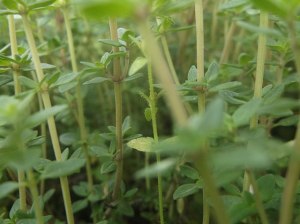
Responding to new weed incursions early and rapidly is very important. ©Panda8pie2

Weeds are a major threat to biodiversity and agricultural industries globally. New alien plant species are constantly introduced across borders, regions or landscapes. We know that some (such as those listed in the IUCN Global Invasive Species Database) are likely become problematic invasive weeds from experiences elsewhere.

When a weed is first introduced, population growth and spread is typically slow. This ‘invasion lag’ may be due to straightforward mathematics (population dynamics) as well as geography, environmental change or genetics. In any case, the lag period often presents the only window of opportunity where weed eradication or effective containment can be achieved. So, responding to new weed incursions early and rapidly is very important. Anyone who has ever battled with a bad weed infestation in their backyard knows it’s best to get in early and decisively! But decisions about where to target surveillance and control activities are often made under considerable time, knowledge and capacity constraints. Continue reading “Responding to New Weeds Needs Speed: Spatial Modelling with riskmapr Can Help”

Multi-State Species Distribution Models: What to do When Species Need Multiple Habitats

Post provided by Jan Engler, Veronica Frans and Amélie Augé

The north, south, east, and west boundaries of a species’ range tell us very little about what is happening inside…

― Robert H. MacArthur (1972, p. 149)

When You Enter the Matrix, Things Become Difficult!

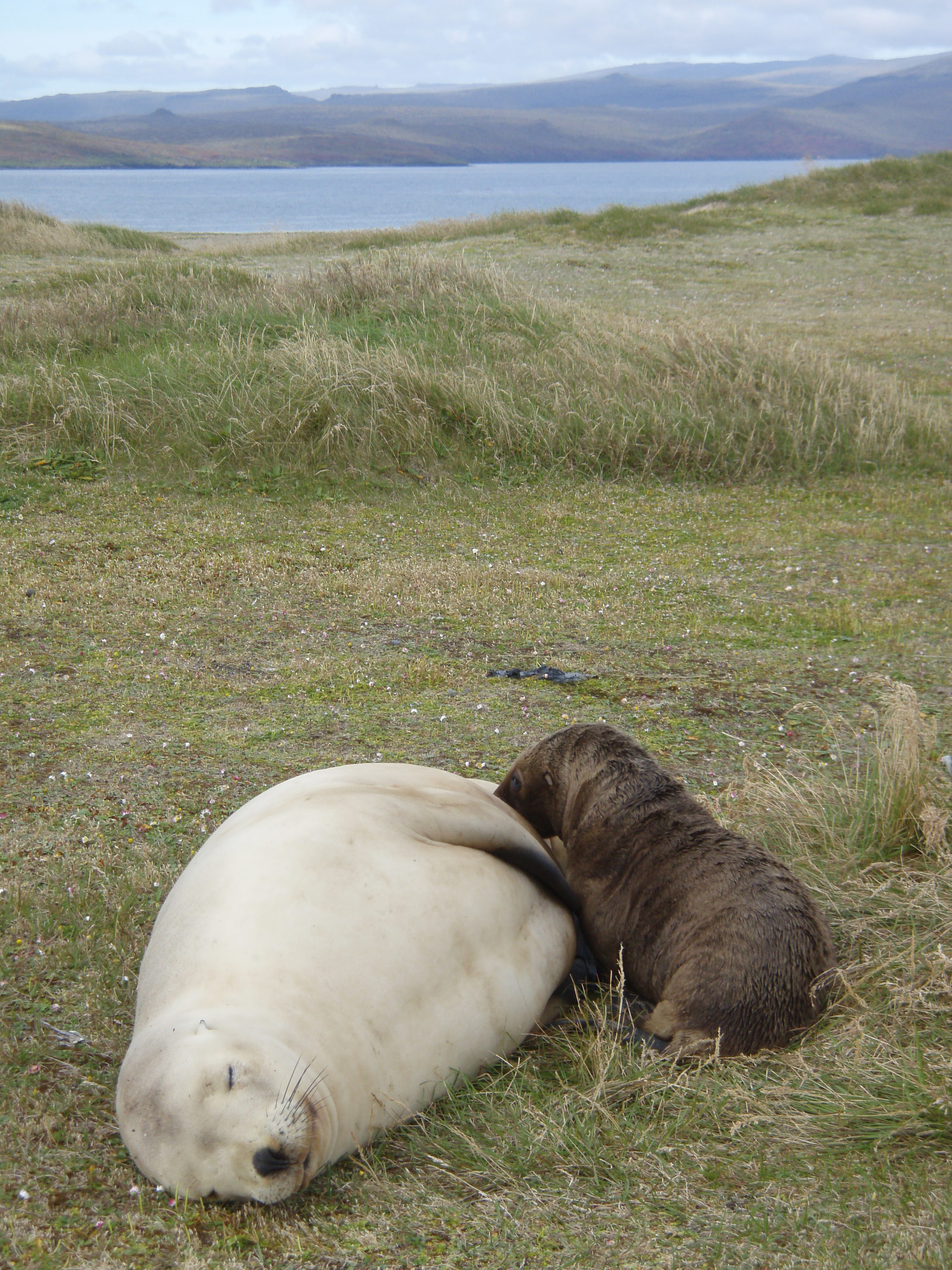
New Zealand sea lion mother and pup. © Amélie Augé

Protecting wildlife calls for a profound understanding of species’ habitat demands to guide concrete conservation actions. Quantifying the relationships between species and their environment using species distribution models (SDMs) has attracted tremendous attention over the past two decades. Usually these species-environment relationships are estimated on coarse spatial scales, using globally-interpolated long-term climate data sets. While they’re useful for studies on large-scale species distributions, these environmental predictors have limited applications for conservation management.

Climatic data were the first environmental information available with global coverage, but a wide range of Earth observation techniques have increased the availability of much finer environmental information. This allows us to quantify species-environment relationships in unprecedented detail. We can now shift the scale that SDMs operate at, resulting in more useful applications in conservation – SDMs now enter the matrix.

This shift in scale brings new challenges, especially for species using multiple distinct habitat types to survive. The landscape matrix, which has been negligible at the broad (global) scale, is hugely important at the fine (local) scale. It is not only that we need to quantify certain habitat types but also need to consider their arrangement in the landscape, which is basically what the landscape matrix is about. But as we enter the matrix, things become difficult. Continue reading “Multi-State Species Distribution Models: What to do When Species Need Multiple Habitats”

Conditional Occupancy Design Explained

Occupancy surveys are widely used in ecology to study wildlife and plant habitat use. To account for imperfect detection probability many researchers use occupancy models. But occupancy probability estimates for rare species tend to be biased because we’re unlikely to observe the animals at all and as a result, the data aren’t very informative. In their new article – ‘Occupancy surveys with conditional replicates: An … Continue reading Conditional Occupancy Design Explained