David Warton interviews Alan Gelfand, a keynote speaker at the Statistics in Ecology and Environmental Monitoring (SEEM) conference in Queenstown, NZ. Alan is best known for proposing Bayesian estimation of a posterior distribution using Gibbs sampling, in his classic papers ‘Sampling-Based Approaches to Calculating Marginal Densities‘ and ‘Illustration of Bayesian Inference in Normal Data Models Using Gibbs Sampling‘. David and Alan discuss the origins of … Continue reading An Interview with Alan Gelfand
Occupancy surveys are widely used in ecology to study wildlife and plant habitat use. To account for imperfect detection probability many researchers use occupancy models. But occupancy probability estimates for rare species tend to be biased because we’re unlikely to observe the animals at all and as a result, the data aren’t very informative. In their new article – ‘Occupancy surveys with conditional replicates: An … Continue reading Conditional Occupancy Design Explained
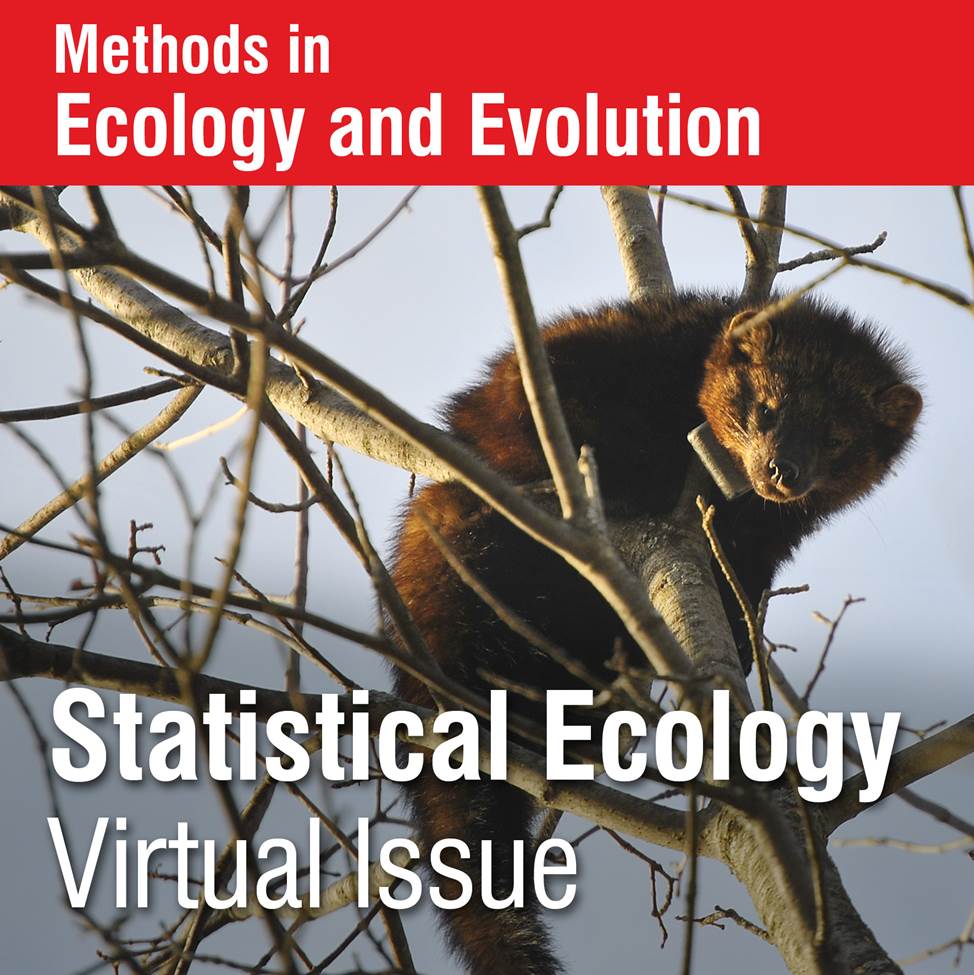
At the last ISEC, in Montpellier in 2014, an informal survey suggested that Methods in Ecology and Evolution was the most cited journal in talks. This reflects the importance of statistical methods in ecology and it is one reason for the success of the journal. For this year’s International Statistcal Ecology Conference in Seattle we have produced a virtual issue that presents some of our best recent papers which cross the divide between statistics and ecology. They range over most of the topics covered at ISEC, from statistical theory to abundance estimation and distance sampling.
We hope that Methods in Ecology and Evolution will be equally well represented in talks in Seattle, and also – just as in Montpellier – some of the work presented will find its way into the pages of the journal in the future.
Animal movement is a driving factor underlying many ecological processes including disease transmission, extinction risk and range shifts. Understanding why, when and how animals traverse a landscape can provide much needed information for landscape-level conservation and management practices.

 Methods Blog