How to assess seed bank effect in a plant metapopulation

Post provided by Apolline Louvet
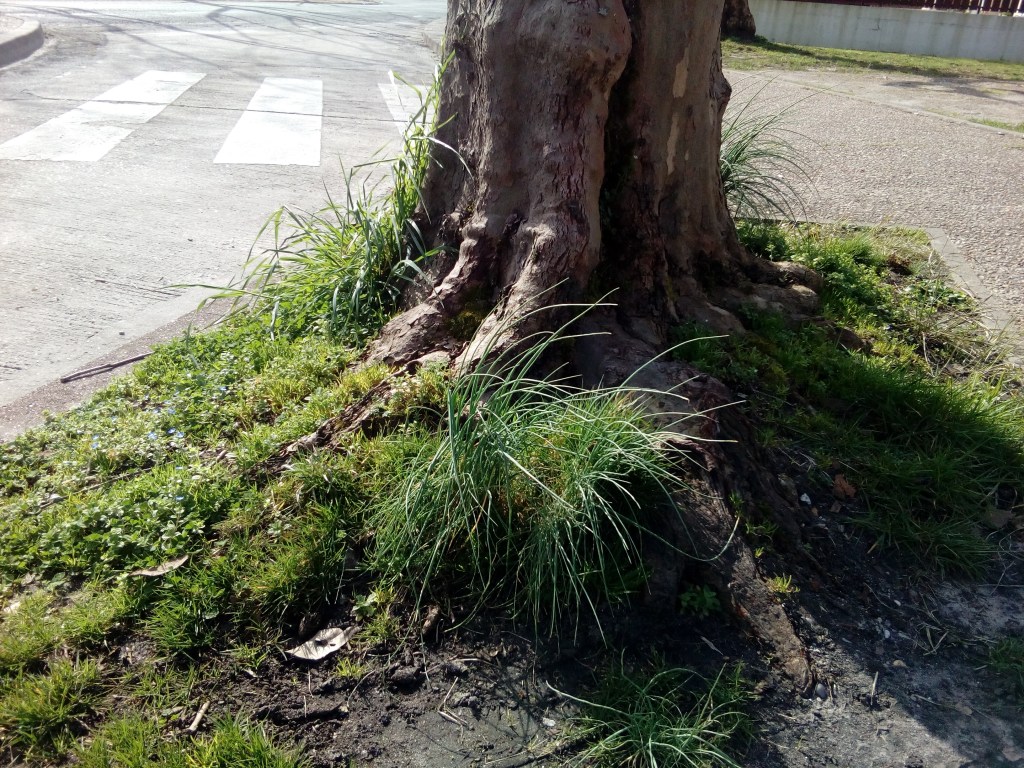
Tree base in an urban area, partly occupied by spontaneous vegetation. Picture credit: Apolline Louvet.

Seed banks play a key role in plant metapopulations, however, detecting seed banks remains challenging. The current method of assessing the effect of seed banks on plant metapopulation dynamics focuses on the presence of standing vegetation. This has direct implications for plant metapopulation models, which require data on the absence of a seed bank to understand plant dynamics.

Our paper, ‘Detecting seed bank influence on plant metapopulation dynamics’ in Methods in Ecology and Evolution, introduces a new metric on plant metapopulations, which assesses the seed bank contribution to the global observed dynamics. In this post, we recall what led us to develop this metric.

Continue reading “How to assess seed bank effect in a plant metapopulation”

How to Assemble, Fill and Clean Metapopulation Microcosm Plates: Two Video Tutorials

Metapopulation Microcosm Plates (MMP) are devices which resemble 96-well microtiter plates in size and shape, but with corridors connecting the wells in any configuration desired. They can be used to culture microbial metapopulations or metacommunities with up to 96 habitat patches.

In these two video tutorials, Helen Kurkjian explains how you can assemble, fill and clean MMPs in your lab.

Continue reading “How to Assemble, Fill and Clean Metapopulation Microcosm Plates: Two Video Tutorials”

Measuring functional connectivity using butterflies

Long-term datasets yield a great deal of information and are increasingly used to inform conservation measures. In the first video of the new year, Gary Powney and Tom Oliver show how long-term monitoring data on the Speckled Wood butterfly (Pararge aegeria) from the UK monitoring butterfly scheme can be used to assess functional connectivity of the landscape. In a paper recently published in Methods, Gary … Continue reading Measuring functional connectivity using butterflies