Modelling approaches in meta-analysis: from sandwich estimators to correlated hierarchical models

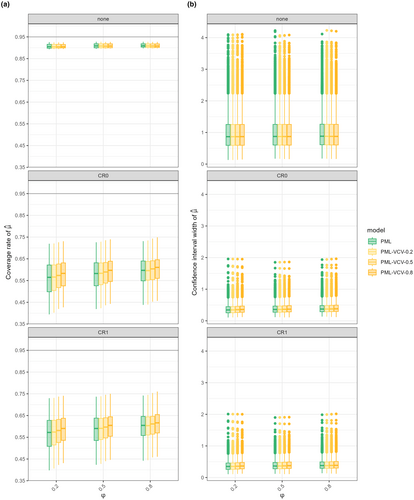
Post provided by Coralie Williams Conducting a meta-analysis involves a series of decisions, from choosing what data to extract to selecting the outcome measure. But then comes the model specification – how should it be formulated? At its simplest, a meta-analysis can be expressed as a simple linear regression model where the outcome is an effect size (yi), which is a quantitative measure derived from … Continue reading Modelling approaches in meta-analysis: from sandwich estimators to correlated hierarchical models


Grace Ridder: Generating spatially realistic environmental null models with the shift-&-rotate approach helps evaluate false positives in species distribution modelling

Throughout March and April, we are featuring articles shortlisted for the 2024 Robert May Prize. The Robert May Prize is awarded by the British Ecological Society each year for the best paper in Methods in Ecology and Evolution written by an early career author. Grace Ridder’s article ‘Generating spatially realistic environmental null models with the shift-&-rotate approach helps evaluate false positives in species distribution modelling‘ is one … Continue reading Grace Ridder: Generating spatially realistic environmental null models with the shift-&-rotate approach helps evaluate false positives in species distribution modelling

Avoiding Confusion: Modelling Image Identification Surveys with Classification Errors

Post provided by Jon Barry We are a group comprised of statisticians, ecologists and a computer scientist. Back in 2021 when this work started, we were all employed at the Centre for Environment, Fisheries and Aquacultural Science (Cefas) at Lowestoft, U.K. Since then, Robert, our computer scientist, has ‘jumped ship’ (no pun intended) to the Alan Turing Institute. We were aware that AI image recognition … Continue reading Avoiding Confusion: Modelling Image Identification Surveys with Classification Errors

Discovering population dynamics and community interactions of migratory birds by individual-based model

It has been a few weeks since the 15th Chinese Symposium on Biodiversity Science and Conservation, where the first “Seminar on Methods in Ecology and Evolution in China” was held. In these blog posts, we hear from some of the winners of the “Outstanding Young Scholar Award in Ecological and Evolutionary Methodology in China”. Here, winner Jin Liu discusses the background behind their research. Post … Continue reading Discovering population dynamics and community interactions of migratory birds by individual-based model

Hidden Markov models have pitfalls…

…but also opportunities! Hidden Markov models (HMMs) and their extensions are attractive methods for analysing ecological data. In recent years, a variety of extensions of the basic model have been proposed, yielding great opportunities for ecological inference. Yet, as these models become more complex and challenging to understand, it is important to consider what pitfalls these methods have and what opportunities there are for future … Continue reading Hidden Markov models have pitfalls…

An Ecologist and a Programmer Walk Into a Bar…

Post provided by Daniel Vedder, Markus Ankenbrand, and Juliano Sarmento Cabral

Five years ago, a new institute opened its doors at the University of Würzburg: the Center for Computational and Theoretical Biology (CCTB). The idea was simple. Take six computational research groups, covering topics from image analysis to genomics and ecological modelling, put them in a building together, and see what happens.

Despite our disparate areas of expertise, this “experiment” has worked really well. It soon turned out that one of our greatest strengths as an institute lay in the cumulative computer know-how we have, or have acquired together. In our experience, many biologists are still somewhat wary of computational techniques, and struggle with them even when they use them. Part of the reason for this unease, we believe, is that few biologists are thoroughly trained in computer science.

Continue reading “An Ecologist and a Programmer Walk Into a Bar…”

Reliably Predicting Pollinator Abundance with Process-Based Ecological Models

Post provided by Emma Gardner and Tom Breeze

Bumblebee. Picture credit: Tom Breeze.

Pollination underpins >£600 million of British crop production and wild insects provide a substantial contribution to the productivity of many crops. There is mounting evidence that our wild pollinators are struggling and that pollinator populations may be declining. Reliably modelling pollinator populations is important to target conservation efforts and to identify areas at risk of pollination service deficits. In our study, ‘Reliably predicting pollinator abundance: Challenges of calibrating process-based ecological models’, we aimed to develop the first fully validated pollinator model, capable of reliably predicting pollinator abundance across Great Britain.

Continue reading “Reliably Predicting Pollinator Abundance with Process-Based Ecological Models”

Creating a package to infer species coexistence

Post provided by Ignasi Bartomeus, David García-Callejas, and Oscar Godoy

Ignasi Bartomeus and colleagues share the story behind their recent Methods article ‘cxr: A toolbox for modelling species coexistence in R’.

This post recalls the journey on how we ended up developing cxr (acronym for CoeXistence relationships in R), an R package for quantifying interactions among species and their coexistence relationships. In other words, it provides tools for telling apart the situations in which different species can persist together in a community from the cases in which one species completely overcomes another.

Continue reading “Creating a package to infer species coexistence”

Advances in Modelling Demographic Processes: A New Cross-Journal Special Feature

Analysis of datasets collected on marked individuals has spurred the development of statistical methodology to account for imperfect detection. This has relevance beyond the dynamics of marked populations. A couple of great examples of this are determining site occupancy or disease infection state.

EURING Meetings

The regular series of EURING-sponsored meetings (which began in 1986) have been key to this development. They’ve brought together biological practitioners, applied modellers and theoretical statisticians to encourage an exchange of ideas, data and methods.

This new cross-journal Special Feature between Methods in Ecology and Evolution and Ecology and Evolution, edited by Rob Robinson and Beth Gardner, brings together a collection of papers from the most recent EURING meeting. That meeting was held in Barcelona, Spain, 2017, and was hosted by the Museu de Ciènces Naturals de Barcelona. Although birds have provided a convenient focus, the methods are applicable to a wide range of taxa, from plants to large mammals. Continue reading “Advances in Modelling Demographic Processes: A New Cross-Journal Special Feature”

Issue 8.3

Issue 8.3 is now online!

The March issue of Methods is now online!

This issue contains two Applications articles and one Open Access article. These three papers are freely available to everyone, no subscription required.

 Solo: Solo audio recorders are inexpensive, easy to construct and record audible sound continuously for around 40 days. The paper also has a video tutorial explaining how to assemble the required hardware and comes with a companion website with more information.

 The third dimension: A novel design to obtain three-dimensional data on the movements of aquatic organisms at depths of up to 140m. The set-up consists of two synchronised high-speed cameras fixed to two articulated arms and can be used for any underwater applications that require synchronized video recordings of medium- to large-sized animals.

Continue reading “Issue 8.3”