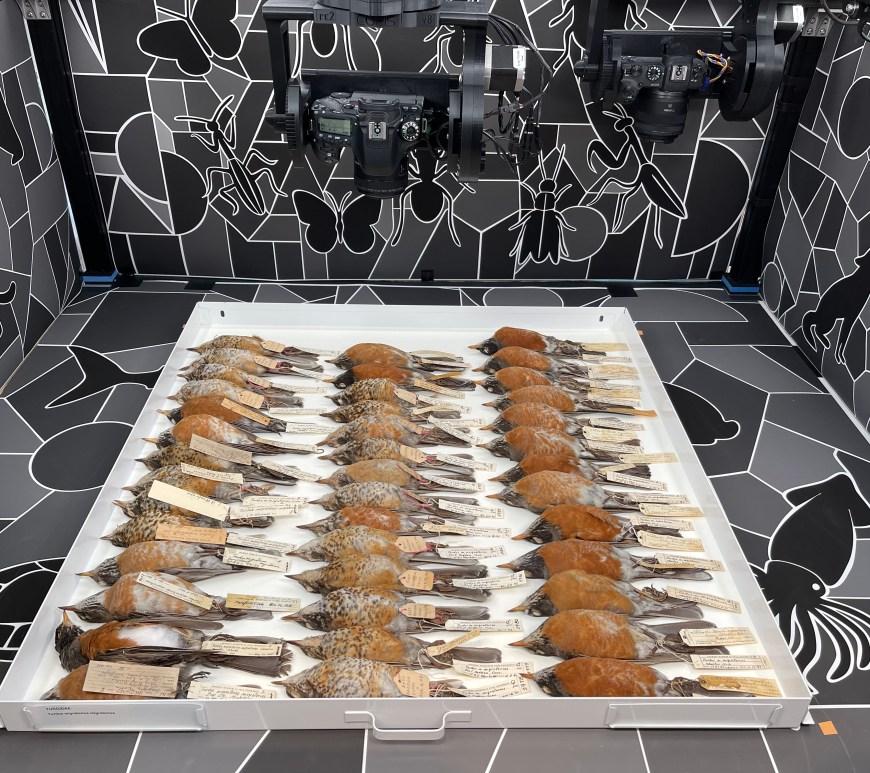
The future of natural history specimen 3D digitization is here with COPIS

Post provided by Jeremy D. Pustilnik and Genevieve S. Rios Natural history museums around the world collectively hold over one billion specimens in their collections, from animal skins and fossils to pressed plants, minerals, and cultural heritage artifacts. Only a small fraction of these objects is ever placed on public display, while most remain in collection cabinets where they are studied by scientists, but rarely … Continue reading The future of natural history specimen 3D digitization is here with COPIS

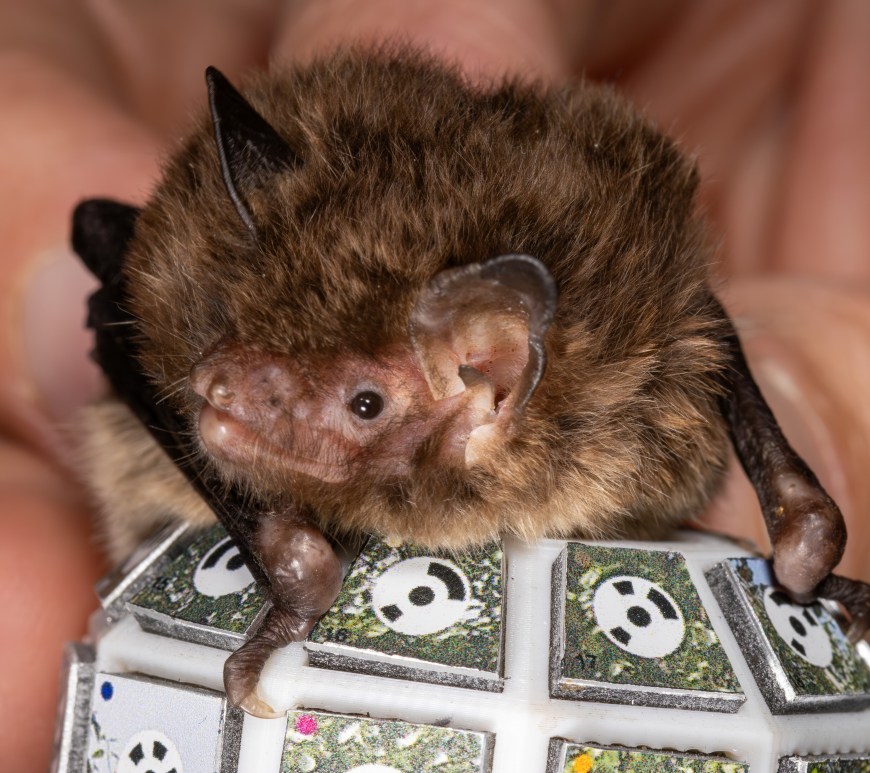
Seeing the Hearing: How 3D Photogrammetry Reveals Directional Hearing in Animals

Post provided by Karsten Vesterholm I’m a Postdoc in the Sound and Behaviour research group at the Department of Biology at the University of Southern Denmark, where I work in the Bat Echolocation Lab. We are particularly interested in understanding how bats use directional hearing as part of their echolocation. Direction of hearing is determined primarily by the shape and orientation of the outer ear … Continue reading Seeing the Hearing: How 3D Photogrammetry Reveals Directional Hearing in Animals

Cover Stories: Making strides towards weighing whole wildlife populations in 3D

Post provided by Michelle Shero

A grey seal pup next to the unoccupied aerial system (UAS) used in this study. Photo credit: Michelle Shero.

To survive and reproduce, all animals must be able to extract sufficient energy from their environment. It takes energy to forage, but animals can recover those calories if they can successfully capture enough prey – and the animal’s weight tells us about its net energetic costs versus gains. Animals that remain in positive energy-balance can then afford to devote more energy towards growth and reproduction. In this blog post, Michelle Shero of Woods Hole Oceanographic Institution guides us through a new method outlined in her team’s recent Methods in Ecology and Evolution paper ‘Tracking wildlife energy dynamics with unoccupied aircraft systems and three-dimensional photogrammetry’. The team uses drone imagery to 3-D model and ‘weigh’ large groups of free-living animals.

Continue reading “Cover Stories: Making strides towards weighing whole wildlife populations in 3D”