Issue 7.3

Issue 7.3 is now online!

The March issue of Methods is now online!

This month’s issue contains two Applications articles and two Open Access articles, all of which are freely available.

METAGEAR: A comprehensive, multifunctional toolbox with capabilities aimed to cover much of the research synthesis taxonomy: from applying a systematic review approach to objectively assemble and screen the literature, to extracting data from studies, and to finally summarize and analyse these data with the statistics of meta-analysis.

Universal FQA Calculator: A free, open-source web-based Floristic Quality Assessment (FQA) Calculator. The calculator offers 30 FQA data bases (with more being added regularly) from across the United States and Canada and has been used to calculate thousands of assessments. Its growing repository for site inventory and transect data is accessible via a REST API and represents a valuable resource for data on the occurrence and abundance of plant species. Continue reading “Issue 7.3”

On the Tail of Reintroduced Canada Lynx: Leveraging Archival Telemetry Data to Model Animal Movement

Post provided by FRANCES E. BUDERMAN

Animal Movement

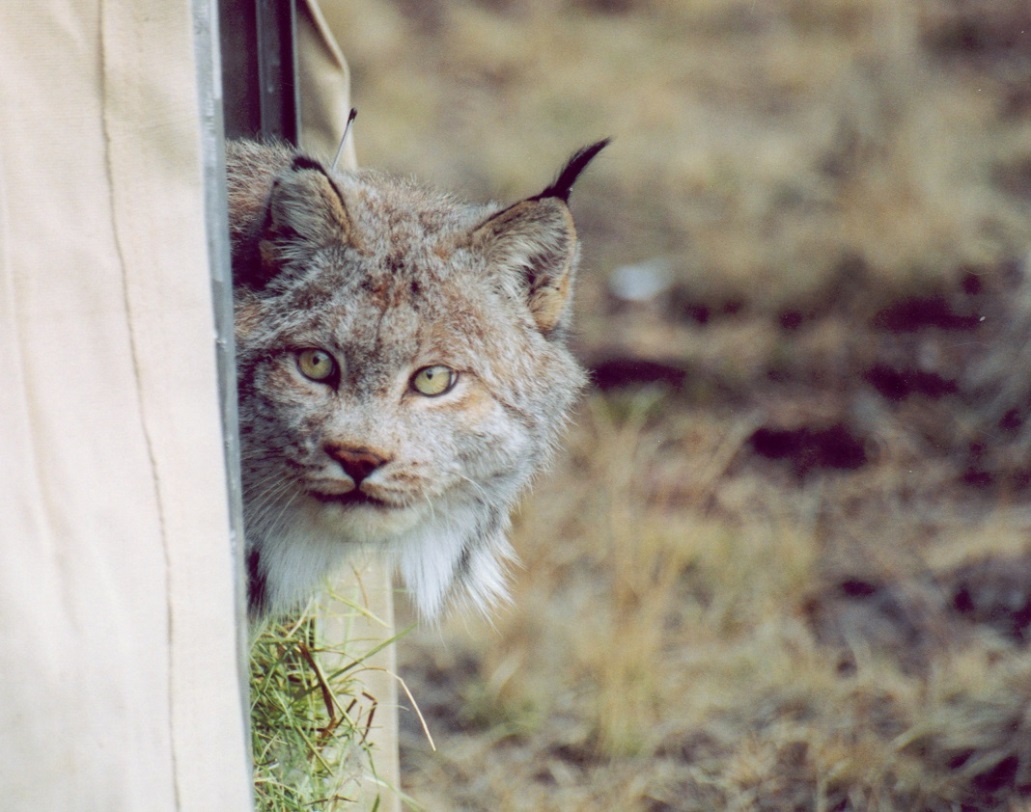
218 Canada lynx were reintroduced to the San Juan Mountains between 1999 and 2006 with VHF/Argos collars. © Colorado Parks and Wildlife

Animal movement is a driving factor underlying many ecological processes including disease transmission, extinction risk and range shifts. Understanding why, when and how animals traverse a landscape can provide much needed information for landscape-level conservation and management practices.

The theoretical underpinnings for modelling animal movement were developed about seventy years ago. Technological developments followed, with radio-collars initially deployed on large mammals such as grizzly bears and elk. We can now monitor animal movement of a wide variety of species, including those as small as a honeybee, at an unprecedented temporal and spatial scale.

However, location-based data sets are often time consuming and costly to collect. For many species, especially those that are rare and elusive, pre-existing data sets may be the only viable data source to inform management decisions. Continue reading “On the Tail of Reintroduced Canada Lynx: Leveraging Archival Telemetry Data to Model Animal Movement”

Issue 7.1

Issue 7.1 is now online!

The January issue of Methods is now online!

As always, the first issue of the year is our sample issue. You can access all of the articles online free of charge. No subscription or membership is required!

We have two Open Access articles and two Applications papers in our January issue.

Recognizing False Positives: Environmental DNA (eDNA) is increasingly used for surveillance and detection of species of interest in aquatic and soil samples. A significant risk associated with eDNA methods is potential false-positive results due to laboratory contamination. To minimize and quantify this risk, Chris Wilson et al. designed and validated a set of synthetic oligonucleotides for use as species-specific positive PCR controls for several high-profile aquatic invasive species.

BiMat: An open-source MATLAB package for the study of the structure of bipartite ecological networks. BiMat enables both multiscale analysis of the structure of a bipartite ecological network – spanning global (i.e. entire network) to local (i.e. module-level) scales – and meta-analyses of many bipartite networks simultaneously. The authors have chosen to make this Applications article Open Access.

Gemma Murray et al. provide this month’s second Open Access article. In ‘The effect of genetic structure on molecular dating and tests for temporal signal‘ the authors use simulated data to investigate the performance of several tests of temporal signal, including some recently suggested modifications. The article shows that all of the standard tests of temporal signal are seriously misleading for data where temporal and genetic structures are confounded (i.e. where closely related sequences are more likely to have been sampled at similar times). This is not an artifact of genetic structure or tree shape per se, and can arise even when sequences have measurably evolved during the sampling period.

Our January issue also features articles on Monitoring, Population Ecology, Genetics, Evolution, Community Ecology, Diversity and more. Continue reading “Issue 7.1”

Models, Practical Management and Invasive Critters

POST PROVIDED BY NICK BEETON

How Simple Should a Model Be?

Should scientists make simplifying assumptions in complex models? This is a debate as old as the hills, and one that everyone seems to have strong opinions about. Some argue that because even the most simplistic model based on the best available estimates is objective, it is better than relying solely on “gut feelings”. In such a model, estimates based on expert opinion or simplifying assumptions can at least be included in a transparent fashion. Others argue that such an approach can miss important emergent properties as a result of missed complexity, making any results misleading and potentially even worse than not using a model at all.

Models to Support Management: Invasive Horses, Cats and Deer

Wild horses in the Australian alps. © Regina Magierowski
Wild horses in the Australian Alps. © Regina Magierowski

Both sides are right in their own way, of course, but perhaps unusually (as an applied mathematics graduate working in ecology), I’ve found myself leaning towards the former view as my career progresses. During my last postdoc, I was confronted with a large, vexing problem: the incursion of wild horses in the Australian Alps. The species was already impacting bogs and wetlands, overpopulated in some places to the point of starvation, and spreading to previously pristine areas of National Park. The issue was (and still is) highly contentious, with activists applying considerable political pressure against lethal forms of control. Knowledge of population densities across the horses’ range was patchy and ability to predict their likely movements equally unreliable. Even predicting their demographics was difficult, with most values for population growth rates conflicting and spatially variable. Continue reading “Models, Practical Management and Invasive Critters”

Issue 6.12

Issue 6.12 is now online!

The December issue of Methods is now online! 

Our final issue of 2015 contains one Applications article and two Open Access articles, all of which are freely available.

stagePOP: A tool for predicting the deterministic dynamics and interactions of stage-structured populations (i.e. where the life cycle consists of distinct stages, for example eggs, juveniles and reproductive adults). The continuous-time formulation enables stagePop to easily simulate time-varying stage durations, overlapping generations and density-dependent vital rates.

Julia Cherry et al. provide one of this month’s Open Access articles. In ‘Testing sea-level rise impacts in tidal wetlands: a novel in situ approach‘ the authors describe the use of experimental weirs that manipulate water levels to test sea-level rise impacts in situ and at larger spatial scales. This new method can provide more robust estimates of sea-level rise impacts on tidal wetland processes. This article was accompanied by a press release when it was published in Early View. You can read more about this article here.

Our September issue also features articles on Biodiversity, Demography, Predator-Prey Interactions, Animal Communication and much more. Continue reading “Issue 6.12”

A Quickstart Guide for Building Your First R Package

Post Provided By DR IAIN STOTT

Iain is a Postdoctoral Researcher at the Max Planck Institute for Demographic Research and the MaxO Center at the University of Southern Denmark. He is currently working as a part of MaxNetAging, a Research Network on Aging. Iain was one of the presenters at the UK half of the Methods in Ecology and Evolution 5th Anniversary Symposium in April. You can watch his talk, ‘Methods Put to Good Use: Advances in population ecology through studies of transient demography’ here.

If you’re anything like me, you might experience a minor existential crisis weekly. As scientists we question the world around us and, for me, this questioning turns all-too-often inwards to my career. I don’t think that’s unusual: ask any scientist about their ‘Plan B’, and the extent to which it’s thought through is often astonishing (if a café-cum-cocktail bar ever opens in Glasgow’s West End, which specialises in drinks that employ spice blends from around the world and are named after old spice trade routes and trading vessels, then you know I’ve jumped the science ship).

Contributing open-source software is something which has made my work feel a bit more relevant and helped me feel a bit less of an imposter. I’ll explain why that is, give some tips to beginners for building a first R package, and hopefully persuade other (especially early-career) researchers to do the same. Continue reading “A Quickstart Guide for Building Your First R Package”

Issue 6.10

Issue 6.10 is now online!

The October issue of Methods is now online!

This month’s issue contains two Applications articles and one Open Access article, all of which are freely available.

letsR: A package for the R statistical computing environment, designed to handle and analyse macroecological data such as species’ geographic distributions and environmental variables. It also includes functions to obtain data on species’ habitat use, description year and current as well as temporal trends in conservation status.

Cleaning Oil from Seabirds: The authors assess the efficacy of sea water as an alternative to fresh water for cleaning oil from seabirds’ feathers. Results indicate that for oiled feathers, a sea water wash/rinse produced clean, low BAI/unclumped feathers with minimal particulate residue.

Stefano Canessa et al. provide this month’s only Open Access article. In ‘When do we need more data? A primer on calculating the value of information for applied ecologists‘ the authors guide readers through the calculation of Value of Information (VoI) using two case studies and illustrate the use of Bayesian updating to incorporate new information. Collecting information can require significant investments of resources; VoI analysis assists managers in deciding whether these investments are justified. The authors also wrote a blog post on VoI which you can find here.

Our October issue also features articles on Niche Modelling, Population Ecology, Spatial Ecology, Conservation, Monitoring and much more. Continue reading “Issue 6.10”

‘Bee soup’ could help understand declines and test remedies

Below is a press release about the Methods paper ‘High-throughput monitoring of wild bee diversity and abundance via mitogenomics‘ taken from the University of East Anglia:

It may sound counter-intuitive, but crushing up bees into a ‘DNA soup’ could help conservationists understand and even reverse their decline – according to University of East Anglia scientists.

Research published today in the journal Methods in Ecology and Evolution shows that collecting wild bees, extracting their DNA, and directly reading the DNA of the resultant ‘soup’ could finally make large-scale bee monitoring programmes feasible.

14614327622_6525ac1c30_o
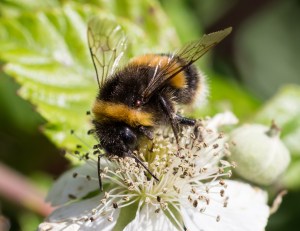
©Mibby23 (click image to see original version)

This would allow conservationists to detect where and when bee species are being lost, and importantly, whether conservation interventions are working.

The UK’s National Pollinator Strategy outlines plans for a large-scale bee monitoring programme. Traditional monitoring involves pinning individual bees and identifying them under a microscope. But the number of bees needed to track populations reliably over the whole country makes traditional methods infeasible.

This new research shows how the process could become quicker, cheaper and more accurate. Continue reading “‘Bee soup’ could help understand declines and test remedies”