ATLAS: a regional-scale tracking system

Post provided by Christine Beardsworth

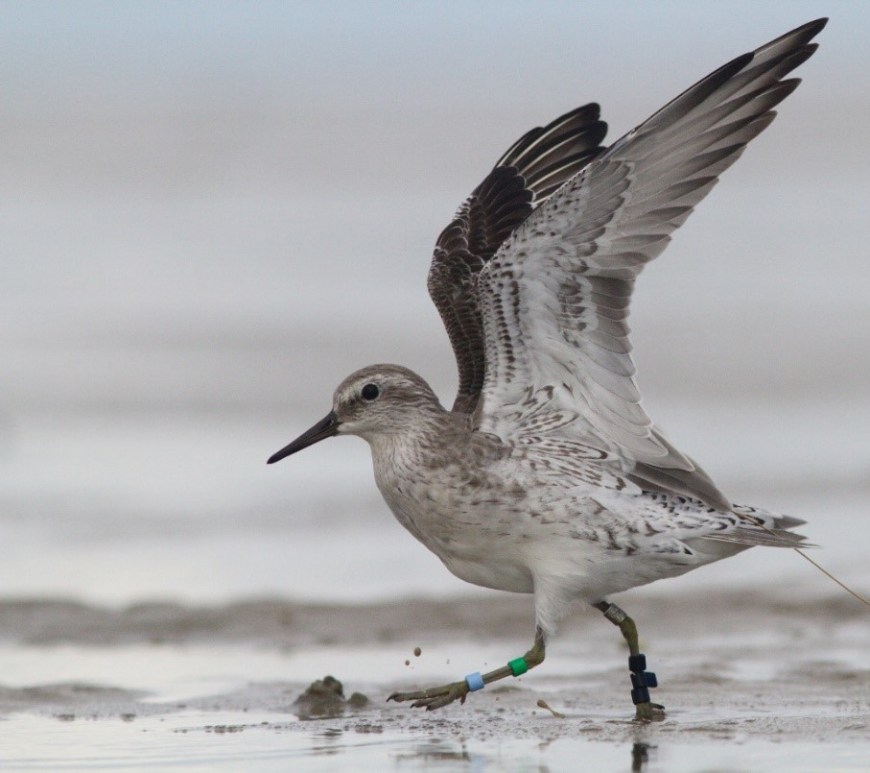
Tracking the movement of animals is important for informing conservation practices but can present logistical obstacles, especially when attempting to track smaller species with large GPS tags. Using existing technologies in new ways may help overcome these obstacles and provide alternative approaches for accurately tracking large numbers of relatively small sized species. In this blog post, Christine Beardsworth discusses findings from her recent Methods in Ecology and Evolution paper “Validating ATLAS: a regional-scale, high-throughput tracking system”.

Continue reading “ATLAS: a regional-scale tracking system”

The next step for tagging insects: we can’t keep ignoring the impact

Robert May Prize Shortlisted Article

Post provided by Femke Batsleer

Digger wasp (Bembix rostrata). Credit: Femke Batsleer.

Each year Methods in Ecology and Evolution awards the Robert May Prize to the best paper in the journal by an author at the start of their career. Femke Batsleer has been shortlisted for her article ‘The neglected impact of tracking devices on arthropods‘. In this blog, Femke discusses how her paper came to be and the outcomes of the review.

Continue reading “The next step for tagging insects: we can’t keep ignoring the impact”

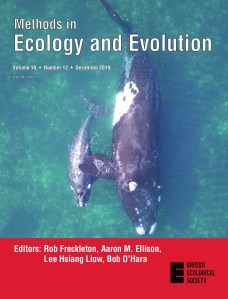
Issue 10.12: Statistical Ecology, UAVs, Invasive Species and More

The December issue of Methods is now online!

The final 2019 issue of Methods in Ecology and Evolution is online now.

To close out another brilliant year, we’ve got papers on invasive species, convolutional neural networks, rapid spatial risk modelling, species distribution models and much more.

You can find out more about our Featured Articles (selected by the Senior Editor) below. We also discuss this month’s Open Access and freely available papers we’ve published in our latest issue (Practical Tools and Applications articles are always free to access, whether you have a subscription or not) .

Continue reading “Issue 10.12: Statistical Ecology, UAVs, Invasive Species and More”