Best practices for taxonomic harmonization, an overlooked yet crucial step in biodiversity analyses

Post provided by Matthias Grenié, Emilio Berti, Juan Carvajal-Quintero, Gala Mona Louise Dädlow, Alban Sagouis and Marten Winter.

Merging taxonomic datasets from diverse sources for use in macroecological studies can prove challenging, as there is no standardised methodology, taxonomic names often change over time, and even close colleagues can format the exact same data using different approaches. Researchers at iDiv, the German Centre for Integrative Biodiversity, held a workshop to discuss strategies for harmonizing taxonomy which led to a review of best practice being published in Methods in Ecology and Evolution. In this post, Matthias Grenié and co-authors share insight on this process.    

Continue reading “Best practices for taxonomic harmonization, an overlooked yet crucial step in biodiversity analyses”
Imperfect Pathogen Detection: What to Do When Sampling and Diagnostic Tests Produce Inaccurate Results

Post Provided by Graziella DiRenzo

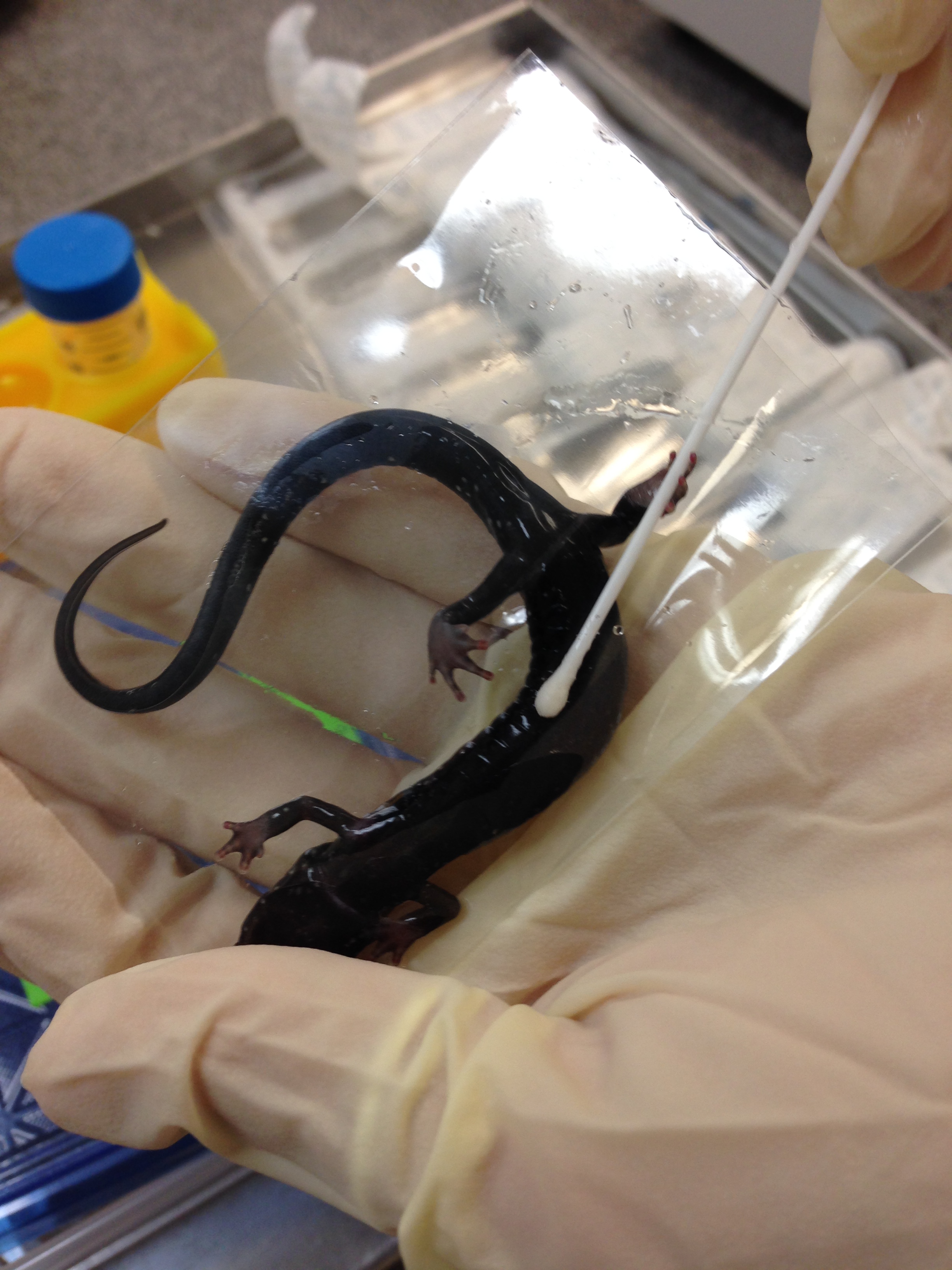
A salamander having its skin swabbed to test for Bsal infection.

Imagine you’re at the doctor’s office. You’re waiting to hear back on a critical test result. With recent emerging infectious diseases in human populations, you are worried you may be infected after a sampling trip to a remote field site. The doctor walks in. You sit nervously, sensing a slight tremble in your left leg. The doctor confidently declares, “Well, your tests results came back negative.” In that moment, you let out a sigh of relief, the kind you feel throughout your body. Then, thoughts start flooding your mind. You wonder– what are the rates of false negatives associated with the test? How sensitive is the diagnostic test to low levels of infection? The doctor didn’t sample all of your blood, so how can they be sure I’m not infected? Is the doctor’s conclusion right?

 Now, let’s say I’m the doctor and my patient is an amphibian. I don’t have an office where the amphibian can come in and listen to me explain the diagnosis or the progression of disease − BUT I do regularly test amphibians in the wild for a fatal fungal pathogen, known as Batrachochytrium dendrobatidis (commonly known as Bd). Diseases like Bd are among the leading causes of the approximately one-third of amphibian species that are threatened, near threatened, or vulnerable to extinction. To test for Bd, and the recently emerged sister taxon Batrachochytrium salamandrivorans (hereafter referred to as: Bsal), disease ecologists rely on non-invasive skin swabs. Continue reading “Imperfect Pathogen Detection: What to Do When Sampling and Diagnostic Tests Produce Inaccurate Results”

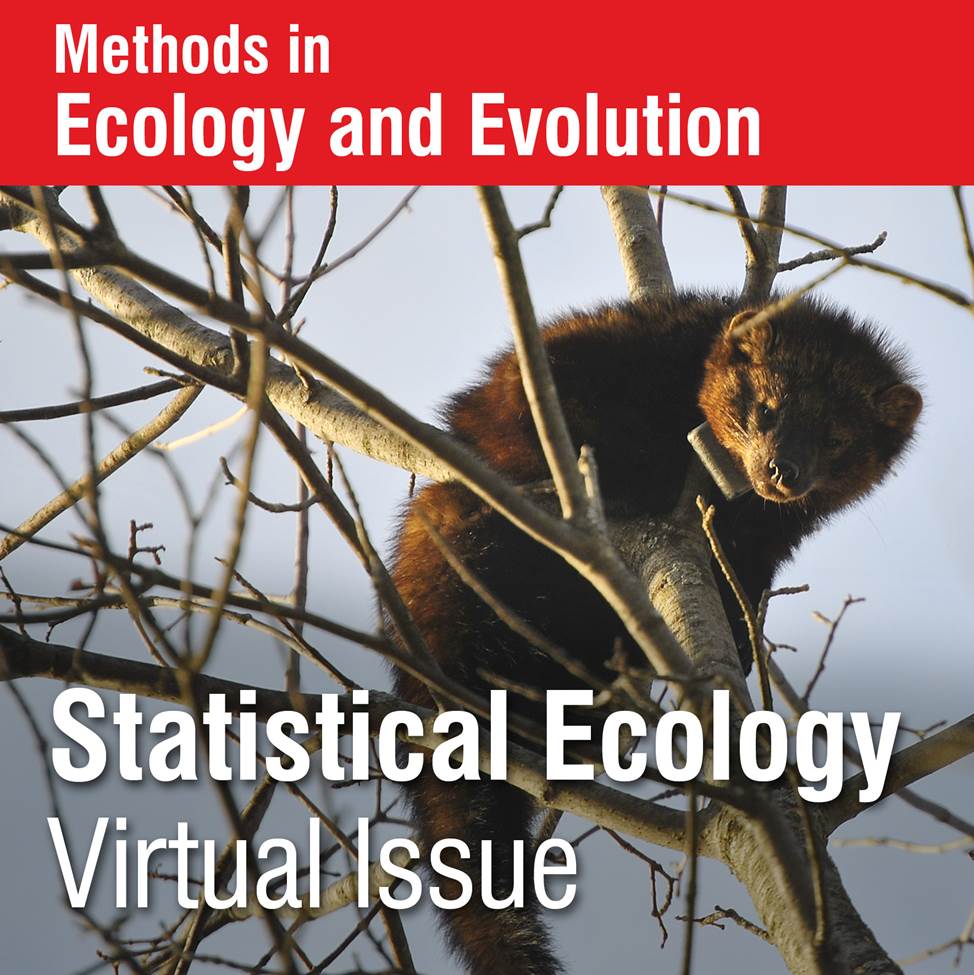
Statistical Ecology Virtual Issue

StatEcolVI_WebAdAt the last ISEC, in Montpellier in 2014, an informal survey suggested that Methods in Ecology and Evolution was the most cited journal in talks. This reflects the importance of statistical methods in ecology and it is one reason for the success of the journal. For this year’s International Statistcal Ecology Conference in Seattle we have produced a virtual issue that presents some of our best recent papers which cross the divide between statistics and ecology. They range over most of the topics covered at ISEC, from statistical theory to abundance estimation and distance sampling.

We hope that Methods in Ecology and Evolution will be equally well represented in talks in Seattle, and also – just as in Montpellier – some of the work presented will find its way into the pages of the journal in the future.

Without further ado though, here is a brief overview of the articles in our Statistical Ecology Virtual Issue: Continue reading “Statistical Ecology Virtual Issue”