At this year’s International Statistical Ecology Conference (ISEC 2018) David Warton interviewed Kate Jones, Chair in Ecology and Biodiversity at University College, London. Their conversation mainly focused on how to classify bats from acoustic data, with particular reference to ‘Acoustic identification of Mexican bats based on taxonomic and ecological constraints on call design‘ by Veronica Zamora‐Gutierrez et al. They also discuss Conservation 4.0! We’ll have more … Continue reading Bats, Acoustic Methods and Conservation 4.0: An Interview with Kate Jones
David Warton interviews Tony Ives, a Keynote speaker at the Statistics in Ecology and Environmental Monitoring (SEEM) conference in Queenstown, NZ. Tony has published a few papers in Methods in Ecology and Evolution over the last couple of years – first we discuss the exchanges on log-transformation of counts (including a paper co-authored with David Warton). Tony and David then talk about a recent paper … Continue reading An Interview with Tony Ives
Happy New Year! We hope that you all had a wonderful Winter Break and that you’re ready to start 2018. We’re beginning the year with a look back at some of our highlights of 2017. Here’s how last year looked at Methods in Ecology and Evolution.
The Articles
We published some amazing articles in 2017, too many to mention them all here. However, we would like to take a moment to thank all of the Authors, Reviewers and Editors who contributed to the journal last year. Your time and effort make the journal what it is and we are incredibly grateful. THANK YOU for all of your hard work!
Technological Advances at the Interface between Ecology and Statistics
Our first Special Feature of the year came in the April issue of the journal. The idea forTechnological Advances at the Interface between Ecology and Statistics came from the 2015 Eco-Stats Symposium at the University of New South Wales and the feature was guest edited by Associate Editor David Warton. It consists of five articles based on talks from that conference and shows how interdisciplinary collaboration help to solve problems around estimating biodiversity and how it changes over space and time.
Today is the first day of peer review week. One of the issues that many people bring up about the current system of peer review is that there is very little formal training. There are guidance documents available (including the BES Guide to Peer Review), workshops on peer review can be found at some conferences and some senior academics teach their PhD students or post-docs about the process. In general though, peer review training is fairly hard to come by.
This is something that people have told us (the BES publications team) at conferences and through surveys, so we’re doing something about it. From October 2017 until April 2018 Methods in Ecology and Evolution is going to be partnering with the BES Quantitative Ecology Special Interest Group to run a trial Peer Review Mentoring Scheme.
The trial scheme is going to focus on statistical ecology (as we receive a lot of statistical papers at Methods in Ecology and Evolution), but if it goes well, we’ll be looking at other areas of expertise too.
DITCH: Amateur naturalists from the UK have a distinguished pedigree, from Henry Walter Bates and Marianne North, to Alfred Russel Wallace and Mary Anning. But arguably, the rise of post-war academia in the fifties displaced them from mainstream scientific discourse and discovery. Recently, there has been a resurgence of the ‘citizen scientist’, like me, in the UK and elsewhere – although the term may refer to more than one kind of beast.
To me, the ‘citizen scientist’ label feels a little patronising – conveying an image of people co-opted en masse for top-down, scientist-led, large-scale biological surveys. That said, scientist-led surveys can offer valid contributions to conservation and the documentation of the effects of climate change (among other objectives). They also engage the public (not least children) in science, although volunteers usually have an interest in natural history and science already. For me though, the real excitement comes in following a bottom-up path: making my own discoveries and approaching scientists for assistance with my projects.
Robert Colwell at the Boreas Pass in Colorado, USA
ROB: I grew up on a working ranch in the Colorado mountains, surrounded on three sides by National Forest and a National Wilderness Area. My mother, an ardent amateur naturalist, taught me and my sister the local native flora and fauna and our father instilled a respect for the land in us. For my doctoral research at the University of Michigan, I studied insect biodiversity in Colorado and Costa Rica at several elevations. The challenges of estimating the number of species (species richness) and understanding why some places are species-rich and others species-poor has fascinated me ever since. Continue reading “Bottom-up Citizen Science and Biodiversity Statistics”
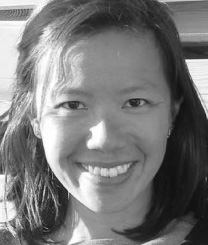
An Asian, female Senior Editor under 45? Progressive! I have loved Methods in Ecology and Evolution since it appeared in 2010 and am thrilled to have been selected to join Rob, Bob and Jana to help with the journal’s continued development.
OK, so you want to know who the new Senior Editor on the MEE block is. I’m just another scientist, I guess. On the outside, we look different but on the inside, we’re all the same. (OK, perhaps we are a little different, even on the inside, but that makes life and research interesting, right?)
A few leading reasons for going to a conference are: to present your work and get feedback on it, to find out what others are doing, to meet collaborators and to network. But a conference can also be a great setting for generating completely new ideas. I find that conferences are one of my most likely places for a “eureka moment”.
Surrounded by researchers working on a range of different problems in interesting and often original ways, I’m encouraged to think about things from a different angle. Idea generation is perhaps one of the main benefits of going to a conference – but is the typical conference format is the best way to facilitate that? Or does it focus too much on giving researchers a platform to report on previous research ideas? Continue reading “Generating New Ideas in a Conference Setting”
This new Special Feature is a collection of five articles (plus an Editorial from Guest Editor David Warton) inspired by the December 2015 Eco-Stats conference at the University of New South Wales in Australia. It shows how interdisciplinary collaboration help to solve problems around estimating biodiversity and how it changes over space and time.
The five articles are based on joint talks given at the conference. They focus on:
As David Warton states in his Editorial, “interdisciplinary collaboration and the opportunities offered by recent technological advances have potential to lead to interesting and sometimes surprising findings, and will continue to be fertile ground for scientists in the foreseeable future”. Meetings like Eco-Stats 15 and Special Features like this one will, hopefully, help to encourage these sorts of collaborative research projects.
Nature is complicated. As a scientist, you might say, “Well, duh,” but as students of nature, this complexity is probably the single greatest challenge we must face in trying to dissect the hows and whys of the natural world.
History is a Set of Lies Agreed Upon: Moving beyond ANOVA
For a long time, we tried to strip this complexity away by conducting very controlled experiments adhering to rigid designs. The ‘two-way fully-crossed analysis of variance’ will be familiar to anyone who has taken even the most basic stats class, because, for many decades, it was the gold standard for any experiment.
It might be tough to manipulate this whole reef.
The problem is: the real world doesn’t adhere to an ANOVA design. By this, I mean that by their very nature, manipulative experiments are artificial. It’s hard—if not impossible—to manipulate an entire forest or a coral reef, and as such, we retreat to more tractable, smaller investigations. There is certainly a lot of value in determining whether the phenomenon can occur, but these tightly regulated designs say nothing about whether they are likely to occur, particularly at the scales most relevant to humanity.
To get at the latter point, we must leave the safety of the greenhouse. However, our trusty ANOVA toolbox isn’t very useful anymore, because real-world data often violate the most basic statistical assumptions, not to mention the presence of numerous additional influences that may drive spurious relationships. Continue reading “piecewiseSEM: Exploring Nature’s Complexity through Statistics”
Eleni is a Lecturer in Statistics and a member of the Statistical Ecology @ Kent (SE@K) group at the University of Kent. She develops statistical models motivated by ecological applications to study populations of birds, insects and, more recently, humans.
There were three invited speakers: Professor Richard Chandler, from University College London, Professor Jonty Rougier, from the University of Bristol and Dr Kate Searle, from the Centre for Ecology and Hydrology, who presented via Skype.
All three talks included interesting motivating data, clever modelling and great insight.
Taming the Pachyderm
Professor Richard Chandler presented joint work with Marianna Demetriou on “The interpretation of climate model ensembles”. Projecting future global temperatures is clearly a timely topic and Richard’s talk highlighted the challenges of doing this reliably. And they’re certainly not minor challenges, in his own words, this is a problem he has spent 10 years thinking about! Continue reading “RSS Meeting on Model Averaging: Elephants, Oscars and Spiky Data”



 An Asian, female Senior Editor under 45? Progressive! I have loved


 Methods Blog