Merging taxonomic datasets from diverse sources for use in macroecological studies can prove challenging, as there is no standardised methodology, taxonomic names often change over time, and even close colleagues can format the exact same data using different approaches. Researchers at iDiv, the German Centre for Integrative Biodiversity, held a workshop to discuss strategies for harmonizing taxonomy which led to a review of best practice being published in Methods in Ecology and Evolution. In this post, Matthias Grenié and co-authors share insight on this process.
Imagine that you want to catalogue all of the biodiversity (all of the living organisms) from a particular location; how many trained experts would that require? How many person hours would it take to collect and identify all of the rare, well-disguised, and microscopic organisms? How many of these organisms would have to be removed from the environment and taken back to a lab for taxonomic analysis.
Although there is no substitute for human expertise, we have begun using the traces of DNA that organisms leave behind (e.g. excretions, skin and hair cells) in the environment to catalogue biodiversity. These traces of DNA, referred to as environmental DNA, can persist in the environment for minutes or can persist for centuries depending on where they end up. This field of environmental DNA (eDNA) is rapidly becoming an effective tool to complement surveys of biodiversity, both past and present.
We’re starting 2020 with a great issue – and ALL of the articles are completely free. And they’ll remain free for the whole year. No subscription required.
You can find out more about our Featured Articles (selected by the Senior Editor) below. We also discuss this month’s Open Access, Practical Tools and Applications articles. There are also articles on species distributions, biotic interactions, taxonomic units and much more.
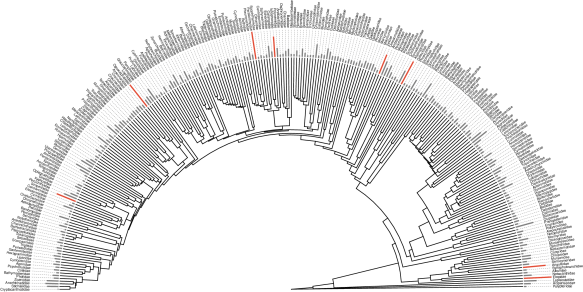
In our recent publication (Rabosky et al. 2018) we assembled a huge phylogeny of ray-finned fishes: the most comprehensive to date! While all of our data are accessible via Dryad, we felt like we could go the extra mile to make it easy to repurpose and reuse our work. I’m pleased to report that this effort has resulted in two resources for the community: the Fish Tree of Life website, and the fishtree R package. The package is available on CRAN now, and you can install it with:
install.packages("fishtree")
The source is on GitHub in the repository jonchang/fishtree. The manuscript describing these resources has been published in Methods in Ecology and Evolution (Chang et al. 2019).
“…if all the matter in the universe except the nematodes were swept away, our world would still be dimly recognizable, and if, as disembodied spirits, we could then investigate it, we should find its mountains, hills, vales, rivers, lakes, and oceans represented by a film of nematodes…” (Cobb 1914)
He may have said it more than a century ago but we now, more than ever, realise that Nathan Augustus Cobb was right. Nematodes are by far the most abundant animals soil, freshwater and marine ecosystems. These tiny worms are barely visible to the human eye (if they’re visible at all), hundreds can inhabit a single gram of soil . Their similar shape might lead you to think that they’re all alike, but that’s not the case. More than 25,000 species have been identified and estimates put their entire species diversity in the 100,000s.
This taxonomic and functional diversity has boosted nematodes to become useful bioindicators for soil quality. Nematodes perform many different functions in both terrestrial and aquatic ecosystems. These are mainly defined by what they eat:
Bacteria/Fungi: Many nematode groups eat bacteria and fungi. They control the population of these organisms and keep them active.
Plants: Plant feeders are the unwanted guests in agricultural systems as well as in our gardens. They can destroy entire harvests by piercing into or infiltrating roots.
Omnivores/Predators: Many nematode species prey on other smaller organisms including smaller nematodes and control their abundances.
Parasites: These species inhabit other larger organisms and can act as biocontrol agents.
More than anything else, the phenotype of an organism determines how it interacts with the environment. It’s subject to natural selection, and may help to unravel the underlying evolutionary processes. So shape traits are key elements in many ecological and biological studies.
Commonly, basic parameters like distances, areas, angles, or derived ratios are used to describe and compare the shapes of organisms. These parameters usually work well in organisms with a regular body plan. The shape of irregular organisms – such as many plants, fungi, sponges or corals – is mainly determined by environmental factors and often lacks the distinct landmarks needed for traditional morphometric methods. The application of these methods is problematic and shapes are more often categorised than actually measured.
As scientists though, we favour independent statistical analyses, and there’s an urgent need for reliable shape characterisation based on numerical approaches. So, scientists often determine complexity parameters such as surface/volume ratios, rugosity, or the level of branching. However, these parameters all share the same drawback: they are delineated to a univariate number, taking information from one or few spatial scales and because of this essential information is lost. Continue reading “The Power of Infinity: Using 3D Fractal Geometry to Study Irregular Organisms”
The Global Pollen Project is a new, online, freely available tool developed to help people identify and disseminate palynological resources. Palynology – the study of pollen grains and other spores – is used across many fields of study modern and fossil vegetation dynamics, forensic sciences, pollination, beekeeping, and much more. This platform helps to facilitate cross/multi-disciplinary integration and discussion, outsourcing identifications, expertise and the sharing of knowledge.
Pollen’s Role in Plant Conservation
Successful conservation of rare, threatened, and valuable plants is dependent on an understanding of the threats that they face. Also, conservationists must prioritise species and populations based on their value to humans, which may be cultural, economic, medicinal, etc. The study of fossil pollen (palaeoecology), deposited through time in sediments from lakes and bogs, can help inform the debate over which species to prioritise: which are native, and when did they arrive? How did humans impact species richness? By establishing such biodiversity baselines, policymakers can make more informed value judgements over which habitats and species to conserve, especially where conservation efforts are weighted in favour of native and/or endemic flora. Continue reading “Tiny Grains, Big Data: The Global Pollen Project”
It’s somehow fitting that the centre piece of an ancient midwinter tradition in Europe – that of decorating and worshipping an evergreen tree – is an ancient seed plant, a conifer. In Europe, we tend to think of conifers as “Christmas trees” – evergreen trees with needles and dry cones, restricted to cold and dry environments – but conifers are much more diverse and widespread than that. There are broad-leaved, tropical conifers with fleshy cones and even a parasitic species that is thought to parasitise on members of its own family!
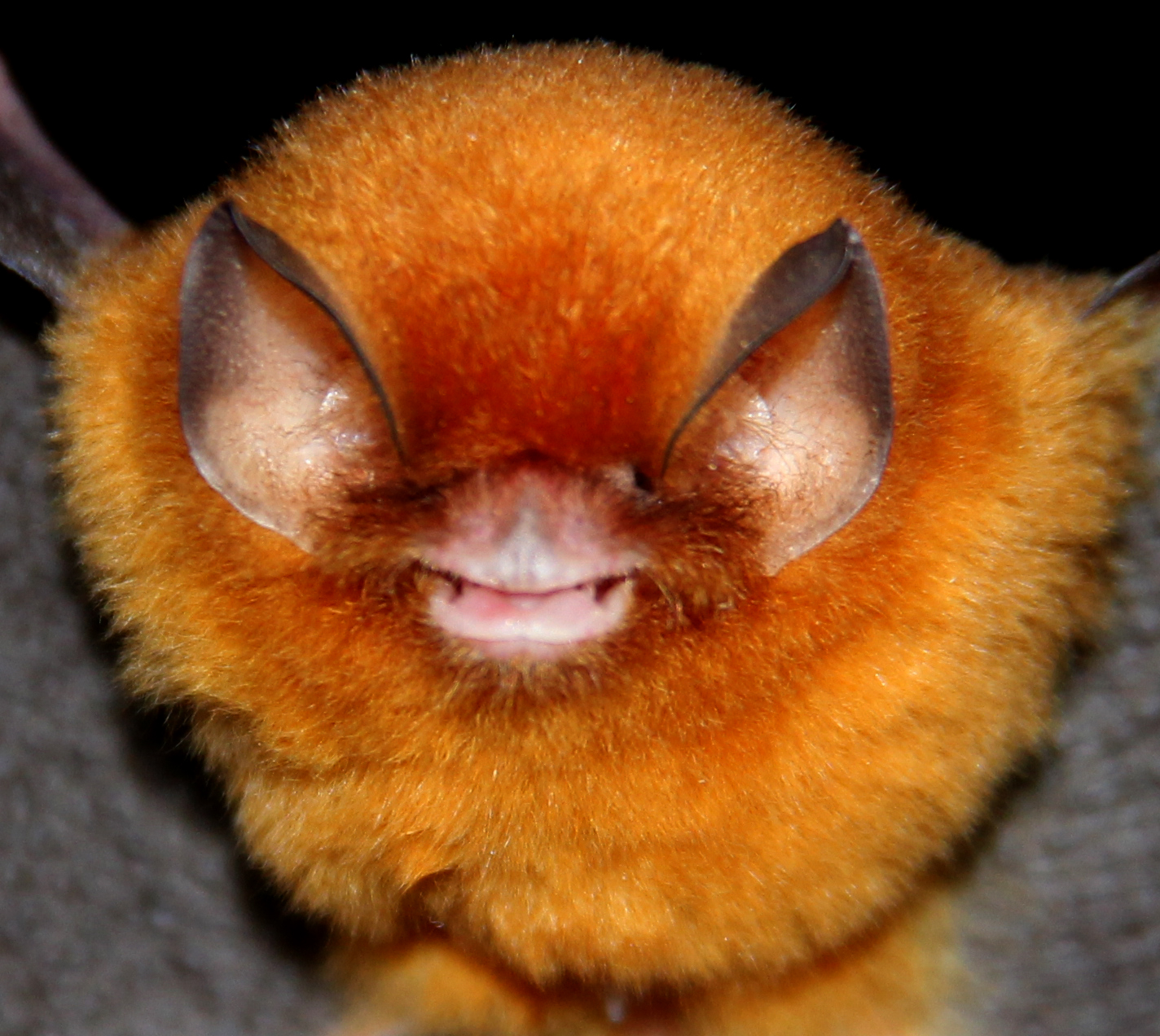
The biggest library of bat sounds has been compiled to detect bats in Mexico – a country which harbours many of the Earth’s species and has one of the highest rates of species extinction and habitat loss.
An international team led by scientists from UCL, University of Cambridge and the Zoological Society of London, developed the reference call library and a new way of classifying calls to accurately and quickly identify and differentiate between bat species.
It is the first time automatic classification for bat calls has been attempted for a large variety of species, most of them previously noted as hard to identify acoustically. Continue reading “Biggest Library of Bat Sounds Compiled”
This month’s issue contains two Applications articles and two Open Access articles, all of which are freely available.
– METAGEAR: A comprehensive, multifunctional toolbox with capabilities aimed to cover much of the research synthesis taxonomy: from applying a systematic review approach to objectively assemble and screen the literature, to extracting data from studies, and to finally summarize and analyse these data with the statistics of meta-analysis.
–Universal FQA Calculator: A free, open-source web-based Floristic Quality Assessment (FQA) Calculator. The calculator offers 30 FQA data bases (with more being added regularly) from across the United States and Canada and has been used to calculate thousands of assessments. Its growing repository for site inventory and transect data is accessible via a REST API and represents a valuable resource for data on the occurrence and abundance of plant species. Continue reading “Issue 7.3”






 Methods Blog