Post provided by Katarina Meramo
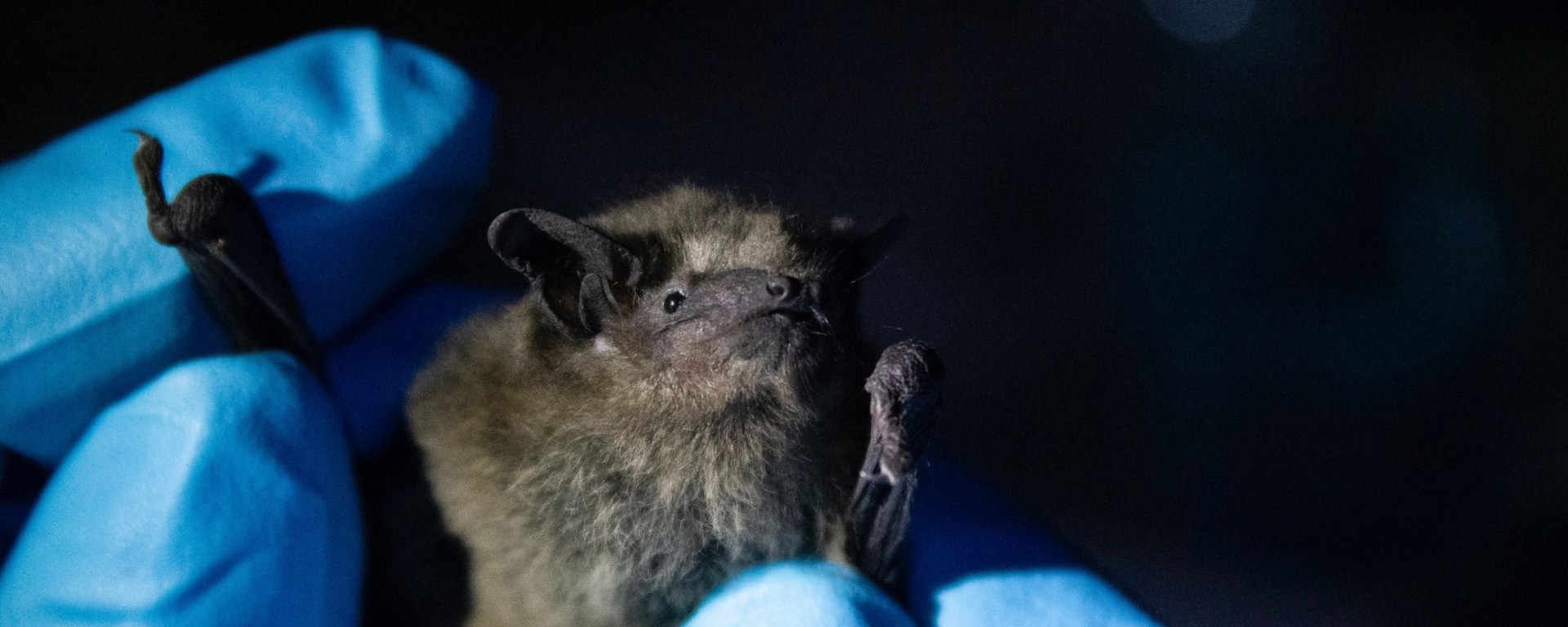
Bats are extraordinary animals. They fly, echolocate, and navigate in absolute darkness, and produce some of the most complex acoustic signals in the mammalian world. They pollinate, disperse seeds, control insect populations, and quietly hold ecosystems together. Yet, despite their importance, monitoring bats – particularly across large spatial and temporal scales – remains remarkably challenging.
Over the past decade, bioacoustic monitoring has transformed bat research. Ultrasonic detectors are cheap and widespread, and a single field season can generate thousands, even millions of recordings. But this exciting shift has brought a familiar problem: identifying bat calls remains challenging, and the tools we have are often closed-source and proprietary (subscription-based), region-specific, or simply not flexible enough for global use. Many researchers face the same frustration: incredible data, but there is no practical way to process it for ecological analysis or conservation work.
This became especially clear in the LIFEPLAN project, a global biodiversity monitoring programme coordinated at the University of Helsinki (https://www.helsinki.fi/en/projects/lifeplan). LIFEPLAN collects acoustic data across the globe. Great for science but overwhelming for humans. It quickly became obvious that no existing bat classifier could handle the diversity or species composition in our recordings.
So, we built one.
From Bird Sounds Global to BSG-BATS
The idea didn’t come out of nowhere. The University of Helsinki hosts a large bioacoustics effort called Bird Sounds Global (BSG, https://bsg.laji.fi), originally created to support automated bird call identification. The portal allows volunteers and experts to identify and mark sounds on spectrograms (“annotate”) and produce training data for machine learning models. It has been hugely successful in birds: tens of thousands of annotations, and models that perform impressively well.
At some point, the idea became obvious: the audio data produced by bats share many of the qualities that made BSG successful for birds. Bats produce complex acoustic signals and are widely and increasingly surveyed through audio, yet there was no open, collaborative platform for generating training data and improving automated identification.
This realization led to BSG-BATS.
Two pieces, one idea
BSG-BATS combines two components:
1. An open annotation portal
Here, anyone can examine spectrograms and annotate bat recordings. Annotations can be made at the species level or at the level of phonic groups — acoustic clusters of species whose calls are very similar. These groups aren’t a flaw; they reflect ecological reality and help prevent overconfident misclassifications.
Instructions can be found at https://bsg.laji.fi/bats/identification/instructions.
2. A machine-learning classifier
A convolutional neural network trained on the annotations. Every new annotation improves the training data, which improves the models.
The first version of the model was trained on just over 4000 annotated 10-second recordings from 21 European species. Despite the quite modest training dataset, performance was surprisingly strong: in most cases our model outperformed widely used commercial tools. Importantly, all of this takes place within the fully open BSG system, where anyone can both benefit from and contribute to further development.
What we learned
Building BSG-BATS taught us that even small contributions can make a big difference. A handful of annotations from one contributor might improve the model for an entire species. We also learned that infrastructure matters: researchers don’t only need a classifier; they need a platform, a workflow, and a way to grow their tools as new acoustic data becomes available.
Perhaps most importantly, we learned that researchers are hyped for open tools. The response has been enthusiastic, and new collaborators have already shown interest in contributing data from other regions, including remote places like Madagascar, where bat diversity is extraordinary but acoustically challenging, and valuable to study.
We also learned that annotating bat recordings is genuinely instructive. Even with my vast experience in bat bioacoustics, going through thousands of spectrograms deepened my understanding of species, phonic groups, and tricky edge cases.
Most importantly, the project highlighted the value of local datasets. When people contribute recordings from their own regions and species communities, the model becomes more accurate and more useful for them in return. This is exactly the kind of community-driven growth we hope BSG-BATS will continue to support.
What we still need
BSG-BATS is only the beginning. Our current model covers only Europe, and thus a big part of the world, including all the tropical and subtropical species, remain acoustically unexplored — ironically, often the very regions where biodiversity is highest and conservation needs are most urgent.
All these challenges make openness and community involvement essential. The more diverse the datasets, the more robust and generalizable the model becomes. Contributions of recordings from underrepresented regions, as well as local expertise for annotation, are especially valuable. If you would like to share data, you can contact and send it to bsg-bat@helsinki.fi,or directly to the author.
What’s next: a shared app for birds and bats
One particularly exciting development is a user-friendly desktop application currently under construction. The idea is to bring bird and bat models into the same user-friendly application, where users can simply select which model they want to run.
The current BSG-BATS model is already openly available on Zenodo, but the upcoming app will make things even easier. BSG-BATS will soon be accessible directly through this shared application, bringing automated bat call identification to a much wider community of field biologists, conservation practitioners and students.
Join us
BSG-BATS is only possible because people contribute: researchers, students, volunteers, anyone with recordings or an interest in bioacoustics. If you’d like to help, you’re warmly invited. You can contribute recordings (to bsg-bat@helsinki.fi), annotate calls through the portal (https://bsg.laji.fi/bats/identification/instructions), or test the model in your own research (https://zenodo.org/records/15495676). Every contribution, large or small, helps grow a more global and inclusive tool for bat conservation. Working on this project has been a reminder of how powerful open science can be. Together, we can teach the models to listen and help protect the remarkable animals that inspired this work!
Read the full article here.
 Methods Blog
One thought on “Teaching Models to Listen to Bats: The Story Behind BSG-BATS”