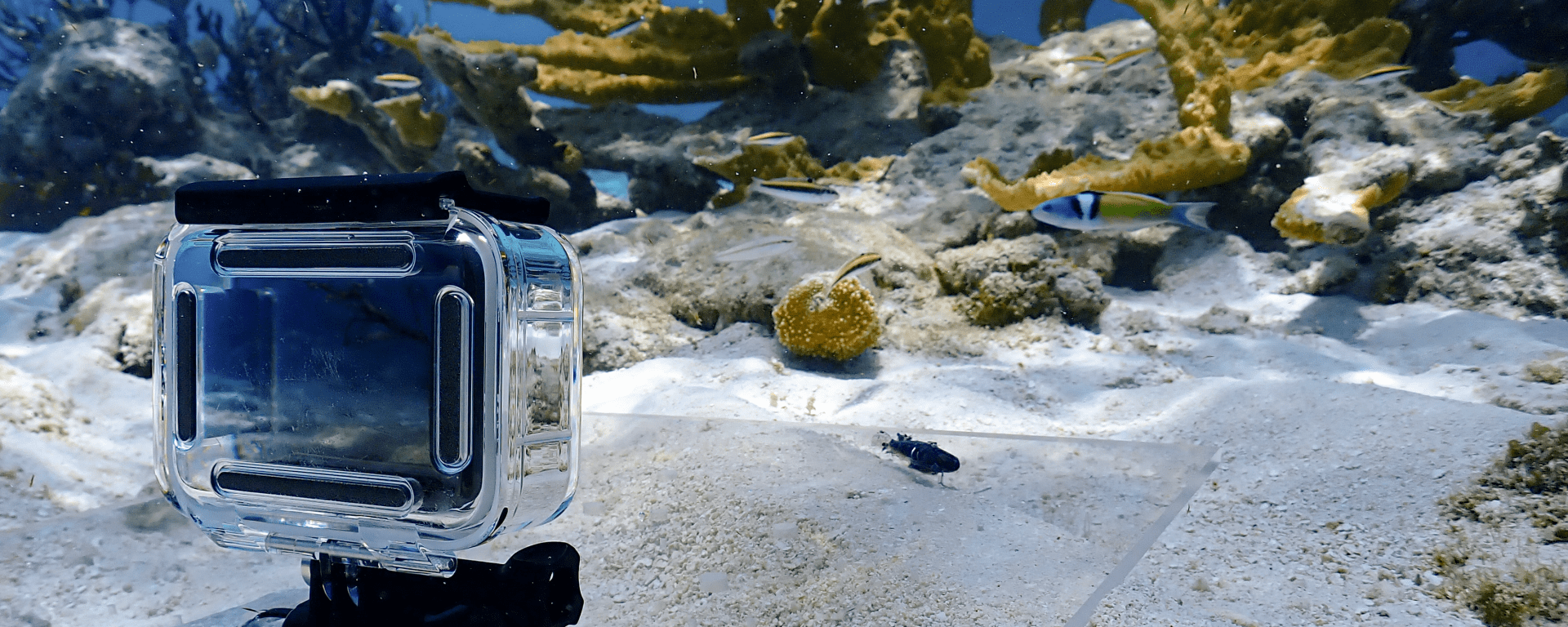
Post provided by Christopher Hemingson
Close your eyes and picture a predation event. Personally, I default to the Planet Earth series’ “Mountains” episode, in which a snow leopard acrobatically chases a mountain goat across near-vertical cliffs in an adrenaline-inducing pursuit. While iconic, predation sequences like this one generally represent the minority. More often than not, predation events occur on the order of split seconds – “blink-and-you’ll-miss-it” kind of moments.
Fish take this concept to the extreme. Since they lack prehensile appendages, predators often ingest their prey whole in one sweeping motion, quite literally creating a vacuum with their mouths that suck in unsuspecting victims. As you can imagine, this process happens nearly instantaneously, and since prey are consumed whole, no clues are left which can be used to study the process. This makes predation events underwater extraordinarily difficult to witness, observe, and study—marking them as something of a “holy grail” to studying in aquatic research.
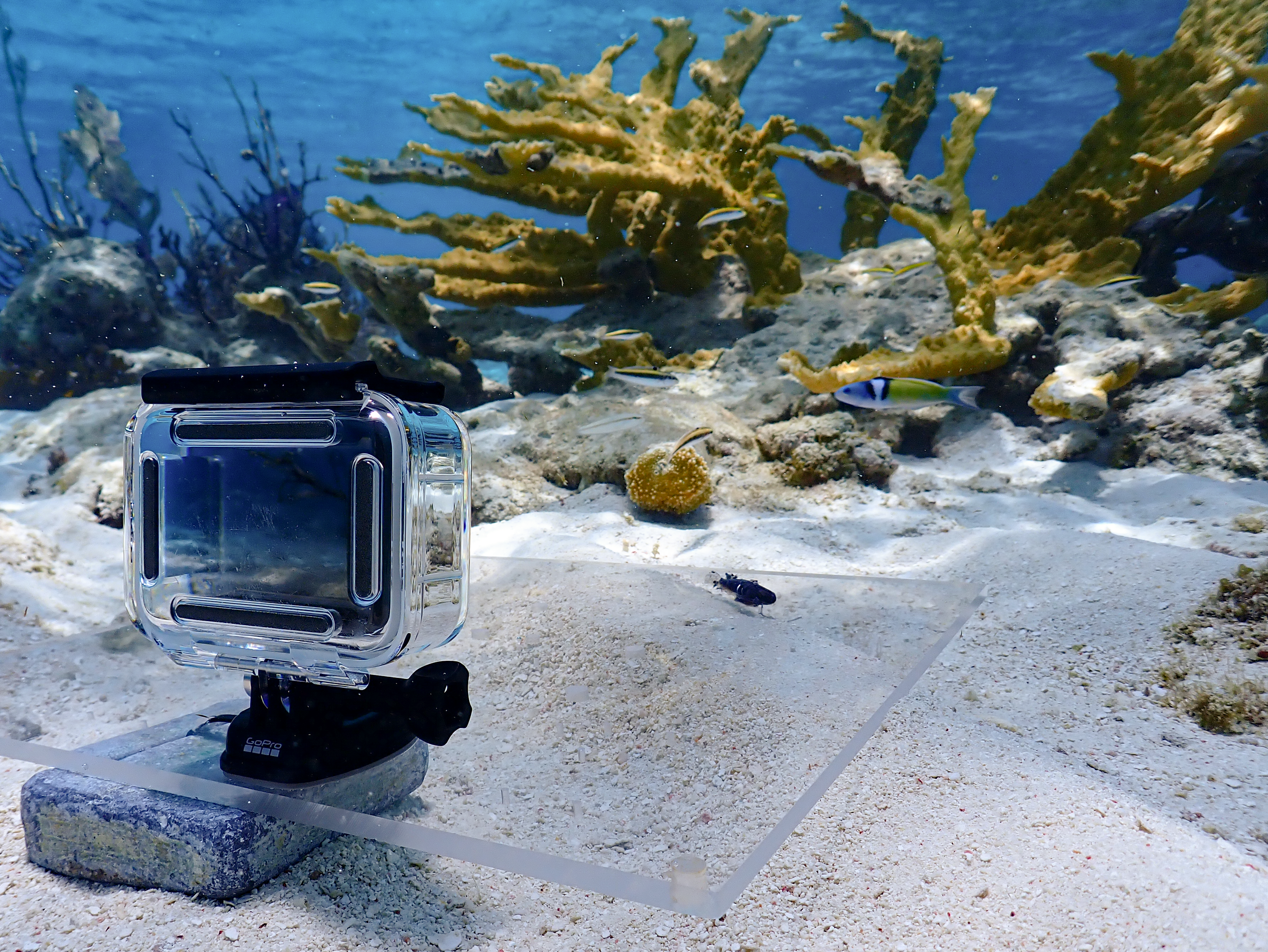
While having a discussion to try and understand this process, my colleague asked me: “what if we made edible gobies?”. Gobies are a widespread group of small prey fish found in both freshwater and marine environments. While this initially struck me as a somewhat outlandish idea, it had a way of creeping back into conversations over the following weeks. Creating what is essentially an edible fishing lure would allow us to better understand why and how predators make decisions without imposing stress on living prey species in experiments. After enough brainstorming and discussion, we decided it would be a worthwhile research endeavour, and we formulated a plan for how they would be constructed and tested.
In the following weeks, I turned our lab space into a makeshift test kitchen – equipped with pots, pans, burners, blenders, measuring cups, mixing bowls, and more. I spent weeks scouring forums and reading papers and online articles to understand how artificial fishing lures were made, as they provided a useful framework on which our process could be based. I also watched a healthy mix of YouTube cooking videos, as we wanted to ensure that the end product was completely edible to predators.
After many attempts, failures, and iterations, Goby Gummies were born. Goby Gummies are completely edible and customizable models that closely resemble a prey fish. The model is mostly made of agar, an algal-based thickening agent that is safe to consume. To activate the dry agar powder, it must be mixed with boiling water which forms a viscous liquid that then sets into a firm gel as it cools. For this reason, gummies can be formed into practically any size and shape using a mould.
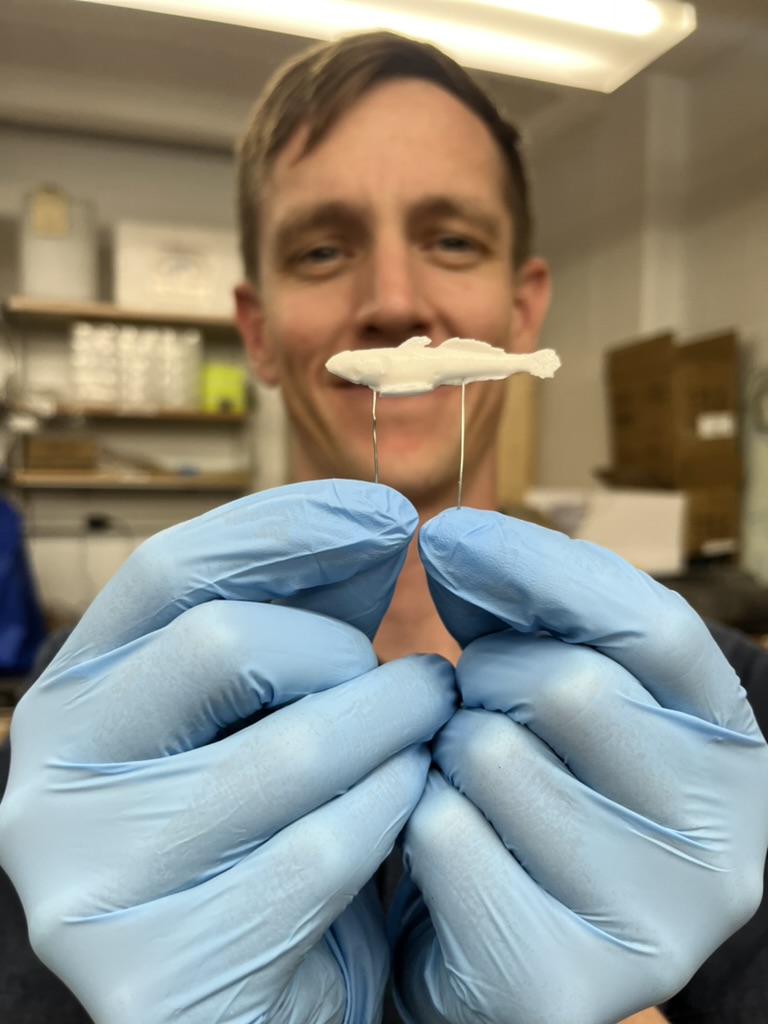
The fun part about Goby Gummies is that they can be dyed different colours and even be “flavoured”. Now, these flavours are not your typical sour apple or blue raspberry, but more like oily surgeonfish or smelly wrasse. Indeed, gummies can be flavoured using dried fish meal to make them smell and taste like real fish. This ability to be shaped, dyed, and flavoured in any combination imaginable is where Goby Gummies shine. They can be adapted to meet the needs of virtually any research project, making them useful in disciplines ranging from predation and cognition to preference and behaviour studies.
Our pilot study showed that predatory fish on Belizean coral reefs clearly preferred fish-flavoured gummies, but that this preference changed depending on the gummies colour. Some were appealing only when flavoured (yellow) while others were consumed readily regardless of whether fish meal was added (black). These tests also showed that gummies are eaten relatively quickly – typically within 15 minutes after they have been placed on the reef. This means that more replicates can be run in shorter timespans, greatly increasing sampling effort.
We hope Goby Gummies serve as a tool that makes studying aquatic predation easier. Through their modification, they can serve a variety of applications and allow for identical comparisons between distant locations. And at the very least, they provide a recipe for making new party treats for your next lab get-together (fish meal not recommended).
Read the full paper here.

