Post provided by Juan C. Diaz-Ricaurte
An unexpected beginning in the Cerrado
Sometimes, scientific tools emerge from sophisticated laboratories and carefully planned engineering projects. Other times, they begin with an empty paint tin. Ours was definitely the second case. Back in 2018, while working on several research projects in the Brazilian Cerrado, we began discussing a question that would eventually become central to my PhD: how could we measure the temperature at which an animal decides that its environment has become too hot?
We wanted to investigate thermal limits without exposing animals to potentially lethal temperatures. Conventional methods often involve heating animals until they reach a physiological endpoint, such as losing their ability to right themselves. We wondered whether we could approach the problem differently. What if, instead of pushing animals towards their physiological limits, we allowed them to leave when they had had enough?
This brought us to voluntary thermal maximum (VTMax), the temperature at which an ectotherm, an animal whose body temperature depends largely on its surroundings, chooses to leave a warming environment. At the time, this threshold had largely been estimated mathematically rather than measured through a standardised experimental procedure. We wanted to observe that response directly.
The idea seemed simple, but making it work in the field was another matter. Fieldwork is expensive, and since we were already studying amphibians and reptiles in the Cerrado, we wanted to make the most of the opportunity. Whatever we built had to be portable, inexpensive, and reliable—without complicating our field logistics.
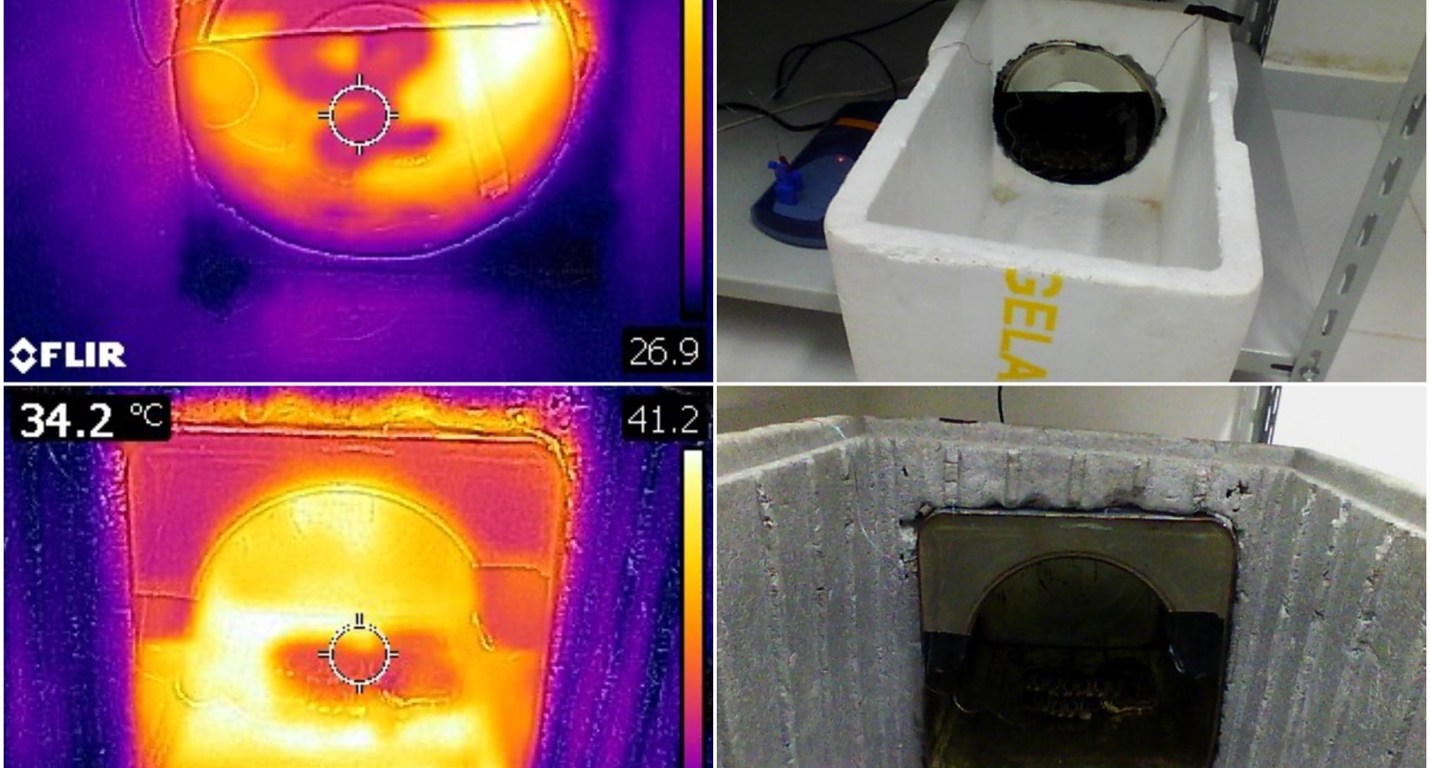
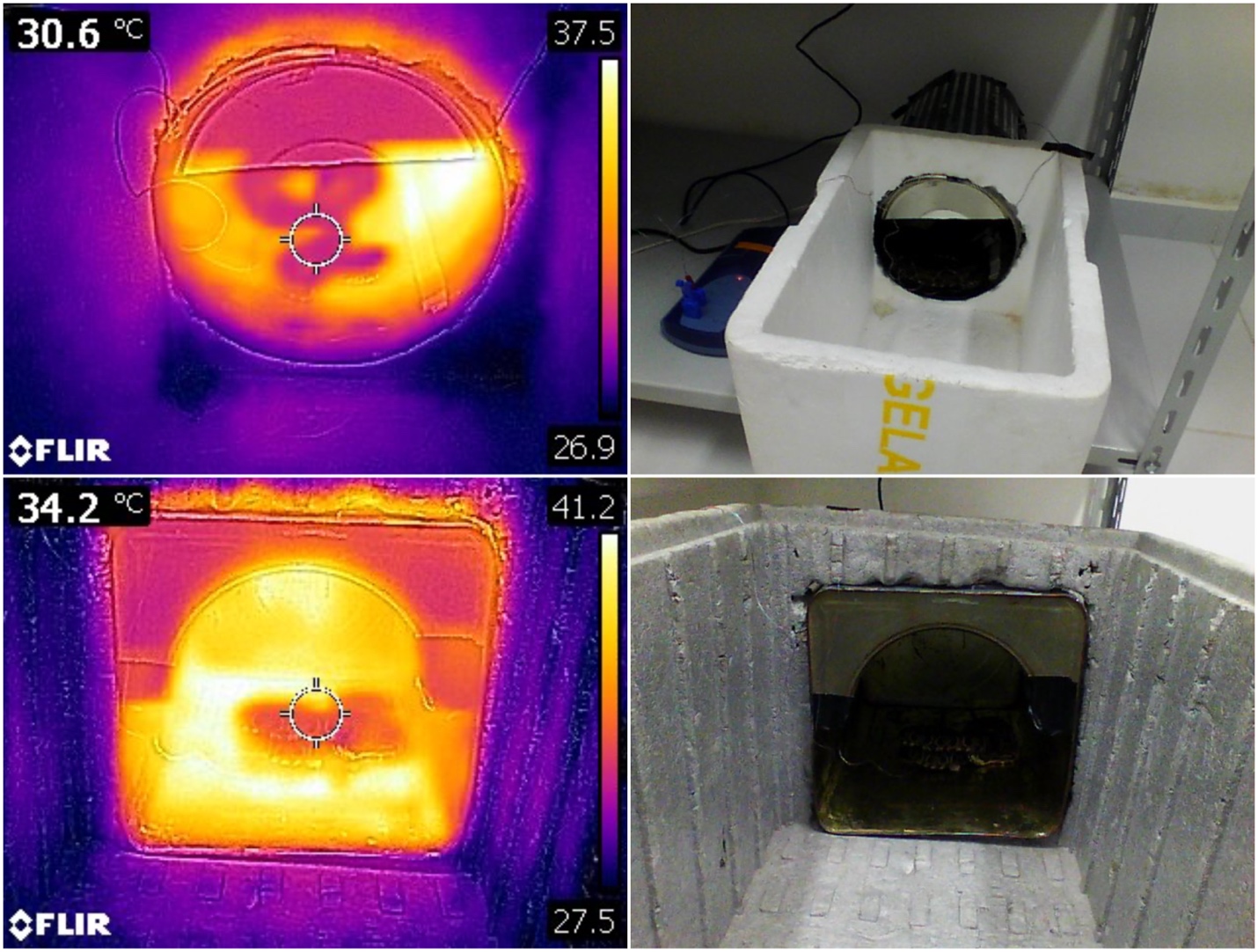
That was when Marcos Pestana, whom we affectionately call Marcão, turned up with our first heating chamber: an old paint tin.
It looked more like something rescued from a construction site than scientific equipment. To be fair, that was precisely what it was. It certainly wasn’t what anyone would expect to find in a thermal ecology experiment, but to our surprise, it worked remarkably well.
From frogs and lizards to venomous snakes
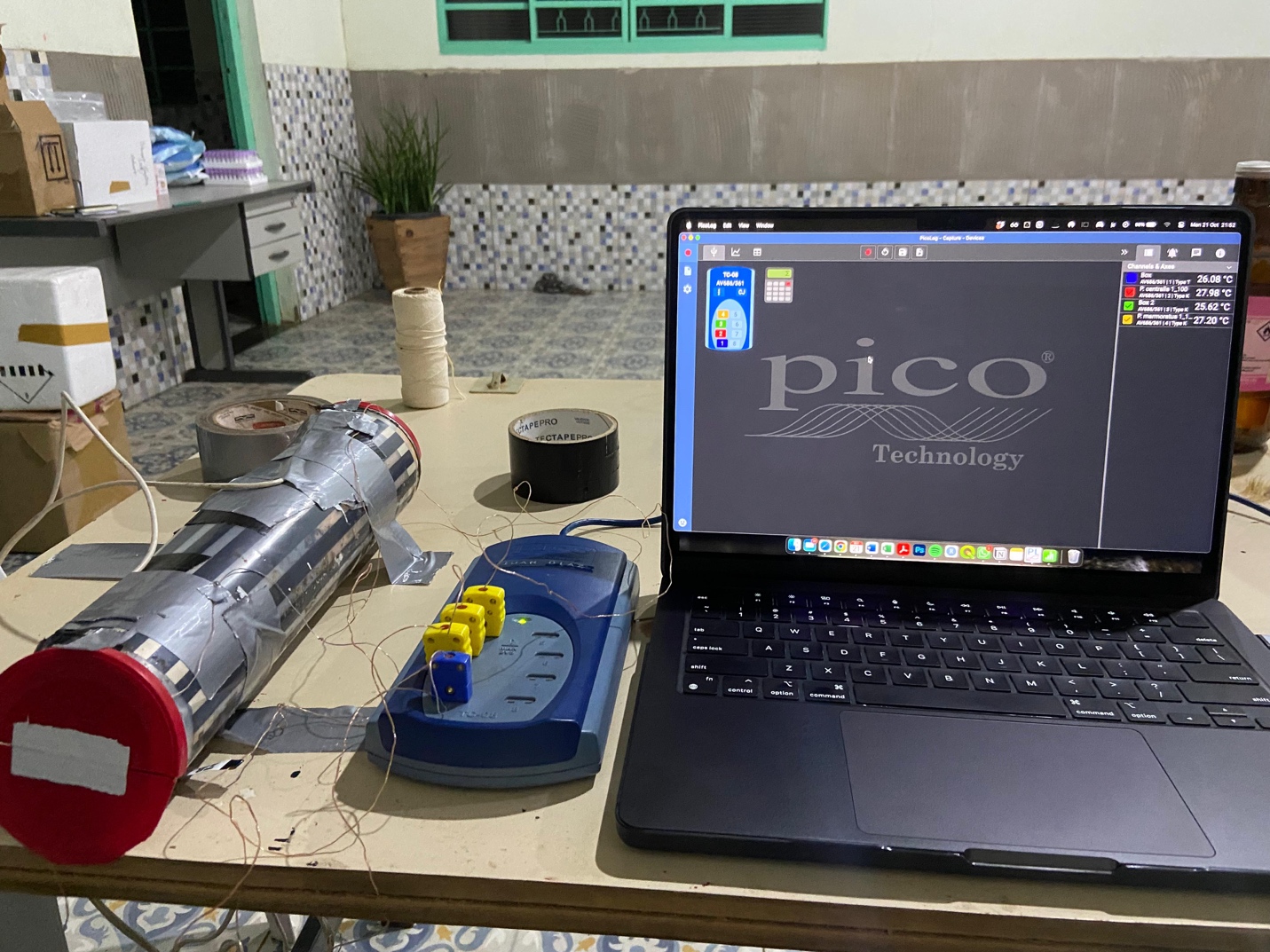
We began testing our improvised box with frogs and lizards from the Cerrado. By gradually warming the chamber and allowing animals to leave voluntarily, we could record their body temperature as they exited. Soon, we were collecting measurements that raised questions about how behavioural thermal limits might relate to habitat use, species distributions and differences among organisms.
Some of those early experiments eventually led to published studies on two Neotropical frog species living in the same area and the fossorial reptile Amphisbaena alba. Encouraged by these results, we began wondering whether the approach could also work with snakes. This presented a rather different challenge, particularly when working with venomous species. We had to consider not only how the animals would leave the chamber, but also how to manage their exit safely while preserving the voluntary nature of their response. This required adjustments to both the box and our experimental procedures.
Eventually, we successfully applied the method to a Neotropical pitviper, investigating whether short-term captivity influenced its VTMax. We also conducted experiments at the Museu Biológico of Instituto Butantan, extending our experience with the method beyond field conditions. Working with different species in different settings reinforced the importance of considering animal behaviour and natural history when designing experimental equipment.
Learning from hundreds of experiments
Over the following years, we accumulated nearly 1000 experimental trials with amphibians and reptiles. Working with animals of different sizes, shapes and behaviours taught us how to maintain consistent heating conditions, arrange the equipment and adapt procedures to different experimental situations.
We even extended the approach beyond vertebrates, investigating whether limb loss influenced behavioural thermal tolerance in crickets.
Our research also took us across four major Brazilian biomes: the Amazon, Pantanal, Atlantic Forest and Cerrado. Each presented different challenges, from humid tropical forests to seasonally flooded wetlands and open savannas. These experiences reinforced why we needed a simple apparatus in the first place: something we could transport, assemble and operate under very different field conditions.
However, as our experience grew, another challenge became apparent. Although we knew how to build and operate our equipment, reproducing it elsewhere was not necessarily straightforward.
Making the method easier to reproduce
Anyone who has worked with homemade scientific equipment knows how much it can depend on locally available materials. A different container, heating element, or small adjustment during assembly might seem insignificant, but these details can alter experimental conditions.
Our paint tin was a perfect example. We knew how to make it work, but could researchers elsewhere build an equivalent apparatus using only the information in our papers? Three-dimensional printing offered a practical solution. Rather than developing an entirely new method, we decided to transform what we had learned into a more standardised and accessible design.
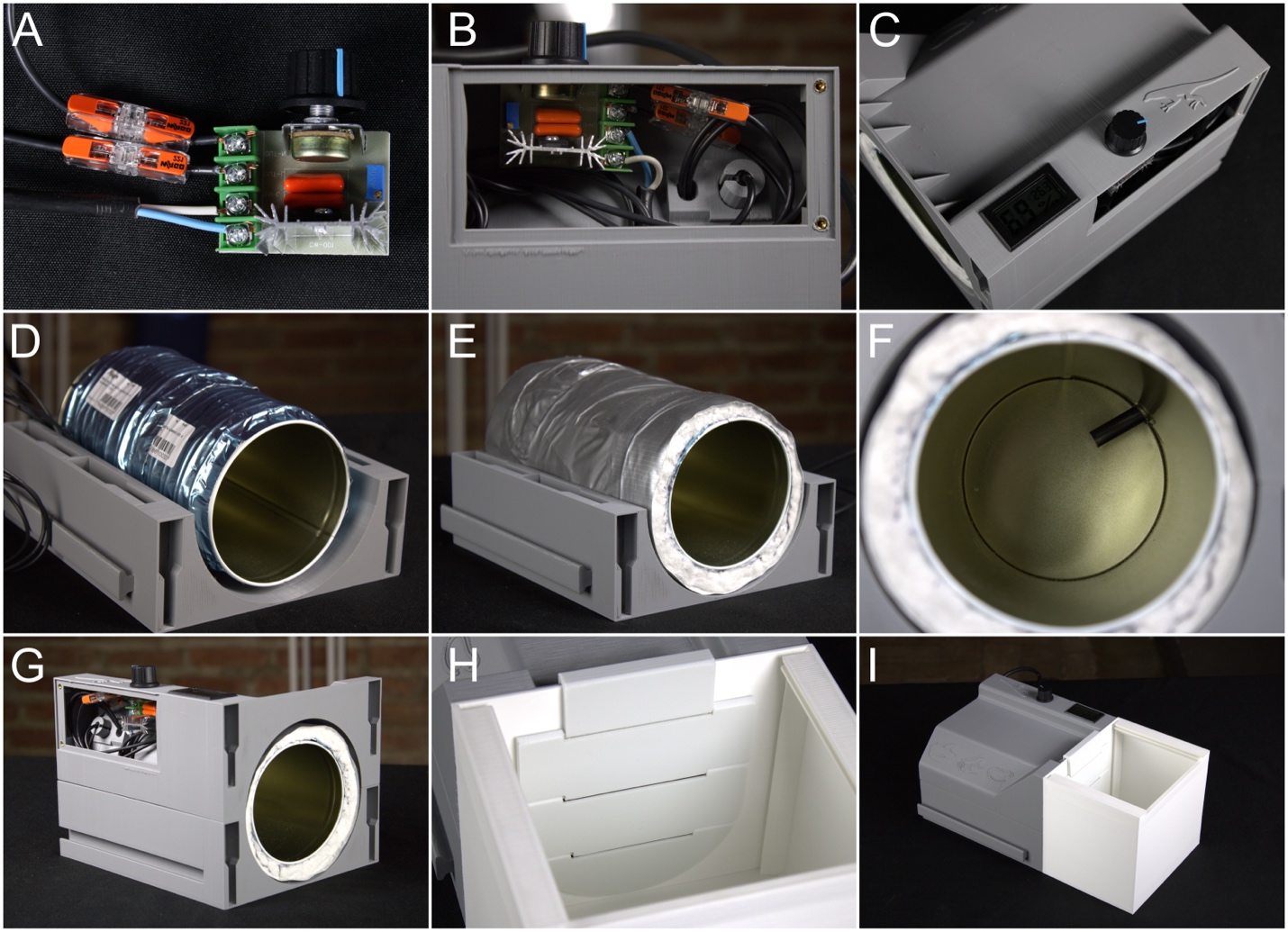
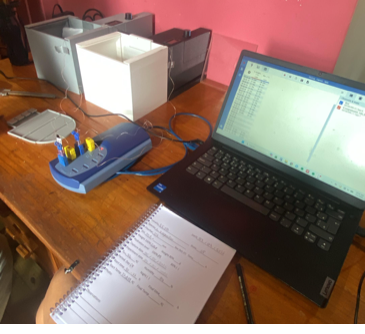
The result was the VTMaxBox, a modular, 3D-printable apparatus incorporating the heating chamber, temperature monitoring equipment and other essential components. We deliberately kept the design affordable and adaptable, aiming for something researchers could build and maintain without specialised manufacturing facilities.
We also made the printing files, assembly instructions and component information openly available, allowing others to reproduce the setup without starting from scratch. Described in our recent paper in MEE, the VTMaxBox brings together years of experiments, practical adjustments and lessons learned from working with different animals and environments.
Beyond our own experiments
What excites us now is seeing where other researchers might take the VTMaxBox. Behavioural thermal responses remain relatively understudied compared with physiological thermal limits, although they offer valuable insights into how animals interact with their environments. As global temperatures rise, understanding when animals choose to avoid heat may become increasingly important.
By making these measurements more accessible, we hope to encourage research across a greater diversity of species, habitats and regions, including places where specialised scientific equipment is difficult to obtain. There are also possibilities beyond research. In museums, universities and other educational settings, the VTMaxBox could help explain concepts such as thermoregulation, animal behaviour and climate change. Models, demonstrations and recorded experimental data could make these ideas accessible without necessarily involving live animals.
Who knows what comes next?
When Marcão arrived with that paint tin, I doubt any of us imagined it would eventually lead to a 3D-printable scientific apparatus published in MEE. We were simply trying to answer a question that interested us.
Years later, after experiments with frogs, lizards, snakes and crickets, that improvised solution has become the VTMaxBox. Looking back, what stands out is not simply the transition from recycled metal to 3D-printed components, but everything we learned through experimentation, collaboration and the willingness to improve what already worked.
We hope others will continue that process, testing the VTMaxBox with different organisms, adapting it to their needs and perhaps finding solutions we have not yet considered.
After all, ours started with an old paint tin. Who knows what someone else might build next?

