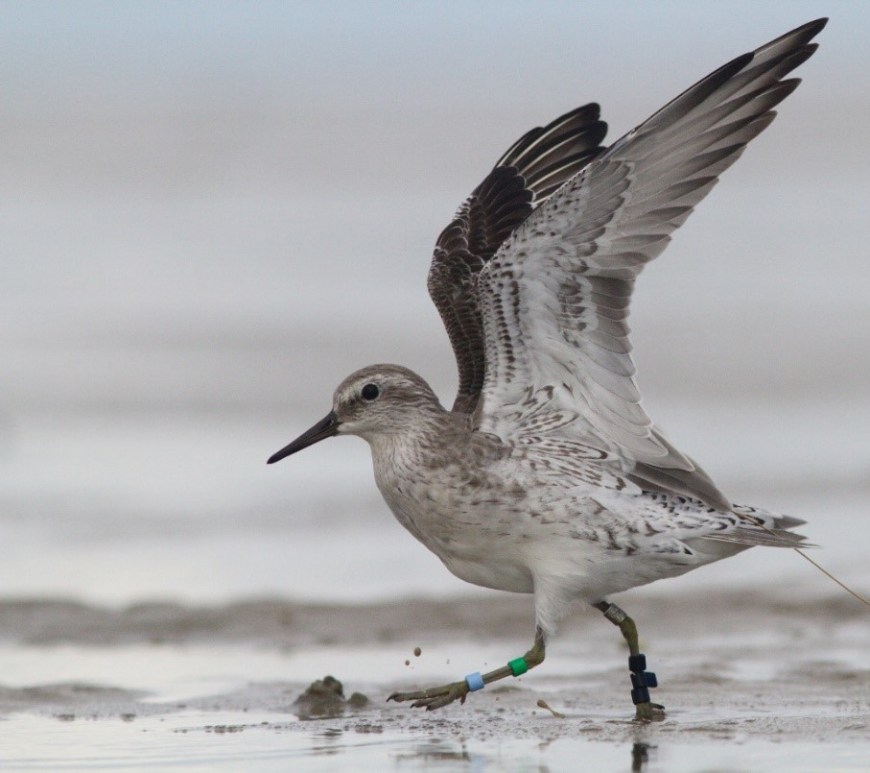
Using citizen science data to track migratory shorebird populations

Post provided by Sam Nicol (He/Him)

Are you an eBirder who loves waders? Do you ever wonder where the birds that you see go after you’ve studiously uploaded your counts to the database? It’s a good question, and in the past, it has been surprisingly hard to answer. In this post, Sam Nicol discusses how citizen science is being used to investigate bird migration.

Continue reading “Using citizen science data to track migratory shorebird populations”
Understanding climate change through animal song

Post provided by Diego Llusia (he/him), Camille Desjonquères (she/her) and Sara Víllen-Peréz (she/her)

Many species produce sound as a means of communication, emitting calls or songs to broadcast information to others in the surrounding area. In this blog post, Diego Llusia, Camille Desjonquères, and Sara Víllen-Peréz discuss their research on recording animal calls and how these soundtracks can be used to help monitor the impacts of climate change. 

Continue reading Understanding climate change through animal song

Rainbow Research: Nature

Post provided by Sara Blunk (she/her)

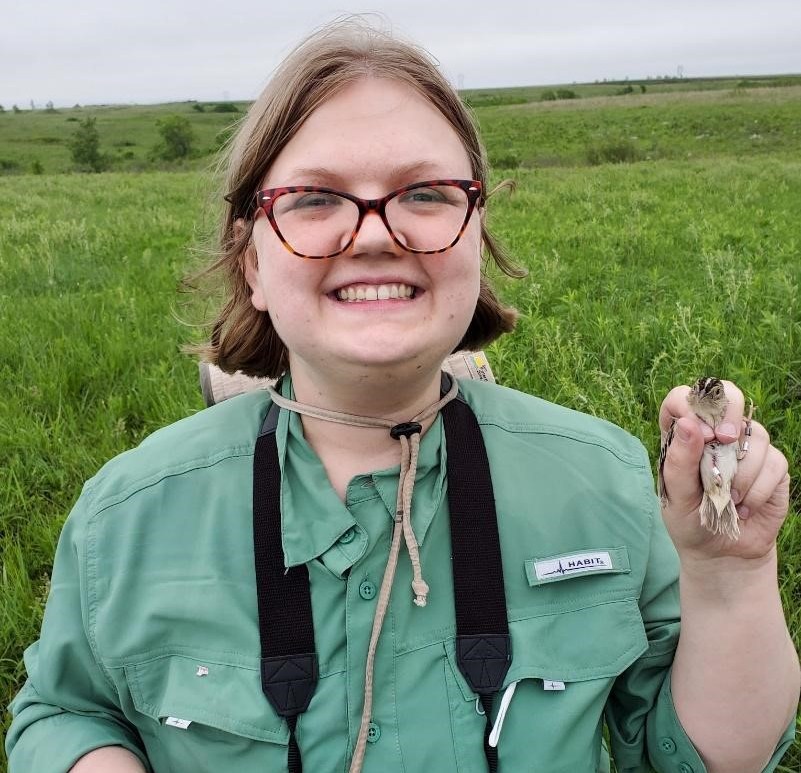
The Rainbow Research series returns to the British Ecological Society to celebrate Pride month 2022! These special posts promote visibility and share stories from STEM researchers who belong to the LGBTQIA2S+ community. Each post is connected to one of the themes represented by the colours in the Progress Pride flag (Daniel Quasar 2018). In this post, Sara Blunk shares her love of birds and experiences being an LGBTQ+ student.

Continue reading “Rainbow Research: Nature”

Rainbow Research: Life

Post provided by Adrian Monthony (he/him)

The Rainbow Research series returns to the British Ecological Society to celebrate Pride month 2022! These special posts promote visibility and share stories from STEM researchers who belong to the LGBTQIA2S+ community. Each post is connected to one of the themes represented by the colours in the Progress Pride flag (Daniel Quasar 2018). In this post, Adrian Monthony shares changes in his life and Pride journey.  

Continue reading “Rainbow Research: Life”

ATLAS: a regional-scale tracking system

Post provided by Christine Beardsworth

Tracking the movement of animals is important for informing conservation practices but can present logistical obstacles, especially when attempting to track smaller species with large GPS tags. Using existing technologies in new ways may help overcome these obstacles and provide alternative approaches for accurately tracking large numbers of relatively small sized species. In this blog post, Christine Beardsworth discusses findings from her recent Methods in Ecology and Evolution paper “Validating ATLAS: a regional-scale, high-throughput tracking system”.

Continue reading “ATLAS: a regional-scale tracking system”

Rainbow Research: Healing

Post provided by Douglas Cirino

The Rainbow Research series returns to the British Ecological Society to celebrate Pride month 2022! These special posts promote visibility and share stories from STEM researchers who belong to the LGBTQIA2S+ community. Each post is connected to one of the themes represented by the colours in the Progress Pride flag (Daniel Quasar 2018). In this post, Douglas Cirino shares their story of healing in São Paulo.    

Continue reading “Rainbow Research: Healing”

Modelling and inference for the movement of interacting animals

Post provided by Jordan Milner

Each year Methods in Ecology and Evolution awards the Robert May Prize to the best paper published in the journal by an author at the start of their career. Ten Early Career Researchers made the shortlist for this year’s prize, including Jordan Milner who studied for his PhD at the University of Sheffield in the UK. In this interview, Jordan shares insights on his paper ‘Modelling and inference for the movement of interacting animals’.

Continue reading “Modelling and inference for the movement of interacting animals”

Assessing impacts of ocean warming on marine fishes

Post provided by Chi-Yun Kuo

Predicting the effects of ocean warming is vital for understanding the likely impacts of climate change on marine ecosystems. In this post, Chi-Yun Kuo shares insights from his recent publication in Methods in Ecology and Evolution which develops a framework for estimating the effects of warming water on communities of marine fishes, and discusses the implications for conservation, food security, and other ecosystem services. 

Continue reading “Assessing impacts of ocean warming on marine fishes”

Spatial thinning and class balancing: Key choices lead to variation in the performance of species distribution models with citizen science data

Post provided by Valerie Steen

Each year Methods in Ecology and Evolution awards the Robert May Prize to the best paper published in the journal by an author at the start of their career. Ten Early Career Researchers made the shortlist for this year’s prize, including Valerie Steen who is a Postdoctoral Researcher at Oregon State University in the USA. In this interview, Valerie shares insights on her paper ‘Spatial thinning and class balancing: Key choices lead to variation in the performance of species distribution models with citizen science data’.

Continue reading “Spatial thinning and class balancing: Key choices lead to variation in the performance of species distribution models with citizen science data”

Tropical forest structure and diversity: a comparison of methodological choices

Post provided by Cléber Rodrigo de Souza

Each year Methods in Ecology and Evolution awards the Robert May Prize to the best paper published in the journal by an author at the start of their career. Ten Early Career Researchers made the shortlist for this year’s prize, including Cléber Rodrigo de Souza who is a data scientist at the Federal University of Lavras in Brazil. In this interview, Cléber shares insights on their paper ‘Tropical forests structure and diversity: a comparison of methodological choices’.

Continue reading “Tropical forest structure and diversity: a comparison of methodological choices”