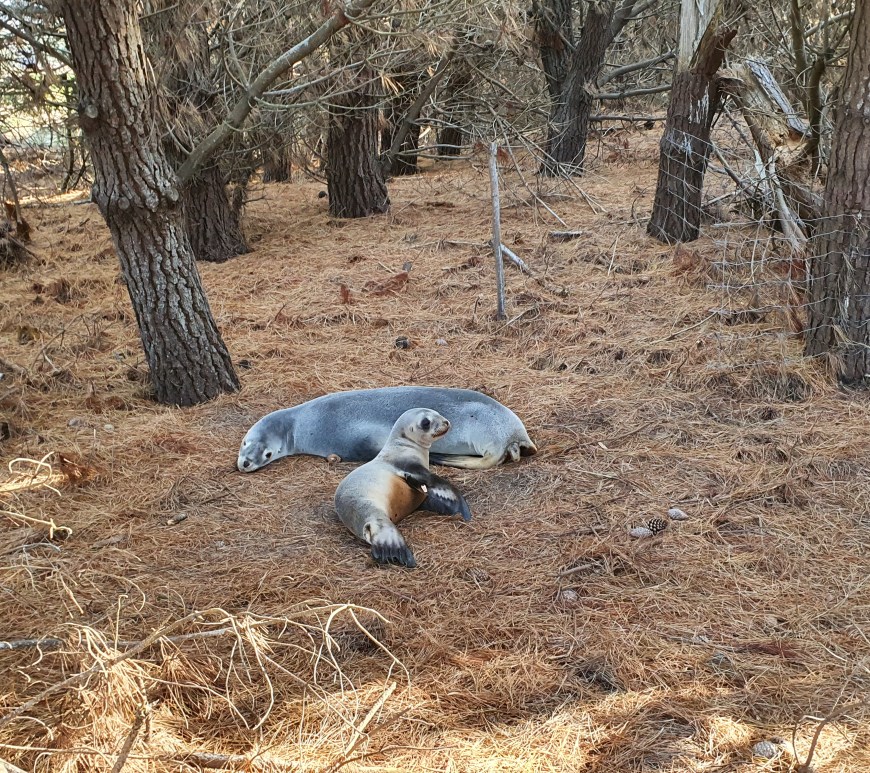
The potential and practice of arboreal camera trapping

Post provided by Jennifer Moore

Each year Methods in Ecology and Evolution awards the Robert May Prize to the best paper published in the journal by an author at the start of their career. Ten Early Career Researchers made the shortlist for this year’s prize, including Jennifer Moore who is a post-doctoral associate at the University of Florida in the USA. In this interview, Jennifer shares insights on her paper ‘The potential and practice of arboreal camera trapping’.

Continue reading “The potential and practice of arboreal camera trapping”
A new graphical interface and toolkit for phylogenetic analyses

Post provided by Daniel Edler

Each year Methods in Ecology and Evolution awards the Robert May Prize to the best paper published in the journal by an author at the start of their career. Ten Early Career Researchers made the shortlist for this year’s prize, including Daniel Edler who is a PhD student at Umeå University in Sweden. In this interview, Daniel shares insights on his paper ‘raxmlGUI2.0: a graphical interface and toolkit for phylogenetic analyses using RAxML’.

Continue reading “A new graphical interface and toolkit for phylogenetic analyses”

Merging dietary metabarcoding into networks: turning “don’ts” into “dos”

Post provided by Jordan Cuff, Fredric Windsor, Maximillian Tercel, James Kitson and Darren Evans.

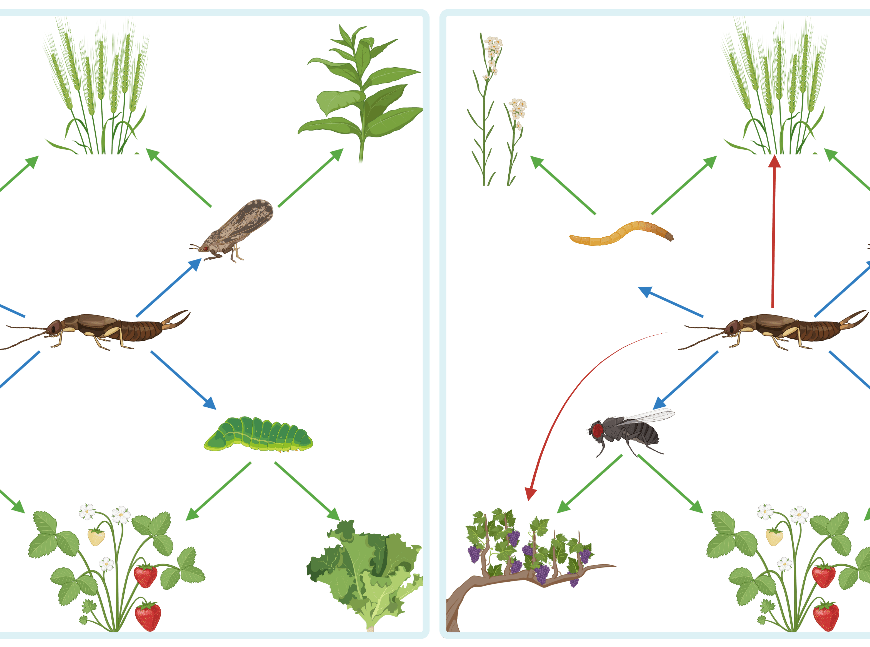
Do you spend your days incapacitated by the agony of not knowing how to combine your field-based observational data with your dietary metabarcoding results? Perhaps every time you go to merge them, the horror of conflicting data types and biases causes you to run and hide from the mere thought of analysis. Or maybe the thought of such problems hadn’t even crossed your mind! In this post, Jordan Cuff and co-authors share insight from their recent publication on using dietary metabarcoding in network ecology and how to merge metabarcoding with traditional data types.

Continue reading “Merging dietary metabarcoding into networks: turning “don’ts” into “dos””

How do you measure the movement of tiny insects?

Post provided by Yash Sondhi, Hailey Dansby, Angela Nicoletti, Elina Barredo, and Samuel T. Fabian.

Studying animal behaviour or ecology can involve measuring movement patterns of small animals. Observing behaviours like foraging, pollination, circadian activity or predation is laborious because it involves long periods of waiting for the behaviour and triggering a camera or poring over hours of video footage to find the behaviour. Existing automated motion tracking tools for small animals are expensive and unsuitable for field use, or need specific conditions like bright light to work. In this blog post, Yash Sondhi and co-authors discuss their tool “Portable Locomotion Activity Monitor (pLAM)” which enables automated monitoring small animal motion tracking in a cost-effective manner, suitable for lab or field use and can track motion under any light environment.

Continue reading “How do you measure the movement of tiny insects?”

Best practices for taxonomic harmonization, an overlooked yet crucial step in biodiversity analyses

Post provided by Matthias Grenié, Emilio Berti, Juan Carvajal-Quintero, Gala Mona Louise Dädlow, Alban Sagouis and Marten Winter.

Merging taxonomic datasets from diverse sources for use in macroecological studies can prove challenging, as there is no standardised methodology, taxonomic names often change over time, and even close colleagues can format the exact same data using different approaches. Researchers at iDiv, the German Centre for Integrative Biodiversity, held a workshop to discuss strategies for harmonizing taxonomy which led to a review of best practice being published in Methods in Ecology and Evolution. In this post, Matthias Grenié and co-authors share insight on this process.    

Continue reading “Best practices for taxonomic harmonization, an overlooked yet crucial step in biodiversity analyses”

A Multiple-Part Morphospace

Post provided by Daniel Thomas

Many biologists dedicate their careers to finding out why life has taken the shape it has. Darwinian natural selection gives us the how, but researchers are deeply interested in why we find particular morphologies amongst certain organisms, when these morphologies arose, and what these morphologies mean for the organisms and the communities in which they reside. In this post, Daniel Thomas (Massey University, New Zealand) describes the philosophy behind the new morphoBlocks package for R. The package is presented in a new paper within the ‘Realising the promise of large data and complex models’ Special Feature for Methods in Ecology and Evolution. Researchers interested in exploring the morphoBlocks package are encouraged to try these three vignettes.

Continue reading “A Multiple-Part Morphospace”

Let’s get real: translating species distribution models into conservation practice

Post provided by Veronica F. Frans

Species distribution models (SDMs) are popular methods for identifying important habitats for species, but what does it take to translate SDMs into conservation practice? In this post, Veronica Frans discusses the applications of iSDMdb as featured in the paper, “Integrated SDM database: enhancing the relevance and utility of species distribution models in conservation management”, recently published in Methods in Ecology and Evolution.

Continue reading “Let’s get real: translating species distribution models into conservation practice”

Monsters Behind the Movies

Post provided by Ben Whittaker & Chloe Robinson

“There’s no such thing as monsters” you whisper to yourself while creeping into bed, regretting your decision to spend the whole night watching horror movies. Thunder rumbles in the distance as rain begins tapping on the windowpane. The lamps flicker and black out. “Just a power cut” you chuckle nervously, clutching the bed covers up to your face. Laid in the darkness, you become aware of every creak and bump echoing throughout the empty house. But what is that shuffling sound? Is it coming closer? The shuffling stops right outside your bedroom door, which gently rattles and then slowly groans open. A dreadful chill runs down your spine. “There’s no such thing as monsters?”

In this special Halloween post, blog editors Chloe Robinson and Ben Whittaker conjure stories of the real-life monsters that have inspired movie makers. Continue reading at your own peril and be warned that Methods in Ecology and Evolution holds no liability for ensuing nightmares, hauntings, or extra-terrestrial abduction.  

Continue reading “Monsters Behind the Movies”

A new tool to identify important sites for conservation using tracking data

Post provided by Martin Beal, Steffen Oppel, Jonathan Handley, Richard Phillips, Paulo Catry, and Maria Dias.

Identifying areas around the world that can best contribute to the conservation of wild animals is a major challenge. Historically, this required conducting extensive surveys in the field, but with the advent of miniature tracking technology we can now follow animals and allow them to indicate which areas they depend on most. In this collaborative post, international researchers from ISPA – Instituto Universitário in Lisbon, the Royal Society for the Protection of Birds, BirdLife International, and British Antarctic Survey present a new conservation tool as outlined in the paper “track2KBA: An R package for identifying important sites for biodiversity from tracking data” recently published in Methods in Ecology and Evolution.    

Continue reading “A new tool to identify important sites for conservation using tracking data”

A framework for unifying disturbance ecology

Post provided by: Brian Buma

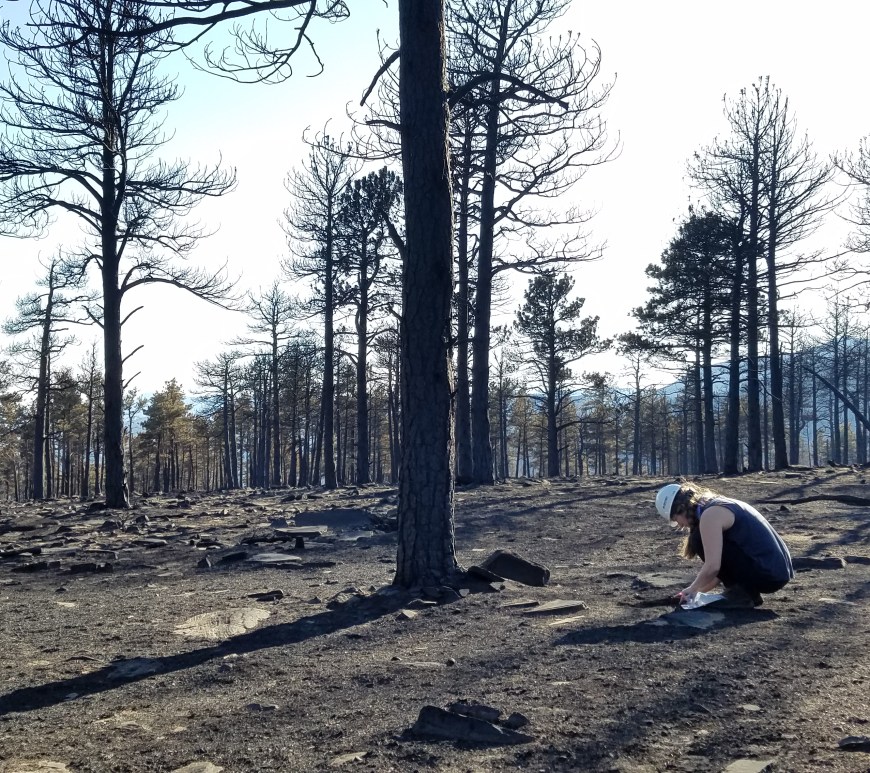
In this post, Brian Buma discusses a unifying framework for studying disturbance ecology, from largescale wildfires to bacterial colonies, as proposed in the new paper “Disturbance ecology and the problem of n = 1: A proposed framework for unifying disturbance ecology studies to address theory across multiple ecological systems” recently published in Methods in Ecology and Evolution.

Continue reading “A framework for unifying disturbance ecology”