plantR: Managing species records from biological collections

Post provided by Renato Lima
Many biodiversity studies, covering a wide range of goals, need species records. These records are becoming readily available online, however there is minimal standardisation for these records at this stage, therefore requiring final users to spend a significant amount of time formatting records prior to using data. To overcome this, Renato Lima et al. have created plantR – an open-source package that provides a comprehensive toolbox to manage species records from biological collections. In this blog post, Renato discusses the workflow of the package and describes how this package can help researchers better assess data quality and avoid data leakage.

Continue reading “plantR: Managing species records from biological collections”

Cover Stories: Making strides towards weighing whole wildlife populations in 3D

Post provided by Michelle Shero

A grey seal pup next to the unoccupied aerial system (UAS) used in this study. Photo credit: Michelle Shero.

To survive and reproduce, all animals must be able to extract sufficient energy from their environment. It takes energy to forage, but animals can recover those calories if they can successfully capture enough prey – and the animal’s weight tells us about its net energetic costs versus gains. Animals that remain in positive energy-balance can then afford to devote more energy towards growth and reproduction. In this blog post, Michelle Shero of Woods Hole Oceanographic Institution guides us through a new method outlined in her team’s recent Methods in Ecology and Evolution paper ‘Tracking wildlife energy dynamics with unoccupied aircraft systems and three-dimensional photogrammetry’. The team uses drone imagery to 3-D model and ‘weigh’ large groups of free-living animals.

Continue reading “Cover Stories: Making strides towards weighing whole wildlife populations in 3D”

Do-it-yourself fishing and climate scenario experiments with a marine ecosystem model

Post provided by Michael Heath, Tom Doherty,  Jack Laverick & Douglas Speirs

Herring is a planktivorous fish species. Credit: Atle Grimsby.

World Fisheries Day, celebrated on November 21, is dedicated to highlighting the critical importance of healthy ocean ecosystems and to ensure sustainable stocks of fisheries in the world. Pressure to find ecologically sustainable strategies for harvesting food from the sea is getting ever stronger, especially in the face of changing climate. However, the question is complex because the harvestable species live in a complex food web where everything is directly or indirectly connected to everything else. Models for carrying out scenario analyses on the impact of fisheries management options on food webs are usually the preserve of trained experts.

In this blog post, Michael Heath of the University of Strathclyde guides us through how using a new marine modelling package and online app, published in their recent Methods in Ecology and Evolution paper ‘StrathE2E2: An R package for modelling the dynamics of marine food webs and fisheries.’, makes these analyses easily accessible to anyone with just basic website skills.

Continue reading “Do-it-yourself fishing and climate scenario experiments with a marine ecosystem model”

Cover Stories: Overlooked primary producers key to accurate trophic position estimation

Post provided by Matthew Ramirez, Alexi Besser, Seth Newsome, and Kelton McMahon

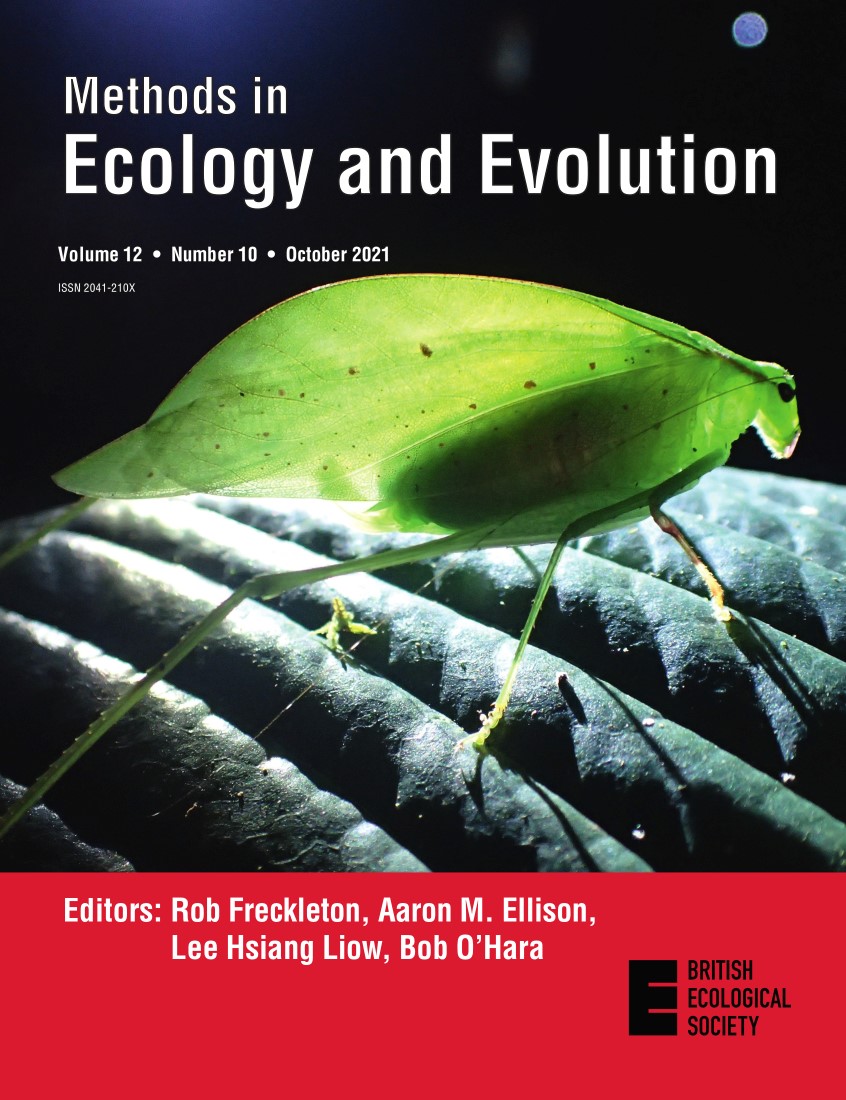
The cover of our October issue shows a katydid feeding on a leaf in the Tirimbina Rainforest National Wildlife Refuge of Costa Rica. Once digested, nitrogen from the leaf is incorporated into the katydid’s tissues in the form of amino acids, with slight modification to their stable nitrogen isotope values (δ15N). In this post the authors discuss the importance of understanding and accounting for variability in primary producer amino acid δ15N values when characterizing where consumers are positioned within food webs, detailed in their Methods in Ecology and Evolution article “Meta-analysis of primary producer amino acid δ15N values and their influence on trophic position estimation.”

Continue reading “Cover Stories: Overlooked primary producers key to accurate trophic position estimation”

Trash Talking: Every Litter Bit Hurts

Post provided by Chloe Robinson

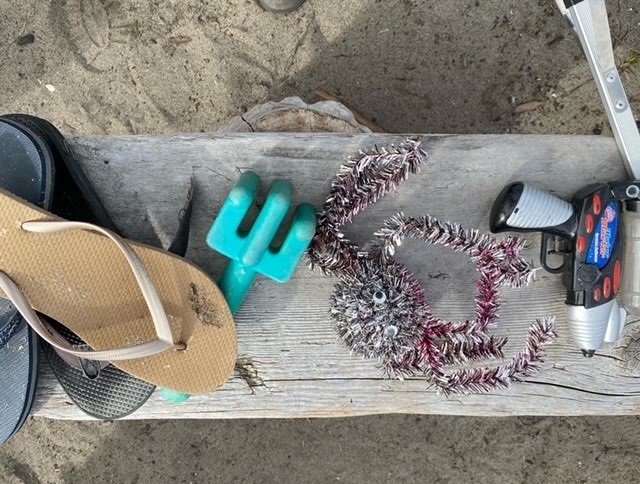
Trash collected from a beach clean at Buccaneer Bay Provincial Park, BC in collaboration with Pender Harbour Ocean Discovery Station (PODS) and the Loon Foundation. Picture credit: Jessica Scott.

It is no surprise that COVID-19 has changed the course of a substantial number of things in the world since the start of the pandemic. One of the most understated impacts is the devastating reversal of many years’ worth of fighting plastic pollution. In the wake of International Coast Cleanup Day and World Environmental Health Day, Associate Editor Dr. Chloe Robinson will be discussing the impacts of marine litter and plastic pollution on marine life and how the Great Canadian Shoreline Cleanup program is working to stop the leak of litter and plastic pollution into the ocean.

Continue reading “Trash Talking: Every Litter Bit Hurts”

An Ecologist and a Programmer Walk Into a Bar…

Post provided by Daniel Vedder, Markus Ankenbrand, and Juliano Sarmento Cabral

Five years ago, a new institute opened its doors at the University of Würzburg: the Center for Computational and Theoretical Biology (CCTB). The idea was simple. Take six computational research groups, covering topics from image analysis to genomics and ecological modelling, put them in a building together, and see what happens.

Despite our disparate areas of expertise, this “experiment” has worked really well. It soon turned out that one of our greatest strengths as an institute lay in the cumulative computer know-how we have, or have acquired together. In our experience, many biologists are still somewhat wary of computational techniques, and struggle with them even when they use them. Part of the reason for this unease, we believe, is that few biologists are thoroughly trained in computer science.

Continue reading “An Ecologist and a Programmer Walk Into a Bar…”

Creating a research and conservation tool to support pollinator survival

Post provided by Matthias Becher, Grace Twiston-Davies & Juliet Osborne

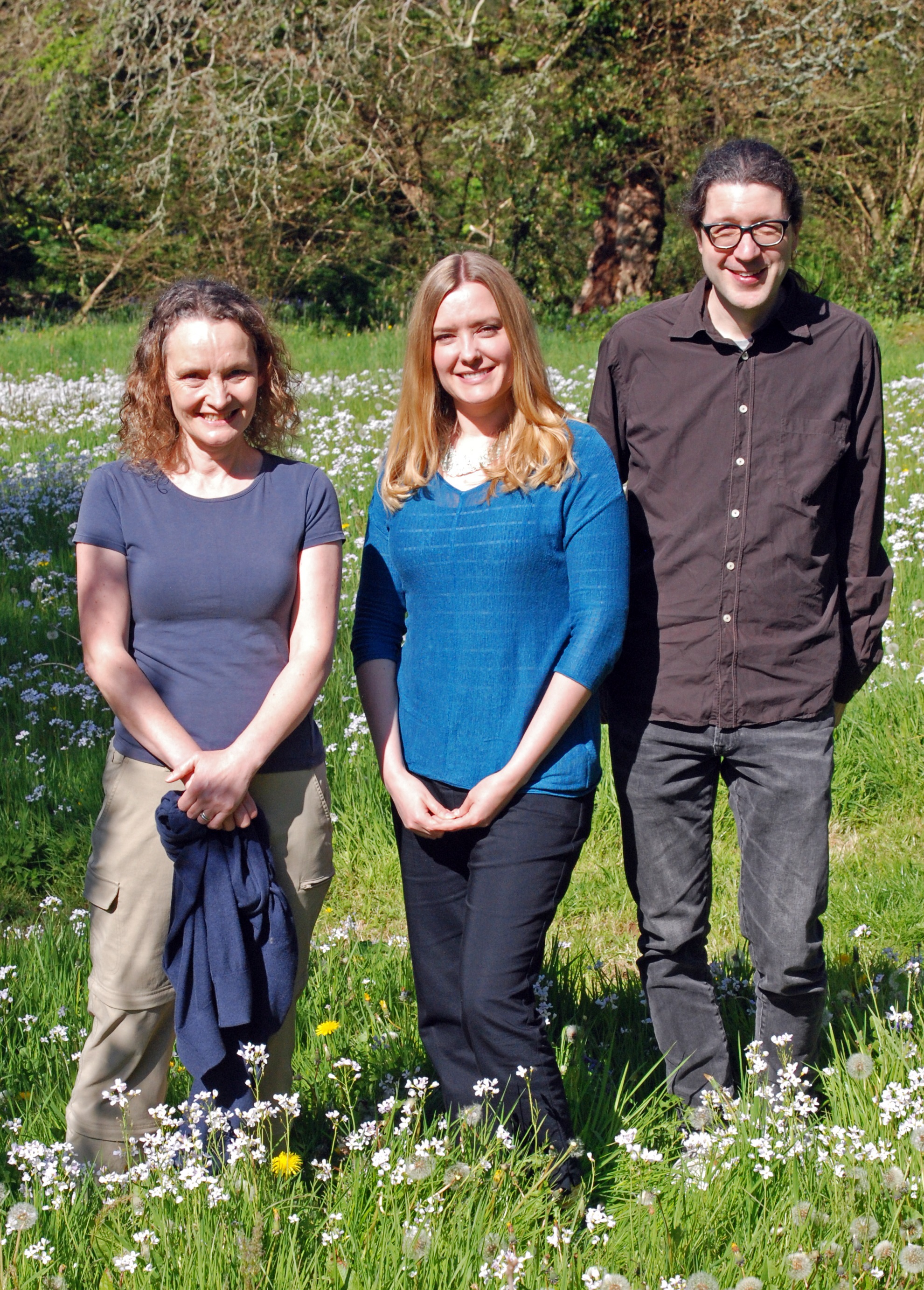
The BEEHAVE Team Osborne Becher and Twiston-Davies. Credit: Pete Kennedy.

Everyone, well, almost everyone, loves honey – that sweet, liquid gold laboriously collected by busy bees from countless little flowers. But of course, much more important than honey or wax or even cosmetic royal jelly products are the pollination services that bees provide to wildflowers and crops. In this blog post, authors Matthias Becher, Grace Twiston-Davies & Juliet Osborne discuss their latest paper published in Methods in Ecology & Evolution, “BEE-STEWARD: a research and decision support software for effective land management to promote bumblebee populations”.

Continue reading “Creating a research and conservation tool to support pollinator survival”

Data manipulation and statistical analysis in palaeoecology: an unexpected journey

Post provided by Midori Yajima

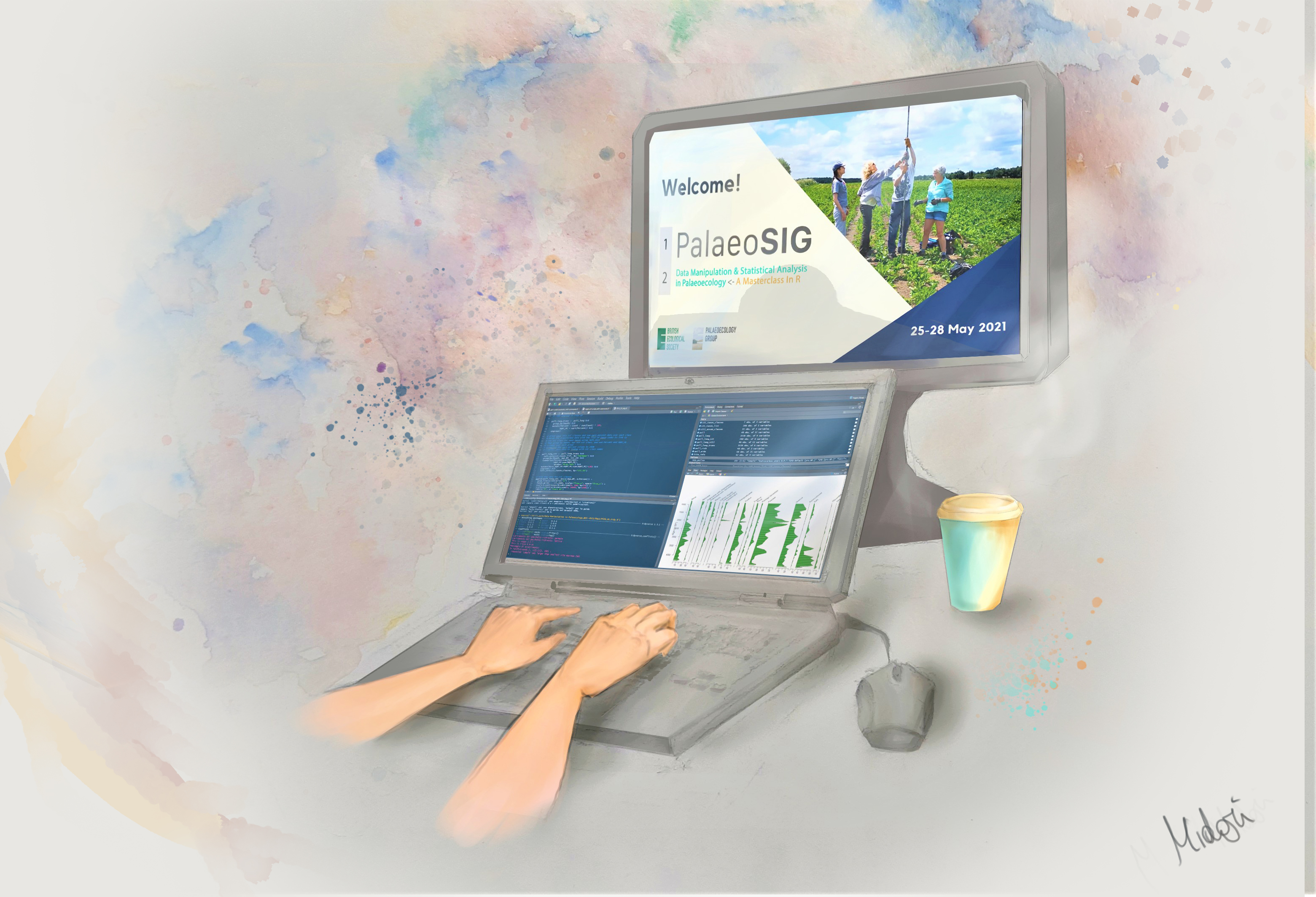
Picture credit: Midori Yajima

Midori Yajima graduated from an MSc in Ecology with a project on palaeoecology and decided to join the online workshop Data Manipulation and Statistical Analysis in Palaeoecology: A Masterclass in R, set up by the Palaeoecology Special Interest Group (PalaeoSIG). In this post, Midori discusses some highlights from the workshop and emphasises the importance of a research community when navigating the programming realm.

Continue reading “Data manipulation and statistical analysis in palaeoecology: an unexpected journey”

Rainbow Research: All Colours of Pride

Post provided by Gawain Antell

To celebrate UK Pride Month, the British Ecological Society journal blogs are posting a ‘Rainbow Research’ series, which aims to promote visibility of STEM researchers from the LGBTQ+ community. Each post will be connected to a theme represented by one of the colours shown in the Progress Pride flag. In this post, Gawain Antell describes the process of sewing a Progress Pride flag with science-themed fabric, while stitching together the identities of being an aromantic asexual palaeobiologist.

Continue reading “Rainbow Research: All Colours of Pride”